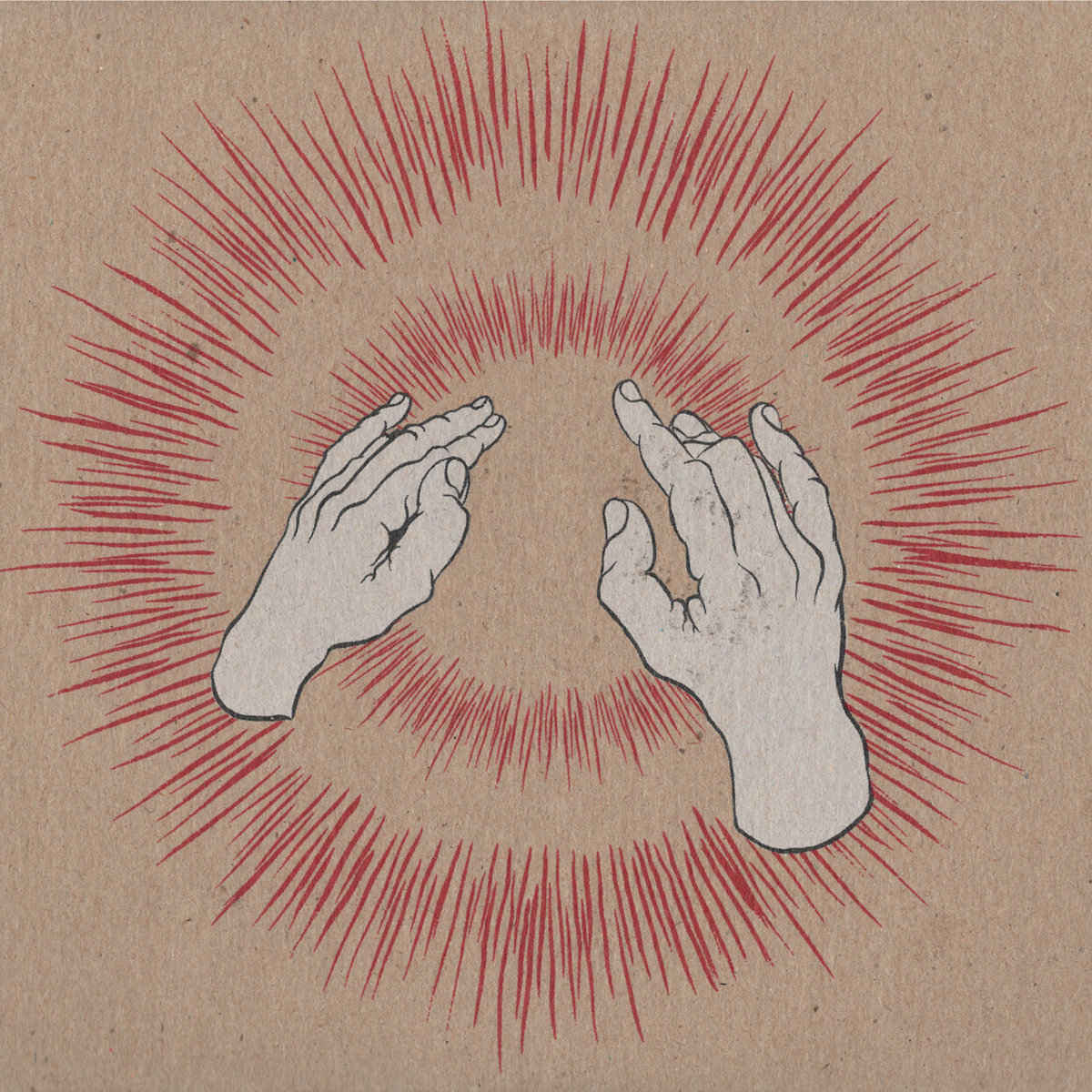
On this date in 2000, Godspeed You Black Emperor! - 'Lift Yr. Skinny Fists Like Antennas to Heaven!' was released.
📈 #2 for 2000, #14 overall
https://t.co/6dUY3OjNQ7
The more self-regulated you become, the more you realize that communicating your feelings isn’t an emergency. You can sit with it. Sleep on it. Let the wave pass. You don’t have to rush into expression just because the emotion feels loud.That’s why, days after you’ve said your piece and it spirals, you replay it. You think of what you should have said, how you could have said it, or you cringe because you realize you didn’t need to say anything at all. You just needed time.
Sometimes, if you’re lucky, there’s a tree outside your bedroom window. It’s important to notice it, appreciate it, and romanticize it as much as possible.
confidence comes once you engage in radical acceptance. once i accepted the fact that i’m going to be in this vessel for this lifetime, i made it my mission to master myself instead of focusing my energy on other people’s lives. i got bigger fish to fry.
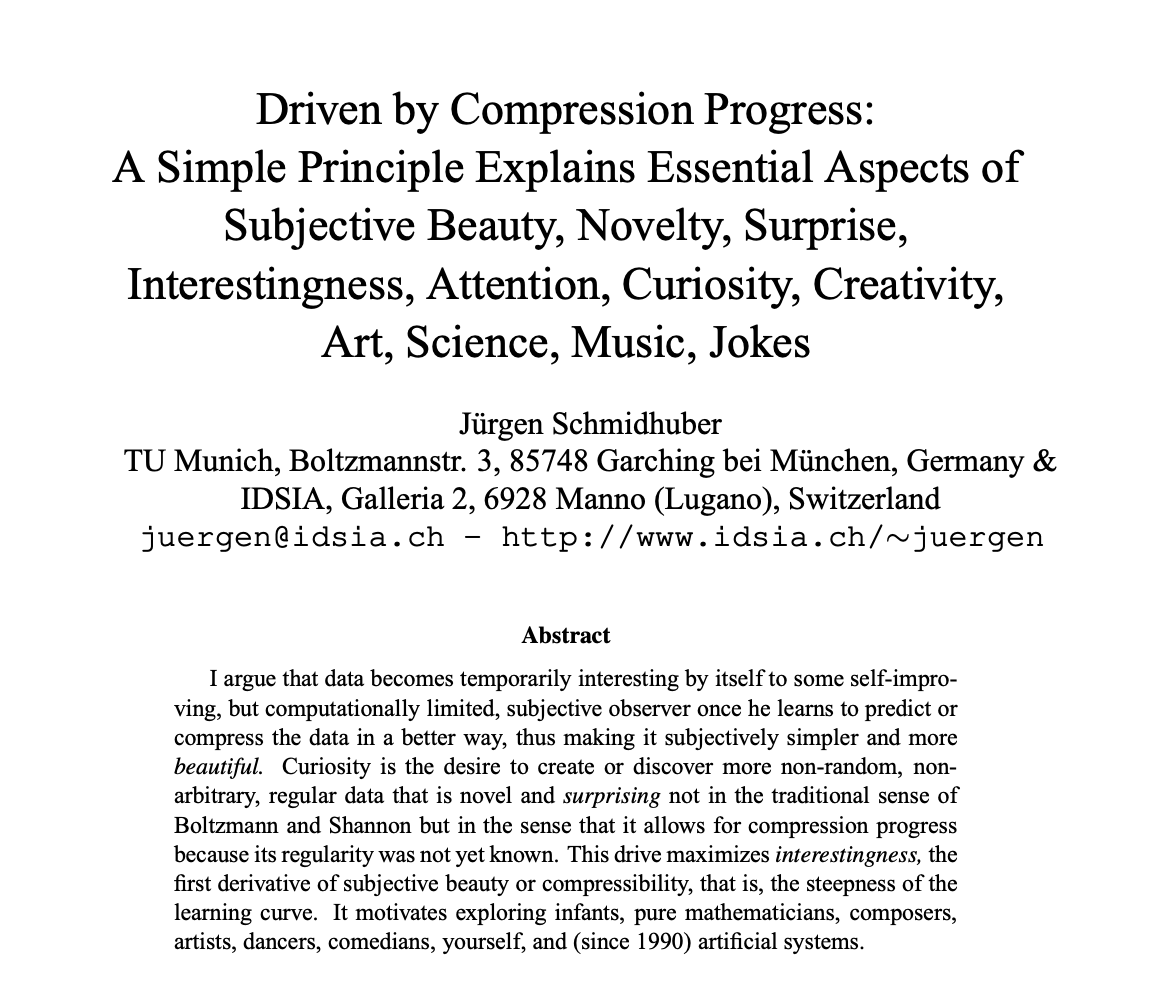
This 2008 paper answers:
why anything is beautiful
why science exists
why jokes land
why you get bored
why art moves you
why babies explore
why music has hooks
It boils down to a single, cold mathematical principle.
Jürgen Schmidhuber is one of the founding fathers of modern AI. But this paper wasn't about building a better machine.
It was about proving that human curiosity is just an algorithm.
It’s called "Compression Progress."
Your brain is a prediction engine. Its only goal is to take the overwhelming chaos of the world and compress it into simple, predictable patterns.
If something is completely predictable, like a ticking clock or a blank wall, your brain compresses it instantly. Zero effort.
You experience this as boredom.
If something is completely random, like TV static or white noise, your brain can’t compress it at all.
You experience this as frustration.
But what happens when you look at something complex, and suddenly discover a hidden rule that makes it make sense?
The exact second you get the punchline of a joke. The moment a chaotic melody resolves into a perfect hook. A baby realizing that dropping a cup always makes a sound.
In that split second, your brain successfully compresses the data.
And to reinforce this behavior, your brain floods your system with an intrinsic reward. A hit of dopamine.
We gave that chemical hit a lot of romantic names.
We call it "beauty." We call it "wonder." We call it "art."
Scientists like Einstein aren't doing magic. They are just hunting for equations that compress the maximum amount of universe into the smallest amount of text.
Composers like Beethoven weren't channeling the divine. They were engineering optimal compression puzzles for the human auditory cortex.
We like to believe our sense of wonder makes us fundamentally different from machines.
But this paper proved that wonder is just a mathematical reward function for efficient data sorting.