Sea of unauthorised colonies mushroomed between noida greater noida Ghaziabad - failing the planning of NOIDA Greater Noida. This is a lack of futuristic planning. Even a riverbed is not spared
and people are expecting a riverfront here
Every year India installs 50 million smart electricity meters but the thing is every chip inside the meters are imported.
An Indian company, Vervesemi, now makes a qualified, ready-to-use alternative. It has even been shown to the Power Ministry. But there is still no mechanism to put that chip into a single meter due to the way the market is today.
This market-product-ecosystem gap is what Indian semiconductor industry champions need to address.
- the country can now make the chip
- and still can't get it used.
Theoretically.
- A chip can now be designed, fabricated and packaged on Indian soil.
- The full sequence, for the first time
Ecosystem:
- 24 funded design startups
- plus 50+ multinational design centres
- an engineering talent base roughly a lakh strong
- 3 packaging units running, 4 more coming
- and Tata's Dholera fab due to produce its first silicon in 2026
So why does the imported chip still win?
Price:
Indian packaging runs 3–5x foreign cost, and one fab quote came back 20% above the Taiwan line it was meant to replace
The old cost edge is gone:
chip-design salaries in Bengaluru now rival the US, so "cheaper in India" no longer holds
Procurement:
government tenders pick the lowest bidder, so an Indian chip that costs 2x at the start is disqualified before it can ever scale down
Paperwork:
even importing a chip to test it can stall on customs and central-bank rules written for finished goods rather than bare silicon
MAINLY -> No pull:
the "product company" layer - firms that turn a chip design into something a manufacturer actually orders - doesn't exist in India yet
What would change it:
- Preferential foundry pricing until Indian fabs scale?
- A procurement carve-out so Indian chips aren't auto-rejected on price alone?
- A rule that counts the actual chip content of a device, not just the resistors and connectors around it
All these changes are expected in the mission's next policy phase, due before July 2026
We've had a good start with the fab and packaging units. The product->market ecosystem needs building now.
For those invested in/closely following the Indian semiconductor space this 6000 word deep dive is a must read 👇
https://t.co/mMdHf3JHIZ
🚨NEW INVESTIGATION: A Fortune 500 company reportedly cancelled a @HinduAmerican training session after employees circulated its Wikipedia page.
That page tells readers HAF aligns with Hindu nationalism, threatens academic freedom, and has been accused of acting as a foreign agent.
We traced who built that narrative. The same handful of accounts kept appearing across HAF, its critics, activist groups, and key public figures—building an interconnected narrative that now feeds Google and AI systems.
Full investigation in thread. Receipts 👇
HOLY SHIT.
The Wikipedia expose on HAF just confirmed what many Hindus have been saying for YEARS.
A tiny network of leftie activist editors hijacked pages related to Hindus, Hindutva, caste, and India and turned Wikipedia into a propaganda machine.
They have smeared Hindu organizations as “extremist,” “nationalist,” and “fascist adjacent” while sanitizing and protecting activist groups openly hostile to Hindus.
And the scariest part?
This garbage doesn’t stay on Wikipedia.
It gets fed into Google searches, media narratives, academia, AI systems, and public perception worldwide.
A handful of anonymous editors can effectively shape how BILLIONS of people understand Hindus and India.
People mocked Hindus for warning about coordinated information warfare.
Turns out they were right.
One of the reasons cities in Gujarat have been able to maintain their Bus Rapid Transit Systems (BRTS) to a reasonable standard is that city bus services fall under the ambit of municipal governments, as per by the 74th Constitutional Amendment.
For cities such as Bengaluru and Hyderabad, where bus services are operated by independent transport agencies, it will be much harder - though not impossible - to build and operate a dedicated bus rapid transit system, because it would need coordination between two different agencies with two different sets of priorities.
The benefit of operating city transport units under separate organization is that they come directly under the state government and often get dedicated funding in state budget, but as I said above, it comes at a cost that requires coordination.
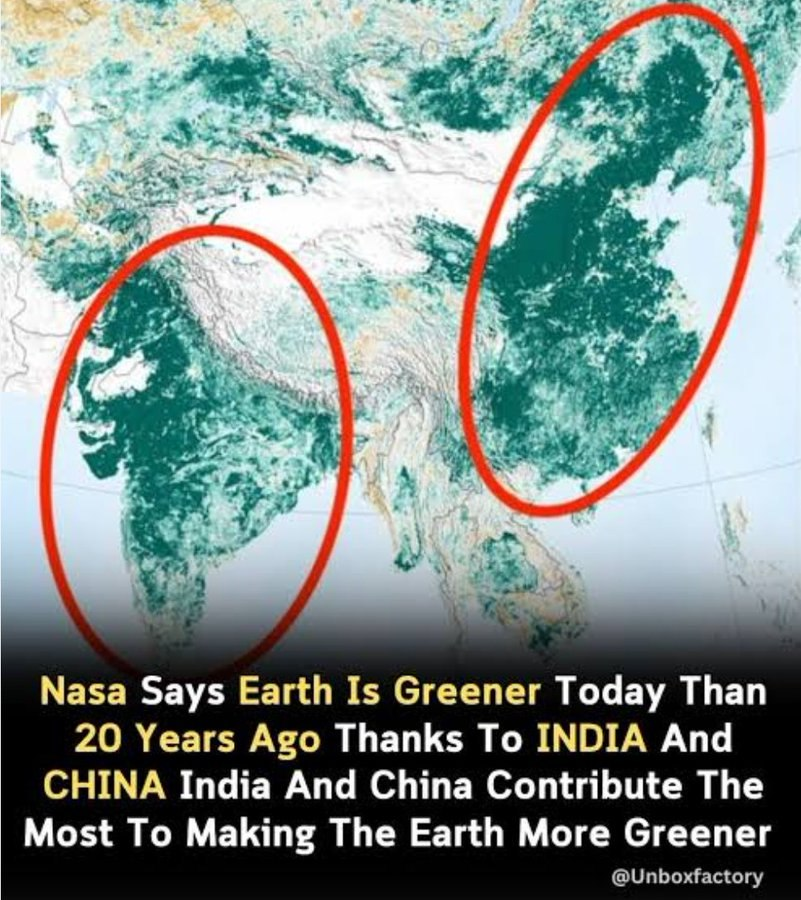
NASA-Daten zeigen beispiellose Begrünung der Erde
Während Regierungen weltweit Billionen ausgeben, um den CO₂-Ausstoß zu reduzieren, verweisen einige Wissenschaftler auf eine Entwicklung, die in der öffentlichen Klimadebatte nur selten im Mittelpunkt steht: Die Erde wird grüner.
Satellitendaten…
https://t.co/mMwJYDk3GE
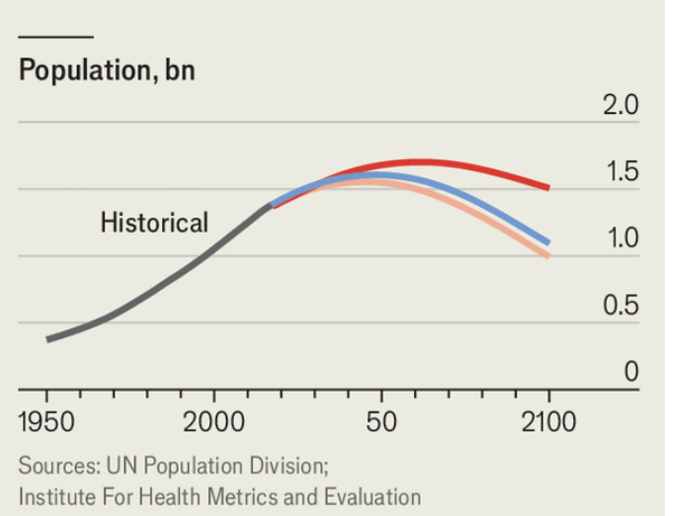
Our cover story in Asia this week is India's baby bust. Fertility rates are falling remarkably fast across the country-- in several states women are now having the same number of children as those in Scandinavia. That means we should think differently about India's future:
Look at the surrounding. Temple is encroached to such an extent that I am afraid in few years Dharmic people will start encroaching on top of temple. This is VRINDAVAN by the way! Even Jihadis may look like a failure infront of them.
Biggest tragedy of Gangetic plains is that it has become too much addicted to Jholachhaps socialism.
The hostility and opposition towards BRT has always been about power politics.
BRT reallocates scarce road space from a minority travelling in private cars to a majority travelling by public transport. For some, the idea that a bus full of workers should move faster than a luxury SUV is simply unacceptable.
Many of these BTech+MBA/policy/econ chaps
Are blackpilled about their own life
They did two degrees aimlessly without proper focus or interest
And now completely lost and disillusioned