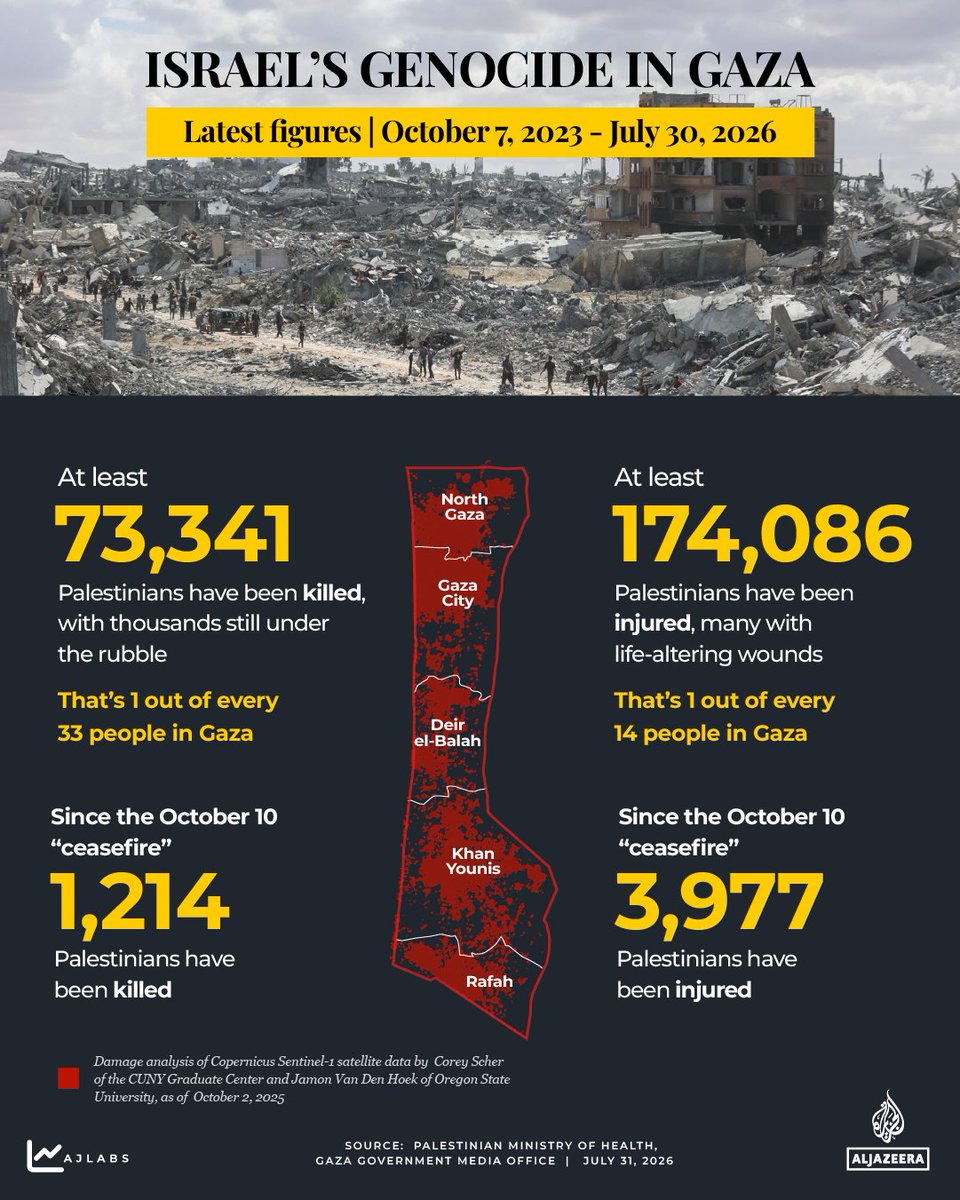
Israel's genocide in Gaza has killed at least 73,341 Palestinians and injured at least 174,086 people, many with life-altering wounds, since October 2023.
15 aharu vandhen Malé geyakah bodu kulli dhekkumakee Malé in dhiriulhen flat gandeh libumah onna eligibility criteria.
Thanks to Solih for coming up with this brilliant way of discrimination.
Thanks to Muiz for doubling down on it.
Thanks to the RT Housing Minister as well.
I am not an MDP member, nor have I contributed to the party. I don’t see myself as someone who can speak on what it should or shouldn’t be, or play any role in shaping it, especially at a time when the party is at its strongest since PNC came to power.
But those who are already part of MDP, especially the youth, should first work to free the party from the grip of a few families that have controlled it since the beginning.
Otherwise, the same cycle will continue: in opposition, MDP presents itself as a party of the people and a model of democracy; but once in power, it becomes concentrated in the hands of a few individuals.
If those within the party can overcome this, I believe many currently unaffiliated people would be willing to join MDP.
@Aliixxath
PNC preoccupied with the loss.
MDP preoccupied with internal struggle.
PNF preoccupied with revenge.
Is there no Party in 🇲🇻 focused on real issues faced by the people?
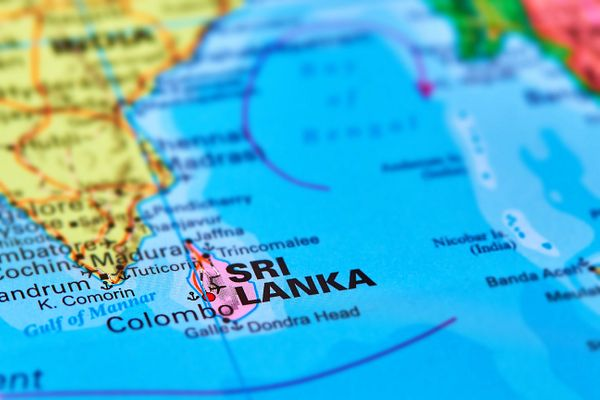
Everyone laughed when they said Sri Lanka's location is its biggest asset. Nobody is laughing now
The Strait of Hormuz just shut down. 20% of the world's oil supply: blocked. 34,000 shipping routes diverted. The biggest shipping companies on earth such as Maersk, MSC, Hapag-Lloyd are all scrambling to find alternative routes
Guess which country sits right in the middle of every single alternative route? 🇱🇰
Colombo Port just recorded 8.29 million containers in 2025. A record. Transhipment surged 15% in January 2026 alone. Colombo Port is now the most connected port in the Indian Ocean region. More shipping lines call here than any alternative except Jebel Ali in Dubai which is currently inaccessible because of the Hormuz crisis. The next closest options? India and Malaysia. Neither match Colombo's connectivity!
But this isnt new. The ancient world already knew this too. Arab traders, Chinese merchants, Portuguese colonisers, Dutch, British they all came here for the same reason.
We sit on the crossroads of every major sea route connecting East to West. Thats not luck. Thats geography. And geography doesnt change
You know what the Dutch called us right? The Cinnamon Island. You know why the British wanted Trincomalee? Not for the beaches. For the natural deep water harbour that could control the Indian Ocean. The same harbour we're now handing over to India and UAE to develop because we couldnt do it ourselves in 80 years of independence
Right now ships are rerouting around the Cape of Good Hope to avoid Hormuz. That route passes Sri Lanka. Ships going from East Asia to Europe pass us. Ships going to Africa pass us. Every rerouted vessel is a potential customer for Colombo Port
The problem? Our port is already congested. We have the location but not the capacity. The West Container Terminal is still being built. We needed it 5 years ago. Every month of delay is revenue going to Singapore, Malaysia and India instead.
Singapore has no natural resources. No agriculture. No beaches. Just location and infrastructure. They turned a fishing village into the world's busiest port. We have the same location advantage PLUS natural resources, agriculture, tourism, and a deep water harbour the British built their entire Indian Ocean strategy around
The difference? They executed. We debated
For decades we've been saying "we have nothing." We have everything. We just never built the systems to use it. The Hormuz crisis wont last forever but the lesson should. Sri Lanka's location is worth more than any resource. If we ever get serious about it
The numbers are in. The referendum rejected by a landslide. Every mayor seat to MDP. The people were asked to permanently surrender their mid-term check on presidential power and they refused.
67% said no. Not a close call. Not a squeaker. A clear, decisive rejection of merging elections.
This was supposed to be Muizzu’s mandate. It became his report card. And the results are in red.
Now watch what happens next. Because the test of this government was never whether it could win. It was whether it would listen when it lost.
My two cents on the results 🧵
Tonight's local council result is not an MDP victory. The MDP did not earn this result, and it would be a serious mistake for anyone to read it that way.
There is no basis for arrogance from MDP at this point. Not based on the abysmal performance as an opposition. You have disappointed us repeatedly, often failing to provide the consistency, clarity, and strength that is expected of you.
What we are seeing now is not a sudden return of trust or confidence in MDP. It is a reaction and response to how poorly Muizzu’s administration has governed.
Public frustration has been building. The arrogance in tone, the disregard for public sentiment, and the repeated attempts to weaken accountability through Parliament and the judiciary have not gone unnoticed.
The confrontational manner in which the President engages with the media, the constant reversals of policy, and the pattern of making promises for effect rather than delivery have all contributed to this moment.
This is not an endorsement of MDP. It is a rejection of the government.
And that distinction matters. Because it also means that sentiment is not fixed. If the government were to reflect, correct course, and begin to govern with more discipline and humility, the public mood could shift just as quickly in the other direction.
There is still time for Muizzu to do that. To take stock of what has gone wrong, to distance himself from the circle of loyalists who are clearly steering decisions in the wrong direction, and to begin aligning governance with the image he presented to the people.
If that happens, there is possibility that the government will be seen differently again. If not, then what we are seeing now is only the beginning of a deeper loss of confidence.
Unpopular opinion
First of all social housing ah apply kurun itself is wrong if your plan is to rent it.
You are stealing some poor family’s deserved flat by applying for it.
Don’t we have any values or principles anymore?
Another good issue to consider in an e-petition, that is long overdue a solution. Since the parliament doesn't know how to function, the public have to put this forward.
Does my opinion really matter?
I live in Hulhumalé, yet my permanent address forces me to vote in an island I no longer live in. My vote goes to a community I’m not part of, while the place I actually live in is where I have no say.
Am I just fulfilling a technical requirement where my voice has little real impact?
@ElectionsMv
#MVElections #LocalCouncilElections #Maldives
@MMuizzu says combining presidential & parliamentary elections is about saving money—but the numbers don’t seem to add up.
If cost-saving is truly the goal, reducing MPs to 30 could save far more—potentially several times the cost of holding elections. Halving political appointees would add even greater savings.
When bigger, more impactful cost-cutting options exist, it raises a valid question: is this really about saving money, or is there another motive?
True fiscal responsibility means making the hard reforms—not just the convenient ones.
3 weeks ago I argued the US goal in Iran is to seize the global oil spigot. Venezuela in January -> Iran in February.
Neutralize every supply channel outside the dollar system within 90 days. Achieve a compliant successor government and complete energy dominance.
The oil thesis was the obvious layer. However, when you zoom out & view the last four years as a single sequence rather than isolated geopolitical events, the architecture of the grander US plan becomes visible.
1st was Europe, which laid the groundwork.
The Ukraine conflict provided the justification for sanctions that collapsed Russian pipeline gas from 150 billion cubic meters to 40.
Then Nordstream was destroyed, which rewired the entire European energy system permanently. The US went from supplying 28% of Europe's LNG in 2021 to 58% by 2025, exporting a record 111 million MTs, the 1st country in history to break 100 MT.
Europe was transformed from a customer with options into a captive market now purchasing its survival in USD.
2nd was Syria.
The fall of Assad severed the critical node connecting China's Belt & Road Initiative to the Mediterranean.
The trilateral railway linking Iran, Iraq & Syria, designed to bypass Western maritime chokepoints, was completely destroyed.
This isolated Iran geographically & cleared the path for what came next.
3rd was Venezuela.
In January the US effectively took control of the world's largest heavy crude reserves. The US Gulf Coast has the most advanced refining complex on earth, specifically built for heavy sour crude. Phillips 66, Valero & the rest are now positioned to process hundreds of thousands of barrels of Venezuelan crude daily.
The US captured a massive strategic reserve & solidified its position as the dominant exporter of refined petroleum products, an industry worth $110 billion in 2025 alone.
Venezuela & Iran were the two major oil supply channels that existed outside the dollar system. Both produce heavy crude sold primarily to China & evaded US financial supervision. Both now being neutralized within 90 days, which leads us to..
4th is Iran & the Middle East energy shock.
Israel struck Iran's South Pars gas field, the world's largest natural gas reservoir. Iran retaliated against Qatar's Ras Laffan, the single largest LNG facility on earth, responsible for a fifth of global supply. QatarEnergy's own assessment is that 17% of export capacity is gone and recovery will take up to 5 years. The Strait of Hormuz is closed. European gas prices spiked 70%. Asian spot prices doubled.
The only remaining scaled supplier? The United States.
If Iran falls & a successor government is installed that the US controls or influences (the Delcy model described weeks ago) then roughly 40 to 45 million barrels per day of global production out of 103 million is effectively under US control. OPEC becomes irrelevant because the US coalition is now the marginal producer. Now add the gas dimension & it goes beyond oil.
This war is solidifying the petrodollar system as it evolves into a hybrid petro/LNG-dollar. The old system was built on Saudi crude priced in USD. The new system is built on American crude plus American gas from the Gulf Coast, with no alternative supplier of comparable scale. The dependency is deeper because LNG infrastructure requires long term contracts & regasification terminals that lock buyers into supply relationships for decades. Europe & the Pacific allies (Japan, South Korea, Taiwan, etc.) cannot pivot away as there is nowhere left to pivot to. They're now locked into the US energy system.
The market confirms this. DXY went from 96 to 101. Gold down ~20% from its January all time high. Bitcoin down 20% on the year. Brent above $100. European & Asian institutions are liquidating precious metals and crypto to buy dollars because they need dollars to buy the only remaining scaled energy supply. The world is selling its gold to buy American energy in American currency. The dollar is now being weaponized through energy dependency.
The structural repricing is happening regardless of how the conflict resolves.
But the US grand strategy goes deeper..
Artificial intelligence is a physical industry. It runs on power and chips. Data centers require massive uninterrupted baseload electricity, primarily provided by natural gas. Semiconductor fabrication requires helium & rare earths.
By choking the Strait of Hormuz & crippling Middle Eastern LNG & helium production, the US is systematically degrading China's ability to power its data centers & fabricate semiconductors at scale.
The US is energy self sufficient, especially with newly captured Venezuelan reserves & expanding Gulf Coast capacity running on domestic gas.
On the other hand, China is import dependent & every joule it imports effectively now transits chokepoints the US Navy controls..
Iran was the Belt & Road's overland energy bypass, the corridor that allowed China to mitigate the Malacca Trap. With Iran neutralized that corridor is severed. China faces a world where its compute infrastructure competes for scraps on a depleted global LNG market, while American data centers run at full capacity on domestic energy.
Russia is next in the sequence. A post-war Iran reopening under US influence competes directly with Russia for the same refineries in China & India at lower cost. Iran's production costs are lower. Russia loses its last structural advantage in heavy crude & its economic lifeline. Additionally, under the Iran war cover, Ukraine has been opportunistically destroying Russian energy infrastructure & all signs point towards Russia being at the end of the line. The message from Washington becomes very simple: we dismantled two regimes in three months, your economy is about to get crushed, sign the Ukraine deal.
Then Trump sits down with Xi holding every card. Complete energy dominance. The hybrid petro/LNG-dollar fortified, Iran cleared, Russia cornered, & China facing the Malacca Trap fully closed with no remaining energy bypass.
Israel & the GCC are absorbing the kinetic cost of a conflict whose primary beneficiary, counter to the mainstream narrative, is actually America (First). Qatar offline for 5 years reprices the entire global gas market in favor of US exporters for the remainder of the decade. The Gulf states face years of rebuilding. Europe faces its 2nd energy crisis in four years.
Sure, the average American might face temporary moderate inflation & higher gas prices. But if you are the architect of the US empire & you view the rise of China & Chinese ASI as an existential winner takes all scenario, the collateral damage is acceptable cost.
Whoever controls the energy corridors controls the monetary system. Whoever controls the monetary system & the energy supply simultaneously controls the compute infrastructure that determines which civilization builds ASI first.
The US is seizing all 3.
ATM systems don’t actually “see” money the way humans do. They rely on a combination of sensors, counters, and internal logs to track every note dispensed. When you request 5,000, the machine calculates how many notes to release (for example, 10 notes of 500), and once those notes pass certain internal checkpoints, the system assumes the transaction was successful.
Now here’s where things get interesting.
Sometimes, during the physical dispensing process, one or more notes can get stuck, misfed, or rejected by the machine’s mechanism. This is called a dispense error. But if the notes already passed the internal counting sensor before the error happened, the ATM still believes it successfully gave out the full amount.
So digitally, everything looks correct.
Physically, you received less.
That’s why the receipt shows 5,000 because from the system’s perspective, 5,000 was dispensed.
The missing cash usually doesn’t just disappear though. ATMs are designed to detect leftover or retracted notes. If cash isn’t properly taken or gets stuck, it’s often pulled back into the machine and logged as a cash retract or cash surplus. During reconciliation (when the bank audits the machine), that imbalance shows up.