Beautiful chart: the collapse in cardiovascular mortality over the last 100 years
What happens when we add anti-lipoprotein(a), anti-IL6, anti-NLRP3, oral anti-PCSK9...?
Why do some people develop bloating with some carbohydrates?
We examined clinical, diet, microbiome & meta-transcriptome in those bloating induced by either:
Fructans ➡️Abdominal girth, F:B ratio, CAZyme
GOS ➡️Breath H2, GABA
Paper @AmJGastro
https://t.co/1SCR7jfe3v
#DDW2026
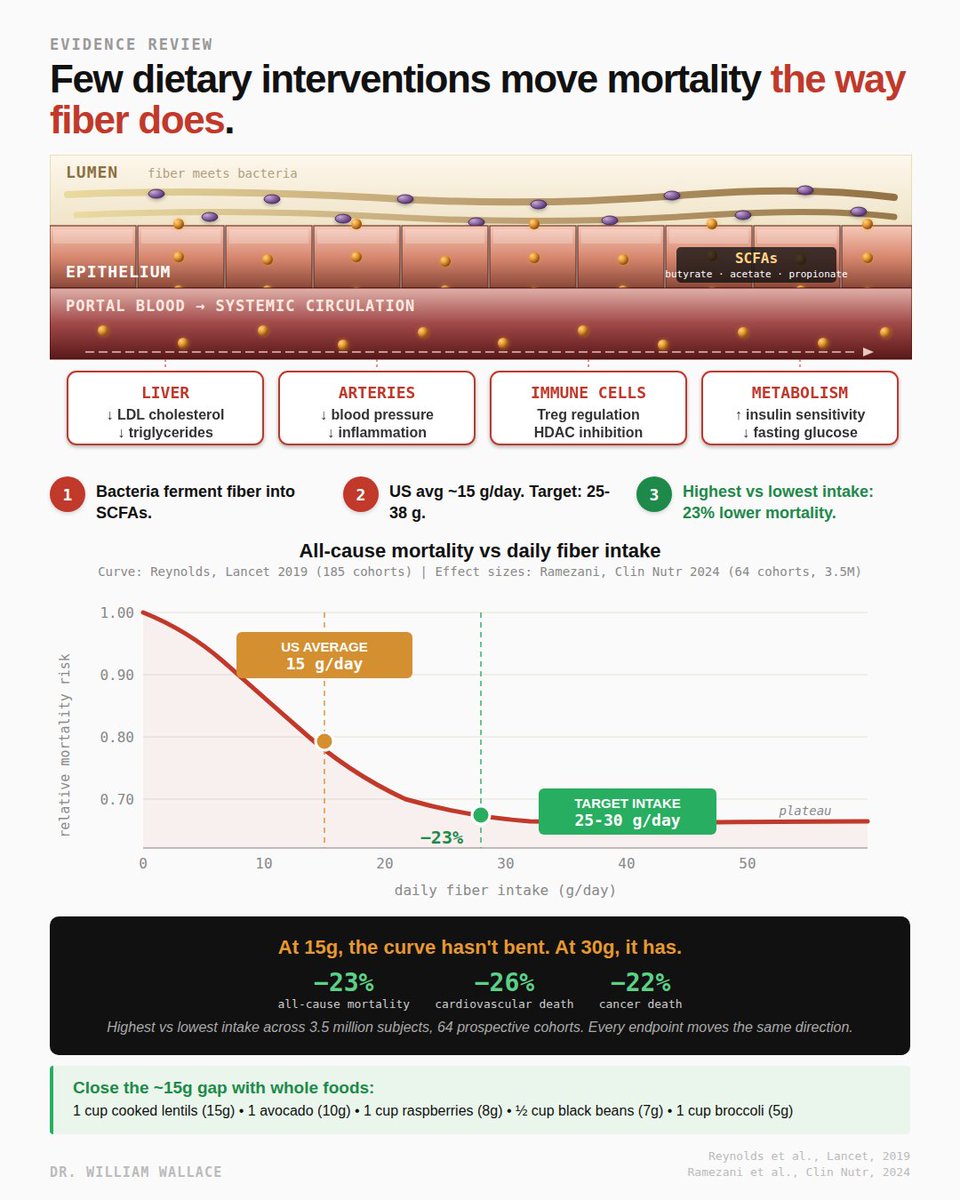
Fiber gets treated as nutrition advice and rarely as a mortality intervention. The meta-analysis data suggests it should be both.
The 2024 Ramezani systematic review in Clinical Nutrition pooled 64 prospective cohorts totaling 3.5 million subjects. Comparing highest fiber consumers to lowest:
- All-cause mortality: 23% lower
- Cardiovascular mortality: 26% lower
- Cancer mortality: 22% lower
Every endpoint measured moved in the same direction. Effect sizes of this magnitude from observational data on a single nutrient are rare.
The 2019 Reynolds Lancet dose-response meta-analysis (185 prospective cohorts) fills in the curve shape. Mortality risk drops sharply from 0 to about 25 g/day and plateaus. Below 25g, each additional gram is associated with measurable risk reduction. Above 30g, the curve is mostly flat. The inflection point sits almost exactly where IOM set the daily target: 25g women, 38g men.
US adults average ~15 g/day, halfway up the curve, not at the top. About 95% fail to hit target. Closing that gap is arguably the single largest preventable nutrition-related mortality signal in the current evidence base.
The mechanism operates on two parallel tracks. Direct effects: viscous soluble fibers (beta-glucan, psyllium) bind bile acids in the intestinal lumen and increase fecal excretion, forcing the liver to pull cholesterol from circulation to synthesize replacements. This is how fiber lowers LDL, independent of bacteria.
Fermentation effects: colonic bacteria ferment fibers into short-chain fatty acids (acetate, propionate, butyrate). Propionate reaches the liver via bloodstream and appears to inhibit cholesterol synthesis, a second pathway behind fiber's lipid effects. Butyrate regulates gene expression in immune cells, supports regulatory T cell populations, and fuels the cells lining the colon. SCFAs also signal through receptors on immune cells, enteroendocrine cells, and fat cells, influencing insulin sensitivity and inflammation.
Caveats. Evidence is observational, not randomized. Fiber intake correlates with diet quality, activity, body weight, smoking, and socioeconomic factors, all independently tied to mortality. Adjustments don't fully eliminate confounding. Causal claims need caution. Large-scale RCTs on hard mortality endpoints do not exist. What IS well-supported: higher fiber intake is associated with lower mortality, the relationship is graded by dose, and associations are consistent across dozens of independent cohorts.
Subgroup finding worth knowing. In Ramezani, insoluble fiber showed stronger associations than soluble. Fiber from nuts and seeds specifically was associated with 43% lower cardiovascular mortality.
Close a 10-15g gap with food: 1 cup cooked lentils (~15g) + 1 avocado (~10g) + 1 cup raspberries (~8g) + ½ cup black beans (~7g) + 1 cup broccoli (~5g). One legume, one whole grain, one fibrous vegetable daily moves most adults from 15 to 30 g/day.
For the magnitude of mortality associations backed by this scale of observational evidence, few single nutrients compare.
Ramezani, Clin Nutr, 2024: https://t.co/Wk131OyYgN
Reynolds, Lancet, 2019: https://t.co/yKft32WksL
Syncope is defined as transient loss of consciousness due to cerebral hypoperfusion. Most syncope is not cardiac in aetiology, but cardiac syncope is a high risk subgroup.
This Practice article looks at how to identify cardiac syncope #MedEd
https://t.co/L8Xh8zkIUW
💊🧠 Statin side effects: separating signal from noise
Even though this is a highly debated topic and there is a high level of polarization in this domain we have to stick to evidence.
Statins save lives—but concerns about side effects remain a major barrier to their use. This landmark CTT Collaboration meta-analysis, published in The Lancet, tackles the issue head-on by asking a simple but crucial question: which adverse effects attributed to statins are actually causal?
🔬 What makes this study different
Individual participant data from 23 large, double-blind RCTs
>154,000 participants, median follow-up ~5 years
Focused exclusively on events listed in statin product labels
Rigorous control for multiple testing using false discovery rate (FDR)
📊 The results are striking
Of 66 adverse outcomes commonly attributed to statins:
❌ 62 showed no causal association
✅ Only four reached statistical significance:
Mild liver enzyme elevations (dose-dependent, clinically small)
Urinary composition changes (very small absolute effect)
Oedema (minimal excess risk)
Well-known effects were confirmed:
Muscle symptoms (mostly mild, early)
New-onset diabetes (modest, mainly in predisposed individuals)
🚫 What was not supported by randomized evidence
No causal link was found for:
Cognitive impairment or dementia 🧠
Depression or sleep disorders 😴
Sexual dysfunction
Peripheral neuropathy
Kidney injury or interstitial lung disease
🧠 Why this matters
Many side effects listed on statin labels stem from observational or unblinded data, where expectation and attribution bias are powerful. This study shows that such labeling likely overstates harms, contributing to fear, discontinuation, and avoidable cardiovascular events.
⚖️ The balance is clear
The cardiovascular benefits of statins—preventing heart attacks, strokes, and death—overwhelmingly outweigh the small, well-defined risks.
📌 Bottom line
Statins are among the most evidence-tested drugs in medicine.
This paper reminds us: robust randomized data should guide both prescribing—and labeling.
Less myth.
More evidence.
Better prevention. ❤️
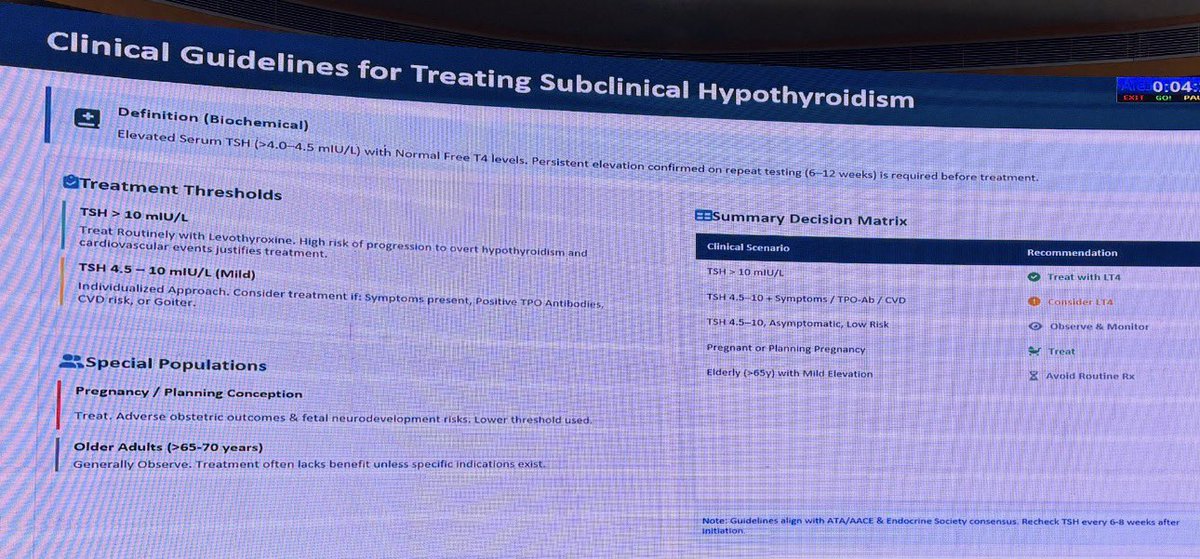
Clinical guidelines for treating subclinical hypothyroidism.
#ISNCON25
You see this often in clinical practice, TSH mildly elevated and free T4 is normal. Should you Rx?
Semaglutide in SELECT: In adults with obesity, established CVD, and no diabetes, once‑weekly 2.4 mg cut total hospitalizations by ~10–11% and hospital days by ~11%, benefits beyond MACE reduction.
https://t.co/AOrgJZdvW4
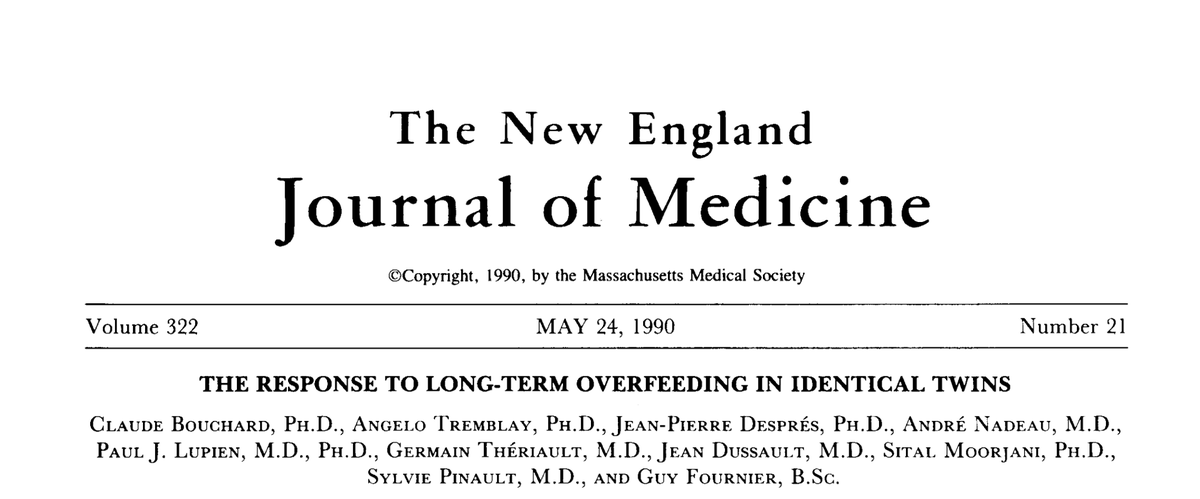
1. If you & your friend (same size, age, weight) ate the same 1,000-calorie surplus every day for 3 months, will you gain the same amount of weight? A landmark experiment on identical twins helps us answer this question and that our 🧬 direct the body's response to overeating 🧵
President Trump is taking 325 mg of aspirin a day to prevent heart disease. His doctors advise him to take 81 mg. Both are wrong. Here’s why.
New edition of Ground Truths, open-access
https://t.co/PpnNFoxtEP
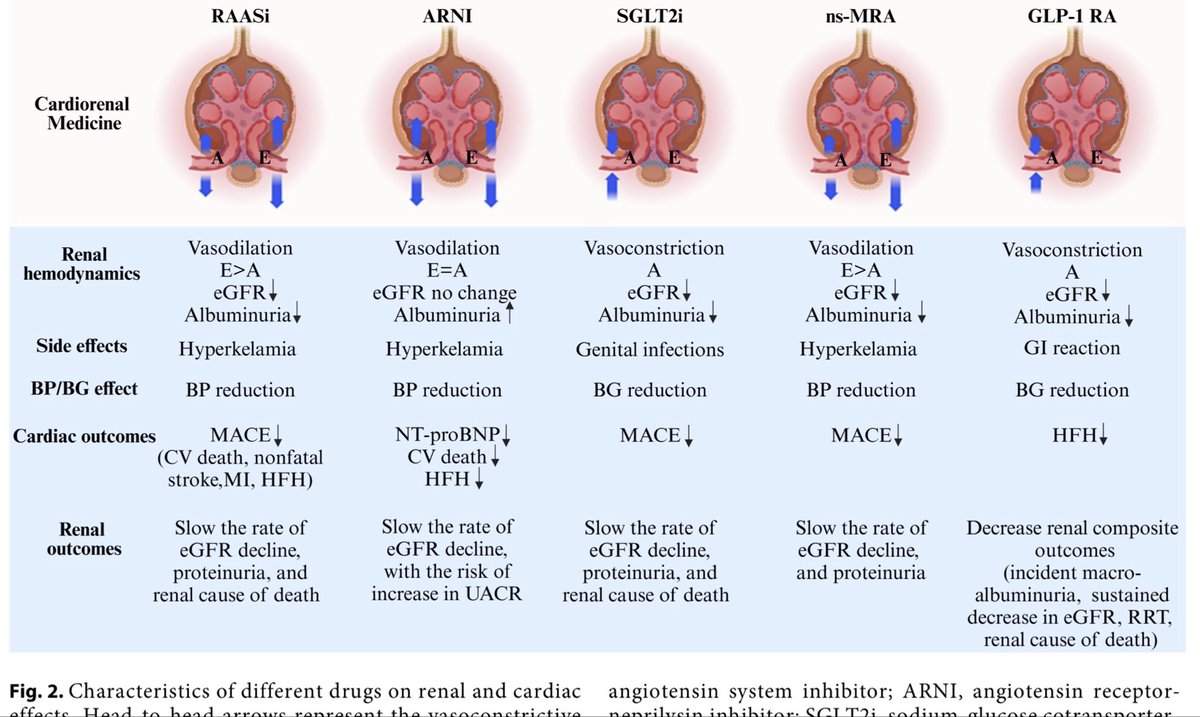
Which drug does what to the nephron & heart?
This single graphic shows the differences:
🟥 RAASi — eGFR dip, MACE↓
🟧 ARNI — NT-proBNP↓
🟩 SGLT2i — proteinuria↓
🟦 ns-MRA — fibrosis↓
🟪 GLP-1 RA — HFH↓
🔗 https://t.co/ruDprocbLm 🆕
#CardioRenal#HFpEF#HFrEF#CKD
Individuals with chronic constipation have LONGER colons (162 cm) compared with healthy controls (127 cm) and people with IBS-C (129 cm). This can be demonstrated with MRI.
Is this cause or effect?!
https://t.co/SvSdg1Oz92
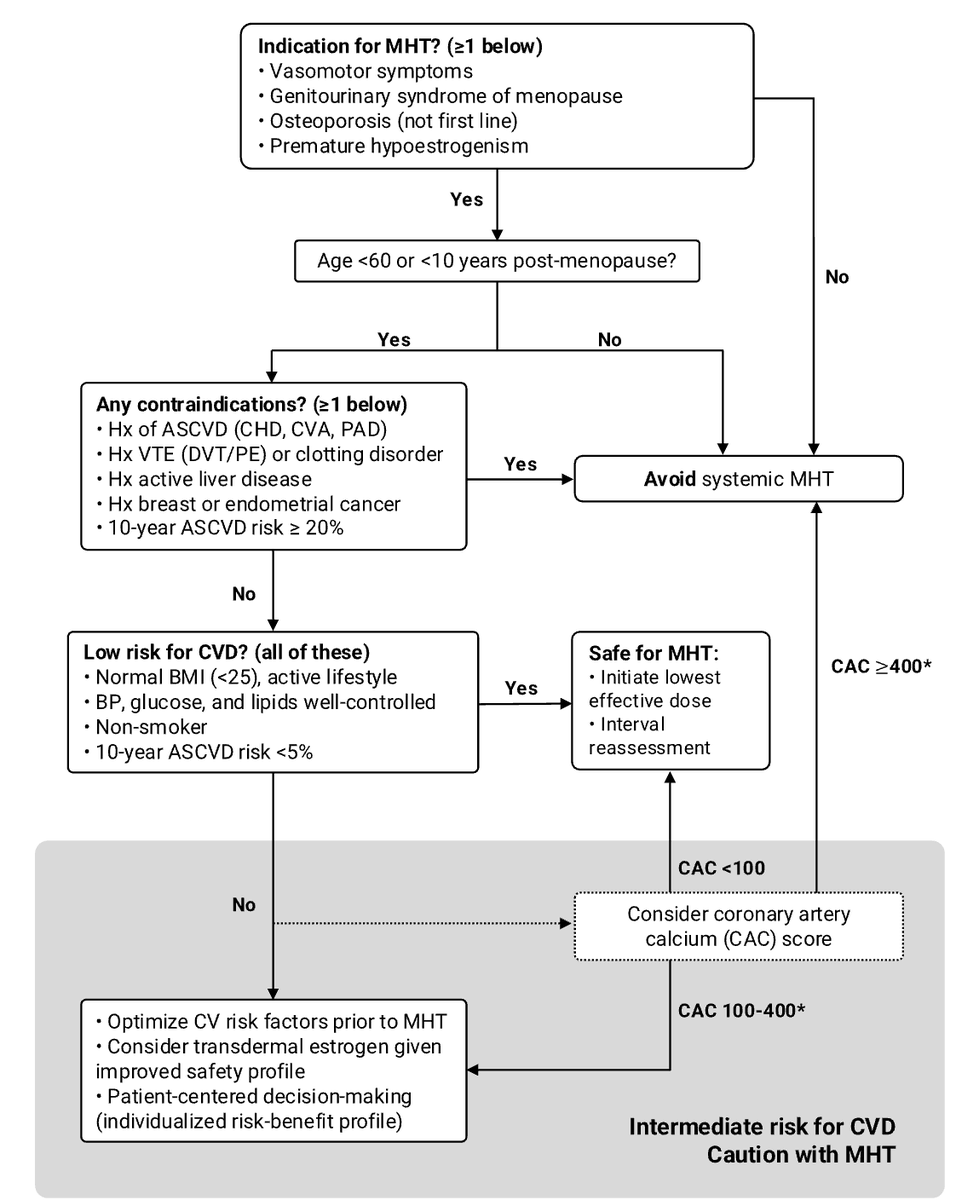
Lots of confusion about menopausal hormone therapy right now —who should get it, when to start, and what is the🫀 risk?
Our new review led by @BrighamMedRes Ruby Guo covers timing, route, and CV risk stratification for midlife women.
🔗: https://t.co/XCHqVM9tqx
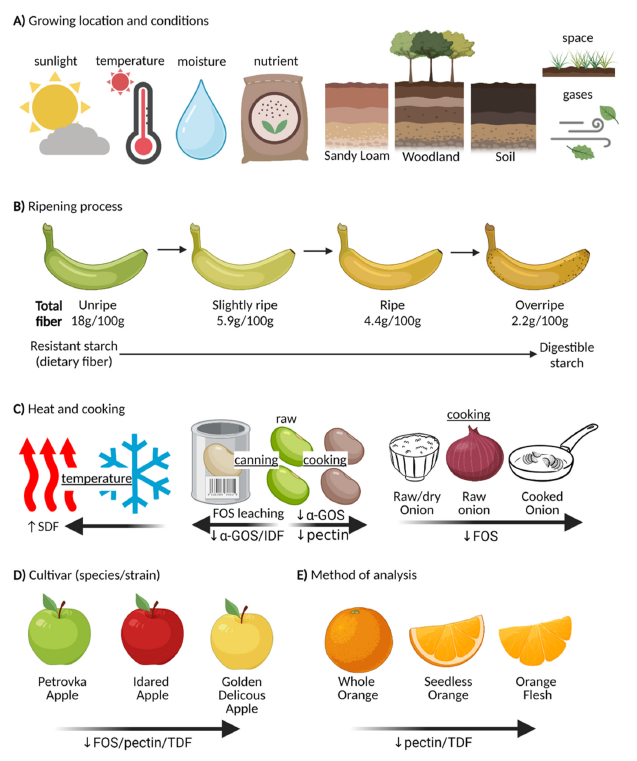
How much fibre, and what different types of fibre, are in foods? Not as easy to answer as you might imagine!
It can be affected by conditions, ripening, cooking, cultivar and method of analysis
Great review paper here from @DrHArmstrong https://t.co/Z7jyMzsnfJ