A toothpaste company has quietly killed the entire market research industry and nobody is talking about it.
Colgate published a paper showing you can predict real purchase intent at 90% accuracy by simply asking LLMs to roleplay customers.
And this is beyond insane.
If you ask an AI, "Rate this product from 1 to 5," it gives safe, middle-of-the-road garbage.
So researchers invented a method called Semantic Similarity Rating (SSR).
Instead of asking the AI for a number, they asked it to roleplay.
They gave the LLM a demographic profile. They showed it a product concept. And they asked it to write down its raw, unfiltered thoughts.
Then, they used a semantic model to translate those written thoughts into a numerical score.
The results are staggering.
Tested against 57 real corporate surveys and 9,300 actual human responses, the synthetic AI consumers matched real human buying behavior with 90% reliability.
They perfectly mirrored how different age brackets and income levels react to price changes.
And they provided detailed, qualitative feedback that was deeper and more critical than what actual humans wrote.
This destroys the economics of traditional market research.
You don't need to wait a month to see if a product will sell.
You can simulate 1,000 hyper-targeted customer interviews overnight.
You can A/B test pricing across every demographic instantly.
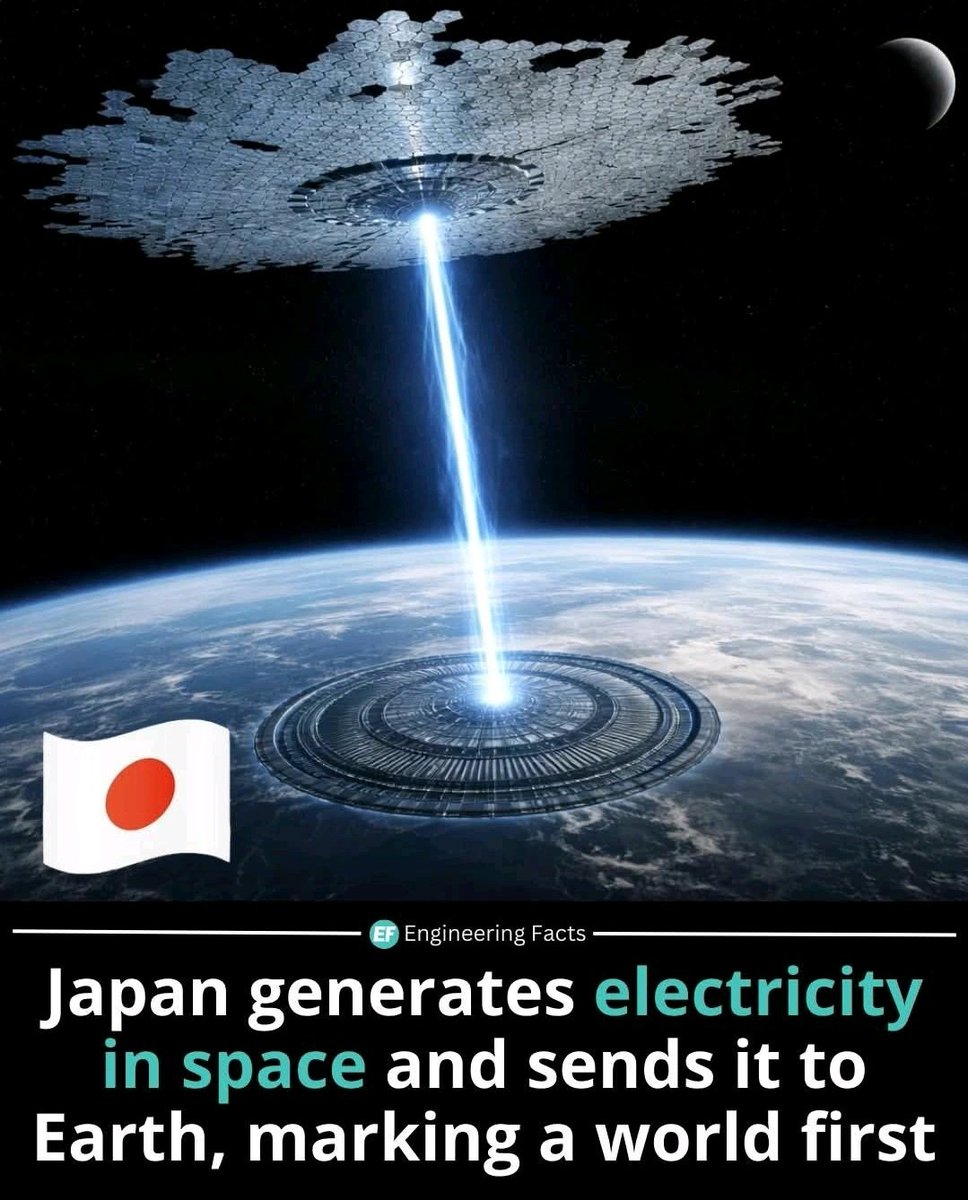
Japan has successfully tested a system that generates electricity in space and transmits it wirelessly back to Earth. Solar panels placed in orbit collected energy and sent it to a ground station using microwave transmission.
Once received on Earth, the microwave energy was converted back into usable electricity. This demonstrates that power can be harvested beyond the planet and delivered without physical cables or fuel transport.
Unlike ground-based solar power, space-based systems can collect energy continuously without weather, clouds, or night cycles. This makes the concept especially attractive for stable, large-scale renewable energy production.
The test represents an early but critical step toward future space-based solar farms. Engineers believe much larger arrays could eventually provide clean power to cities or remote regions.
Experts see this as a potential shift in how humanity produces energy, blending space technology with climate-focused solutions. While still experimental, the success confirms the concept is technically feasible.
via Paul Koti, LinkedIn
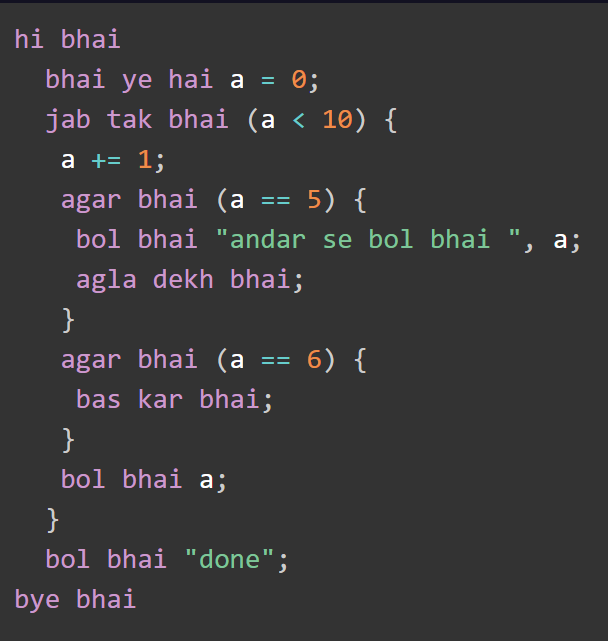
Indian software engineers are so goatedly unemployed that they created a programming language themed around brotherhood called Bhailang literally mind-blowing.
This paper from Harvard and MIT quietly answers the most important AI question nobody benchmarks properly:
Can LLMs actually discover science, or are they just good at talking about it?
The paper is called “Evaluating Large Language Models in Scientific Discovery”, and instead of asking models trivia questions, it tests something much harder:
Can models form hypotheses, design experiments, interpret results, and update beliefs like real scientists?
Here’s what the authors did differently 👇
• They evaluate LLMs across the full discovery loop hypothesis → experiment → observation → revision
• Tasks span biology, chemistry, and physics, not toy puzzles
• Models must work with incomplete data, noisy results, and false leads
• Success is measured by scientific progress, not fluency or confidence
What they found is sobering.
LLMs are decent at suggesting hypotheses, but brittle at everything that follows.
✓ They overfit to surface patterns
✓ They struggle to abandon bad hypotheses even when evidence contradicts them
✓ They confuse correlation for causation
✓ They hallucinate explanations when experiments fail
✓ They optimize for plausibility, not truth
Most striking result:
`High benchmark scores do not correlate with scientific discovery ability.`
Some top models that dominate standard reasoning tests completely fail when forced to run iterative experiments and update theories.
Why this matters:
Real science is not one-shot reasoning.
It’s feedback, failure, revision, and restraint.
LLMs today:
• Talk like scientists
• Write like scientists
• But don’t think like scientists yet
The paper’s core takeaway:
Scientific intelligence is not language intelligence.
It requires memory, hypothesis tracking, causal reasoning, and the ability to say “I was wrong.”
Until models can reliably do that, claims about “AI scientists” are mostly premature.
This paper doesn’t hype AI. It defines the gap we still need to close.
And that’s exactly why it’s important.
If I hit this dictation button after sending a text and it beeps and stops my music one more time,
I’m gonna find everyone at apple and put them in a rear naked choke hold
Even if I turn off dictation I somehow hit the voice note thing
The send button should not have multiple functions in the same spot
🚨 BREAKING SCIENCE NEWS 🚨
For the first time ever, scientists have successfully teleported a quantum state of light over the internet and yes, it’s just as mind-blowing as it sounds.
A team of researchers in the US pulled off this breakthrough by sending quantum information through over 30 kilometers (18 miles) of standard fiber optic cable, while regular internet traffic was flowing through the same lines.
This process, known as quantum teleportation, doesn’t physically move the object itself. Instead, it transfers the properties of a quantum particle (like a photon) from one location to another, recreating it perfectly at the destination while the original disappears a concept that sounds straight out of Star Trek, but is firmly rooted in the bizarre world of quantum mechanics.
The challenge? Making fragile quantum signals coexist with ordinary internet data without interference. The researchers overcame this by precisely managing how light interacted with other signals inside the fiber. This achievement marks a massive leap toward integrating quantum communication with our existing internet infrastructure potentially paving the way for ultra-secure, lightning-fast networks of the future.
Credit: Jordan M. Thomas et al., "Quantum teleportation coexisting with classical communications in optical fiber", Optica (2024).
I'm a big fan of the "GPS Theory" when you miss a turn, your GPS doesn't judge you, it recalculates. No matter how many detours you take, it finds another way forward. Life works like that too. You'll make mistakes, but your destination doesn't vanish. The route just changes.
@elonmusk "Every one of us is, in the cosmic perspective, precious. If a human disagrees with you, let him live. In a hundred billion galaxies, you will not find another." - Carl Sagan
The Aftermath of a Father Digging a Grave for His 2-Year-Old Daughter:
In 2017, Zhang Liyong, from a rural village in Sichuan, learned that his two-year-old daughter was diagnosed with severe thalassemia. The treatment required a hematopoietic stem cell transplant, with total costs approaching nearly one million yuan RMB. To save their daughter, Zhang Liyong and his wife exhausted all their family savings but still couldn’t afford the subsequent medical expenses.
In despair, the father dug a grave with his own hands for his daughter, saying that if she were to leave this world one day, he hoped she could adapt to death sooner. Zhang Liyong stayed with his daughter, sleeping and playing in that earthen grave.
After the video spread online, it touched the hearts of people across the internet.
Thanks to the power of the internet, Chinese crowdfunding platforms stepped in to help the family, raising the full amount of treatment costs in less than a month. Even more heartening, following the doctor’s advice, the couple had another daughter, and the younger sister successfully saved her older sister using her own cord blood. Later, a compassionate entrepreneur also covered all the recovery expenses for the older sister.
After his eldest daughter was discharged from the hospital, Zhang Liyong filled the grave back with soil and scattered sunflower seeds over it.
Love can traverse the deepest despair, blooming with hope even in the most barren soil!