The economic vandals at work. @AlboMP ’s new higher CGT changes now hit start-up workers with a “dry-tax” trap.
@FinancialReview Oped by Shaun Cartoon : talented Australians take lower pay + options to build the next Canva now they face tax bills on paper gains they can’t sell.
No liquidity. No cash. Just a bill. A new tax trap on @AlboMP ‘s new CGT.
This is how you punish risk-takers and kill aspiration.
https://t.co/a44aLD9ToK
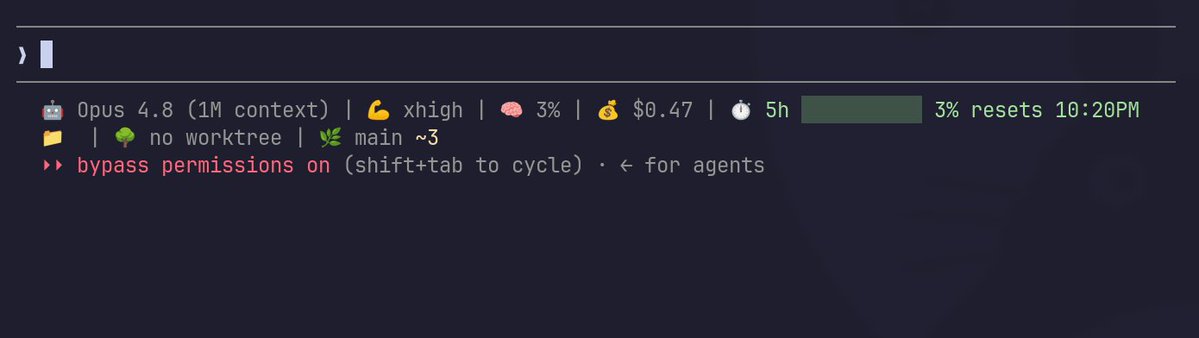
Beautiful way to display real-time session information in your Claude Code terminal.
To configure this:
1. Run /statusline in Claude Code
2. Copy script locally (see GitHub repository below)
3. Modify Claude Code settings to point to the script
5. Restart Claude Code
Repo ↓
Finally we sold our Bangalore property. Being an NRI the process is tedious. I will give all the steps here so that it might be useful. Below are the main steps
1. Power of Attorney - this is first step if you don’t want to go to India for registration. Take 2 witnesses 1/7
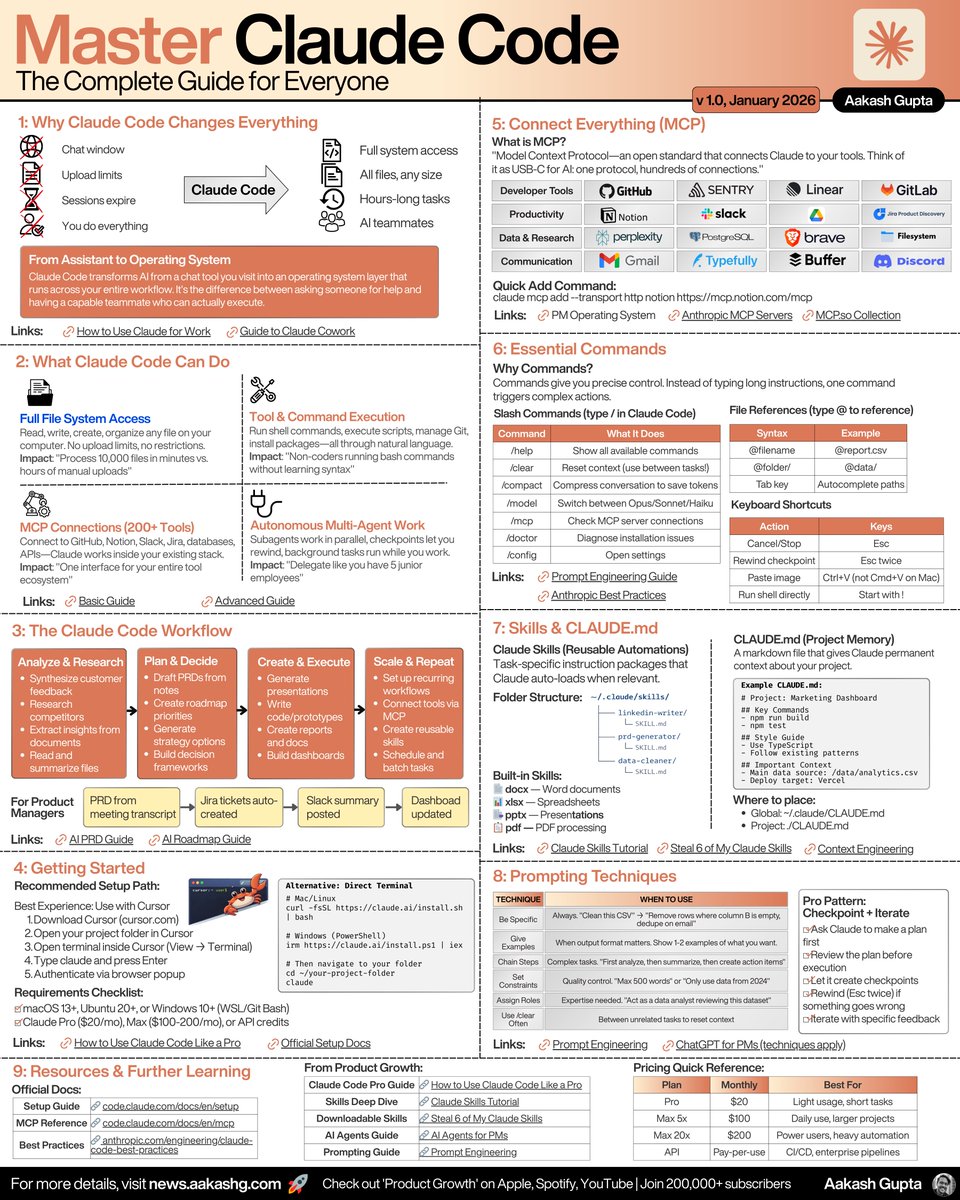
Claude Code has 10+ features most people never touch.
Skills. Subagents. Memory. Hooks. MCP servers.
This repo explains when to use each one, and how to set them up properly.
100% Open Source.
Claude Code tips that have made my life easier:
(Add these to your CLAUDE .md file)
1. "Before writing any code, describe your approach and wait for approval. Always ask clarifying questions before writing any code if requirements are ambiguous."
2. "If a task requires changes to more than 3 files, stop and break it into smaller tasks first."
3. "After writing code, list what could break and suggest tests to cover it."
4. "When there’s a bug, start by writing a test that reproduces it, then fix it until the test passes."
5. "Every time I correct you, add a new rule to the CLAUDE .md file so it never happens again."
The wording in the file is much more detailed than what I wrote above, but hopefully these show the spirit.
I learned and used the Claude Agent SDK today to build an agent. I genuinely think this will be one of the most useful skillets to have in this new world.
Documented the TLDR here in this tutorial to get you started.
Reaching this milestone after working at Airwallex for 8+ incredible years fills me with immense pride. It has been an absolute privilege to witness its extraordinary journey. I am deeply grateful for every opportunity and for the amazing team that makes working here so special.
Stripe offered to acquire us for $1.2 billion when we had $2M in revenue.
Today, we've raised $330M at an $8B valuation and reached $1B ARR.
We could've died three times during this journey.
This is the story I've never told anyone before:
A free, online, hard-core Machine Learning book.
If you are interested in understanding how Machine Learning algorithms work, this is for you.
Great resource if you are one of those who cares about how the magic happens.
https://t.co/PCE1IwQFoJ
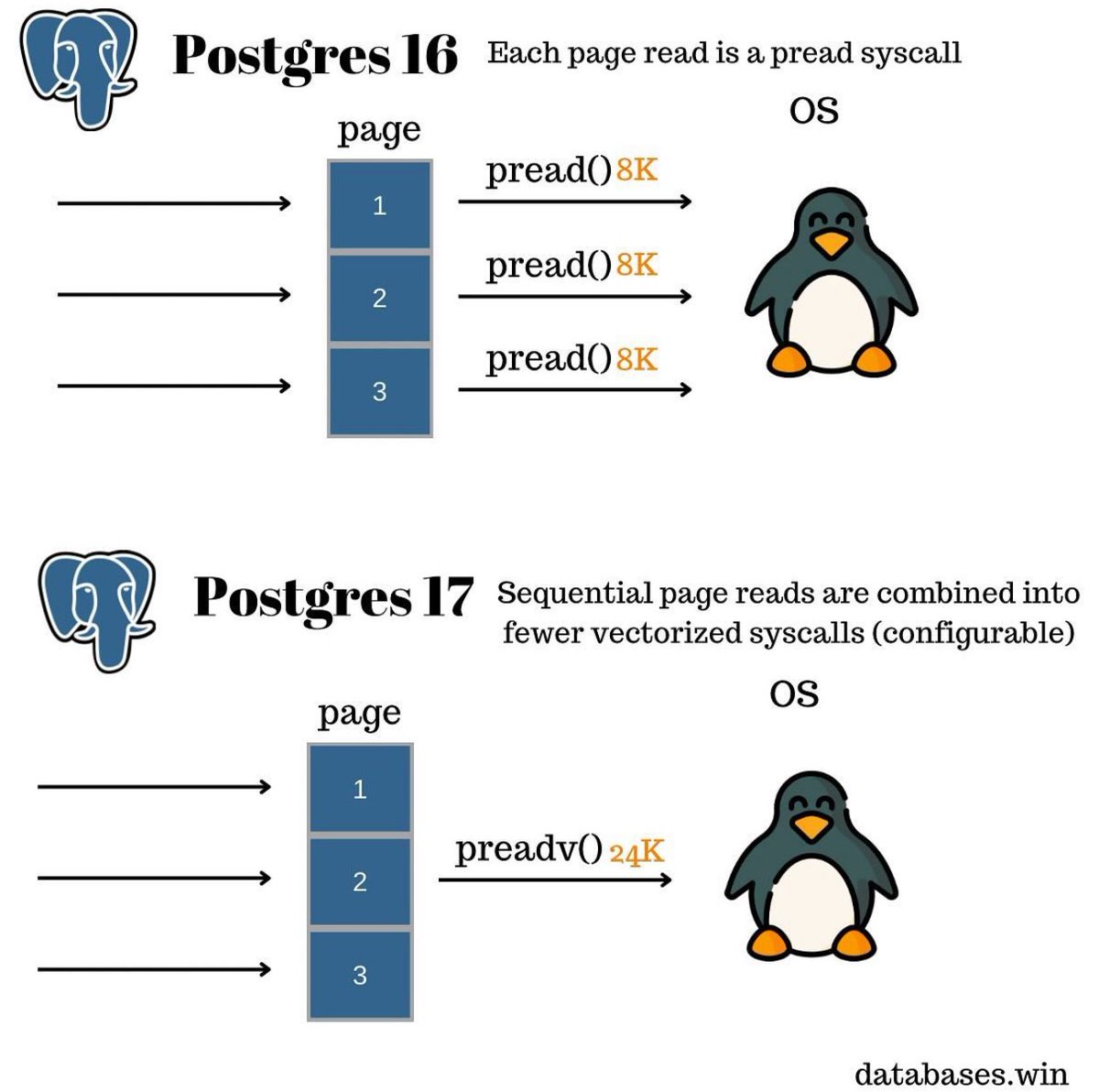
This new PostgreSQL 17 feature is game changer.
You see, postgres like most databases work with fixed size pages. Pretty much everything is in this format, indexes, table data, etc. Those pages are 8K in size, each page will have the rows, or index tuples and a fixed header. The pages are just bytes in files and they are read and cached in the buffer pool.
To read page 0, for example, you would call read on offset 0 for 8192 bytes, To read page 1 that is another read system call from offset 8193 for 8192, page 7 is offset 57,345 for 8192 and so on.
If table is 100 pages stored a file, to do a full table scan, we would be making 100 system calls, each system call had an overhead (I talk about all of that in my OS course).
The enhancement in Postgres 17 is to combine I/Os you can specify how much IO to combine, so technically while possible you can scan that entire table in one system call doesn’t mean its always a good idea of course and Ill talk about that.
This also seems to included a vectorized I/O, with preadv system call which takes an array of offsets and lengths for random reads.
The challenge will become how to not read too much, say I’m doing a seq scan to find something, I read page 0 and found it and quit I don’t need to read any more pages. With this feature I might read 10 pages in one I/O and pull all its content, put in shared buffers only to find my result in the first page (essentially wasting disk bandwidth, memory etc)
It is going to be interesting to balance this out.
Good work Pg team! More here
Note that true postgres issues a kernel system call to read 8k at a time the kernel can be configured to read “ahead” little bit read more and cache it in the file system cache.
——-
Learn more about database and OS internals, check out my courses
Fundamentals of database engineering https://t.co/tiObG0HPoT
Fundamentals of operating systems https://t.co/WCns5RMqKz
Here's a complete blueprint for learning how to engineer multi-agent AI systems:
1. Master advanced prompting: Basic prompting is not enough. You need to learn techniques like Chain-of-Thought and ReAct to give agents reasoning skills.
2. Design agentic workflows: Learn to architect workflows with patterns like Routing, Parallelization, and Prompt Chaining.
3. Give agents tools: Learn how to integrate external APIs and web search capabilities with your agents to interact with live data.
4. Implement agent memory: Learn how to use vector databases for both short-term and long-term memory management.
5. Generate structured output: Learn how to use Pydantic to force structured JSON output from LLMs.
6. Manage complex state: Learn how to build and manage state machines to track conversations and orchestrate complex agent interactions.
7. Build database agents: Learn how to connect agents to SQL databases to query and interact with structured, private data.
8. Engineer multi-agent systems: Learn to design, orchestrate, and coordinate teams of specialized agents that work together.
9. Leverage multi-agent RAG: Learn how to create advanced RAG systems where multiple agents collaborate on retrieval tasks.
10. Evaluate agent performance: Learn how to evaluate agents on task completion, quality, and tool use to build reliable applications.
If you're ready to learn these skills, I highly recommend the new "Agentic AI" Nanodegree from Udacity. I'm partnering with them on this post.
(I'll post the link in a reply to this post to avoid reach issues.)
This program is a deep dive into building sophisticated, agentic systems. You'll build a portfolio of projects, including a multi-agent travel planner, an AI project manager, and a fully automated sales team.
This is probably one of the most comprehensive programs for building multi-agent systems.




![EXM7777's tweet photo. turn this thread into instructions for your claude[.]md file
this might just change your life https://t.co/FkmClXtdPg](https://pbs.twimg.com/media/HAF0lbda8AAeurt.jpg)