📍 Aganitha AI at GRC2026
Chanukya Nanduru will be presenting a poster at the Gordon Research Conference (GRC) AIMECS 2026, showcasing real-world case studies that demonstrate how #AgenticAI delivers measurable impact across R&D workflows.
✨ Unearthing the Gold Dust of Mechanistic Insight With Deep Tech✨
🧪 We show this in our recently published ACS @JCIM_JCTC paper, elucidating the mechanistic basis by which Siponimod, a drug for #multiplesclerosis (MS), avoids off-target activation.
https://t.co/IBEoF7inQW
The article on Selective Activation of GPCRs using Molecular Dynamics simulations, published in #JCIM, aims to decode the mechanistic basis of Siponimod’s differential activation behavior across S1PR1 and S1PR2: https://t.co/xGcnSy7eQB
🔬 DISTILLing Complex Biology in the #SingleCell & #AgenticAI Era
Why should single cell #omics analysis still take months, even in 2025?
In this video, Ananya Jana explains the core challenges single cell researchers face today and how DISTLL™ accelerates journey to insights.
LNPs are transforming #RNA therapies. At Aganitha, we fuse data-driven #AI models with physics-based molecular dynamics (#MD) simulations to accelerate and enhance LNP design.
https://t.co/RIYFJSvVoW
At Aganitha, we are applying deep tech to learn from & build on the datasets generated by deep science.
Happy to share a preprint describing how we used #GenAI to improve design of blood-brain-barrier (#BBB) penetrating #AAV viral vectors for gene therapies in brain disorders.
🔍 PROTACs are opening new avenues for targeting previously “undruggable” targets by harnessing the cell’s own protein degradation machinery. We're excited to share our solution for De Novo #PROTAC Design with #GenAI & #FBDD.
🔗 Know more from our blog at
https://t.co/JX7guB36kv
Great work! We, @AganithaAI, also explored the use of predicted structures in SBDD & encountered similar challenges. Refining AF2-predicted/experimental structures is crucial to address conformational issues like side chain placement and occluded pockets.
https://t.co/EsB4YLUYLs
We discovered that AI-predicted models can reveal previously unknown conformations of kinases, which could potentially guide development of more selective drugs. However, these models should be used judiciously in drug discovery, as they require rigorous refinement and validation
Delighted to share results from our Molecular Dynamics (MD) simulations investigating why Siponimod, a FDA-approved drug for relapsing forms of Multiple Sclerosis, activates its GPCR target, S1PR1 but not S1PR2, an off-target from the same family.
🧵👇
https://t.co/pYBGS04Tlj
Selective Activation of GPCRs: Molecular Dynamics Investigation of Siponimod's Interaction with S1PR1 and S1PR2 https://t.co/IksztN89nW #biorxiv_biophys
Check out our latest work. We tried to address the fundamental question - how do cations find specific binding sites on RNA? Does the RNA backbone play any role in site-specific cation condensation? @AntaripHalder
https://t.co/mumJXKGdYg
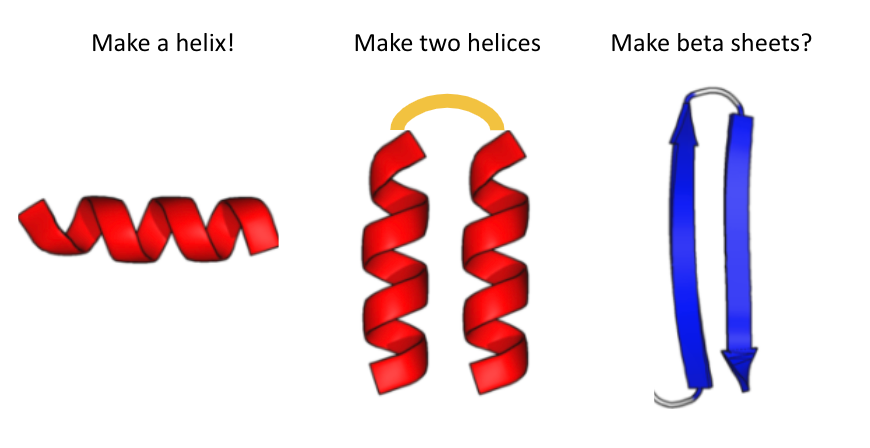
For my latest attempt at introducing proteins to students, I made a Google Colab Notebook that predicts proteins from a single sequence. I asked the students to tweak the sequence to get a helix or two helices or... (1/5)
https://t.co/eRufxDAkWm
It's fascinating that this is finally published. Congratulations to the team!
On the Nature of Nucleobase Stacking in RNA: A Comprehensive Survey of Its Structural Variability and a Systematic Classification of Associated Interactions https://t.co/4cNygZakcQ
How #RNA selectively binds to specific metal ions like magnesium? Atomistic #MolecularDynamics simulations unravel crucial contribution of metal ion coordinated water molecules in the process.
Check out our recent article published in #JCTC.
https://t.co/WibB3CCwJ5
Drs G. Brahmachari of @visva_bharati, Vinod Tiwari of @vcofficebhu, U. D. Priyakumar of @iiit_hyderabad along with others have been chosen to receive the CRSI Bronze Medal of 2021. This honor is given to young researchers who have done well in Chemistry. Congratulations!