@Nyambuscov_ Dennis Oliech is still very much loaded. He still owns multi-million-shilling properties in Kilimani. Kuna maskini anaishi Denni Pritt Road kweli?
There is nothing exciting with Nganya culture. Nothing at all. Only disorder, chaos and death. Uncouth characters. Let's say as it is. Uongo tuachie Akina Ruto Na Duale.
Daktari, you are obviously aware that Kenyan doctors, including Doctor Oluga himself, always travelled to DRC and Uganda as part of the frontline combat team against the virus. Why did we not accuse them of importing a disease into Kenya when they came back? Collaboration in combating such infectious diseases is a common and necessary practice. I see no big deal here.
@DavidNdii He could also shed light on law firms that are acting as sales agents for grabbed public plots in South C. Quick to see the spec in a brother's eye,but blind to the logs in their own eyes.
I have always wondered why he never had the mind to do that. Why obtain through violence what you can get through peace? Rwanda could have made arrangements to offer logistics and trading hubs for mineral resources from the DRC. But no, Rwanda has a wannabe Napoleon Bonaparte, whose country has neither the wealth nor the technology to drive his ill-informed ambitions.
I recently watched a documentary done by some foreign channel, whose theme was how a nation of brilliant people like Kenya could end up in such an economic morass. In Kenya, the public sector is always doing its best to kill the private sector. Some sort of managed stagnation or decline.KRA does this all the time.
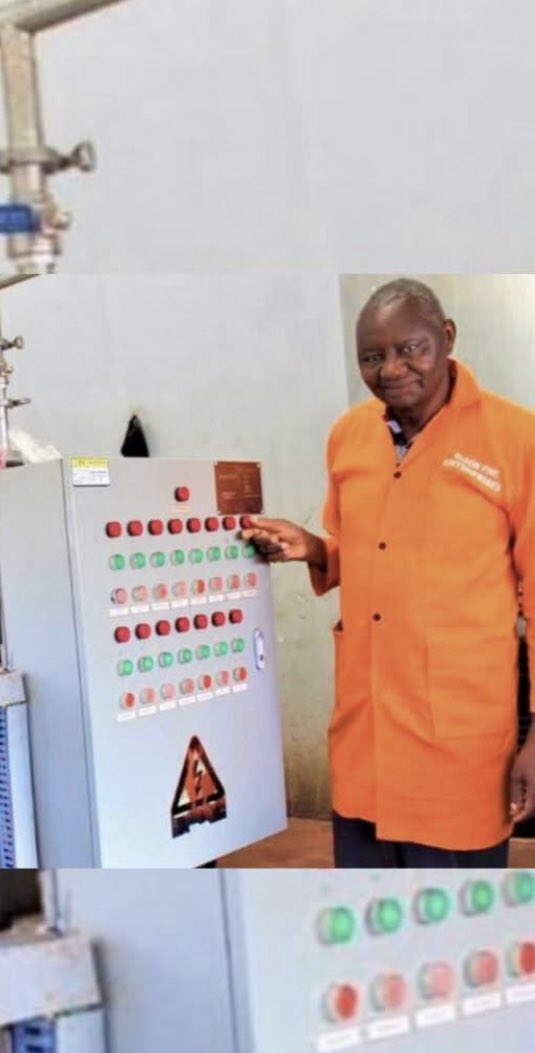
Paul Njuguna, a retired technical manager at the Agricultural Development Corporation, invested Ksh 16 million in 2019 to set up Elgon Pine, a refined oil and animal feed plant in Eldoret. At its peak, the plant processed 90 tonnes of canola, sunflower, and soya annually, with capacity for 300 tonnes. Njuguna contracted about 100 farmers who supplied raw materials, while he also farmed 10 acres himself.
The business also produced poultry feeds and soap from crop by-products.
The venture collapsed after Kenya Power slapped him with a Ksh 400,000 bill in August 2021, compared to his usual monthly bill of about Ksh 30,000. Njuguna disputed it as an error and filed a complaint, but Kenya Power claimed underbilling and refused to adjust. When he failed to pay, Kenya Power disconnected electricity to both his plant and home. Though EPRA ruled in his favour and ordered reconnection, the power was never restored, forcing him to shut down operations.
The shutdown affected the entire value chain - contracted farmers, suppliers, and employees - all of whom lost income. Njuguna now questions whether the disconnection was deliberate sabotage and why Kenya does little to protect small industrial ventures. His case has raised concerns about how utility billing errors and slow dispute resolution can destroy promising local businesses and the livelihoods tied to them.