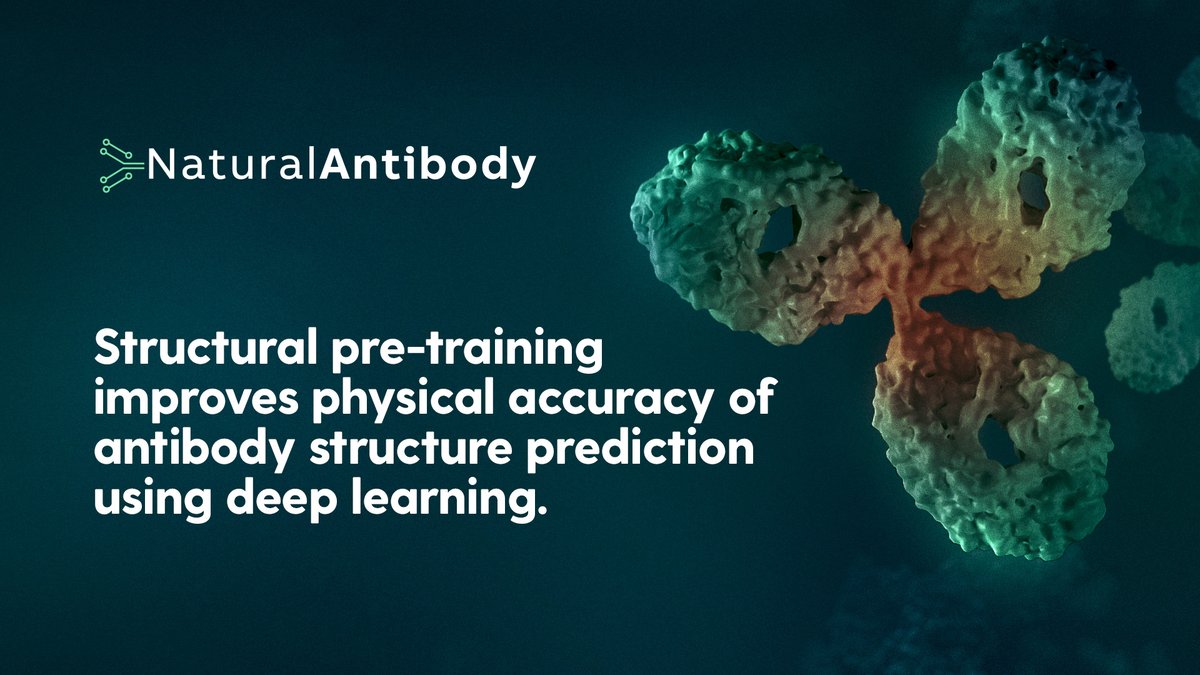
A new pre-print from our team demonstrated that pre-training on large set of antibody models allows producing #anitbody physically plausible shapes on an artificial set of #CDR-H3s, showing the ability to generalize to the vast #antibodysequence space
https://t.co/8adqp42oc0
Our preprint on OpenFold, our trainable reproduction of AlphaFold2, is finally up (https://t.co/3EoTzE3Xdb)! Since we open-sourced parameters in June, we've trained the model to high accuracy more than 50 times, on a variety of datasets. Here's what we learned (a lot) -> (1/19)
Our new tool, KA-Search, allows exhaustive yet efficient antibody mining through billions of natural sequences (from OAS and/or your private data), enabling new avenues in function & immunogenicity prediction. Work led by @HegelundOlsen and @brennanaba.
https://t.co/xSt8si8lpW
In the works for a LONG while - a new clustering of antibody CDR structures to update North et al (2011)/PyIgClassify. Clusters now have high electron density support & at least 10 sequences. DBSCAN helped to remove noise points. @biorxiv_bioinfo @build_models @PDBeurope@PDBj_en
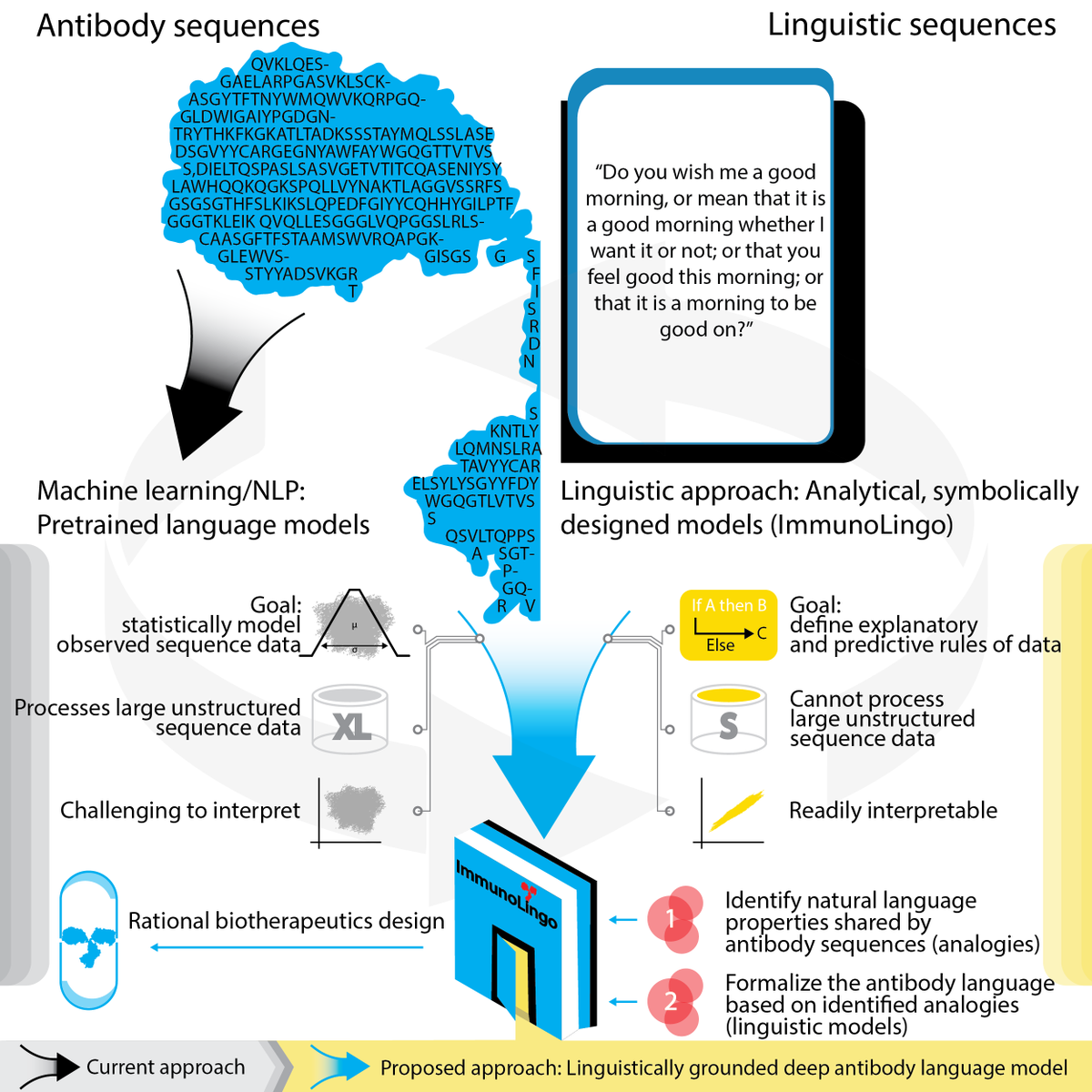
New work from our @UiO_LifeSci ImmunoLingo convergence environment in which we leverage linguistics to formalize the antibody sequence language. https://t.co/0jvdiC7E5d. Work led by @MaiSpaceHa, @PRobertImmodels, @pandaisikit.
See🧵below by @MaiSpaceHa for details.
Really excited to announce that AntiBERTa is now published in @Patterns_CP! Here we describe a transformer model that demonstrates understanding of antibody sequences 🧵 (1/6)
#machinelearning#antibodies#drugdiscovery
https://t.co/lzeqiueNSh
Excited to share IgFold, our new method for fast, accurate antibody structure prediction! IgFold achieves state-of-the-art accuracy for conventional paired antibodies and provides useful error estimates for its structures. https://t.co/FidL39Cq3E
The evolutionary velocity paper ended on a cliffhanger: protein language models could predict evolution retrospectively, but could they also run evolution forward to prospectively design new proteins? So, I retrained as a protein biochemist to find out...
https://t.co/v6S7UqPAdG
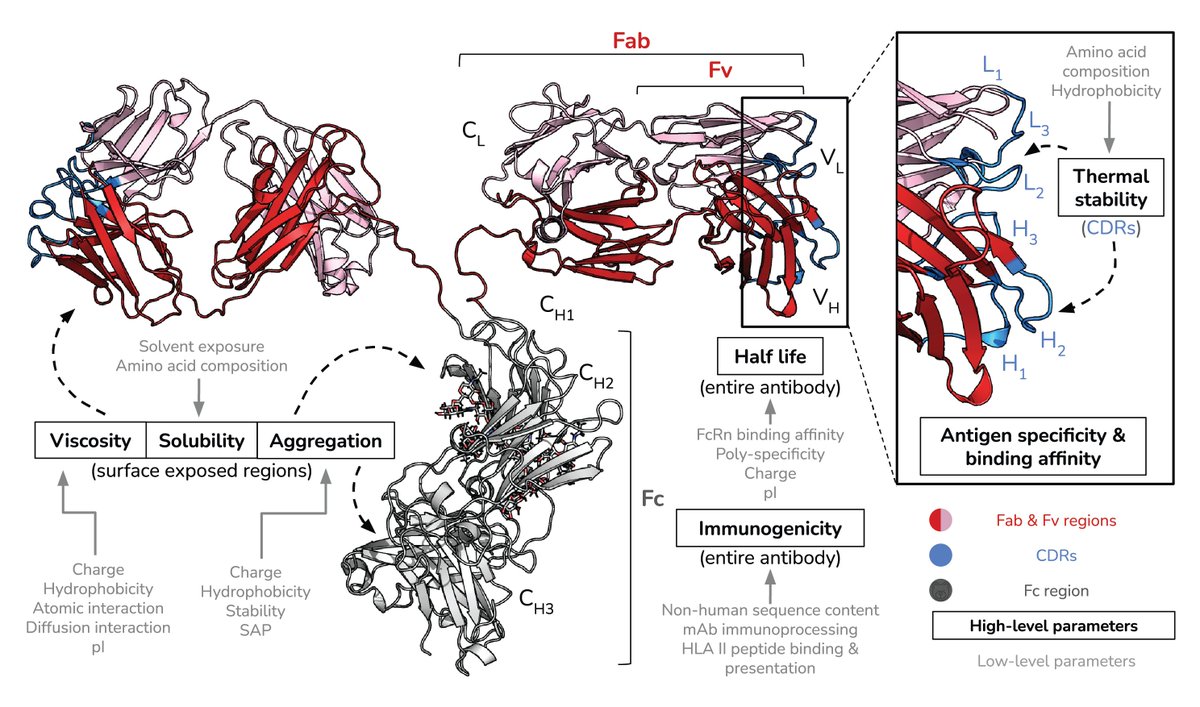
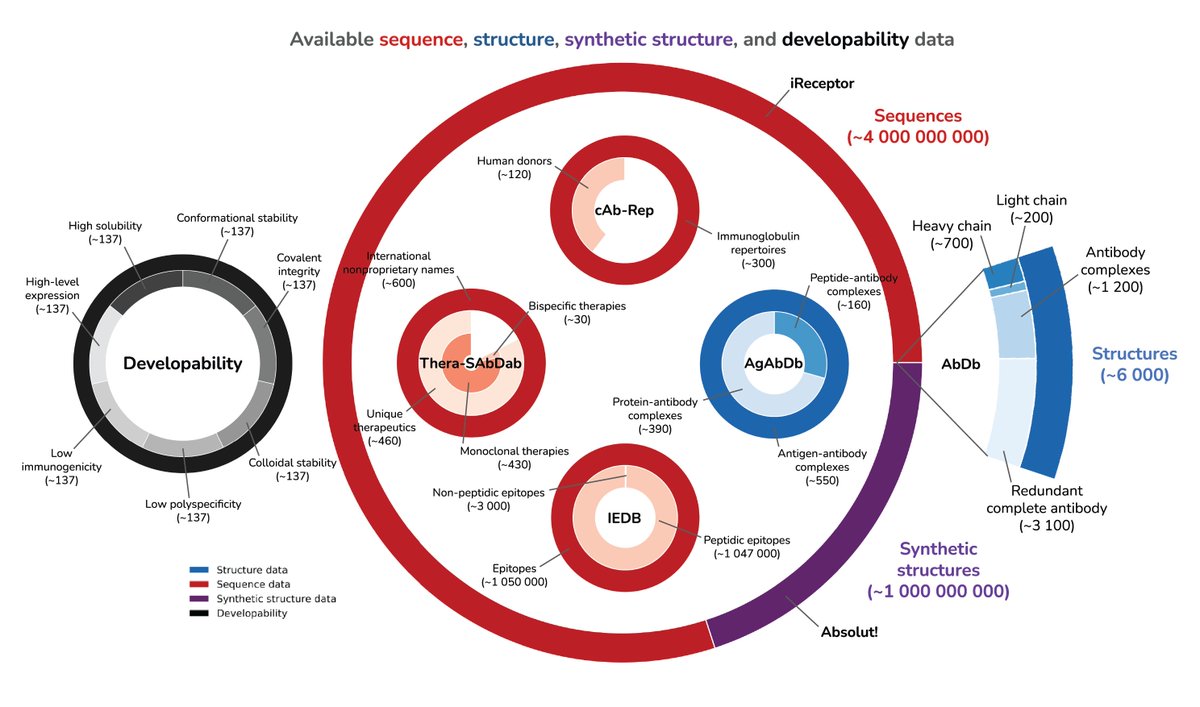
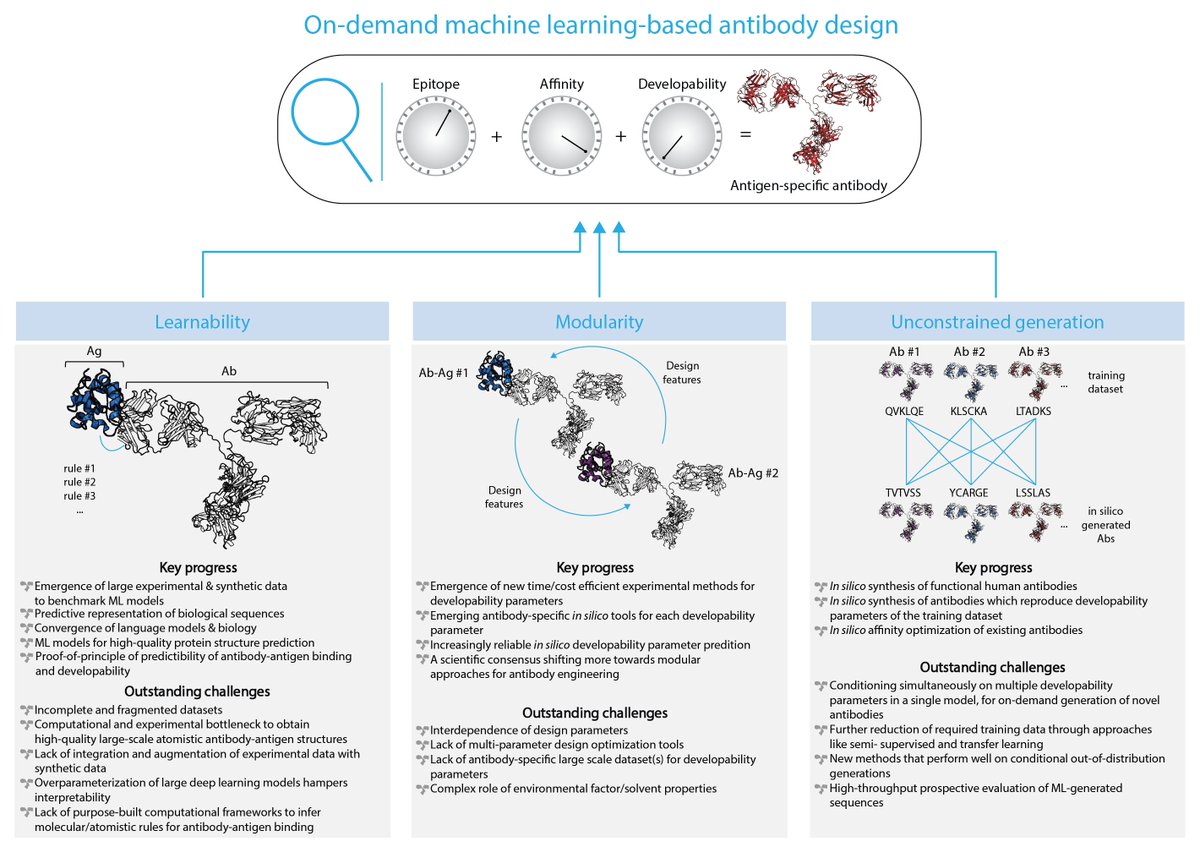
Very happy that our review on the "Progress and challenges for the machine learning-based design of fit-for-purpose monoclonal antibodies" is finally out. https://t.co/qXRIBhynZl
Happy to share our work on multi-dimensional comparison of immune repertoires. Amazing work by @cedricrweber. Great collaboration with Xiao Liu, @ReddyLab_ETHZ, @mkuijjer, and, as always, @SandveGeir. Main findings in 🧵. https://t.co/5ID0ttPkeP.
The @alchemabtx team are excited by the huge growth of BCR repertoire sequencing and analysis! We collected a list of papers in this space – feel free to share and contribute👍 #BCRs#antibodies#papers#datasets#machinelearning
https://t.co/rqmLeFEOjz
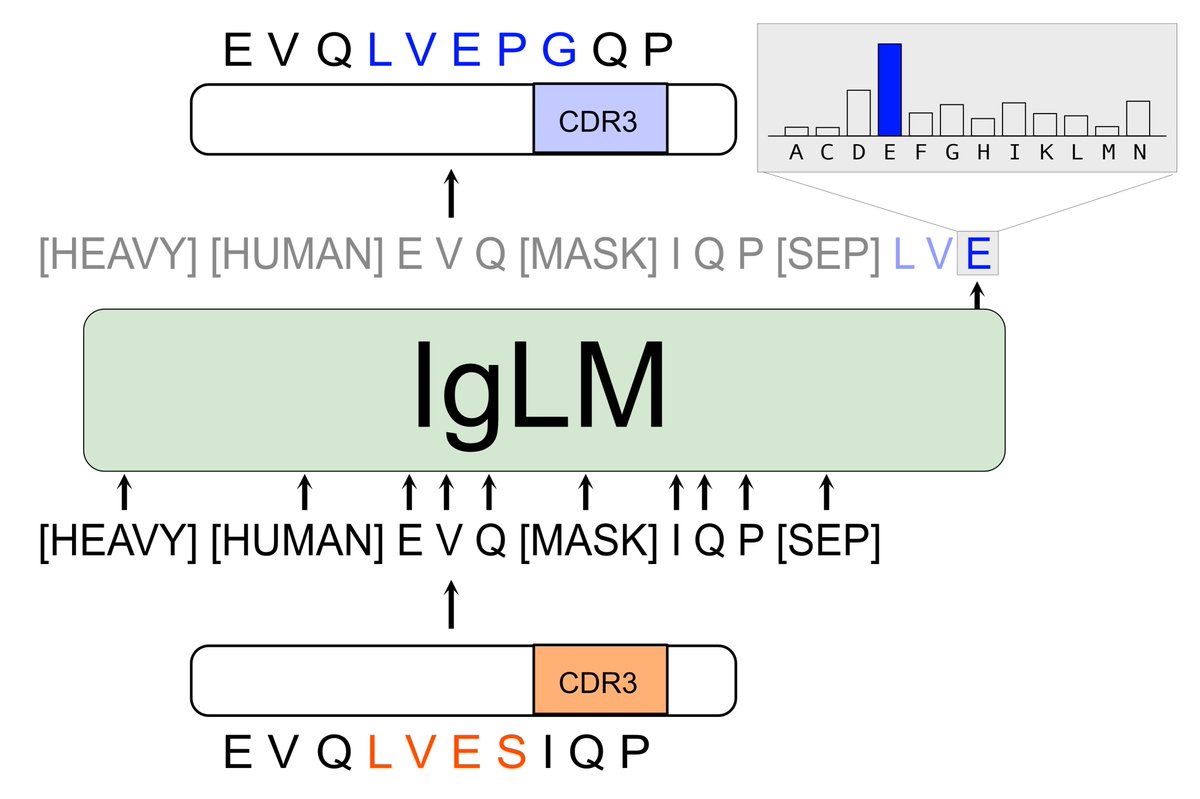
Our work on generative language modeling for antibody sequences is now out on bioRxiv! 🧬 We take inspiration from text infilling and task our model with generating spans of amino acids within antibodies. 1/3
https://t.co/IboFKgUwpQ
The DB issue of NAR will have both INDI (db of nanobodies from structures, ncbi, patents, ngs, manual) https://t.co/tbNfk5lYEA + nanobody structure update to sabdab (https://t.co/6aZsFzm44R). Good stuff @conctaylor @mijr12@OPIGlets
Navigating millions of human #antibody sequences in next-generation sequencing #NGS repositories is hard, so scientists now turn to solutions like AbDiver for performing a fast natural reference for query sequences. Check out the use cases in our preprint:
https://t.co/fgkniyJ0Em
@alchemabtx's tech team are delighted to present our latest pre-print on an antibody-specific language model, AntiBERTa, on bioRxiv! #antibodies#transformers#biotech (1/5)
https://t.co/4Fz3bCS4fu