@PaulGTTHM@Jim106b@TheBasedTrinity You and your family are no longer located in that vacation spot that you probably have a photo of hanging on the wall of your home.
I assume you know this but decided to keep a representation to remember.
Cromwell stomped on fenian baby skulls, he skinned whole villages alive and used their skin to make lampshades, he turned Irish women into bars of soap, he was a serial killer who bragged about killing people and he professed and confessed to be a demon
Everett: once there was this guy named Jesus...
Tribe: We are incapable of abstract thought
Everett: Wow. I never thought of it like that. I guess there was no guy named Jesus
St Etheldreda’s sheltered Catholics who risked death to hear Mass. It later became England’s first medieval place of worship returned to Catholic use after the Reformation.
Mum said at dinner yesterday that she had stepped inside recently. She expected a monument and found a living church. I love that. Watching Sophie Clarke walk through the upper chapel left me deeply moved and proud.
In 1620, Catholics flocked here under the protection of the Spanish ambassador. Centuries later, Fr William Lockhart bought the chapel at auction for £5,400 and launched an appeal to restore it. High Mass returned to the upper church in 1879.
Mass is still said here every weekday and Sunday. Protecting the building protects a home for faith.
Lateran IV: The Church regulated Jewish moneylenders, barred Jews from public office, and required distinguishing dress. Canons 67-70 and the crusader-debt provision of canon 71, read from the primary text, alongside the protective law issued by the same pope, Innocent III.
https://t.co/Psz7isVmMB
"They were not just raping nuns, they were not just massacring priests, they were not just using Churches as pornography theaters... they were digging up graves of people and desecrating their corpses."
— Darryl Cooper
After the Reformation swept through Lithuania, the little church in Šiluva was lost. The building was completely destroyed.
The land passed into Calvinist hands. For decades the place where the Mass had been offered was only a field, plowed, sown, and grazed. The deeds that proved the Church’s claim were gone. Most of the village no longer remembered that anything holy had ever stood there.
Then, one summer day in 1608, shepherd children tending their flock saw a woman on a large rock in that field. She was beautiful. She held a Child. She was weeping.
Word ran through the village. The next day the children came back with a crowd, and with a Calvinist pastor. He saw her too. Gathering his courage, he asked why she wept.
She answered that there was a time when her beloved Son was worshipped on that very spot. Now the ground was given only to the plow and the seed.
An old blind man, more than a hundred years old, heard what had happened. Years before, he had helped the last parish priest bury an ironclad chest near a rock when the church was falling. They led him to the field. At the place of the apparition his sight returned. He pointed to the ground.
They dug. Inside the chest, perfectly preserved, were the church deeds, vestments, chalices, and a painting of Mary and the Child.
In 1622 the land was restored to the Catholic Church. A church rose again on the old site. The region that had nearly been lost to the faith returned. On 17 August 1775, Pope Pius VI confirmed the apparition.
The image was later crowned. Šiluva became Lithuania’s great Marian shrine, sometimes called the Lithuanian Fatima.
It is one of the earliest well-documented apparitions in Europe. What makes it rare is this: Protestants stood there and saw her. Heaven did not wait for the ground to be Catholic again before it spoke. She came to a field that had forgotten her Son, and she wept until memory, law, and worship were put back in their place.
Ever wonder what happened to the hundreds of monasteries King Henry VIII dissolved in the 1530s?
Scrapping the monasteries after state seizure, the Crown sat on large quantities of lead and bronze.
In the 1570s, under Elizabeth, merchants with royal backing began selling the metal to the Ottomans, who used it to craft cannons and arms that would be used in their longstanding wars with Spain and the Hapsburgs.
At the time there was a blanket papal ban on selling arms to infidels, and this trade deal was heavily protested by the Spanish and the Hapsburgs, both claiming it was a betrayal of Christendom to arm the Ottomans for profit.
Elizabeth enriched the English coffers, selling the metal for nearly its weight in gold, while declaring a shared mission in rejection of all forms of idolatry, in a letter to the Ottoman sultan that same decade.
🚨 BREAKING: Archaeologists beneath the Church of the Holy Sepulchre, the traditional site of Jesus’ tomb, found evidence of a 2,000-year-old garden.
John 19:41 says there was a garden beside His tomb.
The archaeology keeps matching the Gospel.
Atheists are seething 😭
@FerrisNikoli@ekaurpokhran@prachyam7 I've quoted scripture, refered to Church history, tried reasoning with you, all in vain.
You are not ready for this discussion. You don't even know what you believe.
@FerrisNikoli@ekaurpokhran@prachyam7 You haven't offered facts. You just are plainly ignorant of scripture, Church history, theology, basic reading, etc.
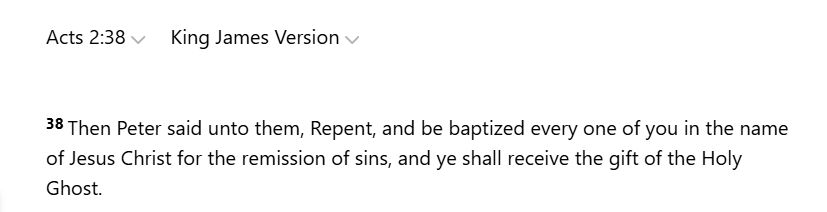
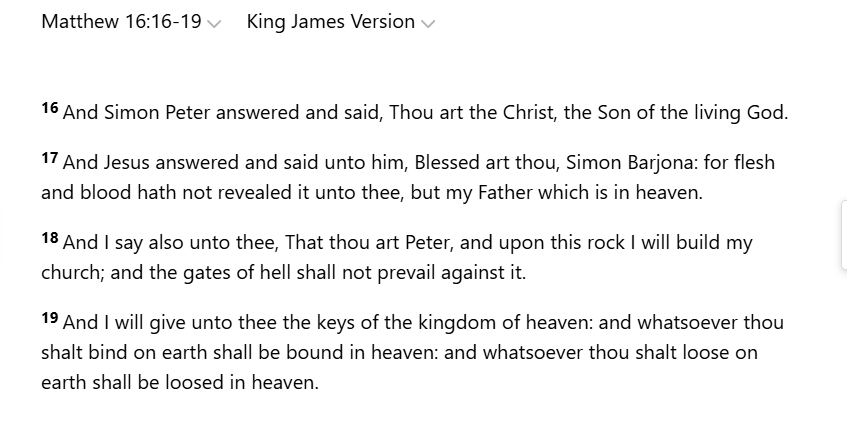
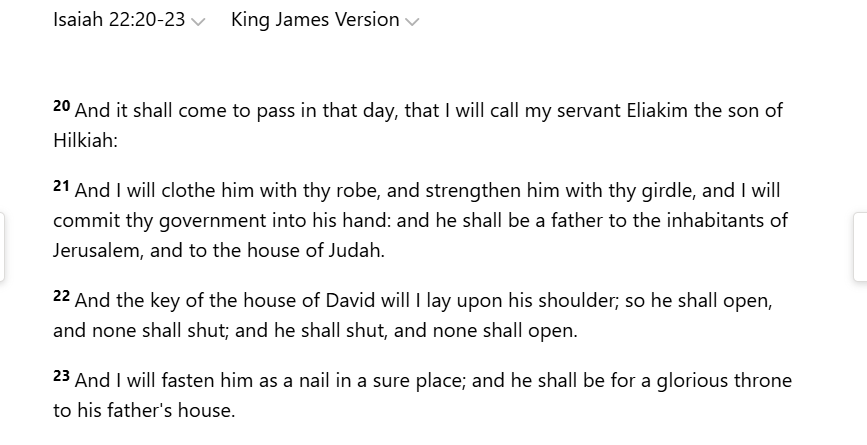
@FerrisNikoli@ekaurpokhran@prachyam7 You don't understand how typology works. Jesus is the fullfillment of the OT promise. He is the new King David. Peter fullfills the role described for Eliakim. He is the steward of Christ's Kingdom. This is basic NT study. You just are not serious.
@FerrisNikoli@ekaurpokhran@prachyam7 Are you schizophrenic? You are protestant, probably baptist.
I don't know what you are talking about. Jesus said Peter is the rock. The name change to Petras/Cephas means rock in Greek/Arahmaic. You are just being obtuse.
@FerrisNikoli@ekaurpokhran@prachyam7 That only works if you are deliberately dense and stop reading at verse 16 and if you don't understand that verse 19 is a reference to Isaiah 22:22, where King David gives the keys of the Kingdom to his steward (Eliakim). David is still king, but Eliakim can represent him.