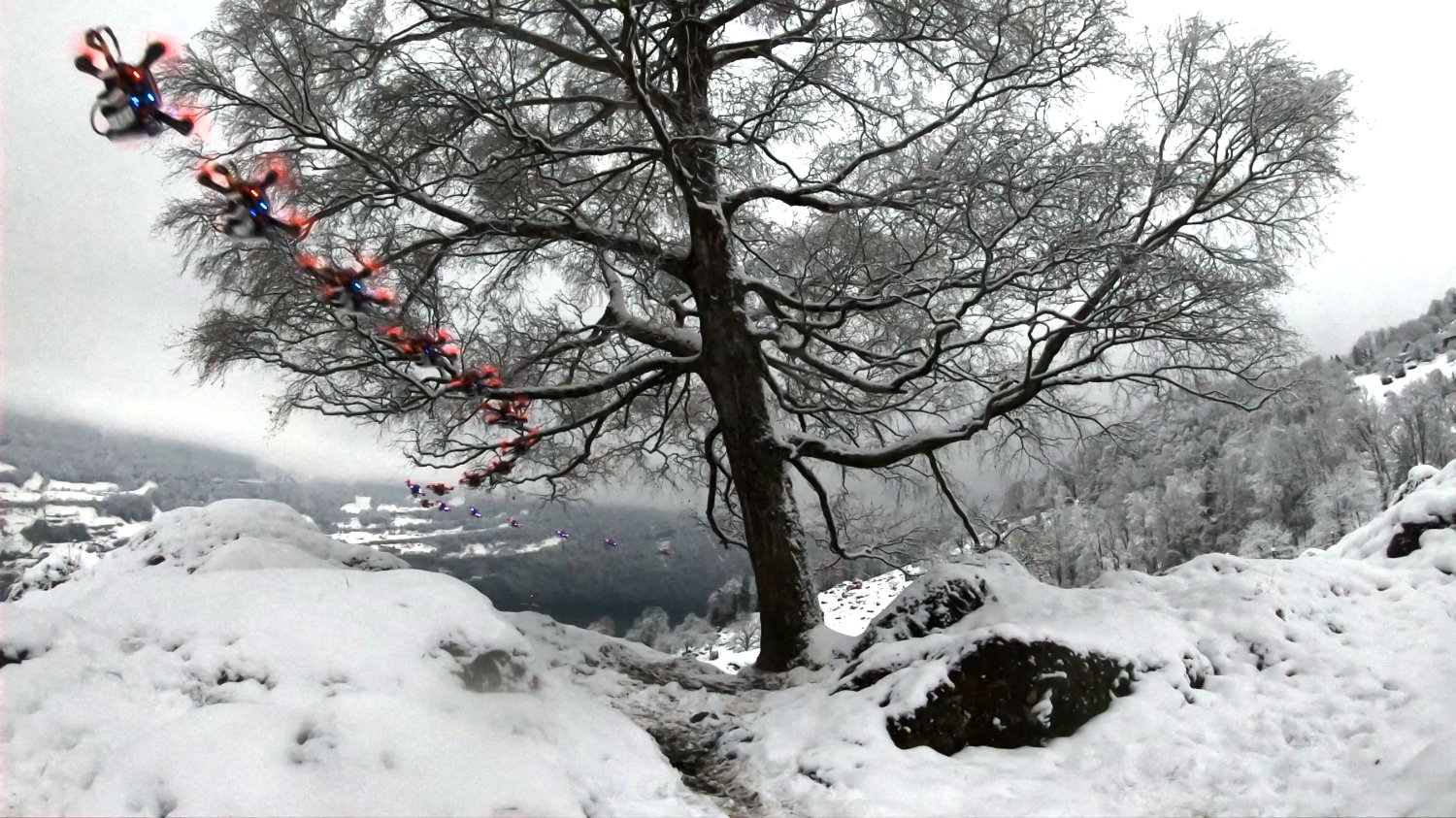
We found that training (multi-agent) policies to win a race with sparse competitive rewards leads to agile policies with strategic behaviors. These policies outperform the ones trained with behavioral-prescribing dense rewards and transfer better to the real world.
Introducing DreamFAR, a world model trained from scratch using only robot data, without internet pretraining. It supports:
🎮 Real-time teleoperation
⏱️ Minutes of long-horizon rollout
🧩 Generalization across 1,000+ tasks
https://t.co/A1ifHlj69O
🧵 (1/8)
How should a robot remember what it saw weeks ago: a blue hat with a pink bow, a fire extinguisher, where you left your keys?
Today's robot memories caption everything into text first, losing the visual details that make retrieval work.
Please meet RAVEN: a long-horizon memory that stores visual embeddings directly — no captioning bottleneck. It answers questions and navigates to goals across days of experience.
🎉 Accepted to the SISREN Workshop at #CoRL2026! 🧵👇
https://t.co/gq8810eNI2
Can GPT-6 Astra control an FPV drone, predicting control commands directly from images?
YES! It was very effective at whatever tasks we threw at it, both in single agent and multi-agent settings. Read more in our blog post: https://t.co/5biYCKgmt5
A copilot flies the plane for you. A coach teaches you to fly on your own. What does it take to build an AI coach?
We formalize AI coaching as a non-cooperative game where the coach targets the learner's independent competence, then use model-free RL to train coaching policies.
[1/5] Fine-grained teleop is slow, error-prone, and frustrating even for experts.
We introduce a real2sim2real shared autonomy framework that learns a residual copilot for low-level corrections.
It enables:
🎮 fine-grained teleop for novices
🤖 a copilot learned from <5 min of teleop data
📈 higher-quality demonstrations for imitation learning
🔗 https://t.co/RXg8S3UBJM
We found that training (multi-agent) policies to win a race with sparse competitive rewards leads to agile policies with strategic behaviors. These policies outperform the ones trained with behavioral-prescribing dense rewards and transfer better to the real world.
Simulation-to-reality transfer for multi-agent policies is still a niche space, but one that (I suspect) has substantial room for discovery and impact.
Last day of class of my brand-new course Physical Intelligence (https://t.co/Lg1ByKnGuw) at #UPenn. We concluded with a drone racing competition in the real world!
I am really proud of all the students; I have no doubt that they will do great in the future!
(1/5) Open Publication and the Prisoners dilemma.
The prisoner’s dilemma game can offer us much insight into the publication strategy of leading industrial AI research labs. Suppose there are two labs A and B. If A and B both publish they are both better off than if they both don’t publish as they can build on the results of each other.
I am at #NeurIPS2025 Dec 2-7, and presenting our papers including STARFlow.
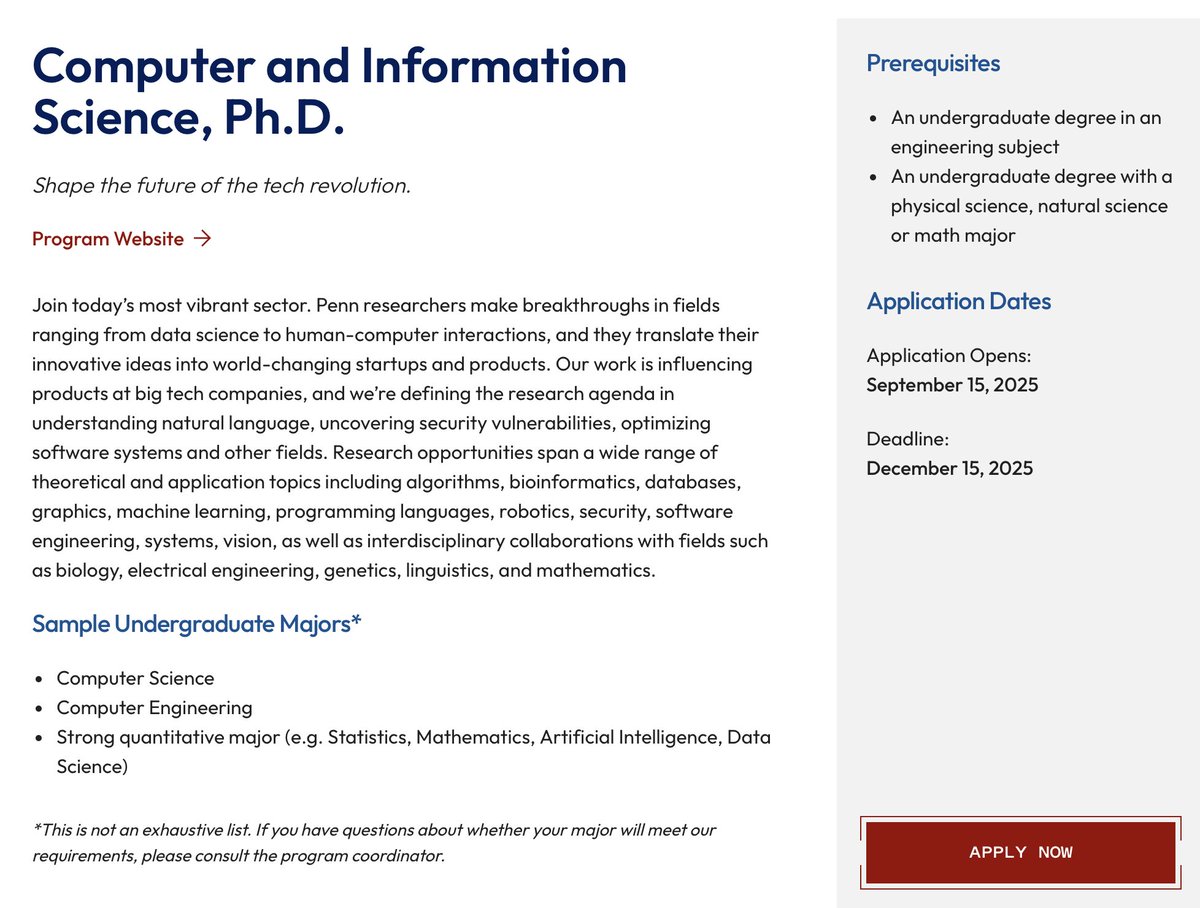
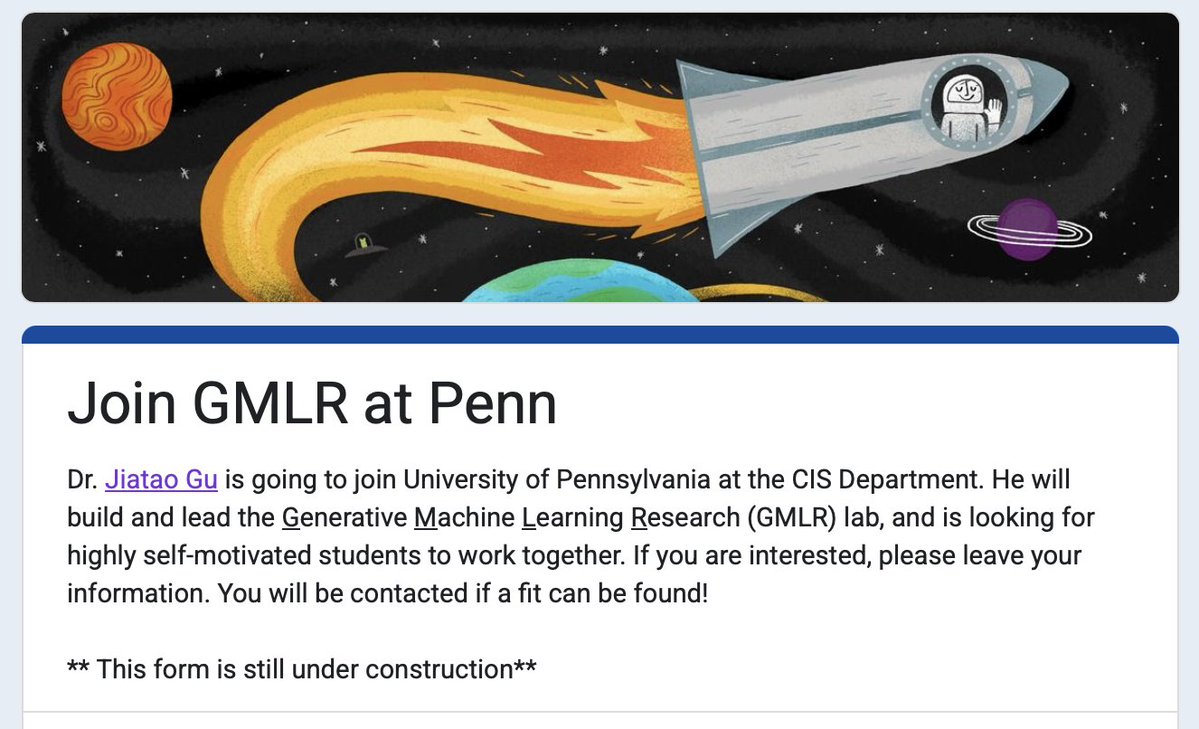
I am also looking for multiple PhD students to join my lab in @CIS_Penn (DDL 12/15), and also research interns at @Apple MLR.
Please DM me or come by our posters. Let's chat generative & world models!
I will join UChicago CS @UChicagoCS as an Assistant Professor in late 2026, and I’m recruiting PhD students in this cycle (2025 - 2026).
My research focuses on AI & Robotics - including dexterous manipulation, humanoids, tactile sensing, learning from human videos, robot systems, and anything needed to make robots truly work and improve everyday life. I also place strong emphasis on open-source.
Check my homepage to learn more: https://t.co/gBZAFrwZmg.
Please reachout if you are interested! The deadline is Dec 11th. Link: https://t.co/yKTmcZu7FP.
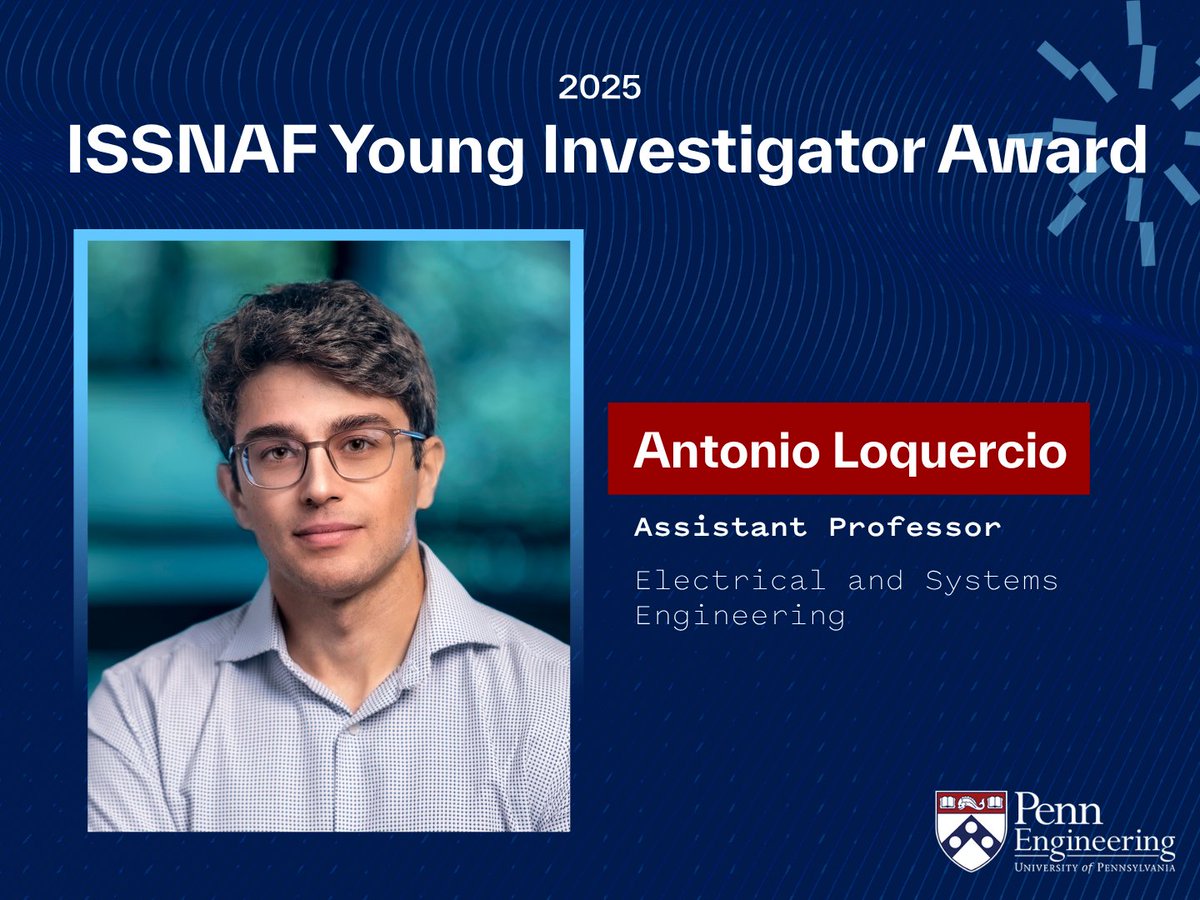
Congratulations to Antonio Loquercio (@antoniloq) on receiving the 2025 Mario Gerla Young Investigator Award from @issnaf.
Recognized for his research on the pivotal role of perception in building effective world models for decision-making, Loquercio enhances the performance of complex robotic systems. He explores how robots can utilize their own sensor data to refine their world models.
Congratulations, Antonio!
https://t.co/WZfd7bqoub
@MathiasGehrig observation != imitation. Observation is potentially more powerful, but tricky. Still a lot of fundamental research is required there (e.g., https://t.co/w6lHXLKIpb)
@Majumdar_Ani@Princeton That sounds very cool! We're doing something similar, but with drone racing instead of drone navigation: https://t.co/ebDpgzPAmb