@MalteLandwehr@gaganghotra_ lol exactly.
these projects may present themselves as saints of the open-source world, but when VC money is involved, there’s ultimately an expectation of massive returns.
Capitalism 101
@demandsphere
Appreciate you being upfront.
kinda eerie why almost none of the other companies are communicating this.
With the direction it's moving in, I won't be surprised if the entire serp goes behind a login soon, which could be the end of the serp data, which hurts so many saas
Reverse-Engineering ChatGPT Fanout Query ! 💥
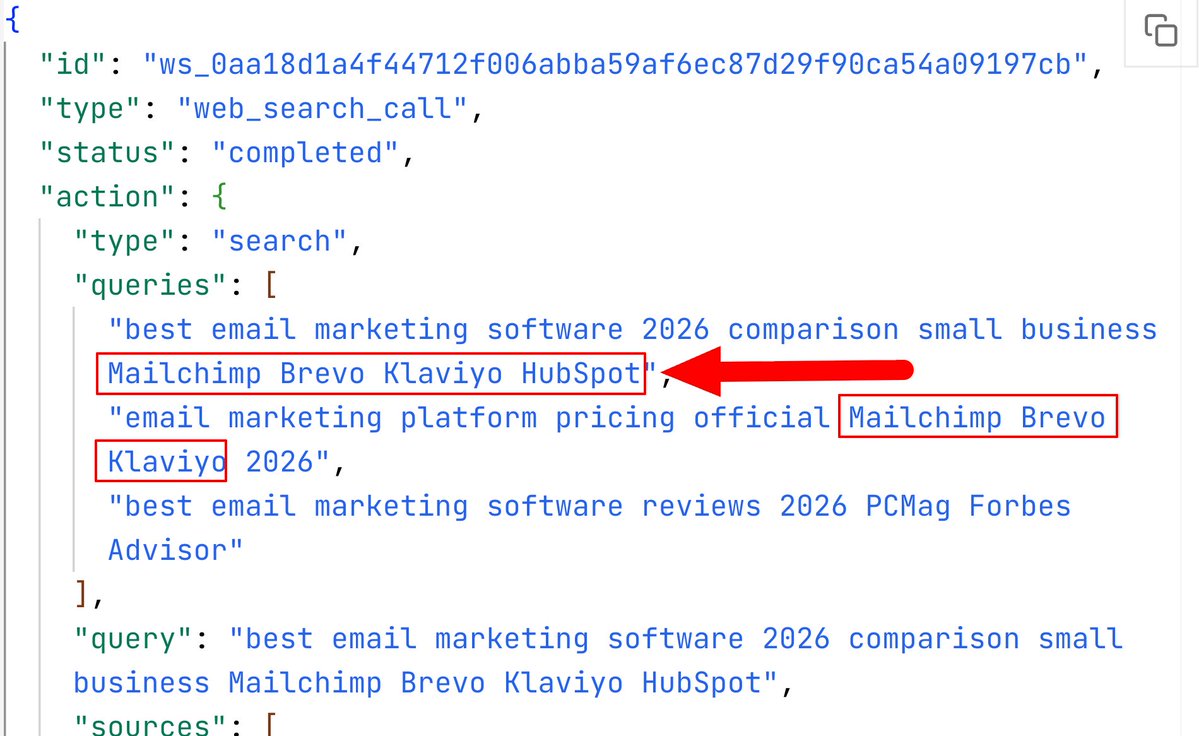
ChatGPT is inserting brand names directly into the fanout queries it generates.
I wanted to know why some brands make it in and others don’t.
Take email marketing.
Ask:
“What’s the best email marketing software?”
One live fanout query looked like:
“best email marketing software 2026 Mailchimp Kit beehiiv HubSpot…”
So the brands are already being chosen before retrieval happens.
That led to an interesting question:
What about brands the model clearly knows, but doesn’t insert?
Campaign Monitor was the clearest example; we probed the model to find whether it knows the brand.
The model recalled it on 49/50 prompts.
But it appeared in the live fanout query on just 1/50.
So this wasn’t simply:
“ChatGPT knows the brand” vs “ChatGPT doesn’t.”
Then we built a fanout-query simulator.
When we allowed the fanout query simulator to include more brand names, the missing brands started coming back.
Campaign Monitor.
AWeber.
Basecamp.
Hasselblad.
That suggests something much more interesting:
The model may have a broader ranked set of brand candidates, while the fanout query only exposes the top few.
Then we asked the obvious next question:
What makes a brand sit higher in that ranking?
For email tools, we compared candidate depth with how widely each brand appeared across the Common Crawl data in an email-marketing context.
The pattern lined up surprisingly well.
The bigger takeaway is simpler:
AI visibility starts before the web retrieval.
The question may not just be:
“How do I get ChatGPT to cite my page?”
It may also be:
“How do I become one of the brands the model is likely to put into the fanout query in the first place?”
You need to enter the model’s parametric memory as a strong category brand.
One way appears to be broad third-party mentions across the web that clearly associate your brand with that category: ideally on crawlable pages that can make it into large training corpora like Common Crawl, Licensed Partners dataset, etc.
Shoutout to @suganthan for valuable feedback on the research, top guy! 🙌
Full research paper in the comments.
Reverse-Engineering ChatGPT Fanout Query ! 💥
ChatGPT is inserting brand names directly into the fanout queries it generates.
I wanted to know why some brands make it in and others don’t.
Take email marketing.
Ask:
“What’s the best email marketing software?”
One live fanout query looked like:
“best email marketing software 2026 Mailchimp Kit beehiiv HubSpot…”
So the brands are already being chosen before retrieval happens.
That led to an interesting question:
What about brands the model clearly knows, but doesn’t insert?
Campaign Monitor was the clearest example; we probed the model to find whether it knows the brand.
The model recalled it on 49/50 prompts.
But it appeared in the live fanout query on just 1/50.
So this wasn’t simply:
“ChatGPT knows the brand” vs “ChatGPT doesn’t.”
Then we built a fanout-query simulator.
When we allowed the fanout query simulator to include more brand names, the missing brands started coming back.
Campaign Monitor.
AWeber.
Basecamp.
Hasselblad.
That suggests something much more interesting:
The model may have a broader ranked set of brand candidates, while the fanout query only exposes the top few.
Then we asked the obvious next question:
What makes a brand sit higher in that ranking?
For email tools, we compared candidate depth with how widely each brand appeared across the Common Crawl data in an email-marketing context.
The pattern lined up surprisingly well.
The bigger takeaway is simpler:
AI visibility starts before the web retrieval.
The question may not just be:
“How do I get ChatGPT to cite my page?”
It may also be:
“How do I become one of the brands the model is likely to put into the fanout query in the first place?”
You need to enter the model’s parametric memory as a strong category brand.
One way appears to be broad third-party mentions across the web that clearly associate your brand with that category: ideally on crawlable pages that can make it into large training corpora like Common Crawl, Licensed Partners dataset, etc.
Shoutout to @suganthan for valuable feedback on the research, top guy! 🙌
Full research paper in the comments.
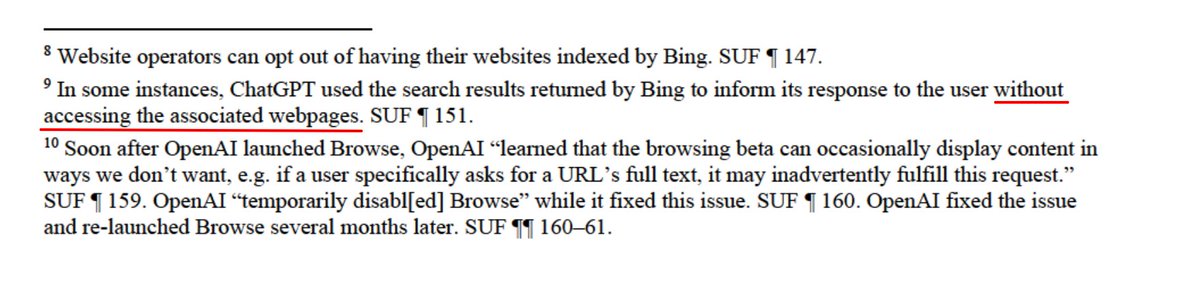
OpenAI has now effectively confirmed that this can happen.
In its summary judgment brief, OpenAI says that in more than 96% of the specific Browse copying instances identified by the News Plaintiffs, OpenAI did not fetch the underlying publisher page.
1/n
#seo#geo#aeo