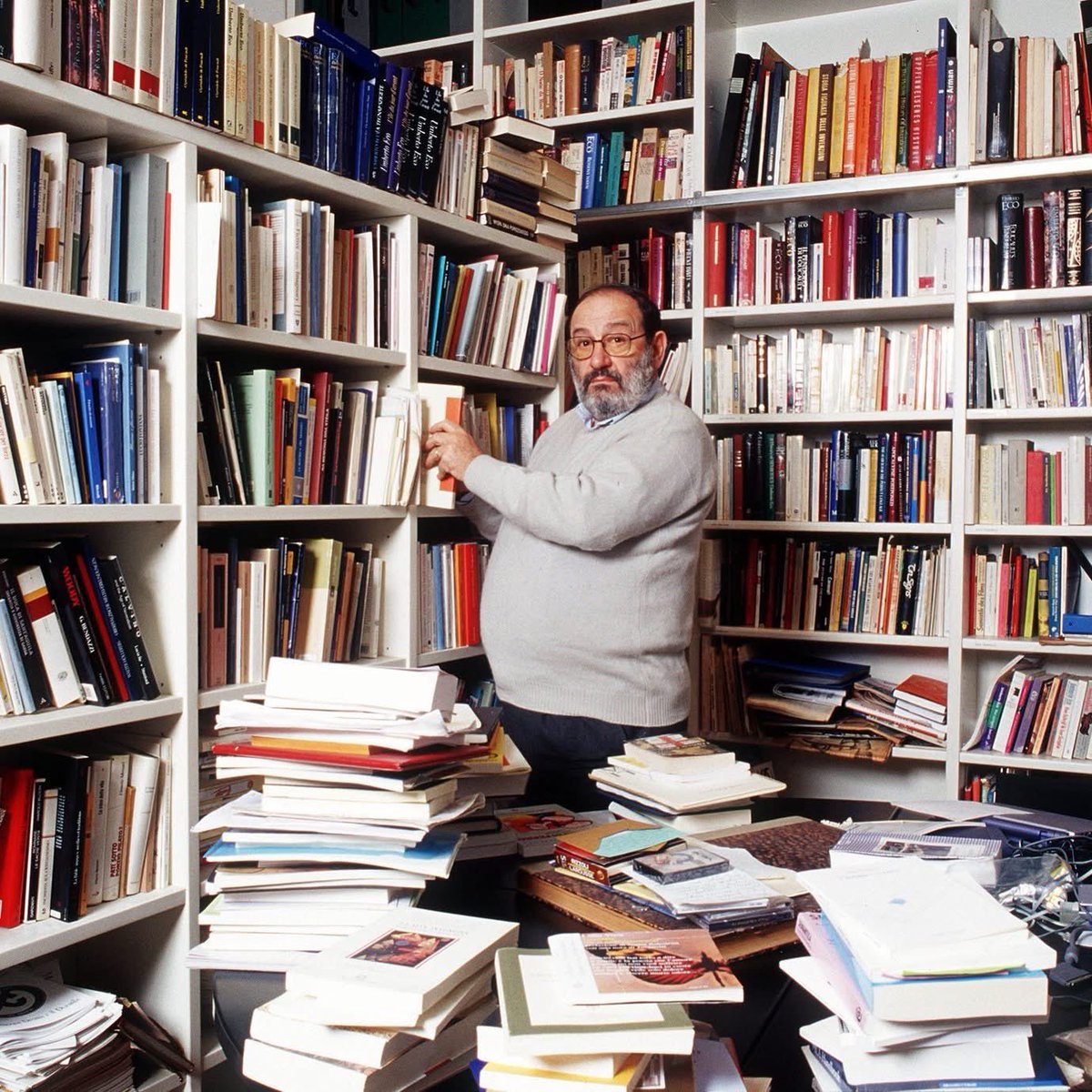
Umberto Eco, qui possédait 50 000 livres, disait ceci à propos des bibliothèques personnelles :
"Il est insensé de penser qu'il faut lire tous les livres qu'on achète, tout comme il est insensé de critiquer ceux qui achètent plus de livres qu'ils ne pourront jamais en lire. Ce serait comme dire qu'il faut utiliser tous les couverts ou les lunettes, les tournevis ou les forets que vous avez achetés avant d'en acheter de nouveaux.
Il y a des choses dans la vie pour lesquelles nous avons besoin de toujours avoir suffisamment de provisions, même si nous n'en utilisons qu'une petite partie.
Si, par exemple, nous considérons les livres comme des médicaments, nous comprenons qu'il est bon d'en avoir plusieurs à la maison plutôt que quelques-uns : quand on veut se sentir mieux, alors on va au « placard à pharmacie » et on choisit un livre. un livre aléatoire, mais le bon livre pour le moment. C'est pourquoi vous devriez toujours avoir un choix nutritionnel !
Ceux qui n'achètent qu'un seul livre, ne lisent que celui-là et s'en débarrassent ensuite. Ils appliquent simplement la mentalité de consommateur aux livres, c'est-à-dire qu'ils les considèrent comme un produit de consommation, un bien. Ceux qui aiment les livres savent qu'un livre est tout sauf une marchandise."
Late one evening in 2003, Emma Thompson sat alone in her London flat, surrounded by the wreckage of a very public divorce
The press had been relentless. Her marriage to Kenneth Branagh had ended amid scandal, and the woman who'd won an Oscar for bringing Jane Austen's words to life couldn't find any of her own.
Then came a knock at the door.
Alan Rickman stood there holding a bottle of wine and nothing else—no advice, no pity, no expectations. He walked in, sat down, and stayed through the night. He didn't ask her to explain. He didn't tell her it would be okay. He just sat with her in the darkness, offering the rarest gift one human can give another: silent, judgment-free presence.
"You saved me without trying," Thompson later wrote to him. "And that's the kind of love I trust most."
Their friendship had begun years earlier during a 1980s stage production, when Thompson met a man whose fierce gaze and commanding silence intimidated most people. But she saw past the intensity to something tender underneath. "I recognized a fellow creature," she said, "one who felt deeply but rarely said as much."
By the time they filmed "Sense and Sensibility" in 1995, their bond had deepened into something rare in Hollywood—a friendship built on creative trust and emotional safety. While Thompson juggled the impossible pressure of starring in and adapting a beloved classic, Rickman quietly anchored her. "Alan had a way of being in the room that made you feel you belonged there too," she remembered.
What made their connection extraordinary wasn't grand gestures or public declarations. It was the accumulation of small, sacred moments. The long conversations about betrayal and forgiveness during "Love Actually." The way he never demanded she be strong when she was breaking. The trust that allowed complete vulnerability without fear.
Then, years later, Rickman fell ill. For a long time, he told almost no one about his cancer diagnosis. But Thompson knew. She noticed how he tired more easily, how his already quiet nature turned more introspective. One afternoon during a charity film shoot, he finally told her.
They stood in silence for several moments.
"Alright," she said simply. "Then we walk through this together."
In those final years, Rickman opened up in ways he never had before—sharing memories, regrets, and hopes with the one person he trusted completely. Thompson told him she had loved him from the beginning, though they'd never crossed the lines of friendship.
He laughed. "You would've ruined me."
"No, Alan," she replied. "I would've healed you."
When Rickman died in 2016, Thompson released a letter calling him "the truest of friends." Their bond had never been about celebrity or performance. It had been real, raw, and sacred—a story written in glances, in trust, in the knowledge that some people don't come into your life to dazzle you, but to hold a steady light.
Thompson keeps one of his handwritten notes tucked in her wallet: "Always speak the truth. It costs less."
And she still visits their favorite café, orders two teas, and talks to him like he's still listening—because the truest friendships never really end.
They just change form, becoming something even more permanent: memory transformed into grace, loss transformed into gratitude, and silence transformed into the loudest kind of love.
En 1997, mientras el britpop se ahogaba en su propia arrogancia, un hombre de Wigan escribió una melodía que sonaba a libertad absoluta. No era un himno de rabia, sino un susurro de gratitud que terminaría definiendo a toda una generación...
A mediados de los 90, un cantante que lo había tenido todo con su banda decidió empezar de cero.
Grabó una canción que hablaba de estar "a un minuto" de perder a quien más quieres.
Pero ese minuto no era solo sobre el amor...
@FPLATKO Lo del Betis es curioso: en los últimos años se han ido tres extremos canteranos prometedores, Assane Diao y Jesús Rodríguez al Como y ahora Pablo García al Racing. Y contra el Madrid tenían en el banquillo a otro extremo canterano, Morante, el hijo del torero
When Dolly Parton approached Robert Plant for permission to record her version of “Stairway to Heaven,” she reportedly worried about how he would react. Instead, Plant’s response was wonderfully simple: “Of course you can, you’re Dolly Parton.”
And somehow, that feels like the perfect answer. Dolly didn’t try to copy Led Zeppelin — she took one of rock’s most iconic songs and made it unmistakably her own, adding a touch of country, gospel, and her unmistakable voice.
Sometimes, a legend recognizing another legend is all the permission you need.
Gene Kelly didn’t want to sing “Singin’ in the Rain” on The Muppet Show.
Kermit took that as a challenge and made it the plot, coaxing him into it anyway.
It was the last episode they ever filmed, and the last time Gene performed it.
A poignant goodbye to the song and The Muppets
Al fondo, una cruz explotada como símbolo fascista. En primer plano, una mujer con la bandera que representó el intento de democratizar y modernizar España. La Segunda República fracasó por la intransigencia de la derecha y el fanatismo revolucionario de un sector de la izquierda. El socialismo humanista de Fernando de los Ríos, el liberalismo reformista de Manuel Bartolomé Cossío, la honestidad periodística de Chaves Nogales y la creatividad de figuras como García Lorca y Antonio Machado podrían haber gestado esa otra España que reaccionarios y revolucionarios malograron, sumiendo a nuestro país en la noche negra de la dictadura.