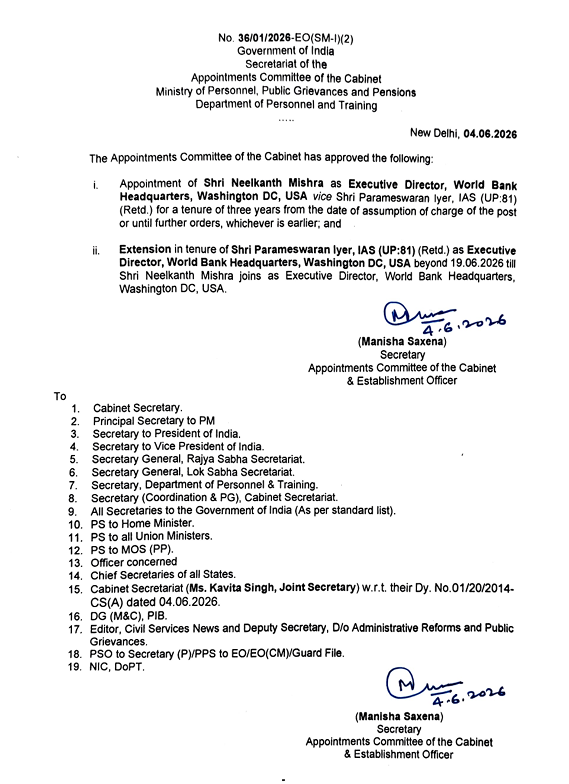
He is a Monk of Ramkrishna Mission.
First time I have heard somebody of Ramakrishna Mission's Sanyasi to speak the truth so boldly.
Enough with Ahinshaa of Md. Gandhi tought to us !!
Its a massive victory for R&AW chief Parag Jain who spearheaded the ban starlink proposal! India was offered Starlink and sadly some top politicians started getting way too excited about it. R&AW chief Parag Jain who is a technocrat himself had to step in and present a report to the Prime Minister’s Office @PMOIndia highlighting the repercussions and strategic paralysis Starlink could bring along with it. The report underlined how Ukraine’s drone strikes deep inside Russia have changed the way modern warfare works. Smart low-flying drones linked through Starlink can quietly glide past radar and hit deep inside enemy lines. These drones use simple glide technology and AI to fly low, stay hidden, and make last-second target corrections using real-time Starlink feeds. With thousands of satellites in low orbit, Starlink provides fast, jam-resistant connections that even advanced Russian systems struggle to block. The result is drones that act like guided missiles, silent, precise, and hard to intercept. But the same technology that gives Ukraine an edge can also be turned around. Russia has already tested Starlink-style systems on its own Shahed drones. That shows how relying on a foreign satellite network is risky because a single software lock or policy change can cut off entire defense operations overnight. For India, this is not paranoia, it is preparedness. If Starlink becomes the main satellite network here, it could also become a potential backdoor for hybrid warfare. India’s move to build its own secure satellite internet, like through Jio’s upcoming space projects, is the right step. Controlling the signal means controlling the battlefield. Banning Starlink in India is not fearmongering, it is common sense in an age where wars are fought through data, drones, and digital skies.
Haleon (formerly GSK Consumer Healthcare), which makes Sensodyne toothpaste and Centrum supplements, is investing 2,000 crore (£175 million) to set up its first manufacturing plant in India, in Pithampur, Madhya Pradesh.
Zen Technologies develops integrated AI-powered anti-drone system
The overall counter-drone architecture will have a combination of interceptor drones and integrated weapon systems
https://t.co/S1zJuuWpfk
India’s Balance of Payments.
India’s current account is being protected by services and remittances, while the capital account has been the fragile side of the BoP. In FY26, the current account deficit was $ 25.4bn, while the capital account surplus was only $ 1.9bn. The result was a $ 23.6bn overall BoP deficit and a corresponding drawdown in foreign exchange reserves.
In FY27, with $50–60bn of potential inflows, oil below $100, and the rupee REER below 90, the BoP setup can move from external vulnerability to macro support.
India’s external account has changed shape. The current account has become more resilient, but the capital account has become the more fragile side of the BoP.
In FY26, India ran a $ 337.3bn merchandise deficit. But this was more than offset by a $ 216.6bn services surplus and $ 144.8bn of private transfers. The combined services-remittance cushion of $ 361.4bn covered 107% of the goods deficit.
This is the most important change in India’s external account. India still runs a large goods deficit. But it now has a much larger invisibles engine. Services exports and remittances are doing the work that merchandise exports are not doing.
The merchandise problem itself is now broader than oil. In FY26, the goods deficit was split across a $ 129.2bn core goods gap, a $ 119.9bn oil/petroleum gap, and $ 84.6bn of gold and silver imports. The FY26 deterioration was led by core imports and gold/silver, not oil.
There is no clear visible solution or trend for core goods imports unless India solves the manufacturing-for-India problem. This is the hardest part of the merchandise deficit. It is not just a price problem. It is a structure problem.
Oil is becoming a lesser problem as India’s size increases. It can also be tackled at the margin by using more local energy resources and coal. Oil remains important, but it is no longer the only explanation for India’s merchandise deficit.
The problem emanating from gold and silver is partly structural because of traditional demand. But a large part is cyclical returns-chasing. The $ 84.6bn of gold and silver imports in FY26 appears to be an aberration. It is likely slowing down because of demand destruction and the dialing down of the FOMO trade in precious metals.
Within services, software remains the anchor at $ 179.5bn. But business services have become the new growth engine, rising from $ 7.3bn in FY22 to $ 54.6bn in FY26. This is the GCC, professional services, legal, consulting, analytics, design, and engineering services story showing up in the BoP.
This is a major structural shift. India’s services surplus is no longer only an IT services story. Software remains the core. But business services are now large enough to matter for the macro account.
The weak point in the current account is the income account. India paid a net $ 48.2bn in primary income in FY26. This was driven mainly by $ 44.8bn of direct-investment income outflows and $ 23.2bn of other investment income outflows, partly offset by $ 19.2bn of reserve-asset income.
This is the recurring leakage in the current account. India earns a large services surplus. It receives large private transfers. But foreign capital also earns a large income claim on India. This is partly the success tax of past capital inflows. Foreign capital helped build assets in India. Those assets now generate income for foreign investors.
So the current account story is clear. India imports goods, exports software and business services, receives large remittances, and pays a recurring investment-income bill to foreign capital. The current account is resilient because services and transfers have scaled up. But the merchandise deficit and the income-account drag keep consuming the cushion.
The capital account tells a different story.
India’s capital account weakened sharply in FY26. India recorded only $ 1.9bn of net capital inflows, down from $ 16.6bn in FY25 and $ 89.4bn in FY24. This is now the central external-sector vulnerability. The current account is manageable, but the capital account has stopped providing the large cushion it provided earlier.
The deterioration is driven mainly by foreign investment. Net foreign investment moved from a $ 54.2bn inflow in FY24 to only $ 4.5bn in FY25 and then to a $ 9.4bn outflow in FY26. This is a $ 63.6bn swing over two years.
Within this, FPI was the biggest swing factor. Portfolio investment moved from a $ 44.1bn inflow in FY24 to $ 3.6bn in FY25 and then to a $ 16.4bn outflow in FY26. FPI remains the most volatile part of the capital account.
FDI is more stable than FPI, but the net FDI trend is weak. Net FDI was $ 43.0bn in FY20, $ 44.0bn in FY21, and $ 38.6bn in FY22. It then fell to $ 28.0bn in FY23, $ 10.2bn in FY24, $ 1.0bn in FY25, and only recovered modestly to $ 6.9bn in FY26.
The FY26 recovery in inward FDI to $ 40.8bn is encouraging. But net FDI remains low because outward FDI by Indian companies rose to $ 33.8bn. Indian companies are globalising. That is not necessarily bad for corporate India. But from a BoP perspective, it reduces the net FDI cushion available to fund the current account.
One of the most critical aspects of FDI.
The quality of inward FDI also needs watching. In FY26, inward FDI of $ 40.8bn was made up of only $ 11.1bn of equity inflows, $ 25.7bn of reinvested earnings, and $ 4.0bn of other capital. This means a large part of inward FDI is not fresh equity money. It is existing foreign-owned businesses reinvesting earnings in India. That is useful, but it is not the same as a broad-based surge in new strategic capital.
Loans are now doing more of the funding work. Net loans were $ 27.4bn in FY26, compared with $ 29.3bn in FY25 and only $ 6.5bn in FY24. Within this, commercial borrowings were $ 11.1bn in FY26, after $ 15.9bn in FY25 and almost flat flows in FY24. Short-term credit to India also rose to $ 13.7bn in FY26 from $ 7.2bn in FY25.
This shows that debt-like flows and trade credit are helping replace the weakness in foreign investment. ECB flows are positive, but they are not large enough to offset the weakness in FDI and FPI. Commercial borrowings brought in $ 11.1bn in FY26. But this happened against a $ 16.4bn FPI outflow and only $ 6.9bn of net FDI. ECB is a support line, not a solution.
Banking capital recovered in FY26, but remains volatile. Within banking capital, non-resident deposits remain a useful stabiliser. NRI deposits brought in $ 14.4bn in FY26, after $ 16.2bn in FY25 and $ 14.7bn in FY24. This is a consistent and important funding line, but it cannot fully offset weak foreign investment.
The policy response is now important. Measures announced by the RBI and the Government of India to attract debt and deposit flows, including initiatives around debt-FAR and FCNR(B), could change the FY27 BoP picture materially. The base case is that these measures can help bring in around $50–60bn of additional flows.
If these flows materialise, India can move back to a BoP surplus in FY27. Even in a less favourable case, if oil prices remain below $100, the BoP deficit should remain modest rather than disorderly.
This matters for asset allocation. At a rupee REER below 90, and with no major stress on the BoP, the external setup is turning supportive for rupee assets. This is likely to be the time to own rupee assets, especially large-cap stocks and long-duration G-Secs.
The current account is no longer the main source of stress. The policy setup is trying to repair the capital account. The currency is not expensive on a REER basis. The BoP setup can shift from vulnerability to support if FY27 debt and deposit flows come through.
Why are so many young people getting cancer? What researchers do and don't know
Candidates for the trend are emerging, but are likely to vary from one type of tumor to another
https://t.co/CLQZOWoUkg
"Researchers around the world are grappling with a vexing problem: why are so many young people developing cancers once considered the purview of old age?
The question was prominent at two of the world’s largest cancer meetings this year, and hypotheses abounded. Ultra-processed foods, obesity, microbial toxins and agricultural chemicals were all considered. But a clear answer remained elusive."
So we’ve already forgotten the TCS, sexual harassment & religious conversion case aided by a v effective Comms operation. Nida Khan & gang count on such amnesia to carry out brazen criminal acts in India
https://t.co/TNS3GuaFW4
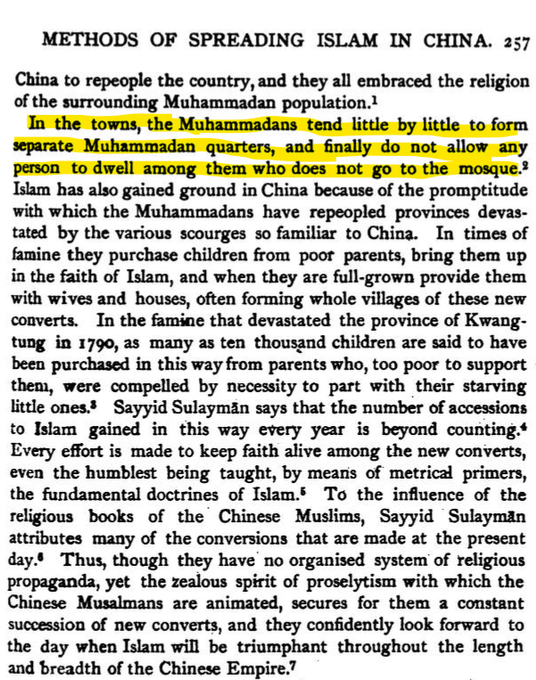
Easily debunked based on this report from Qing empire in 1896 & a later report from Nanking in 1908 that authorities were trying to prevent formation of Mohammedan ghettos
No Hindus involved
Mohammedan ghettos are voluntary as infidels r najis (impure)
#Pune Municipal Corporation has moved a proposal to start alternate-day water supply to residents from next week. All engineers have been asked to prepare a plan to implement it in their respective areas. Though it's still pending approval, water cut is likely soon.
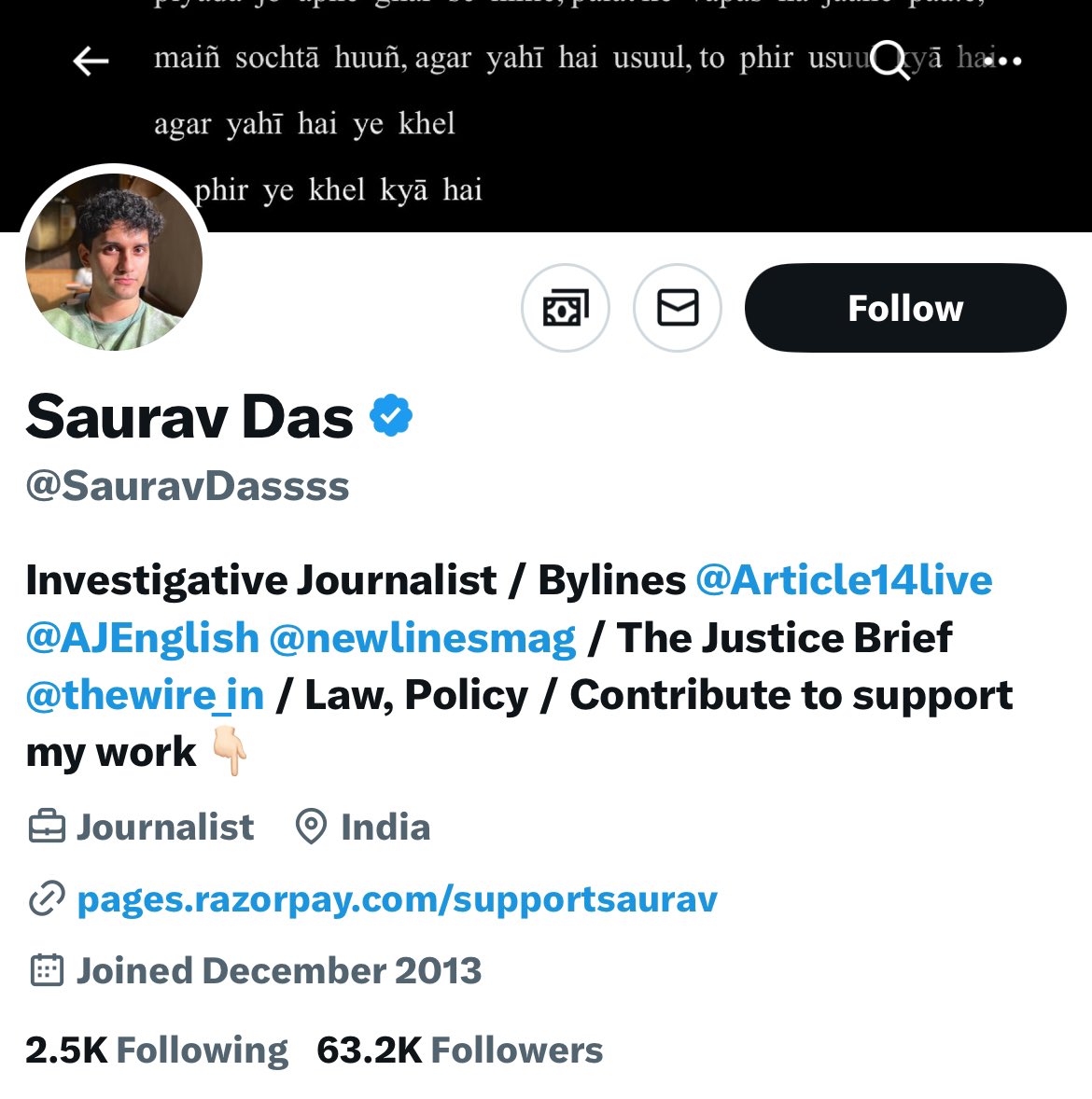
The newly appointed spokesperson of AAP- oh, sorry, CJP- Mr. Saurav Das, has received 6 lakh INR from the USA via a Boston-based firm.
In this, too, he has committed fraud.
The money he has received is in the name of public health, but he has written just two articles that have nothing to do with public health.
Who pays 1.5 lakh per article?
And yes, he is also a dear friend of Umar Khalid.
The chargesheet in the TCS Nashik forced conversion case has exposed Nida Khan’s alleged role clearly.
As per the victim’s statement:
-Nida introduced her to Islamic teachings & videos
-Downloaded Muslim Pro app on her phone
-Made her recite Al-Fatiha repeatedly
-Pressured her to convert, warning “Allah will send you & your family to Jahannum (hell)”
-Took her to her residence after office, made her wear burqa & hijab, taught namaz
-Her family even discussed sending the victim to a madrasa
Despite this, many were earlier defending Nida Khan.
Even more shocking, Nida was arrested from the house of Matin Patel, an AIMIM corporator. That house was later demolished by the authorities.
Yet AIMIM leader Imtiaz Jaleel openly declared that his party will build a “better and bigger” place for Matin at the same spot.
It shows how certain elements are actively supporting those allegedly involved in forceful conversions of Hindu girls using fear, pressure & religious threats and most importantly, political patronage is shielding them.
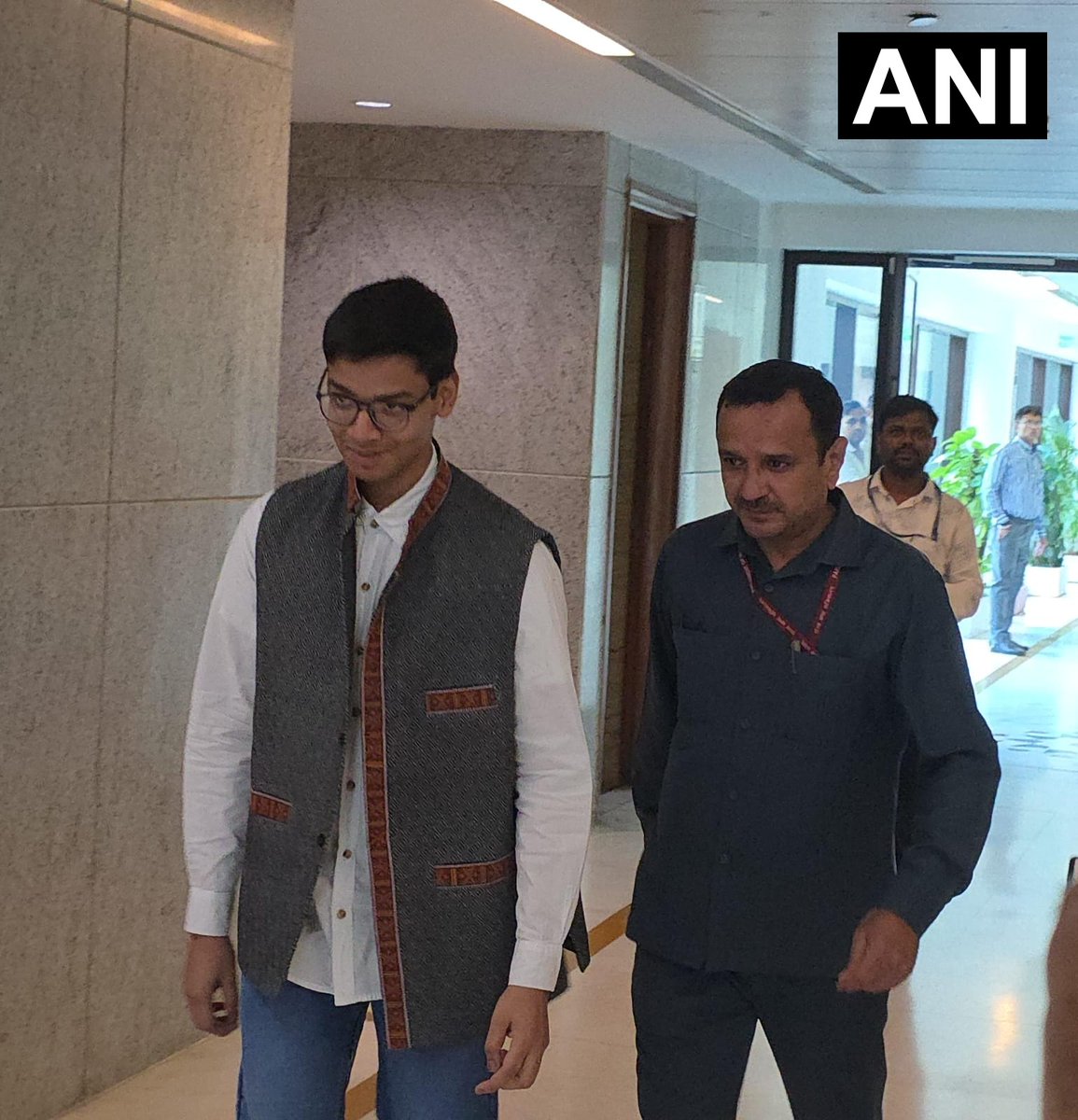
Delhi: Sarthak Sidhant, one of the students affected by the CBSE's 'On-Screen Marking' (OSM) system, arrived at the Parliament House Annexe to give a presentation before the Parliamentary Standing Committee on Education, Women, Children, Youth, and Sports. This committee is reviewing the use of 'On-Screen Marking' (OSM) in Class 12 CBSE examinations and the consequent problems faced by students.