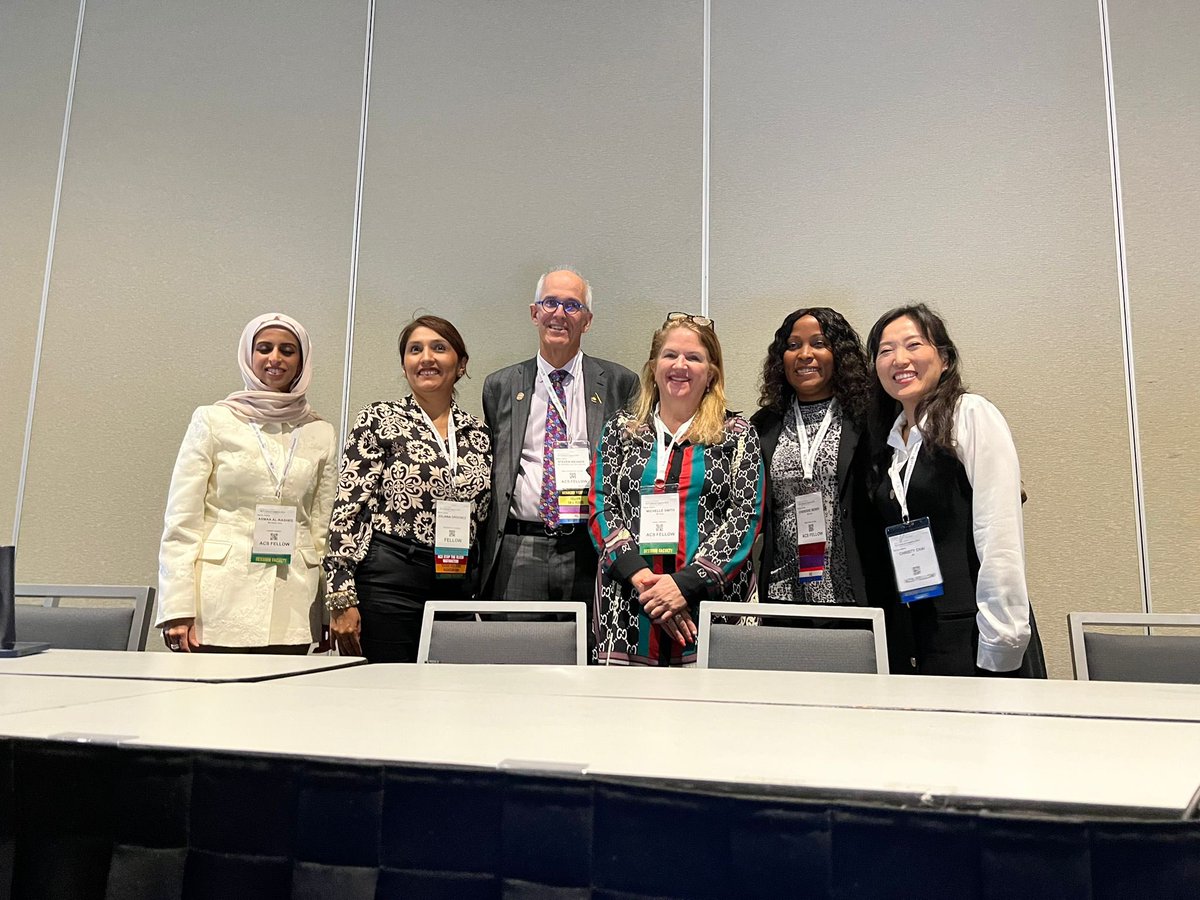
#ACSCC24 Creating brighter future for Women in Surgery globally together!
Honored to share @womensurgeonsk1 experience in the Leadership for Women in International Arena Session with esteemed speakers & panelist @SWexner@Chai_Christy Dr. Smith Dr. Berry Dr. Ordonez
Cardiology calls statins miracle drugs. Social media calls them poison.
Both sides cite published scientific papers. How can they be looking at the same evidence and reaching opposite conclusions?
As a cardiologist, I think both sides are are on to something. Let me explain. 🧵
Here we go! The first phase 3 trial for Retatrutide in obesity
Here's how it compares to the other drugs with phase 3 data
I used the treatment-regimen estimand, which measures weight loss regardless of adherence, to better represent real-world effectiveness:
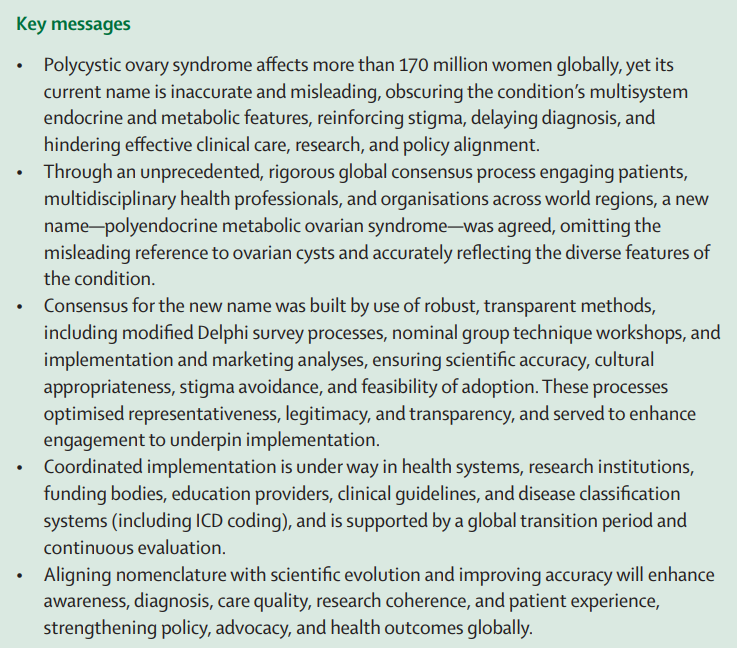
Experts reach consensus to rename polycystic ovary syndrome (PCOS), better reflecting the condition’s full health impacts.
Find out more 👉 https://t.co/Azue7YDFcn @ESEndocrinology#ECE2026
¿Cuándo elegir semaglutida y cuándo tirzepatida?
La EASO acaba de actualizar su algoritmo con evidencia hasta noviembre 2025 📊 @EASOobesity
Spoiler: depende del objetivo clínico. No es solo pérdida de peso.
🔗 @NatureMedicine
https://t.co/RKkccNGYTq
#ECO2026
Full breakdown — the IJO vs. Annals reconciliation, the DXA measurement problem, the Lundgren NEJM RCT, the Tinsley & Nadolsky case series showing patients gaining lean mass on tirzepatide, and the practical clinical protocol: https://t.co/DmeBnn4v9T
Do GLP-1 drugs increase the risk of vision loss?
Specifically, a condition called NAION: a sudden loss of blood flow to the optic nerve that can cause vision loss.
We looked at this in 588,000 people.
The answer, in our new @JAMANetworkOpen paper, is yes. 🧵
https://t.co/Fdedf4bLbK
In 2008, evolutionary anthropologist Katie Hinde began studying breast milk from rhesus macaque mothers. What started as a routine study turned into a groundbreaking discovery. She found that mothers raising sons produced milk richer in fat and protein, while those raising daughters had different nutrient balances. This led Katie to a radical conclusion: milk is not just nutrition—it’s information.
Her research revealed that milk shapes behavior, not just growth. For instance, first-time mothers produced milk with higher levels of cortisol, influencing their babies to grow faster but also become more anxious. Katie also discovered that milk changes based on the baby’s immune needs. When a baby is sick, the mother’s milk quickly adapts by producing more white blood cells and targeted antibodies.
Katie’s work, which challenged the scientific consensus, was largely ignored. She launched a blog, Mammals Suck Milk, to spark discussions, and her findings, including that every mother’s milk is unique, gained widespread attention. In 2017, she took her research to a TED stage, and in 2020, her work was featured in Netflix’s Babies. Today, as a professor at Arizona State University, Katie continues to revolutionize our understanding of infant development and lactation.
Katie Hinde didn’t just study milk—she uncovered a living, responsive communication system, revealing that nourishment is intelligence. Her discovery shows that sometimes the biggest revolutions begin by listening to what others ignore.
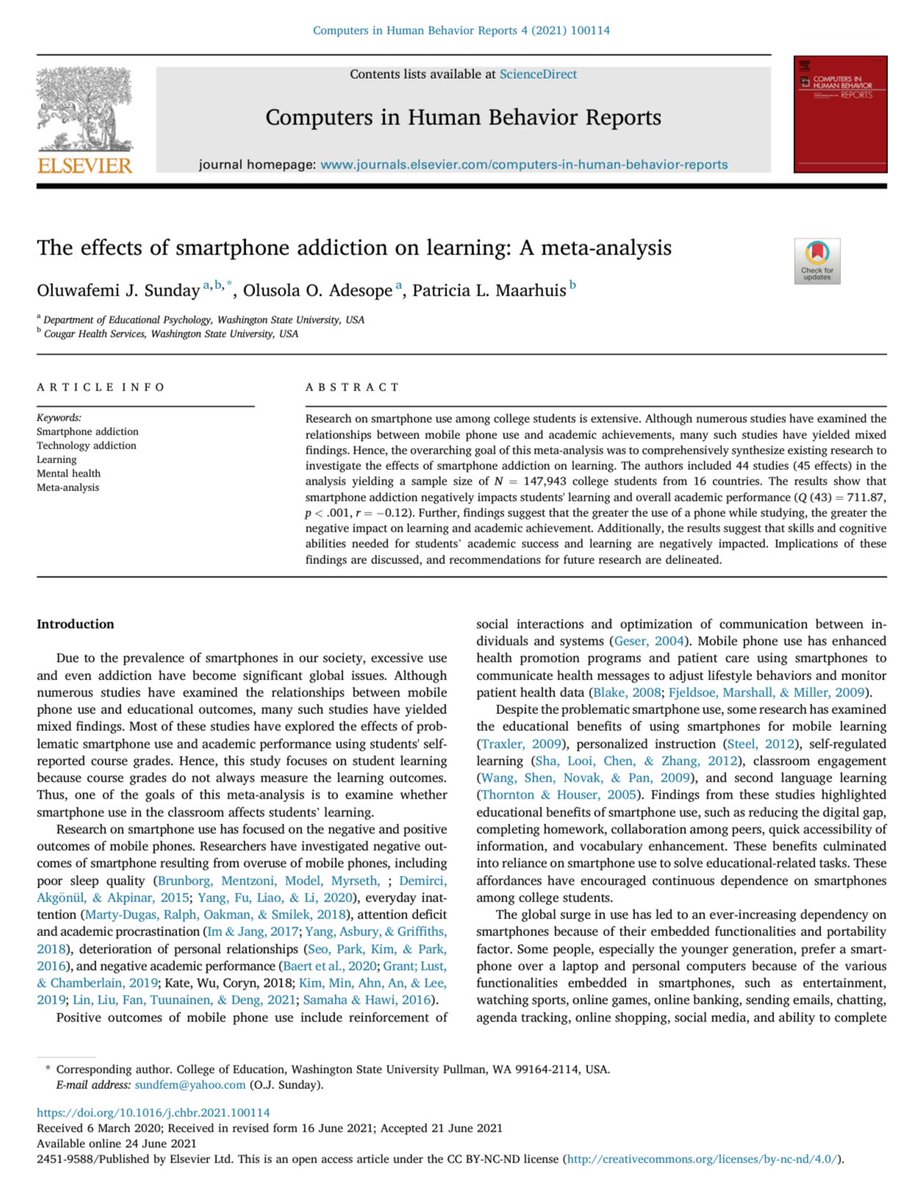
Smartphone addiction has negative impacts on student learning and overall academic performance. The greater the use of a phone while studying, the greater the negative impact on learning. The skills and cognitive abilities students needed for academic success are negatively affected by excessive phone use. The results of this meta-analysis implied that addicted users show a diminished level in learning.
Higher mortality rates among surgeons may be associated with work environment, professional demands, & lifestyle. A cross-sectional study analyzes mortality rates & leading causes of death among US surgeons compared with other occupation groups.
🔗 https://t.co/jr1QdE4LD1
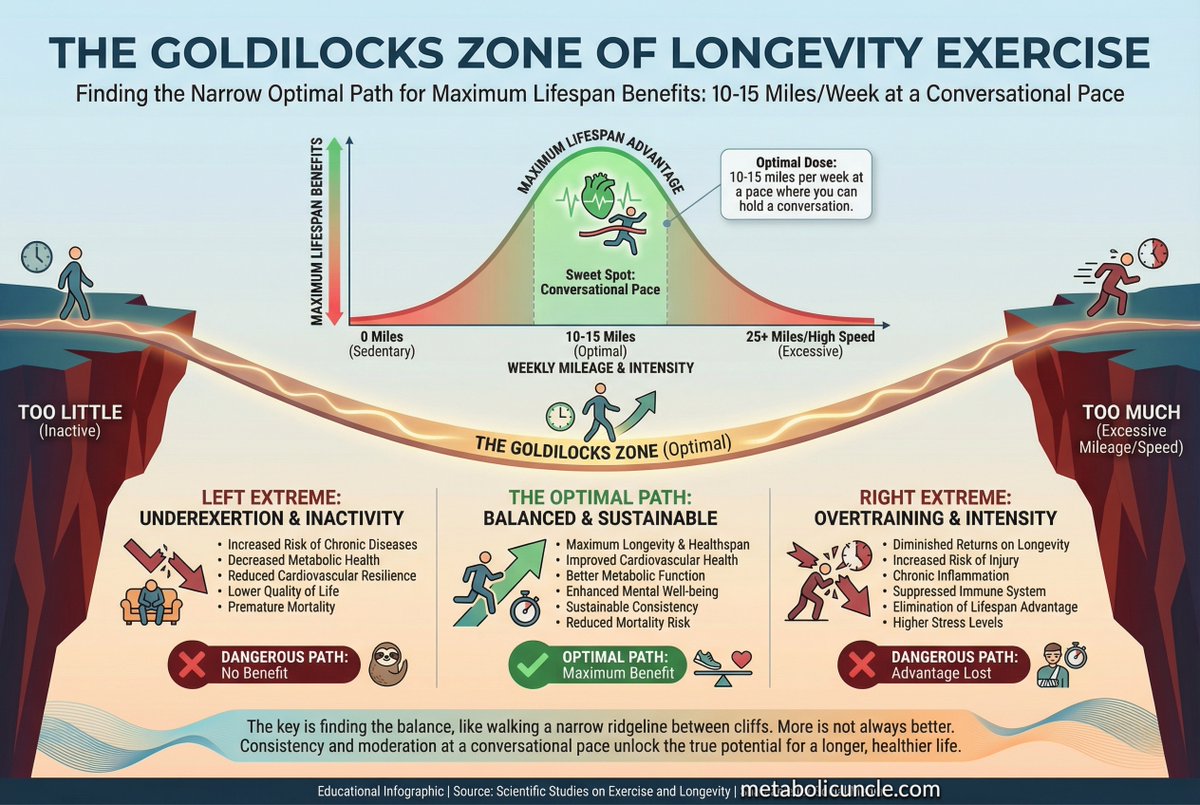
Why Marathon Training is Shortening Your Life
Your heart isn't built for chronic punishment. The same cardiovascular stress that makes you endure pain and suffering for longer can also make you vulnerable.
Exercise saves lives. That's undisputed. But chronic high-intensity training creates a paradox: veteran endurance athletes show elevated coronary calcification, atrial fibrillation rates five times higher than sedentary people, and myocardial scarring typically seen in cardiac patients.
The mechanism is straightforward. During sustained hard efforts, your heart pumps five to six times its resting volume. After 60 minutes, this mechanical stretch overwhelms adaptation capacity.
Adrenaline spikes, free radicals accumulate, and microscopic tears appear in cardiac tissue. Do this once, it heals. Do this weekly for years, scar tissue accumulates.
Studies of marathoners completing races show over half have elevated troponin levels, a cardiac injury marker cardiologists associate with heart attacks. These are micro-tears from mechanical stress. Repeat exposure causes chamber dilation, wall thickening, and permanent fibrosis.
The data is clear. A 52,000-person study tracked runners for 30 years. Runners who covered 5 to 20 miles weekly at a comfortable pace lived 19% longer than non-runners. Those exceeding 25 miles weekly or running faster than 7.5 mph pace saw benefits disappear entirely. Running seven days per week eliminated longevity gains.
A separate Copenhagen study found moderate joggers lived six years longer than sedentary controls, but extreme exercisers showed no advantage. The relationship mirrors alcohol consumption, a U-shaped mortality curve where both extremes increase risk.
Peak fitness on a treadmill test occurs around 7 to 7.5 mph. Beyond that threshold, further cardiovascular conditioning provides no additional mortality benefit.
The plateau is real.
Marathoner autopsies reveal enlarged, scarred hearts. One legendary ultrarunner died at 50 during a routine 12-mile run. His autopsy showed idiopathic cardiomyopathy, likely accumulated damage from decades of extreme training.
A Minnesota study found 25-year marathon veterans had 62% more coronary plaque than sedentary controls despite better traditional risk factors.
Animal studies offer hope. Mice run to exhaustion daily for four months developed the same cardiac pathology. When training stopped, hearts normalized. Fibrosis reversed. Electrical instability resolved.
The prescription is simple. Walk daily, as much as possible. Run or perform vigorous exercise 15 to 40 minutes, two to five days weekly, at a conversational pace around 10-minute miles. Your peak heart rate during brief intervals is fine. Sustained Zone 4 or 5 efforts are not.
Humans evolved for intermittent intensity followed by recovery. Persistence hunting required stamina, not speed. Modern endurance culture mistakes suffering for progress. Your heart needs pulsatile stress, work followed by genuine rest, not perpetual inflammation.
The moderate exerciser lives longest. Not the sedentary person, not the Ironman finisher. The person who moves daily and occasionally pushes hard, then backs off.
Combine walking, easy zone 2 activities (swimming, biking, running, rowing) with repeated sprint interval training and you are doing the optimum.
You don't need to suffer or learn to sustain pain to be fit. You don't need to aim for a VO2 max beyond 45 to live long.
"Productivity, I’ve come to see, is not measured only by research papers and grants. It is also sustained by presence, rest, and the relationships that give meaning to the work." #ScienceWorkingLife https://t.co/wdvcDr1qMt
Viewpoint: #MandM conferences benefit surgeon moral development by fostering personal responsibility, reflection, and a mindset for improvement in #Surgery.
@pangelos1@seancwightman
https://t.co/Ym4UvaJQ33
Increased surgeon physiological stress during the first 5 minutes of surgery was associated with reduced odds of major surgical complications.
Optimizing surgeon stress may provide an opportunity to improve surgical performance and patient outcomes.
🔗 https://t.co/S9MmI1IhrZ
Robotic hiatal hernia repair offered no short-term morbidity or mortality advantage over laparoscopic hiatal hernia repair but incurred longer operative times and a higher pulmonary embolism risk in older adults. https://t.co/GUgUbJUpzo
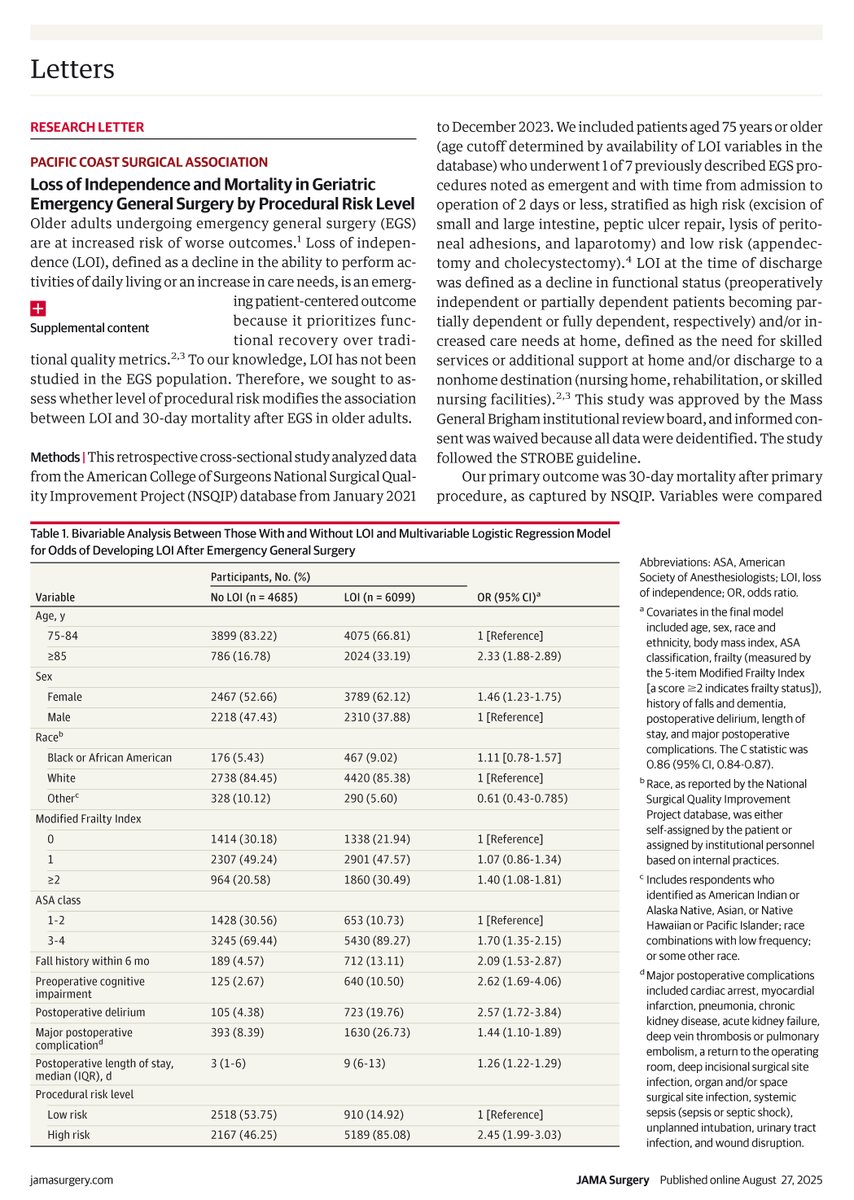
Loss of independence (LOI) and associated factors like frailty and postoperative delirium are linked to increased mortality risk in older adults undergoing emergency general surgery. https://t.co/p5q0ho7qyn
GLP-1 agonists are not cost-effective compared to gastric bypass for patients with severe obesity if current drug pricing persists, with an incremental cost-effectiveness ratio exceeding $500,000 per QALY over 10 years. https://t.co/v35da08sPt
Proud of this paper: the first of its kind to address management of ACUTE femoral hernias in the modern era.
There seems to be so much confusion about this. So if you’re an ACS surgeon or general surgeon, I hope this helps you!
Check out the treatment algorithm we provided in the article and let me know your thoughts and how you would improve it.
@GBarmparasMD@CedarsSinai@CedarsSinaiMed @DeptSurgeryCS @Trauma_CS #acs #oncall #acutecaresurgery #trauma @SESC_AmSurg
https://t.co/zax4wtAAyN