Led by A/Prof Edward L Webb @NUSingapore, pursuing research on conservation of tropical diversity in natural & human‐managed systems of the #AsiaPacific region.
Modelling distributions shaped by anthropogenic factors? Beware occurrence-habitat mismatching and niche truncation! We showed why and what we can do about it in our latest #OpenAccess paper in @consbiog (1/10) https://t.co/eQ01KEuiQD
#AsianSnaringCrsis@mongabay on the recent snaring of 3 #tiger from the #Leuser ecosystem #Aceh#Sumatra
Understanding the motivations of the snaring
poaching pigs? tiger conflict retaliation? tiger poaching? critical to addressing this crisis
https://t.co/U8xeWZqeIu
New paper🥳led by @APELabNUS
🌳land-use legacies are long-term drivers of forest composition & succession #AmericanSamoa#Polynesia
This was my 1st research stint. I learnt so much. Not just about forest ecology but also key foundational research skills https://t.co/DCIGA2vP90
Excited that our paper is finally out! Find out how telecoupled #EnvironmentalImpacts are embedded within the #SDGs, and what we can do to improve #equitability here: https://t.co/rGw6R5FQqx Many thanks to @lromancarrasco @RKRunting & @cyclonewatson for all the help and support!
Want to know more about #forest loss and recovery?
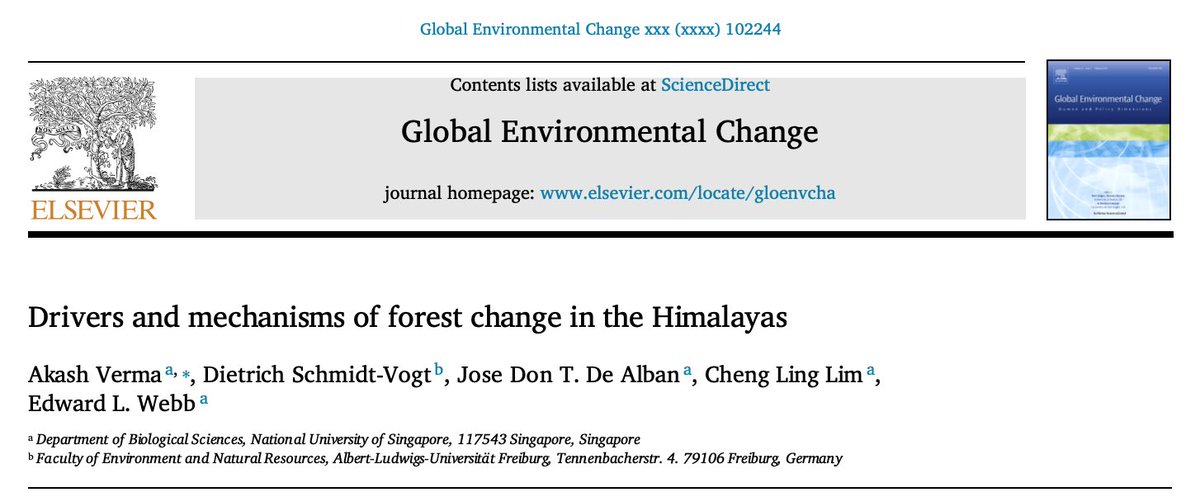
Have a look at our recent paper 'Drivers and mechanisms of forest change in the #Himalayas' https://t.co/lmG3c4ai2n… by @dondealban Dietrich Schmidt-Vogt @ELWEcology and myself via Global Environmental Change @APELabNUS
1/11
Yay! Finally got to play around with #machinelearning and SDMs again! We found that two of Singapore’s most charismatic and nationally #threatened#butterflies Common Birdwing and Common Rose are now critically dependent on a #nonnative host plant.
https://t.co/dGQuYdfW4F
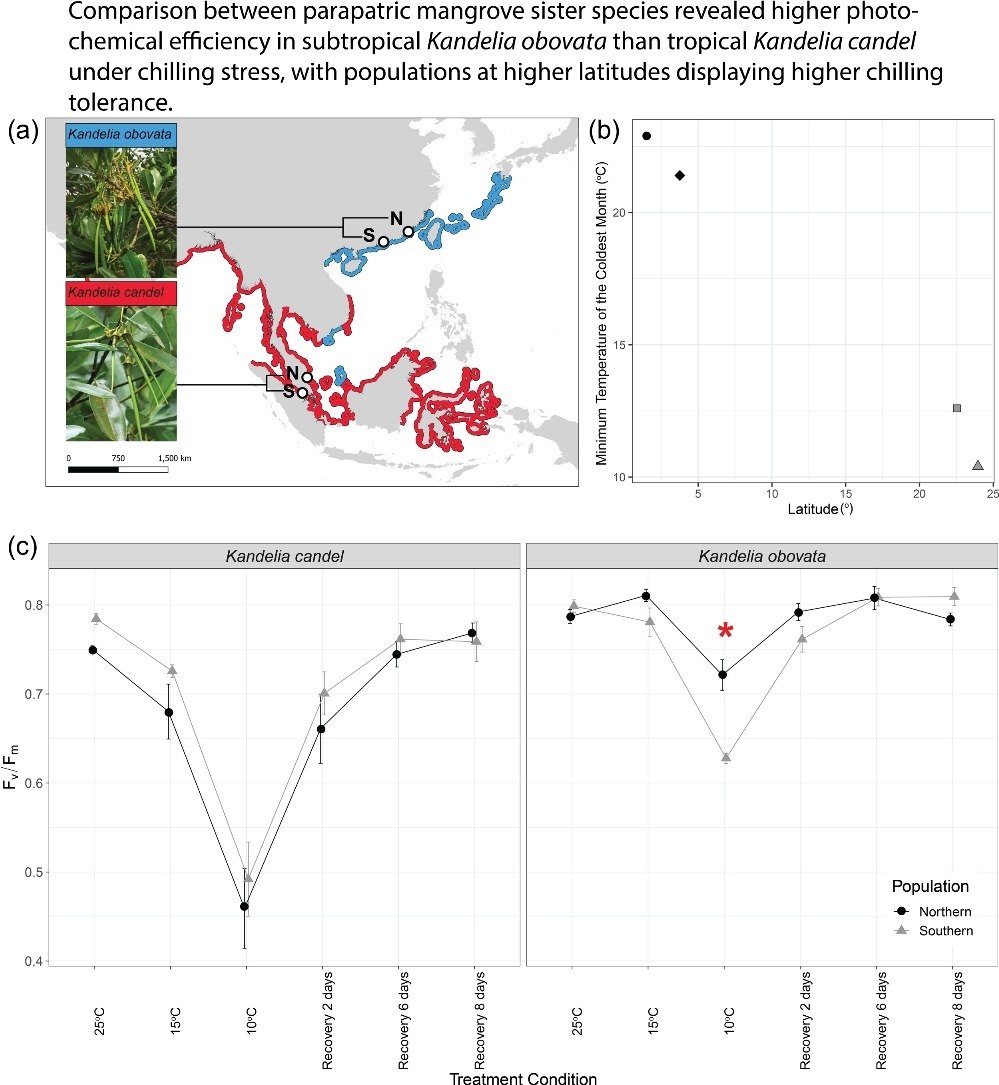
Our work provides new evidence that cold tolerance is an adaptive trait and a potential driver for speciation in certain mangrove lineages. With @AidanWShort1, supported by @ArnoldArboretum.
Via Aquatic Botany: https://t.co/SUlJ7odnar
Mangroves on the cover of Journal of Biogeography, featuring our study on the genetic connectivity of four mangrove species from the Malay Peninsula. Ten years in the making, so happy to see it published! @JBiogeography https://t.co/jiq2Wjw02y
Our new #openaccess paper is out! Conservation beyond the existing protected area network is required to improve species and habitat representation in a global biodiversity hotspot https://t.co/iUGQiZIzKz #MARXAN#SpatialPlanning@Marxan_Planning@APELabNUS
We still have open project opportunities for upcoming final year undergraduate students @NUSingapore under the Environmental Studies and Life Sciences programmes.
Here’s the description of projects https://t.co/UcD7wIBLDS.
Contact us if you’re interested!
@NUSgeog @dbsbox29