Out today in @JACCJournals, our ValveNet study shows a ML model can detect mod-severe left sided valve disease from ECG. This model is currently running live in our health system daily. Now let me tell you everything wrong with it! A brief 🧵 https://t.co/rjtZxxTLt9
Come join us at the poster session 7:30-9pm New York Time (EST) at #neurips2021 Poster Session 2, Location A2! https://t.co/LXiFLCLNJT. Joint work with @han_xintian along with @lycanduo, Thomas Wies, @aperotte, and Rajesh Ranganath!
Very proud to be chosen for an @AMIAinformatics Doctoral #Dissertation Award! It was the product of hard work with my advisor, @aperotte, and others at @ColumbiaDBMI. @drgriffis and I will share our work at #AMIA2021 - get vaxxed so we can do it in person! https://t.co/wbfw3jd95H
I am super excited to announce that I'll be a core member at @nygenome and an assistant professor at @ColumbiaDBMI starting January 2022! I cannot wait to join these two amazing communities and work alongside with the scientists that I have looked up to throughout my training...
In our latest News and Views: @nicktatonetti and @noemieelhadad discuss new data on the use of fine-scale genetic ancestry as a potential new tool for #precisionmedicine
https://t.co/nZyJyX2yCt
Congratulations to 2021 PhD graduate Tian Kang, who led the study "A neuro-symbolic method for understanding free-text medical evidence” recently published by #JAMIA. @AMIAinformatics@nychunhua@aperotte
➡️ https://t.co/CDlh0mrccb
A true team effort - very proud of our work predicting complications of COVID in hospitalized patients. Thanks to our clinical colleagues. Great job Victor and @sabhave, in particular! https://t.co/4XtURccmBb
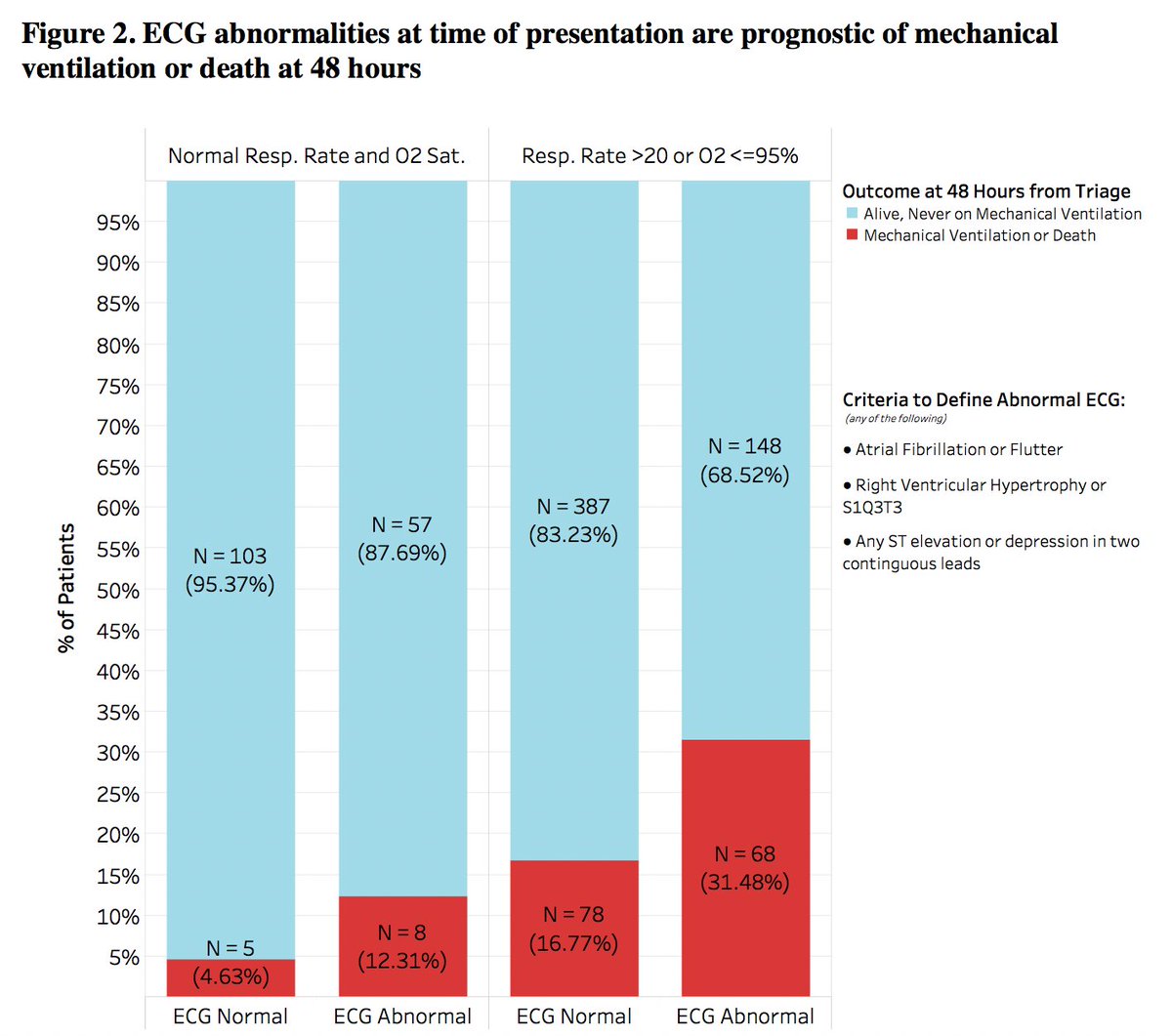
We looked at ECG abnormalities of #COVID19 patients, out in @JAHA_AHA. Particularly alarming was afib/flutter pts had 59% mortality vs 21% in those without (HR 2.1 in Cox model). Many thanks to @ElaineWanMD, @NirUrielMD, and @ColumbiaCardio team. https://t.co/xG8icuIsaU
A little casual causal philosophizing for your upcoming holiday celebration. Thanks @PAsclepius and Glen Colopy for the opportunity! Based on the great work of @AJAveritt. https://t.co/9ABjPGwjKN
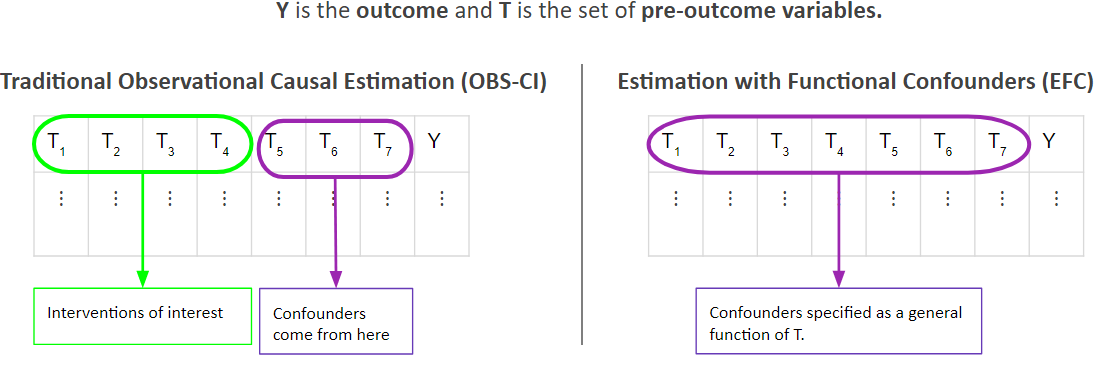
Now, what if the confounders were specified as a function of interventions of interest: h(T)? Like population structure in a GWAS problem? We call this problem Estimation with Functional Confounders (EFC):
https://t.co/YVTAw31a9y
Work with @aperotte and Rajesh Ranganath.
Attributable risks (ARs) support inference of whether an outcome is caused by an exposure. At #OHDSI2020, I will present my #NORAModel- a #Bayesian method of AR estimation that rectifies evidence at the population & individual-level. DM me! #CausalTwitter https://t.co/oE0MZ2ne3X
In our @MayoProceedings paper on pts admitted with #COVID19, we discuss findings helpful for early triage to floor vs ICU. Takeaway: EKG in ED is important--look for afib/flutter, RV strain, ST segment changes. Big thx to @NirUrielMD and @ColumbiaMed team!
https://t.co/pZl8n3odpW
I am ready to get to work leading @nychealthy, the finest health department in the country. Public health is a calling I've answered throughout my career—I invite you to read the remarks I shared earlier about my story.
Please follow me at @NYCHealthCommr https://t.co/m7YnH6lysa
To keep up to speed with recent work on abstractive summarization, I wrote a (little) lit review called "Sending out an SOS (Summary of Summaries)". https://t.co/QeRfZUzkMf