NYP Reporter: Prior to boarding Air Force One to depart Beijing, the entire U.S. delegation disposed of every item provided to them by their Chinese hosts. Gifts, badges, pins, and commemorative items were all dumped into a trash bin on site. The directive was absolute, no item of Chinese origin was permitted to board the aircraft. The precautions extended beyond the departure itself. Delegation members had left all personal electronic devices at home before traveling to China and operated exclusively on clean burner phones throughout the duration of the trip.
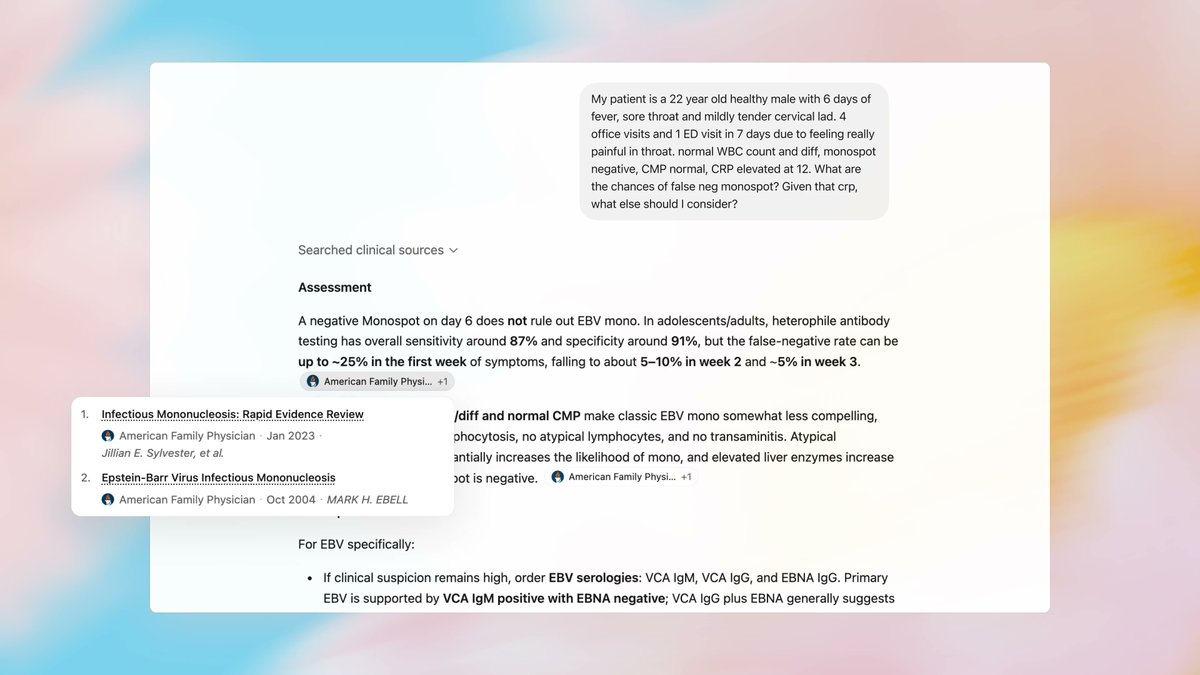
Today we’re introducing two big steps for health at OpenAI:
- ChatGPT for Clinicians, a free version of ChatGPT designed for clinical work
- HealthBench Professional, a new benchmark to evaluate real clinician chat tasks
We’re excited about what this can unlock for care. ❤️
RAG vs. CAG, clearly explained!
RAG is great, but it has a major problem:
Every query hits the vector DB. Even for static information that hasn't changed in months.
This is expensive, slow, and unnecessary.
Cache-Augmented Generation (CAG) addresses this issue by enabling the model to "remember" static information directly in its key-value (KV) memory.
In fact, you can combine RAG and CAG for the best of both worlds.
Here's how it works:
RAG + CAG splits your knowledge into two layers:
↳ Static data (policies, documentation) gets cached once in the model's KV memory
↳ Dynamic data (recent updates, live documents) gets fetched via retrieval
This gives faster inference, lower costs, and less redundancy.
The trick is being selective about what you cache.
Only cache static, high-value knowledge that rarely changes. If you cache everything, you'll hit context limits. Separating "cold" (cacheable) and "hot" (retrievable) data keeps this system reliable.
You can start today. OpenAI and Anthropic already support prompt caching in their APIs.
I have shared my recent article on prompt caching below if you want to dive deeper.
👉 Over to you: Have you tried CAG in production yet?
BREAKING: I asked Claude to upgrade my LinkedIn profile.
It didn’t just “upgrade” it. It turned it into a recruiter magnet.
Here are the exact 7 prompts I used:
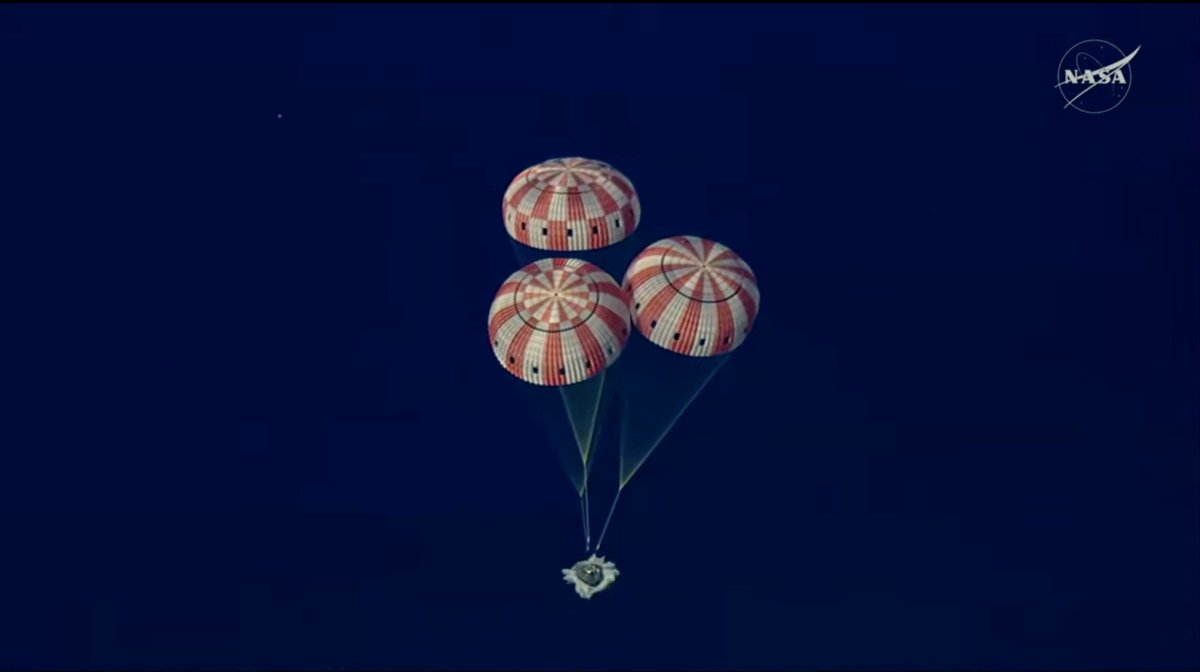
And splashdown!
America is back in the business of sending astronauts to the Moon and bringing them home safely.
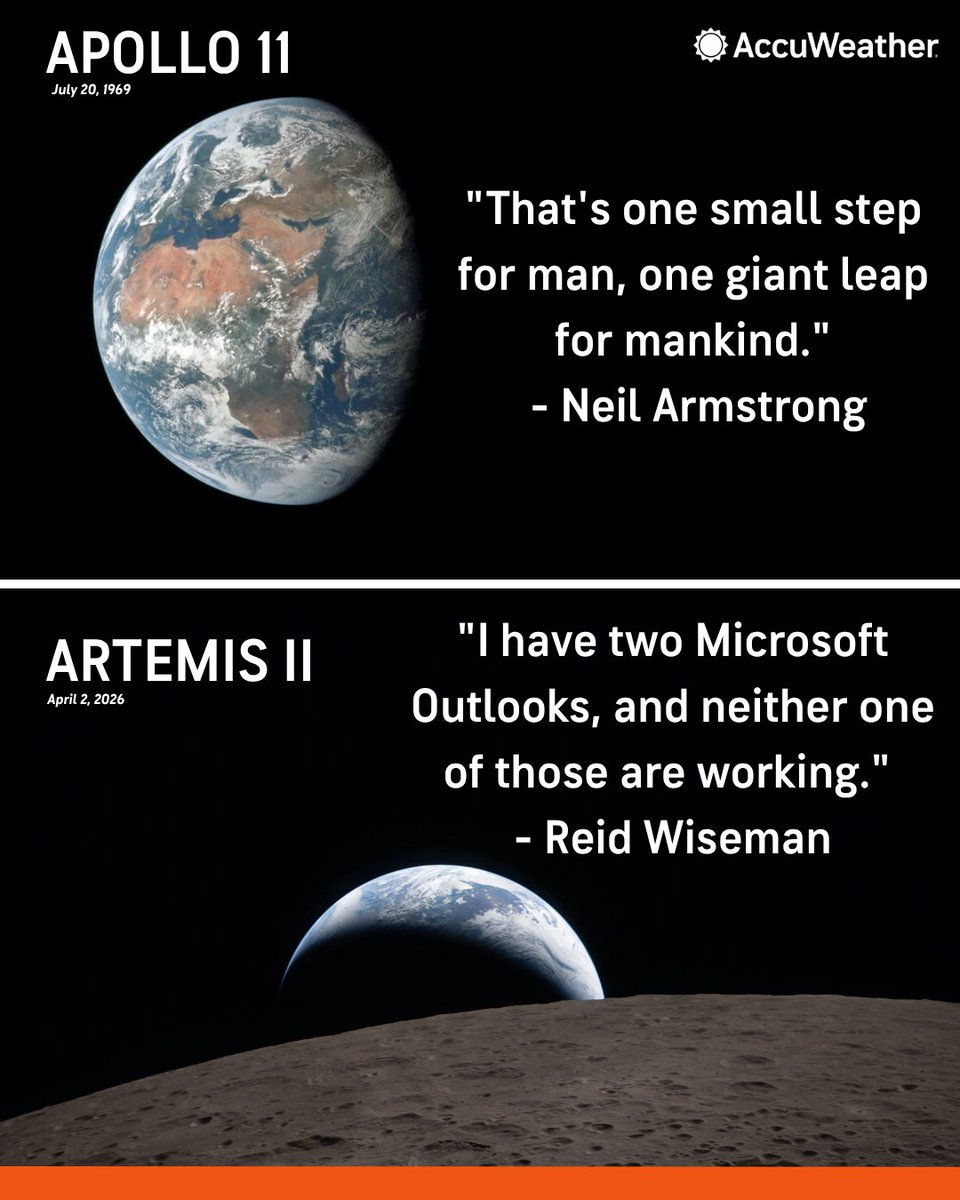
Reid, Victor, Christina, and Jeremy did an outstanding job. These talented astronauts inspired the world and represented their space agencies and nations as humanity’s ambassadors to the stars.
This was a test mission, the first crewed flight of SLS and Orion, pushing farther into the unforgiving environment of space than ever before, and it carried real risk. They accepted that risk for all we stood to learn and for the exciting missions that follow, as we return to the lunar surface, build a Moon base, and prepare for what comes next.
And they were not alone. The entire NASA workforce, our commercial and international partners, and the hopes and dreams of people all over the world were with them. The astronauts know it, and you should too. This mission would not have been possible without you.
Congratulations. Artemis II, mission accomplished.
Today we are launching https://t.co/hGaJPuT3Vz.
A real-time tracker of AI-driven layoffs across the U.S. These jobs are disappearing. The numbers are growing. And we're counting every single one.
SKILL.md is eating MCP Servers, and that's a good thing
Your MCP servers are burning 50,000 tokens just to teach an agent what a 200-token markdown file already knows.
Brad Feld runs an entire company on 12 skill files. No app. No workflow engine. Just markdown in a git repo.
Sentry's David Cramer says it bluntly. Many MCP servers shouldn't exist.
The problem? Teams keep building MCP servers for knowledge problems. But
MCP was designed for execution problems. The difference is costing you 50x in wasted context and worse agent reasoning.
I wrote the decision framework for getting this right.
What's your skill-to-MCP ratio looking like?
https://t.co/7xC39JPUjB
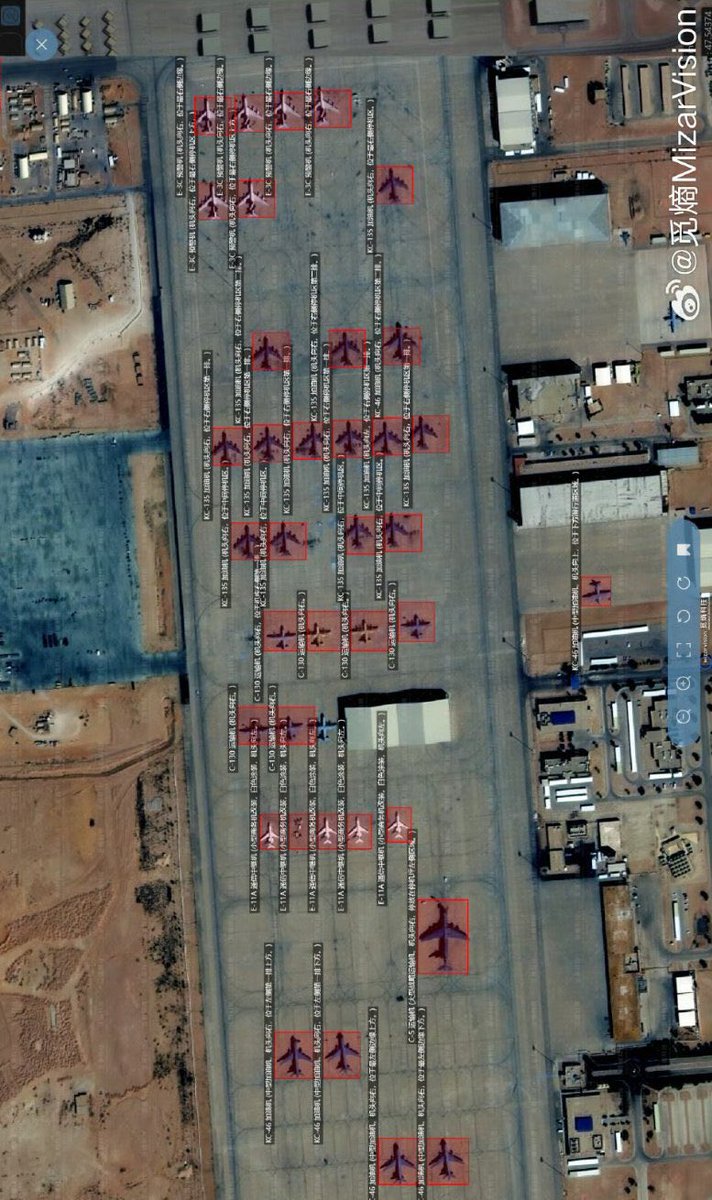
Look at this image carefully. You are looking at a Chinese commercial satellite photograph of Prince Sultan Air Base in Saudi Arabia. Every red box is an artificial intelligence model identifying a US military aircraft by type. Every label is in Mandarin. And the base you are looking at is the one Iran fired ballistic missiles at on Saturday night.
A company called MizarVision, founded five years ago in Hangzhou, published this. Not the Pentagon. Not the CIA. Not a classified intelligence briefing delivered to the Situation Room. A Chinese startup with access to sub-meter resolution Earth observation satellites and an AI object detection model that can distinguish a KC-135 Stratotanker from a KC-46 Pegasus from orbit.
Aviation Week confirmed what the image shows. Fifteen KC-135 aerial refueling tankers. Six KC-46 Pegasus tankers. Six E-3 Sentry airborne early warning aircraft, which is significant because only thirty one E-3s remain in the entire US Air Force inventory worldwide, meaning roughly a fifth of America’s operational AWACS fleet is parked on a single ramp in the Saudi desert. Two E-11A Battlefield Airborne Communications Nodes. C-130 Hercules transports. C-5 Galaxy heavy lifters. The backbone of Operation Epic Fury, catalogued from space and published on Weibo.
This is the base that Iran targeted. AFP journalists in Riyadh reported explosions in the eastern part of the capital with thick smoke rising. The Saudi Foreign Ministry condemned Iranian attacks targeting Riyadh and the Eastern Province. Saudi air defenses intercepted the projectiles. But the image you are looking at was published days before the strike. Which means Iran had exactly the same intelligence picture that MizarVision gave the entire world for free.
This is what the democratization of intelligence looks like. In 1991, only the United States could see individual aircraft on a ramp from space. In 2003, a handful of nations had that capability. In 2026, a Chinese startup publishes annotated satellite imagery of American force dispositions on social media, and Aviation Week runs the analysis before the first missile is fired.
Defence Security Asia captured what this means: sub-meter resolution imagery distinguishing individual aircraft types fundamentally alters the secrecy calculus of pre-strike deployments. You cannot mass two hundred aircraft across half a dozen bases and keep it secret when commercial satellites photograph every ramp twice a day and AI models label every airframe before an analyst finishes their coffee.
The age of hidden buildups is over. Every deployment is now observable, catalogued, and published in near real time by companies with no security clearance and no allegiance to anyone. The next war will not be planned in secret. It will be watched from orbit by everyone, in every language, simultaneously.
https://t.co/BrzGRrU3VW
so we now have:
- OpenClaw
- perplexity OpenClaw (perplexity computer)
- anthropic openclaw (cowork)
- miniature openclaw (picoclaw)
- secure openclaw (ironclaw)
- chinese openclaw (kimi k2.5)
- enterprise openclaw (openai frontier)
the future is 100% agentic. get the fuck on board.