Helena R. Peixoto (@IBCCF_UFRJ) and colleagues observed that Angiotensin-converting #enzyme 2 enhances megalin-mediated albumin #endocytosis in proximal tubule cells by restraining Angiotensin II/AT1R 🔬 🔎
Read the study 👇️
https://t.co/rAcgrpcxmJ
Kim Barrett, Editor-in-Chief of @JPhysiol, and Damian Bailey, Editor-in-Chief of @ExpPhysiol, reflect on the importance of recognising excellent in peer review and celebrate the newly launched 'Exceptional Referees' initiative at the journals 🎓️ 🎉
🔗 https://t.co/axErCK99QP
7 Sci-Hub Alternative Websites
Paper you need to ask for payment & can't use sci-hub?
You don't have to pay to read academic papers.
These are 7 sci-hub alternative websites to download papers for free.
👉 Unpaywall --> https://unpaywall. org/
Install this browser extension on Chrome and read the paper directly on the journal website legally and for free.
👉 Open Access Button (OAB) --> https://lnkd. in/dXVVQpUf
Copy and paste the link paper or DOI on the OAB website. This will be accessible on the next page. Legal.
👉 PaperPanda --> https://paperpanda. app/
Like Unpaywall, this Chrome extension allows you to access millions of research papers in one click.
👉 DOAJ --> https://doaj. org/
As the name implies, DOAJ (Directory of Open Access Journals) provides access to millions of scientific papers from around the world for free.
👉 OA[.]mg--> https://oa. mg/
Like Google which is made specifically to search for academic papers. There are more than 250 million papers available for access.
👉 Core --> https://core. ac. uk/
The world's largest database of research papers with more than 298 million papers from around the world that can be accessed for free.
👉 arXiv --> https://arxiv. org/
Especially for lovers of natural sciences and economics, this website provides access to 2.4 million academic papers for free.
Tip: Remove any spaces in the URLs if you encounter issues accessing the websites.
It all started in a London townhouse on 31 March 1876, at the home of Sir John Scott Burdon-Sanderson...
For our 150th anniversary, we share the story of how the Society was founded, and celebrate the life and work of Burdon-Sanderson. Read the article ⬇️ https://t.co/qEux89lAQK
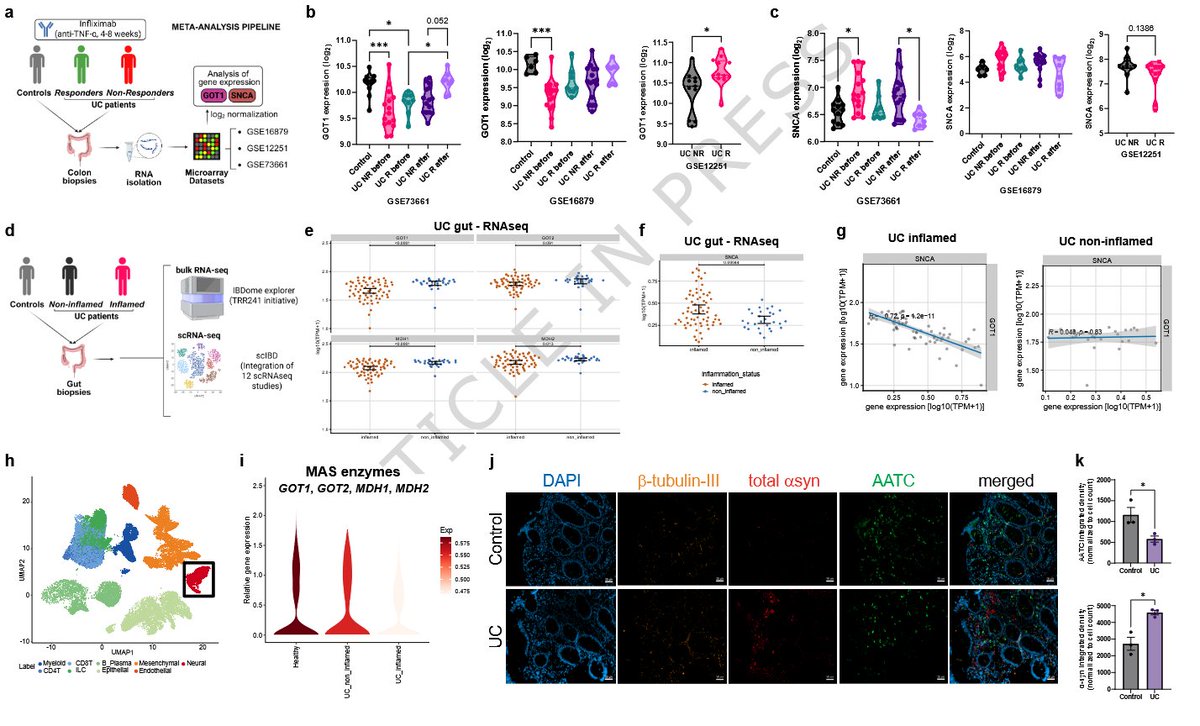
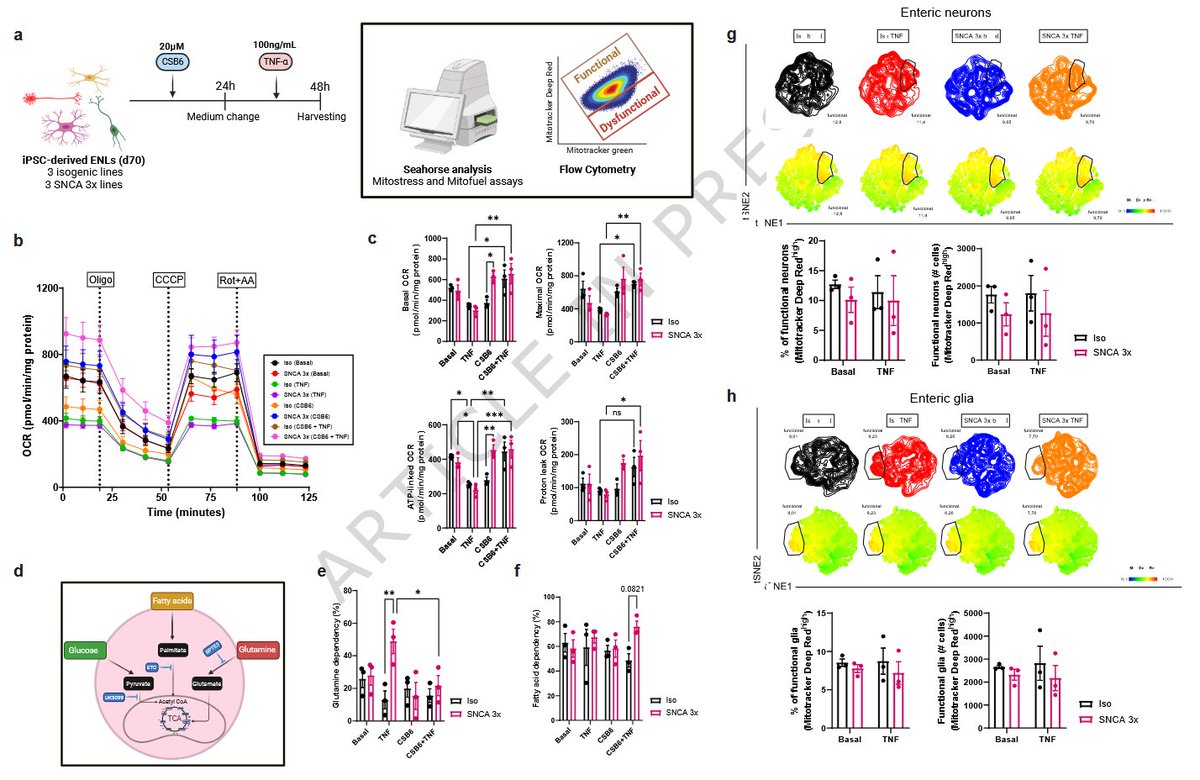
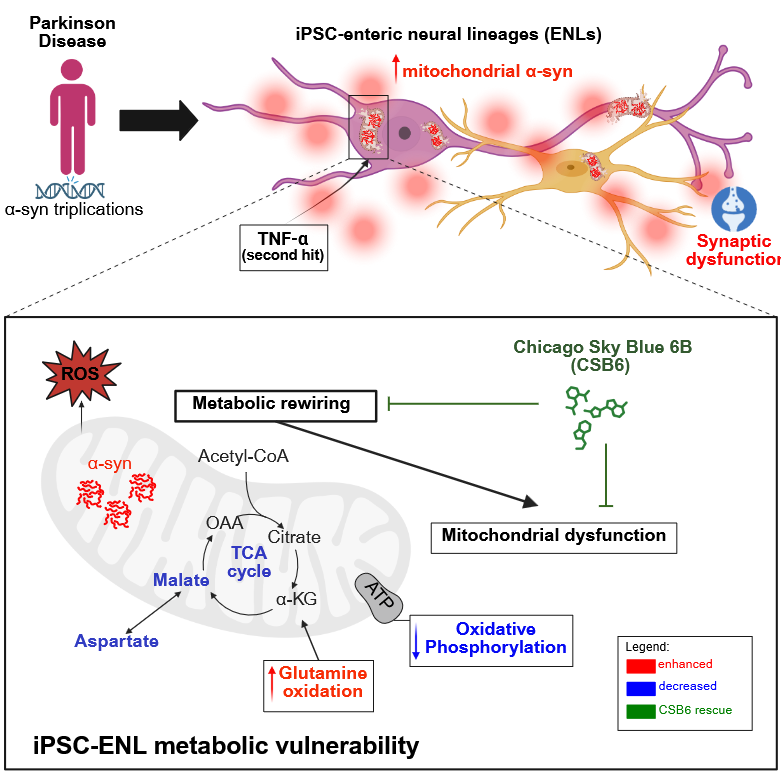
Researchers show that Tumor Necrosis Factor alpha (TNFa) enhances α-synuclein accumulation in IPCS-derived enteric neurons & glia; It impairs the malate-aspartate shuttle - bridging #Parkinsons & intestinal inflammation
https://t.co/kJubESs3oc
From our Cell and Animal Models of #Gastrointestinal#Disease collection comes today's #ThrowbackThursday, Intestinal organoid coculture systems: current approaches, challenges, and future directions (Ghanyah Al-Qadami et al.):
https://t.co/pcxNMQkp2A
Si eres profesor, estudiante o cualquier persona que crea contenido NotebookLM acaba de cambiar cómo se construyen los cursos para siempre.
El flujo de trabajo que las mejores universidades ya están usando 👇🏼
Integrating cross-species multi-omics with in vivo experimental validation, researchers identify potential #Parkinsons therapeutic targets & novel risk factors within endolysosomal pathway subnetworks
https://t.co/daw9b2gWLm
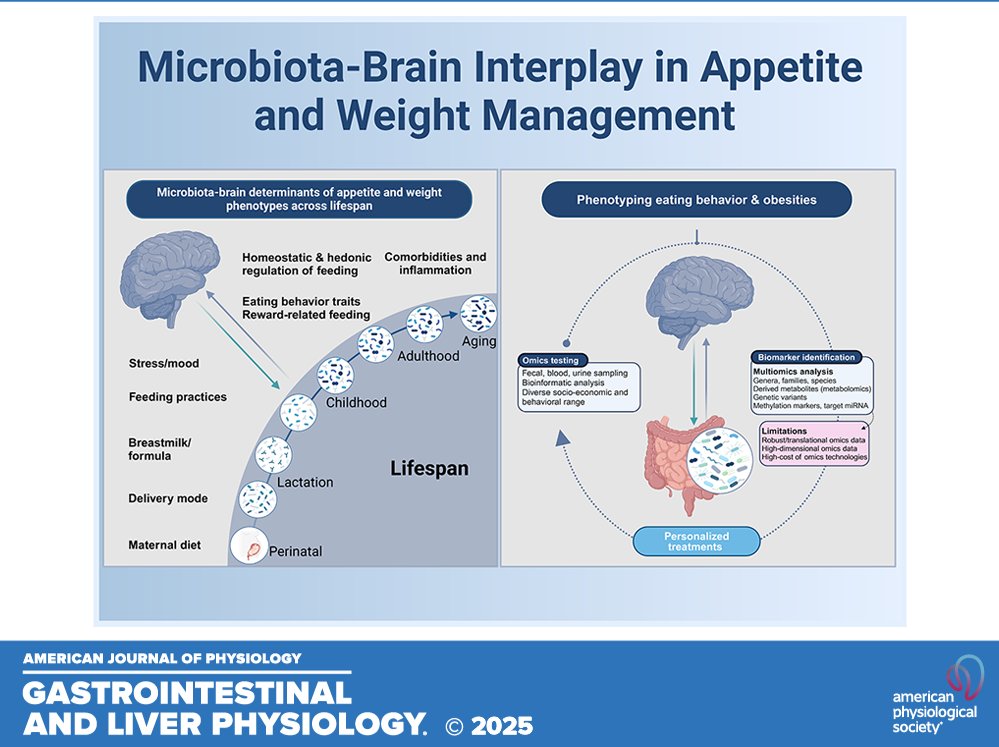
Today's #ThrowbackThursday features accompanying material in an AJP podcast! A menu for #microbes: unraveling #appetite regulation and weight dynamics through the microbiota-brain connection across the lifespan (Gabriela Ribeiro et al. @nova_medschool):
https://t.co/ADieCkMAVC
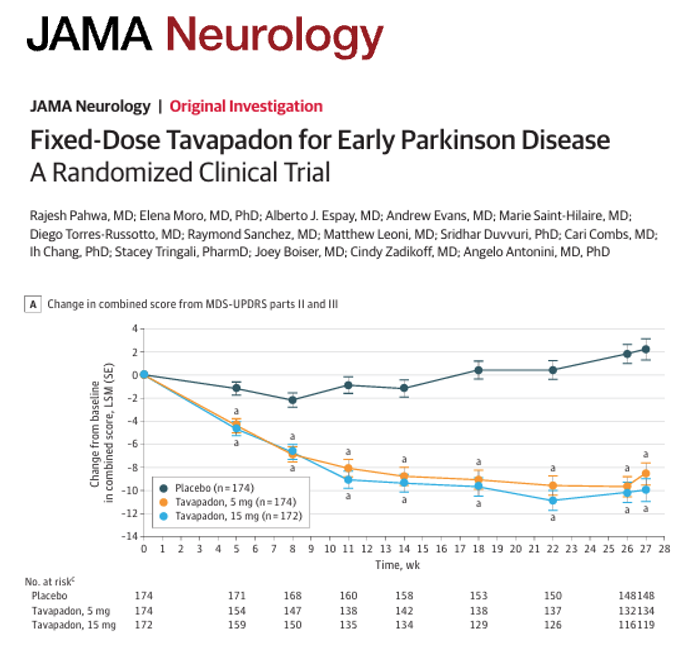
A new drug 'on the block' for Parkinson’s: Tavapadon, a D1/D5 selective dopamine agonist. Randomized trial results are in and positive. Randomized means participants were assigned by chance to different groups. Pahwa and colleagues describe in their new paper in JAMA Neurology the results of a phase 3 randomized trial of Tavapadon in EARLY Parkinson’s disease.
Key Points:
- Tavapadon significantly improved motor symptoms as measured by MDS-UPDRS II and III scores compared to placebo over 26 weeks.
- Clinical benefit emerged as early as week 5 and was sustained through the duration of the study.
- The drug demonstrated a favorable safety profile, w/ most adverse events mild to moderate including nausea, headache and dizziness.
My take: This is an important study that brings a D1/D5 selective dopamine agonist into the spotlight. The idea of targeting D1 pathways while potentially avoiding some of the D2/D3 related side effects is compelling. However, we should be cautious as longer term data will be critical to understand durability, safety and real world impact.
Here are 5 points that resonated w/ me:
1- Early Parkinson’s disease remains a window where smarter therapies could meaningfully alter trajectories.
2- Selective D1/D5 agonism represents a different pharmacologic strategy compared to traditional dopamine agonists.
3- The magnitude of motor improvement in this trial appears clinically meaningful and not just statistically significant.
4- Side effects were frequent, however mostly manageable, and this balance will matter in early disease decision making.
5- The future will hinge on long term safety, comparative effectiveness and identifying which folks benefit the most.
https://t.co/r7jxOAYEwd @JAMA_current@JAMANeuro
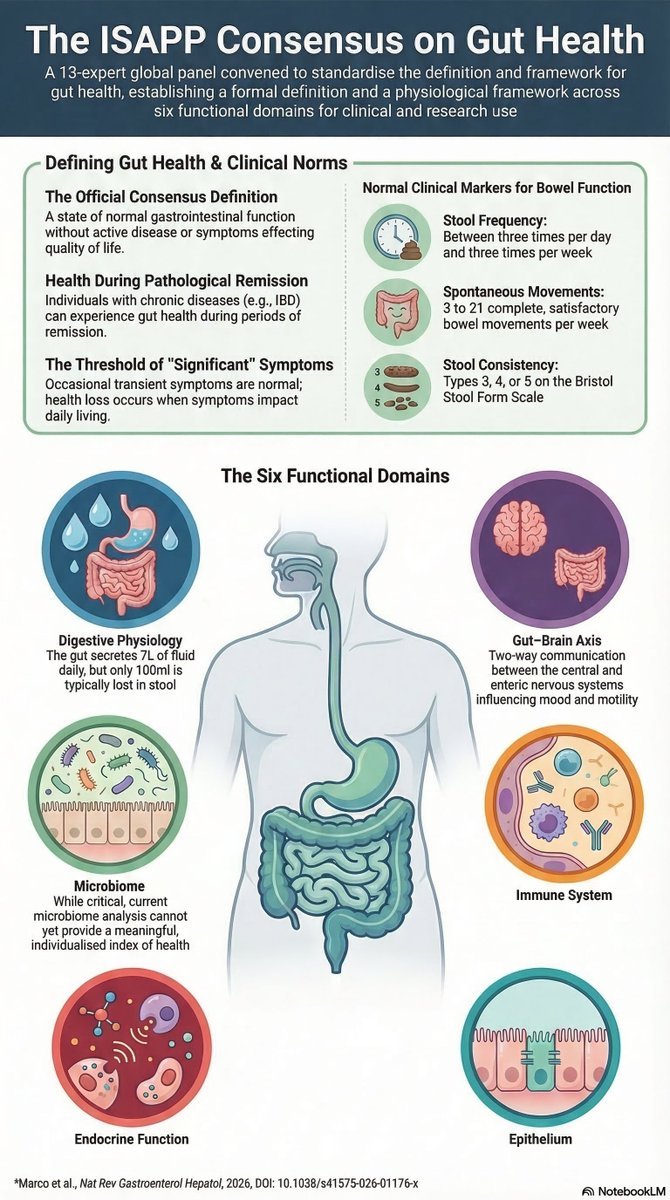
What is “gut health”?
In this consensus statement from the International Scientific Association for Probiotics and Prebiotics (ISAPP), gut health is defined as “a state of normal gastrointestinal function without active GI disease and gut-related symptoms that affect quality of life.”
To optimise gut health, each of the 6 following domains should be addressed👇
https://t.co/gNRkFeain0
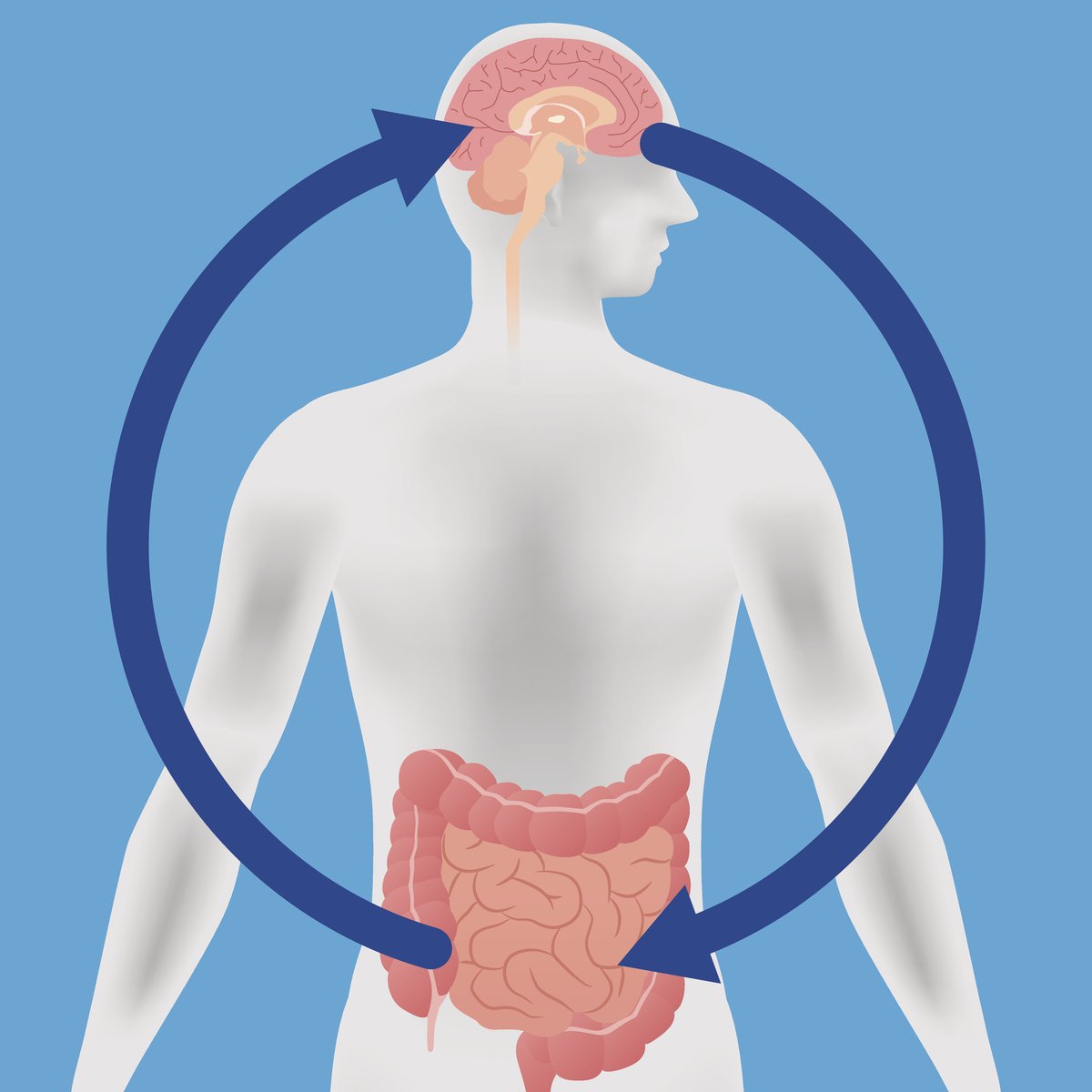
Your gut and brain are in constant conversation—and when it goes wrong, disease can follow.
This @physiol_journal review explores how gut–brain signaling shapes disorders—and why targeting the gut may offer new therapies: https://t.co/ismAgyyxEY #ArticlesInPress
📷: @istock
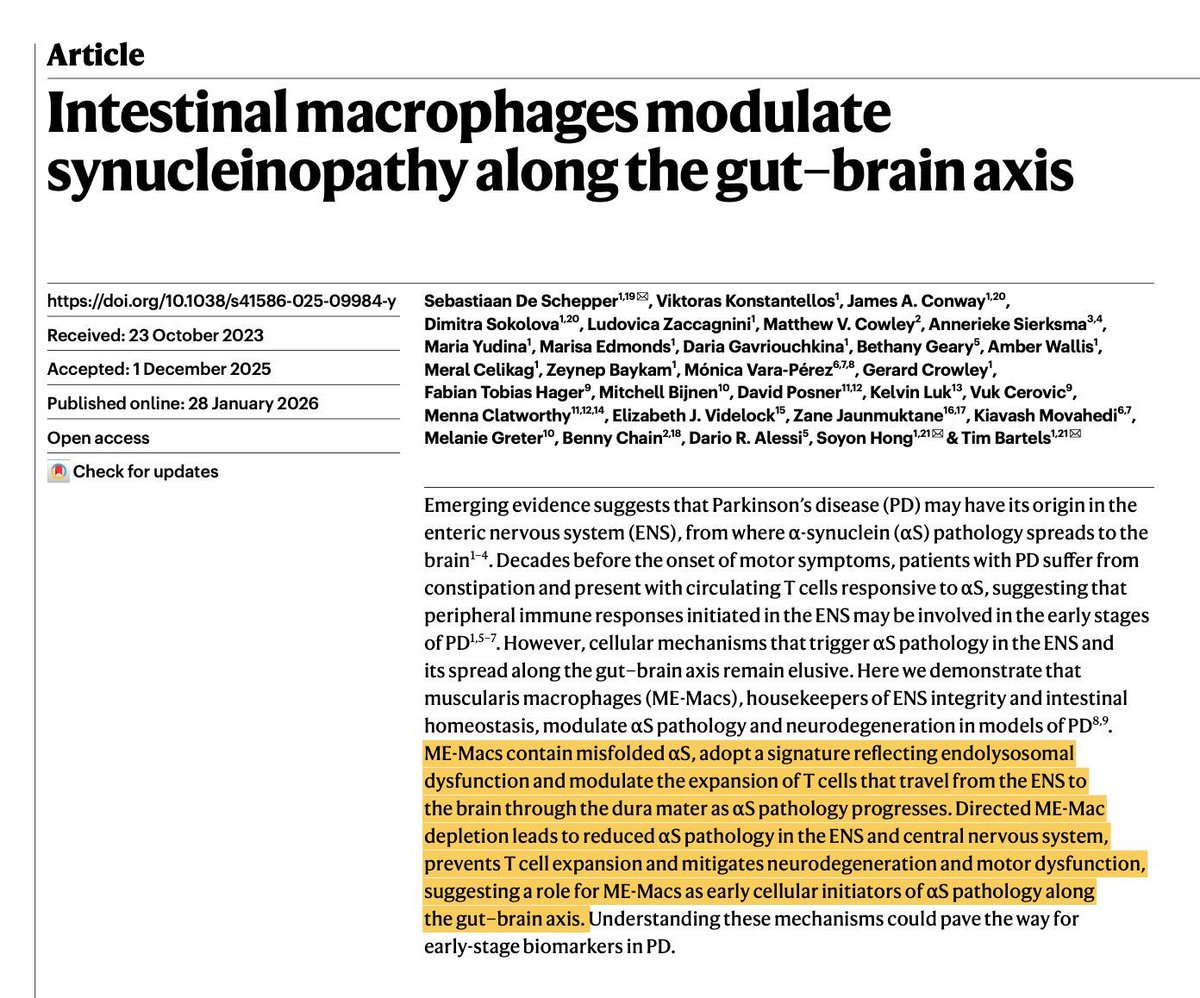
Parkinson's disease may begin in the gut, something Dr Parkinson suggested when he described the disease in 1817. How?: intestinal macrophages regulate alpha-synuclein pathology which ascends into the brain via the vagus nerve. This suggests several research strategies to prevent the brain disease by targeting the gut-vagus-brain axis.








![ScholarshipfPhd's tweet photo. 7 Sci-Hub Alternative Websites
Paper you need to ask for payment & can't use sci-hub?
You don't have to pay to read academic papers.
These are 7 sci-hub alternative websites to download papers for free.
👉 Unpaywall --> https://unpaywall. org/
Install this browser extension on Chrome and read the paper directly on the journal website legally and for free.
👉 Open Access Button (OAB) --> https://lnkd. in/dXVVQpUf
Copy and paste the link paper or DOI on the OAB website. This will be accessible on the next page. Legal.
👉 PaperPanda --> https://paperpanda. app/
Like Unpaywall, this Chrome extension allows you to access millions of research papers in one click.
👉 DOAJ --> https://doaj. org/
As the name implies, DOAJ (Directory of Open Access Journals) provides access to millions of scientific papers from around the world for free.
👉 OA[.]mg--> https://oa. mg/
Like Google which is made specifically to search for academic papers. There are more than 250 million papers available for access.
👉 Core --> https://core. ac. uk/
The world's largest database of research papers with more than 298 million papers from around the world that can be accessed for free.
👉 arXiv --> https://arxiv. org/
Especially for lovers of natural sciences and economics, this website provides access to 2.4 million academic papers for free.
Tip: Remove any spaces in the URLs if you encounter issues accessing the websites.](https://pbs.twimg.com/media/HE69ZiEb0AAQR6M.png)