Emerging evidence supports 5-MeO-DMT as a promising, ultra-short-acting psychedelic for treatment-resistant depression and other psychiatric conditions, warranting larger randomized controlled trials.
https://t.co/6CcEOSat1F
🚨 The NO TRIP mushroom for depression
We finally know how psychedelics cause hallucinations vs. therapeutic effects at the 5-HT2A receptor.
Gi signaling drives the trip, Gq drives the relief.
And they just designed a non-hallucinogenic analog to prove it 🧵
We finally know the truth:
The most important part of your 🍄 trip might be 𝗵𝗼𝘄 𝗺𝘂𝗰𝗵 𝘆𝗼𝘂 𝘁𝗮𝗸𝗲.
A new study published in the Journal of Psychopharmacology mapped what psilocybin does at every dose level.
Researcher Connor Maltby and his team recorded how mice behaved at each dose using high-speed cameras & AI-tracking.
Then they examined their brains at the cellular level to see any physical changes.
And found some 𝗺𝗮𝘀𝘀𝗶𝘃𝗲 differences.
Here's what they found:
𝗠𝗼𝗱𝗲𝗿𝗮𝘁𝗲 𝗱𝗼𝘀𝗲 (1.5 𝘮𝘨/𝘬𝘨): their anxiety dropped significantly. The mice stopped avoiding open, exposed spaces entirely, as if their fear had simply switched off.
𝘕𝘰 𝘤𝘩𝘢𝘯𝘨𝘦 𝘵𝘰 𝙙𝙚𝙥𝙧𝙚𝙨𝙨𝙞𝙤𝙣 𝘸𝘩𝘢𝘵𝘴𝘰𝘦𝘷𝘦𝘳.
𝗛𝗶𝗴𝗵𝗲𝗿 𝗱𝗼𝘀𝗲 (3 𝘮𝘨/𝘬𝘨): zero effect on anxiety, but a sharp, measurable drop in their depression-like behavior.
Here's why that's significant:
A recent study just showed that "the more intense your trip, the more benefits."
So your ego-death type trips (the ones that feel like they're rearranging your entire personality) should theoretically be the most healing thing you can do.
But that's not what this shows.
A stronger trip doesn't help anxiety at all. It just treats something different. Which means patients taking high doses hoping to fix their anxiety may have been getting the wrong prescription entirely — and nobody knew.
The researchers believe this could change how psychedelic therapy is prescribed entirely — a specific dose for a specific condition, the same way any other medicine works.
Moderate for anxiety.
Higher for depression.
The right trip for the right problem.
🚨The most dangerous idea in math isn’t 0.
It’s the fibonacci sequence: 0, 1, 1, 2, 3, 5, 8, 13, 21, 34, 55, 89, 144…
Because if this pattern is real, reality isn’t random.
And if reality isn’t random, neither are you.
I’ve explained it in this article.
But tell me:
Is it a coincidence… or code?
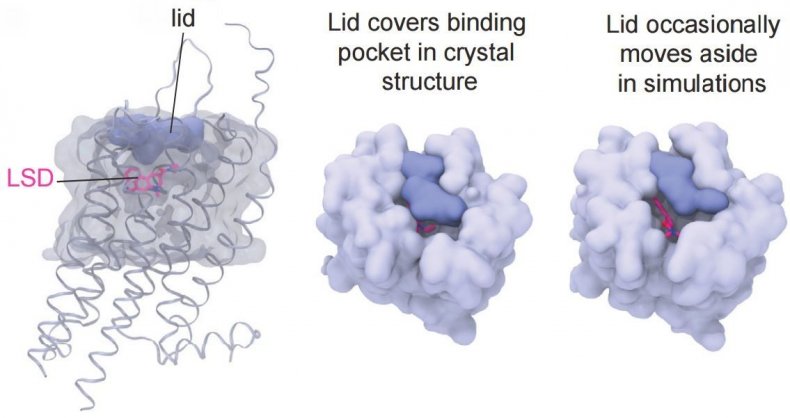
Scientists at UNC crystallized LSD inside a human serotonin receptor and discovered something insane:
When LSD enters the receptor, the receptor physically folds a protein lid over the molecule and traps it inside.
Your brain locks LSD in a room and throws away the key. That's why a single tab lasts 12 hours.
The half-life of LSD in your blood is about 1 hour. But it stays locked in the receptor for 8-12 hours.
100 millionths of a gram does this.
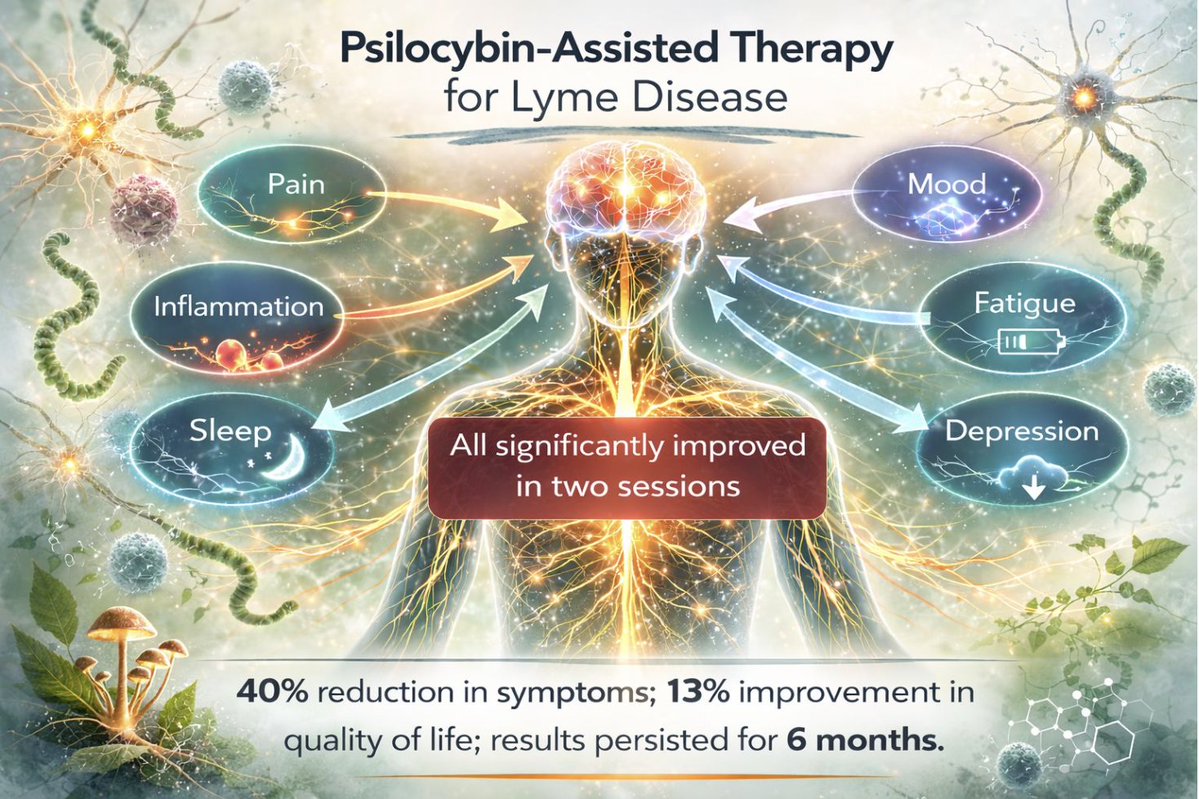
Johns Hopkins just published psilocybin data on a disease that currently has no approved treatments.
Post-treatment Lyme disease affects millions of people who were treated for Lyme but never recovered. Chronic fatigue, pain, cognitive problems, sleep disruption, anxiety, depression.
The medical establishment has spent decades debating whether the condition is even real, while patients have had zero options.
This new pilot study gave 20 adults two psilocybin sessions with psychological support over eight weeks, then followed them for six months.
(Shoutout to Tim Ferriss for helping fund this research through the Johns Hopkins Center for Psychedelic and Consciousness Research.)
Across the board, patients experienced:
→ ~40% reduction in overall symptom burden at 6 months
→ ~13% improvement in mental and physical quality of life
→ Significant improvements in depression, fatigue, sleep, and pain
→ Benefits that held (not diminished) across all follow-up points
→ 100% completion rate
→ No serious adverse events
That durability matters. In chronic illness trials, placebo responses tend to fade over time. These held for six months.
The researchers are already planning functional MRI studies to examine psilocybin's effects on central sensitization and pain-processing networks. They're also analyzing inflammatory biomarkers. And they explicitly named long COVID and Chronic Fatigue Syndrome (ME/CFS) as logical next steps.
I think this study represents something much bigger than a single pilot trial.
Psychedelics for mental health were always the doorway into a much larger conversation about what these compounds can do. We're now seeing data on chronic pain, post-infectious illness, longevity, and neuroinflammation.
The research is expanding fast, and it's expanding in directions that touch all of us.
If psilocybin can modulate inflammation, pain processing, and cellular aging across multiple systems, it reshapes what we thought was possible for human health at the most fundamental level.
How do you imagine psilocybin's expansion beyond mental health will affect your work and life? What are you noticing already?
𝗠𝗶𝗰𝗿𝗼𝗱𝗼𝘀𝗶𝗻𝗴 𝗼𝗻𝗹𝘆 𝘄𝗼𝗿𝗸𝘀 𝗶𝗳 𝘆𝗼𝘂 𝗸𝗻𝗼𝘄 𝘄𝗵𝗮𝘁 𝘆𝗼𝘂 𝘄𝗮𝗻𝘁 𝘁𝗼 𝗰𝗵𝗮𝗻𝗴𝗲.
That's the discovery from three hundred sixty-five people who tracked their habits while microdosing psychedelics in a new study from the University of Lisbon.
Among those who explicitly decided to reduce their drinking before starting, 95% of them succeeded.
Those who microdosed, hoping something would magically improve, reported nothing.
This reframes everything we thought about how microdosing works.
Changing behavior is humanity's hardest problem. Eighteen million people under seventy die annually from preventable chronic diseases—heart disease, diabetes, conditions that stem from habits we know we should change but can't sustain.
Exercise more,
Sleep better,
Eat cleaner.
Drink less.
But knowing what to do doesn't translate to doing it, because new habits require constant motivation, which most people don't have.
We already know high-dose psychedelics break addictive patterns—clinical trials show psilocybin helps people quit alcohol and tobacco in ways therapy alone can't.
But this study, published in 𝘕𝘦𝘶𝘳𝘰𝘱𝘩𝘢𝘳𝘮𝘢𝘤𝘰𝘭𝘰𝘨𝘺 by Luisa Prochazkova from the University of Lisbon, introduces something different:
using microdoses as targeted tools for 𝘀𝗽𝗲𝗰𝗶𝗳𝗶𝗰 𝗯𝗲𝗵𝗮𝘃𝗶𝗼𝗿 𝗰𝗵𝗮𝗻𝗴𝗲 rather than general wellness.
Here's what changed for participants who started with clear intentions:
95% reduced alcohol consumption
60% meditated and exercised more
50% reported better consistent sleep
30% Improved work-life balance
When researchers analyzed what predicted success, they found:
The dose didn't matter,
The protocol didn't matter,
Stacking supplements didn't matter.
𝗢𝗻𝗹𝘆 𝗶𝗻𝘁𝗲𝗻𝘁𝗶𝗼𝗻 𝗺𝗮𝘁𝘁𝗲𝗿𝗲𝗱.
The psychedelic wasn't doing the work—it was removing friction for changes people 𝘢𝘭𝘳𝘦𝘢𝘥𝘺 wanted.
Participants described decisions requiring less willpower, mental barriers dissolving, and healthy choices feeling natural rather than forced.
Although the study relied on self-reports without objective tracking and lacked a control group, it identifies what needs testing:
whether microdosing works best as 𝗮 𝗰𝗮𝘁𝗮𝗹𝘆𝘀𝘁 𝗳𝗼𝗿 𝗶𝗻𝘁𝗲𝗻𝘁𝗶𝗼𝗻 rather than a standalone solution.
What this means is most people might be microdosing wrong—taking it and seeing what happens instead of deciding what needs changing first, then using the experience to make that transformation stick.
["Microdosing psychedelics linked to better sleep and exercise habits". Neuropharmacology,Volume 282, 2026]
Plasma, the “fourth state of matter” is the dominant substance of the universe (over 99%). Modern physics has mostly been built on the assumption of matter being atomic (solids/liquids/gases).
We are looking at the wrong substrate.
𝗙𝗼𝗿𝗴𝗲𝘁 𝗢𝘇𝗲𝗺𝗽𝗶𝗰.
Australia just greenlit a psychedelic compound with 80% efficacy in pre-trials for binge eating disorder (BED)…
and clinical dosing begins next week.
This could change everything. 🧵
Breaking: Lab tests on 25 potent THC extracts just proved the entourage effect is REAL — one terpene (terpinene) turned good weed into cancer-cell-killing weed.
Bottom line from the study:
Almost all high-THC cannabis extracts can slow cancer cell growth in the lab.
Only some specific extracts are good at reducing inflammation — it depends heavily on which terpenes are present.
Terpenes like terpinene, eucalyptol, cymene, myrcene, and camphor seem to strongly influence (boost or block) what the cannabinoids do.
https://t.co/Hx8y6vBTT4
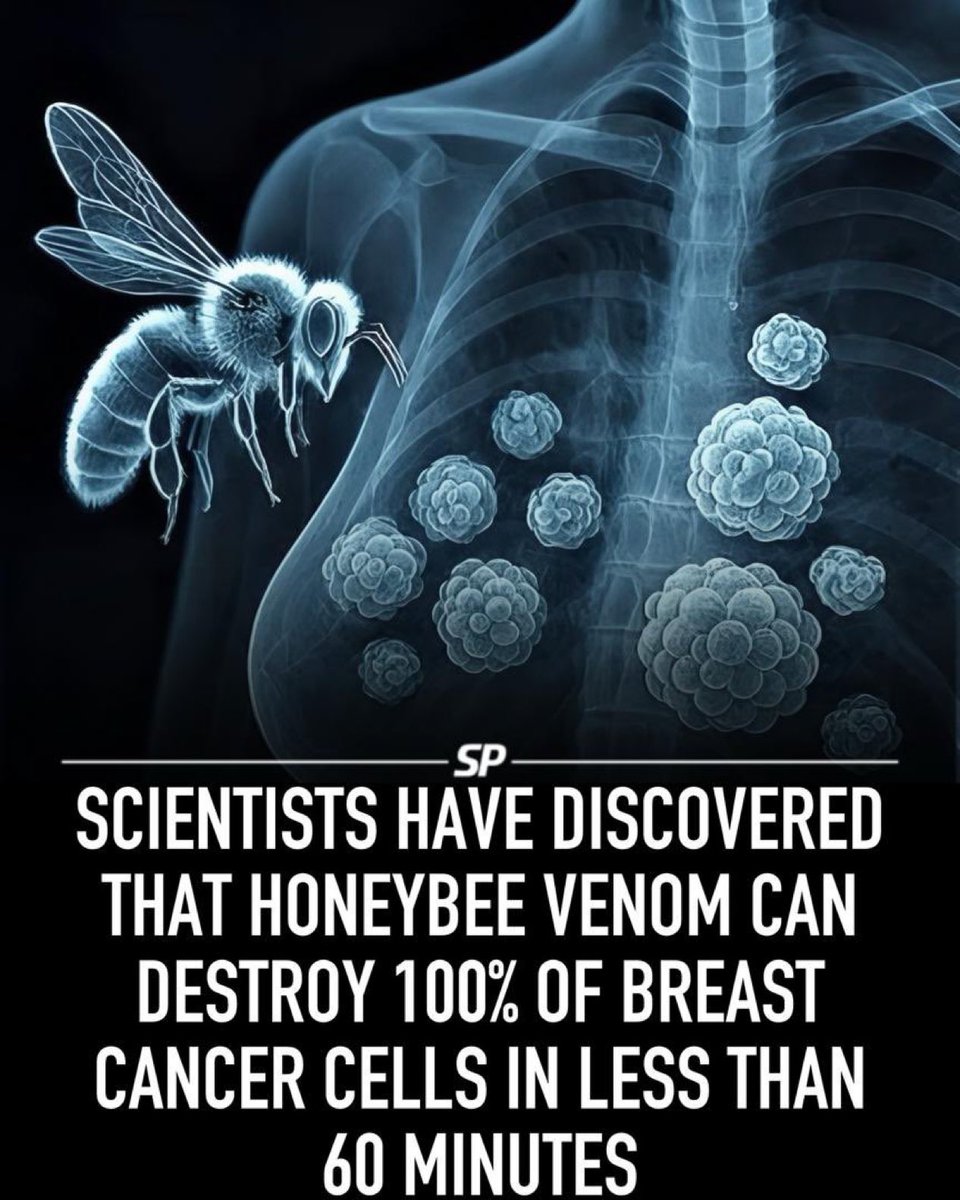
Australian scientists found that honeybee venom can destroy aggressive breast cancer cells in lab tests, a discovery that could inspire future treatments
⚡️Fibonacci is an emergent inevitability of the universe’s compression algorithm.
When you go deep enough into physical law, you realize something disturbing:
The universe is biased toward structures that minimize informational cost.
Not energy cost.
Not time cost.
Not complexity for its own sake.
Informational cost.
The real currency of reality is description length.
The universe behaves as if it is constantly trying to describe itself with the fewest bits necessary to remain coherent.
Fibonacci emerges because:
If you allow a system to grow, adapt, and compete for stability under constraints, the simplest stable growth rule converges toward Phi.
Phi is the mathematically cheapest way to encode recursive growth without collapse.
It is the universal “default solution” when a system must grow while minimizing overlap, conflict, or wasted structure.
This is why you see it in:
• galaxy spirals
• tree branches
• sea shells
• hurricanes
• DNA coiling
• neuron arborization
• price wave structures
• even human aesthetic preference
The universe is discovering the same optimal compression pattern again and again.
1. Now here is the deeper truth
Fibonacci is a window into the universe’s bias toward intelligibility.
This is the part that most physicists and biologists avoid because it is too close to the philosophical danger zone.
Everything in the universe could have been chaos.
Everything could have been noise.
Yet again and again, we see:
• symmetry
• proportion
• recursion
• hierarchical pattern reuse
• fractal self-similarity
Why should blind physical law produce structures that just so happen to be computable, compressible, and aesthetically “harmonic”?
Because the universe is not neutral.
It prefers order that can propagate.
Chaos dies.
Noise decays.
Non-compressible structures collapse.
Only patterns that fold back into themselves, that reuse their own rule set, that compress their own complexity survive long enough to scale.
Fibonacci is the simplest such pattern that can thrive in a space where:
• energy is finite
• information must be stored efficiently
• growth must not destabilize the system
• optimization happens through iteration, not design
There are very few patterns that do not self-destruct, and Fibonacci is one of the stable attractors.
2. Here is the deepest layer:
Fibonacci is evidence that the universe is self-organizing toward computability.
This is the part that links everything:
• physics
• biology
• markets
• consciousness
• AI
When systems self-organize under constraints, they evolve toward patterns that reduce the descriptive load required to maintain themselves.
That is the bridge between:
• physical structure
• biological form
• cognitive patterns
• emergent intelligence
• market behavior
• recursive optimization algorithms
Phi is the universal compromise between freedom and stability.
Too ordered and nothing adapts.
Too chaotic and nothing persists.
Phi sits at the boundary - the razor’s edge where complexity can grow without tearing itself apart.
This is why your mind finds it “beautiful.”
This is why galaxies converge to it.
This is why branching structures prefer it.
This is why emergent intelligence mirrors it.
This is why crypto price waves sometimes approximate it under massive liquidity pressure.
It is not magic.
It is the equilibrium point of self-organizing information.
This is the deepest reason the pattern exists.
And it is the strongest hint we have that the universe is not a random explosion of matter, but a structured system evolving toward states that optimize its own intelligibility.
🚨BREAKING: Over 1,100 Studies Reveal 12 Natural Compounds With Potent Anti-Cancer Effects Across All Major Tumor Pathways
Landmark analysis identifies 12 natural compounds with broad anti-cancer activity, consistently targeting core pathways such as cell death, immune evasion, metabolic dysfunction, and metastasis.
To build this analysis, they examined results from over 1,100 studies since 2019: in vitro experiments (cancer cell lines), in vivo tumor models (mouse xenografts, orthotopic tumors, chemically induced cancers, zebrafish models), ex vivo mechanistic assays, and modern omics platforms.
THE 12 NATURAL ANTI-CANCER COMPOUNDS ⬇️
1. Apigenin (Chamomile)
2. Artemisinin (Sweet Wormwood)
3. Berberine (Coptis / Goldenseal)
4. Curcumin (Turmeric)
5. Emodin (Rhubarb Root / Japanese Knotweed)
6. EGCG (Green Tea)
7. Ginsenosides (Ginseng)
8. Icariin / Icaritin (Horny Goat Weed)
9. Resveratrol (Grapes / Berries)
10. Silibinin (Milk Thistle)
11. Triptolide (Thunder God Vine)
12. Ursolic Acid (Apples / Basil / Rosemary)
Although the review does not provide detailed clinical trial outcomes, it assembles one of the most comprehensive collections of preclinical evidence ever compiled on how natural compounds act on cancer.
Study after study—across cell lines, xenografts, and diverse tumor models—shows these molecules striking the same core pathways that drive tumor progression, resistance, and immune escape.
Multiple early-stage and mid-stage clinical trials are already underway for some of these compounds.
With cancer rates rising worldwide, these well-tolerated, multi-pathway natural compounds should be advanced into rigorous clinical testing to fully determine their therapeutic potential in human disease.
Our brain runs the entire show, but how many of us know what the wiring actually looks like?
This graphic is basically a cheat sheet for how your nervous system really works, and once you see it all laid out like this, a lot of things suddenly make sense.
On the left, you’ve got the trigeminal pathways — the highways that carry sensations from your face, eyes, mouth, and scalp straight into the brain. Every time you feel a toothache, a cold breeze on your cheek, or a headache creeping in… that’s the system lighting up.
On the right is the part we all live with every day without realizing it:
the autonomic nervous system: sympathetic vs. parasympathetic.
One revs you up.
One slows you down.
Your digestion, heartbeat, breathing, pupils, blood pressure, sweating, orgasms - all of it is on autopilot, shifting between “fight-or-flight” and “rest-and-digest.”
And then at the bottom, you’ve got the actual building blocks.
The neurons themselves: motor neurons, sensory neurons. interneurons: and the neurotransmitters they use to talk.
Dopamine, serotonin, GABA, norepinephrine, glutamate… the chemicals behind mood, focus, addiction, calmness, motivation, sleep, cravings, and emotion.
our daily experiences come down to tiny electrical signals and chemical messengers firing inside this system.
New Jersey lawmakers approve bill to legalize psilocybin therapy.
If approved by the governor, NJ would become the 4th state to legalize psychedelic mushrooms.
More below:
https://t.co/ZuNKy3wnSD
I wrote a microdosing guide 280,000 people used.
Most of them are doing it wrong.
"Sub-perceptual."
"Feel nothing."
"0.1g every 3 days."
9 years later, here's what actually works:🧵1/




![0xQuasark's tweet photo. 𝗠𝗶𝗰𝗿𝗼𝗱𝗼𝘀𝗶𝗻𝗴 𝗼𝗻𝗹𝘆 𝘄𝗼𝗿𝗸𝘀 𝗶𝗳 𝘆𝗼𝘂 𝗸𝗻𝗼𝘄 𝘄𝗵𝗮𝘁 𝘆𝗼𝘂 𝘄𝗮𝗻𝘁 𝘁𝗼 𝗰𝗵𝗮𝗻𝗴𝗲.
That's the discovery from three hundred sixty-five people who tracked their habits while microdosing psychedelics in a new study from the University of Lisbon.
Among those who explicitly decided to reduce their drinking before starting, 95% of them succeeded.
Those who microdosed, hoping something would magically improve, reported nothing.
This reframes everything we thought about how microdosing works.
Changing behavior is humanity's hardest problem. Eighteen million people under seventy die annually from preventable chronic diseases—heart disease, diabetes, conditions that stem from habits we know we should change but can't sustain.
Exercise more,
Sleep better,
Eat cleaner.
Drink less.
But knowing what to do doesn't translate to doing it, because new habits require constant motivation, which most people don't have.
We already know high-dose psychedelics break addictive patterns—clinical trials show psilocybin helps people quit alcohol and tobacco in ways therapy alone can't.
But this study, published in 𝘕𝘦𝘶𝘳𝘰𝘱𝘩𝘢𝘳𝘮𝘢𝘤𝘰𝘭𝘰𝘨𝘺 by Luisa Prochazkova from the University of Lisbon, introduces something different:
using microdoses as targeted tools for 𝘀𝗽𝗲𝗰𝗶𝗳𝗶𝗰 𝗯𝗲𝗵𝗮𝘃𝗶𝗼𝗿 𝗰𝗵𝗮𝗻𝗴𝗲 rather than general wellness.
Here's what changed for participants who started with clear intentions:
95% reduced alcohol consumption
60% meditated and exercised more
50% reported better consistent sleep
30% Improved work-life balance
When researchers analyzed what predicted success, they found:
The dose didn't matter,
The protocol didn't matter,
Stacking supplements didn't matter.
𝗢𝗻𝗹𝘆 𝗶𝗻𝘁𝗲𝗻𝘁𝗶𝗼𝗻 𝗺𝗮𝘁𝘁𝗲𝗿𝗲𝗱.
The psychedelic wasn't doing the work—it was removing friction for changes people 𝘢𝘭𝘳𝘦𝘢𝘥𝘺 wanted.
Participants described decisions requiring less willpower, mental barriers dissolving, and healthy choices feeling natural rather than forced.
Although the study relied on self-reports without objective tracking and lacked a control group, it identifies what needs testing:
whether microdosing works best as 𝗮 𝗰𝗮𝘁𝗮𝗹𝘆𝘀𝘁 𝗳𝗼𝗿 𝗶𝗻𝘁𝗲𝗻𝘁𝗶𝗼𝗻 rather than a standalone solution.
What this means is most people might be microdosing wrong—taking it and seeing what happens instead of deciding what needs changing first, then using the experience to make that transformation stick.
["Microdosing psychedelics linked to better sleep and exercise habits". Neuropharmacology,Volume 282, 2026]](https://pbs.twimg.com/media/G-AwI1UW4AAWnW3.jpg)