On the road to finding and analysing Gravitational Waves using Pulsar Timing Array techniques on our African MeerKAT telescope & with the Meertime collaboration
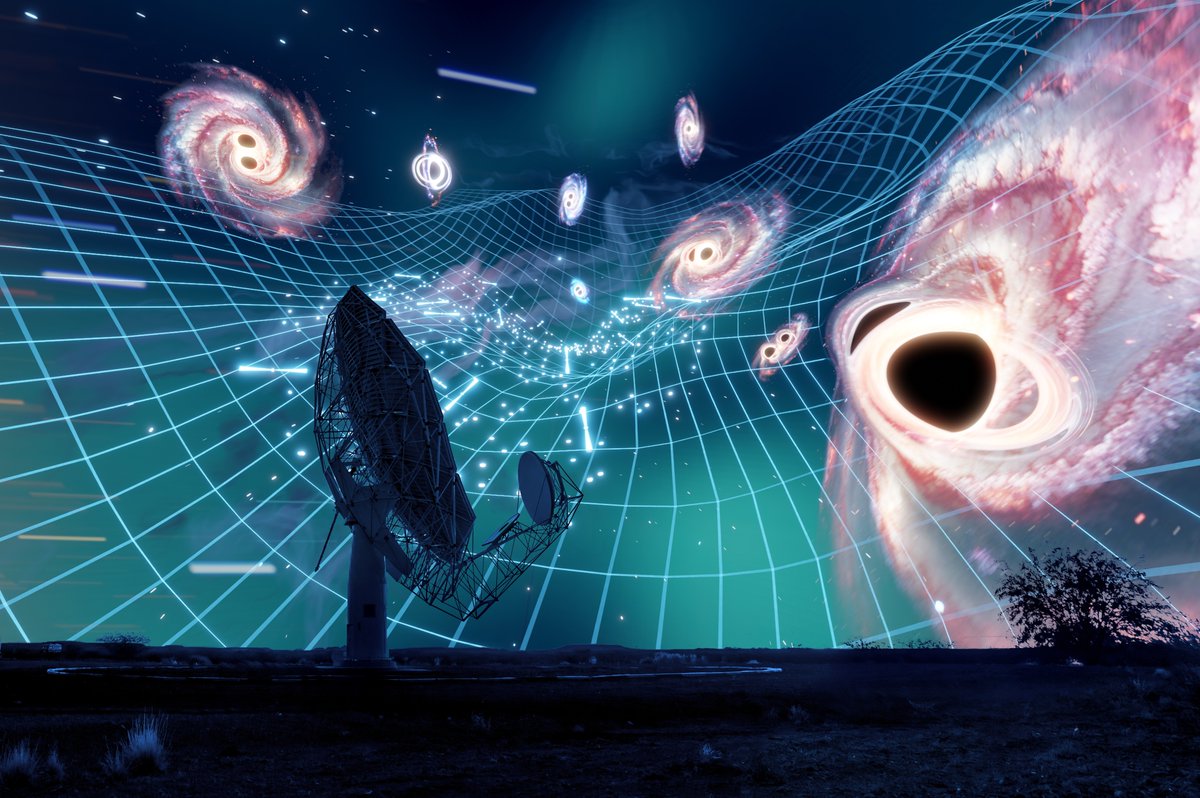
MeerKAT is a science-eager 64-dish radio telescope in the heart of the South African Karoo. This world operates at maser-coordinated "Karoo Telescope Time" - a hyper precise time standard ideal for pulsar timing science as done by the Meertime project https://t.co/54RdKns91h
A year and a half on - and MeerKAT PTA results streaming in! In just 4.5 yrs of data we see evidence for the gravitational wave background. Well done team! And testament to a magnificent instrument.
A perfect day to show off our new website too: https://t.co/9rIrOjJMBv
Watch Dr Daniel Reardon (@Swinburne) explain how #ParkesPulsarTimingArray astronomers used the @CSIRO_ATNF Parkes radio telescope #Murriyang to find evidence for gravitational waves from supermassive black holes at the heart of galaxies https://t.co/pu96EkUuVh
Join us for the IAU 389 Symposium on Gravitational Waves in Aug 2024 in Cape Town, South Africa - where we will discuss the latest PTA results and much more!
https://t.co/XOIU3401cJ
And there we have, the checkpoint marking the beginning of the era of nHz GW astronomy!
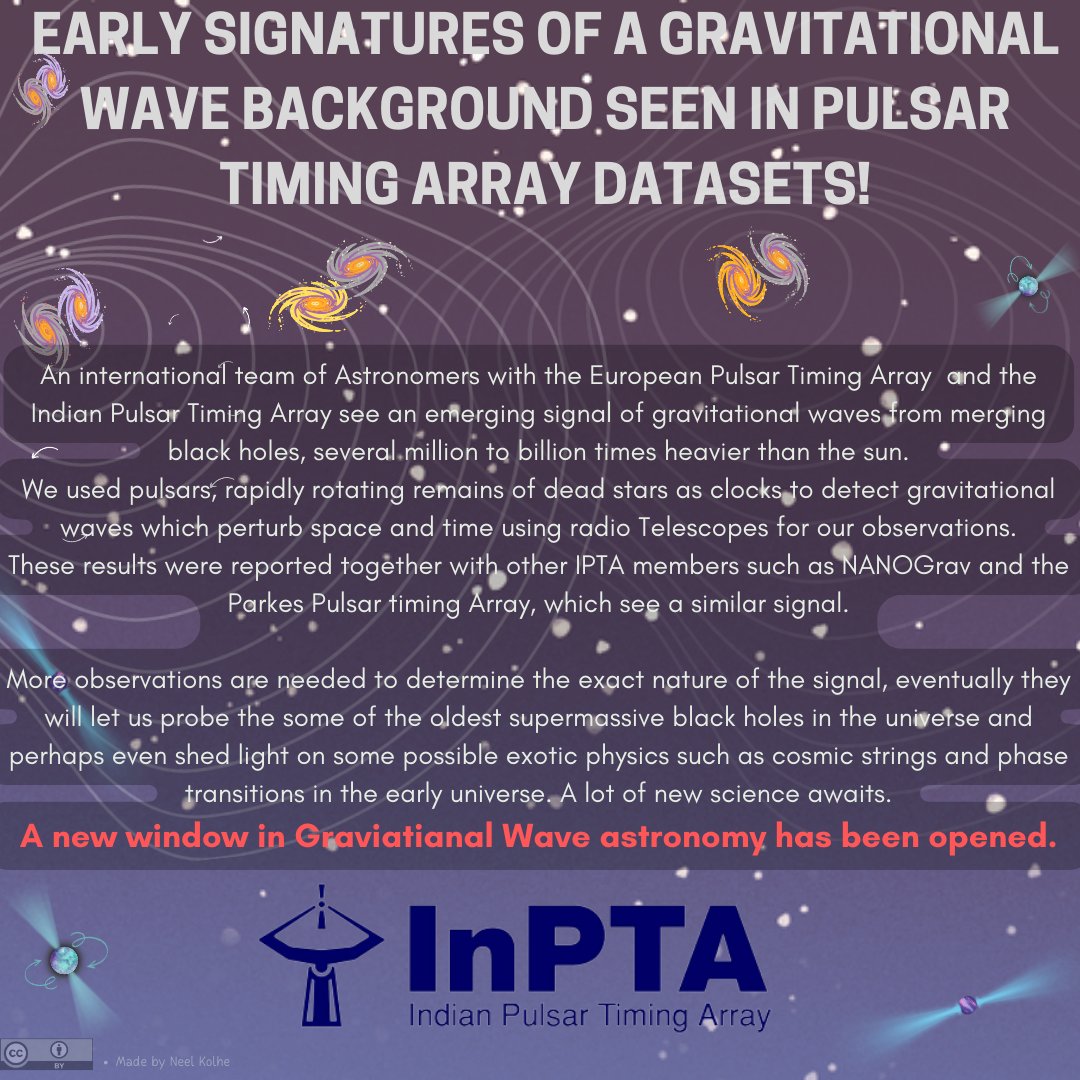
A successful press conference with the members and PIs of @indian_pta presenting the emerging evidence of a SGWB in the combined EPTA+InPTA data sets! 🥂🎉
Wow, just wow! Good morning humming cosmos! Congratulations to all my amazing colleagues & PTAs across the world for this beautiful first result after decades of your hard work, delighted & so proud to know you! @IPTA_GW@NANOGrav@EPTAGW @CSRIO_ATNF @InPTA_GW@APT_GW 🙌🏾❤️🎉📡🌍
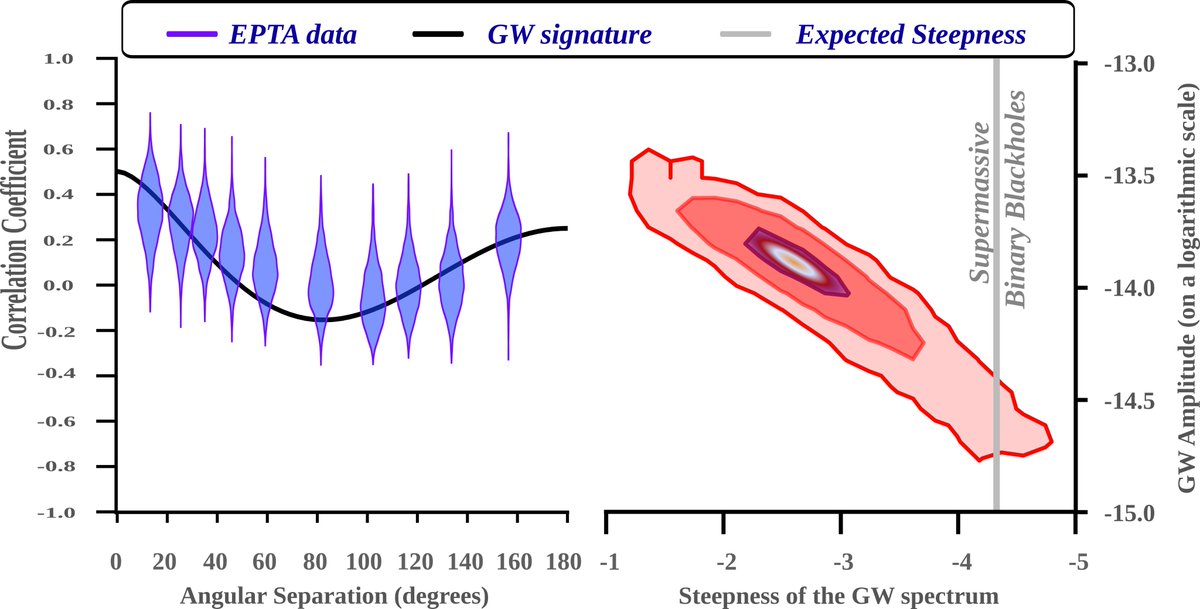
In this paper we compare several data versions; it turns out that the latest EPTA data from our new-generation observing systems show non-negligible evidence for a gravitational wave background being present in our data
We see early signs of a Gravitational Wave background in our combined dataset with @EPTAGW.
These results corroborate with those from @NANOGrav and PPTA @CSIRO_ATNF@ARC_OzGRav
Read along in this thread to know this discovery was made and it's consequences!
Australian astronomers have announced the strongest hint yet of low-frequency gravitational waves from supermassive black hole pairs! @Swinburne@ARC_OzGRav@CSIRO_ATNF https://t.co/e9uKi3fWWT
An exciting pulsar timing announcement is coming on 29 June! Join us at the IAU Symposium on Gravitational Wave Astrophysics in Cape Town, 6-8 Aug 2024! Explore impactful discoveries in Physics & Astronomy, discuss GW detections and more! #GW2024@APT_GW https://t.co/k8Vd6cjX4N
#Astronomy activities can change perspectives and reframe one’s problems. Can they be designed to promote #mentalhealth? That is the question being explored by Dominic Vertue, Sandra Benitez, & others at the OAD.
Article in the latest issue of CAP Journal
https://t.co/EuGCKBJ2Iq
A big breakthrough in stellar research! South African telescopes have contributed to uncovering the secrets of a new type of white dwarf pulsar. These rapidly rotating stars offer valuable insights into magnetic fields and stellar companions. https://t.co/1uZwEbyGJF🌌 #Discovery
How it all fits together - a collection of pulsar array timing experiments called the International Pulsar Timing Array jointly searches for nanoHz Gravitational Waves! More details on the science at @IPTA_GW.
And mark June 29th for the combined reporting of their new results!
The International Pulsar Timing Array (IPTA) is a consortium of consortia, comprised of the European PTA (EPTA), the North American Nanohertz Observatory for Gravitational Waves (NANOGrav), the Indian Pulsar Timing Array Project (InPTA), and the Parkes PTA (PPTA).