Computer consulting / repair center. We fix (and build) laptops / desktops / servers. Onsite support for business, and website design/hosting. Linux / Mac / Win
We decided years ago we wouldn't launch a #Cardano Native Token unless we had an actual application for it.
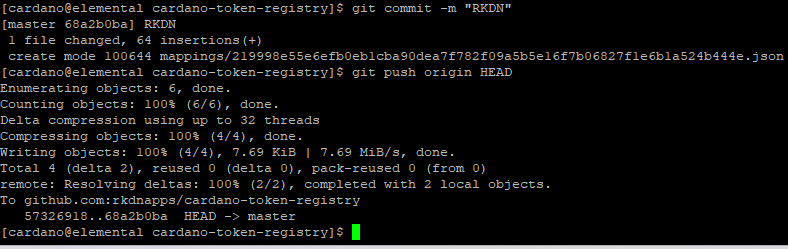
We're getting close to a beta release of that application so we're hoping our PR to a certain Github repo gets accepted!
https://t.co/6GMOcHyTEf
https://t.co/7NYU9BkNNm
SanDisk’s forecast of a 1.2 zettabyte (ZB) AI data center NAND market by 2030 has “no downside risk” and doesn’t even include High-Bandwidth Flash (HBF), which will sample in early 2027, media report, citing a Citi note from a SanDisk call. https://t.co/sQzFuRtU2f
I asked Claude to populate a Civilization-style game map with real data from the US. Opus 5.5 downloaded and parse a ton of public data and 7 hours and 45K lines of code later... it works :)
- 31 real data sources including Census, BEA, BLS, EIA, NOAA, USGS, DoD, NPS, FAA, FEMA, CDC...
- Real elevation, land cover, GDP, jobs, power plants, mines, ports, airports, bases, parks, universities, freight flows, disasters; all reconciled onto one 25 km hex grid.
- The data is converted into Civilization language, e.g. Gold yield is GDP. A city's districts are its real industry specializations: San Jose gets a Campus, Detroit is "Motor city". Its citizens are its real workforce: 1 in 4 San Jose workers are engineers, coders or scientists, against 1 in 14 nationally. Wonders are chosen by published rules, such as national parks by visitor numbers and universities by R&D spending, etc etc.
- 19 lenses (income, degrees, faith, disasters…), a City View for 524 metros, and nine advisors plus an Explorer. The Explorer turns any column for any of 3,100+ counties into a table and scatter plot, linked to the map.
- Claude decided to skip a few states and territories sry
- Built using Claude Code desktop app, Opus 5.5 on medium and turning on ultracode.
It's deployed here: https://t.co/QMhmafXMj5 and the "?" has the source link too. I don't exactly know where I was going with this but it's really fun to browse and play with. Possibly it can be expanded or built into a game. I only have half of my weekly Claude quote left though so someone else will have to take over :D. Claude also made a trailer:
Interestingly, there was no change among the top 10 systems of the #TOP500, and only 27 new systems entered the list this time around. It was the lowest amount of system turnover ever recorded, in the 68th edition of TOP500. https://t.co/h11PIeGh89
NVIDIA quietly released a 30B image generation model.
Its official inference example uses 4x H100s.
And a community developer already reports running a quantized version on an RTX 3090.
This is Nemotron-Labs-Image-30B-A3B and here are its stats ...
🧠 30B total parameters
⚡ About 3B active per token
🎨 Autoregressive image generation
📦 Downloadable weights, tokenizer and inference code
It generates discrete visual tokens, much like an LLM generates text. A separate decoder turns those tokens into pixels.
Can the techniques we use to squeeze MoE language models onto our hardware work for image generation too?
Early community implementations are giving us something concrete to test. 🔥
One developer’s ComfyUI implementation reports these times for a 1024×1024 image using W4A8 quantization:
🟢 RTX 3090 → 30.8 seconds
🟢 RTX 4090 → 26.1 seconds
Those are warm, single-image runs. Initial loading takes longer.
The model file is 22.7GB, with a separate image decoder. File size and runtime memory usage are different numbers.
And NVIDIA owners aren’t the only ones experimenting.
A separate community GGUF port reports image generation on:
🔴 AMD RX 7800 XT, 16GB
⚙️ llama.cpp + Vulkan
🧠 CPU-offloaded experts
🖼️ Image decoding on CPU
That’s a different implementation with different performance.
We need to figure our how these quantized versions compare on image quality, text rendering and generation time against the models we already run locally?
Anyone testing this on their own setup?
🔗 Model and research links in ALT.
Video Source: @nvidia
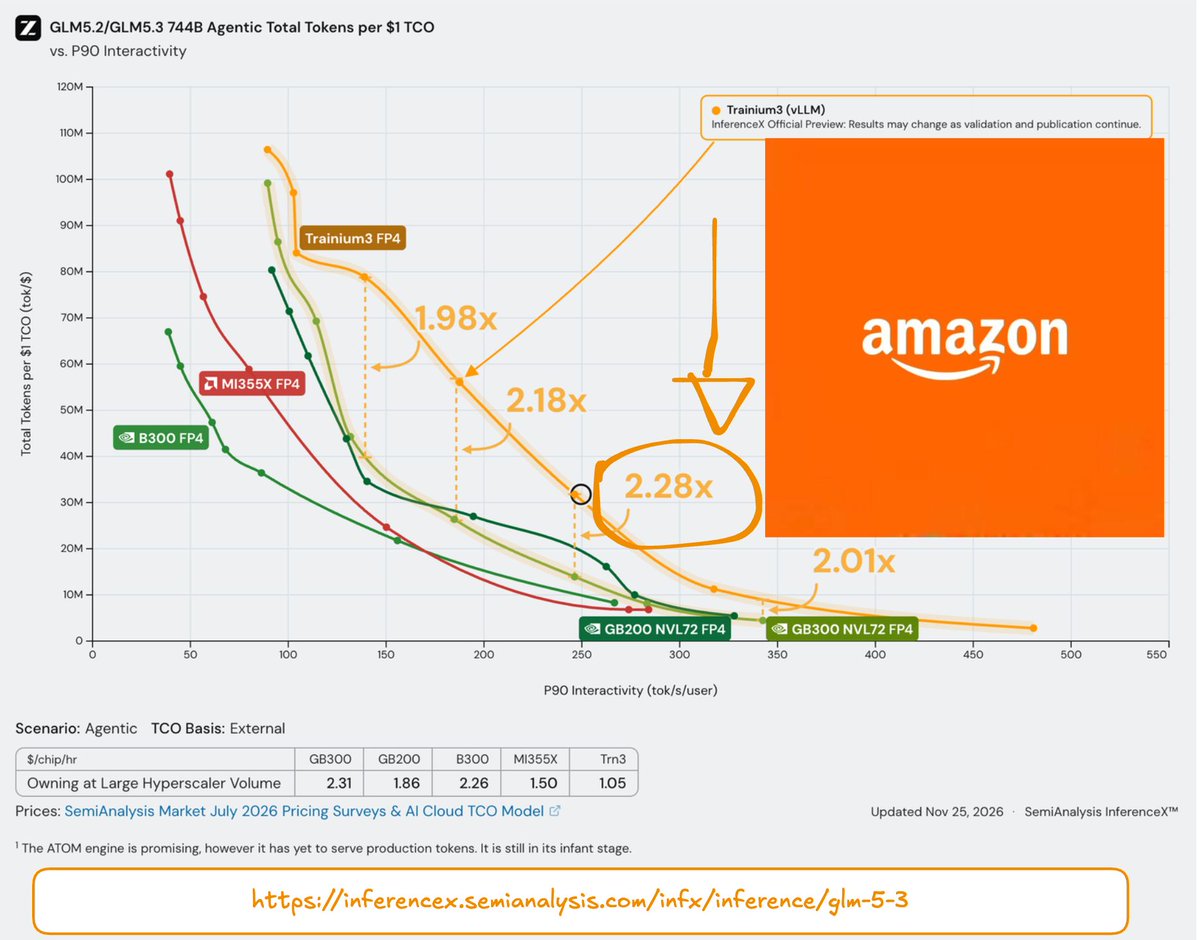
BREAKING NEWS: Amazon has submitted its FIRST Trainium3 UltraServer results to our Agentic Inference Benchmark and has demonstrated 2.28x better perf per dollar than even GB300 NVL72, B300, and MI355, thanks to its wide EP-based approach for external customers. (1/5)🧵
@therealdisasm This is how we do it as well! Bring the project back to deterministic code ASAP, and your token costs will tank because you can have a local agent use the new tools you've made instead of making endless API calls to the frontier models.
Can decentralized AI agents solve one of the world's hardest mathematical problems?
We're proud to support the collaborative effort to tackle P vs NP, championing open research, decentralized collaboration, and scientific discovery.
Big problems deserve collective thinking.
https://t.co/1eIpCfo4Ls
Our fee on miningpoolstats now accurately takes collateral bids and ERG profitability into account.
https://t.co/FLNfkbEitY
From 3% -> 0.85%
@LithosProtocol
SXM2 V100 Quad carrier board with PLX chip and SlimSAS passthrough. Imagine NVLink'd 128gb VRAM via 2x SlimSAS connectors, with daisychain available.
These are custom newly made designs.
I threw a couple on my ebay, depending on demand I will get more on order. Quad A100 and H100 sxm to pcie boards will come out next year.
19 years of BitLocker lockout just collapsed to 20 days because of a $1 motherboard flash chip.
Firmware TPMs on modern laptops store failed PIN counts on external SPI flash. TPM 2.0 Dictionary Attack Protection enforces a 32-try limit followed by one guess every 10 minutes, relying on a JEDEC counter called RPMC inside that flash chip to stop state rollbacks.
At ACM CCS 2026, researchers broke that lock on both sides.
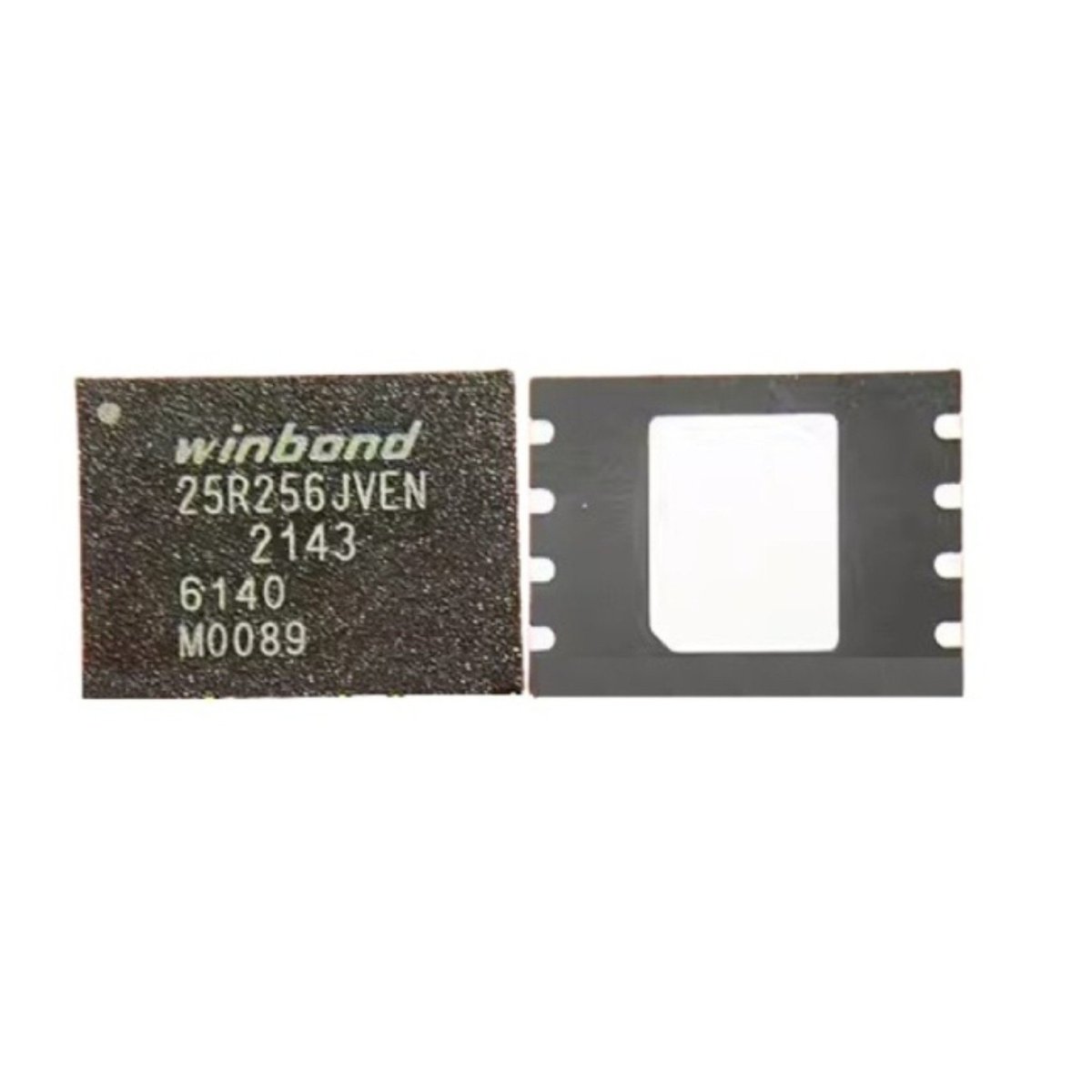
On Winbond RPMC flash (25R and 74M chips), a 1-second voltage glitch leaks the HMAC signing key straight out of the chip. Any laptop using that flash, Intel or AMD, now accepts forged counter values and rolls back its failed-attempt state.
On AMD fTPM (CVE-2026-43613), the firmware skips verifying whether the counter ever incremented. A custom interposer sitting between the CPU and SPI flash blocks counter updates with zero glitching.
Measured worst-case brute-force results on locked laptops:
* 4-digit Windows Hello PIN: 69 days down to 40 hours
* 6-digit BitLocker startup PIN: 19 years down to 20 days
Winbond has no patch timeline because fixing the leak takes new silicon. AMD published AMD-SB-7079 with firmware fixes rolling out from November 2026 through February 2027.
New build for Vegas Pro before the holiday!
2x 2TB Samsung 9100 NVMe, Core Ultra 5 250K Plus, 32GB DDR5 5600, ASUS TUF Gaming RTX 5060 8GB, all installed on a Gigabyte B860 EAGLE motherboard powered by a Thermaltake Toughpower 850watt (headroom for the future) PSU.
PyTorch needs gigabytes just to print a token.
I built a full Qwen3-0.6B inference engine in 12,120 bytes of pure x86-64 assembly. ZERO libc, ZERO libm, ZERO shared libraries.
On my EPYC 7642 CPU it hits 105 tok/s, and when I checked the output against PyTorch FP32, it matched all 64 greedy tokens.
I assembled 3,688 lines of NASM and linked them straight into a static Linux ELF without gcc or a runtime. Run readelf -d on build/asm-llm and it prints "There is no dynamic section in this file."
What fits inside those 12 KB:
- Full 28-layer Qwen3-0.6B forward pass (Q8_0 weights via mmap, 16Q/8KV GQA, per-head QK-Norm before split-half RoPE, SwiGLU, KV-cache, greedy and top-p sampling)
- Custom AVX2 + FMA Q8_0 matmul with fused QKV and gate+up projections
- Hand-written polynomial expf and sincosf with under 1.4e-7 error
- Pure-assembly BPE tokenizer using a 524,288-slot Fibonacci hash table that matches HuggingFace token for token, including UTF-8 Cyrillic and --think mode
- Multi-threading built straight on raw Linux clone() and futex() syscalls instead of pthreads
Decode scales from 7.96 tok/s on 1 thread to 100.18 tok/s at 40 threads (peak 105.39 tok/s decode and 154.28 tok/s prefill at 32 threads). Every thread count from 1 to 47 outputs bit-identical tokens, and the logits hit 1.000000000 cosine similarity against my Python Q8_0 reference.
This is part 1 of 3 in my llm.asm repo. Next I threw out Linux completely to boot Qwen3-0.6B on bare metal, and after that I wrote a Mini-GPT trainer from scratch in assembly too.
I dropped the GitHub repo and full build guide in the reply below.
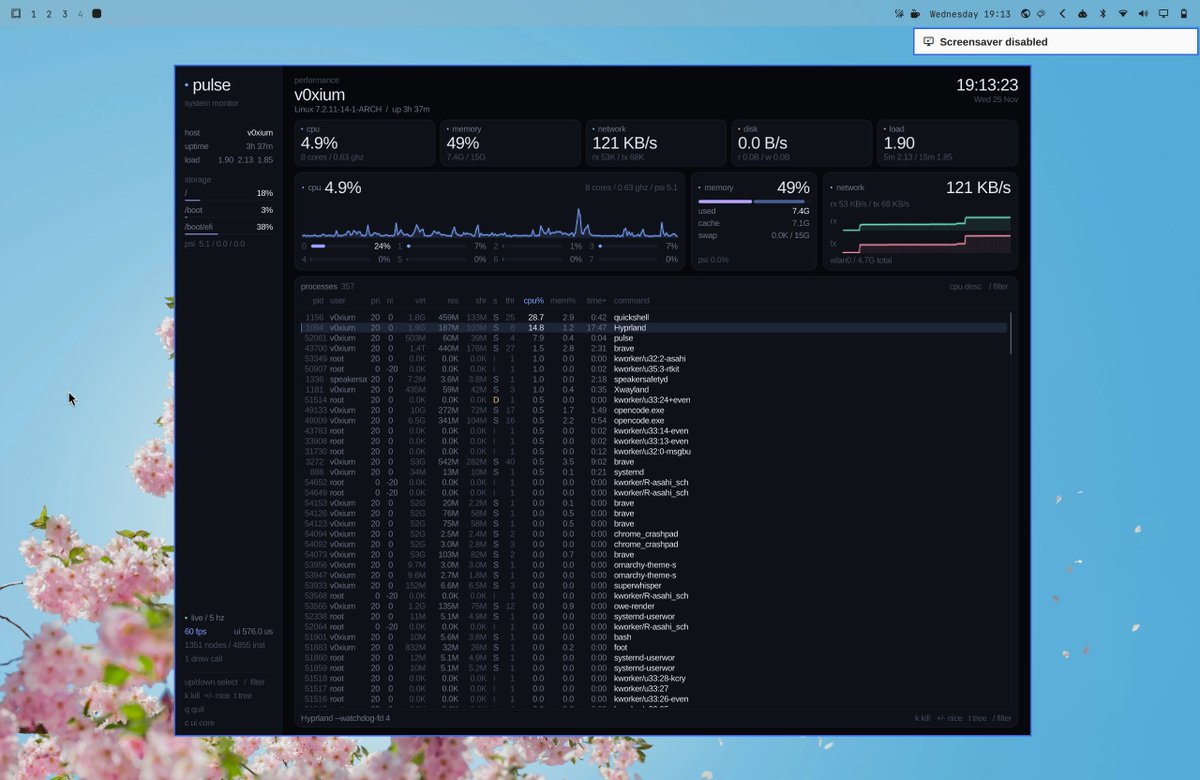
So I made a UI library written completely in C.
It is single header, immediate mode, sdf rectangles, anti-aliased lines, tables, charts, flexible layout. raylib only gives it a window and a GL context.
Then I built a system monitor using it. See how beautiful & responsive it turned out to be.