An African researcher tells me; “One of the things that differentiates beautiful and uglish African cities isn’t the beautiful flower gardens and lawns, but the impact of crime on buildings. In low or no-crime cities buildings have these nice doors and big windows without giant metal bars on them, and they don’t have high walls like they are prisons. The secret to a beautiful city is not primarily architecture”. I like fellows like him.
Who can actually afford a home in the Greater Kampala Metropolitan Area? Are we being priced out of the formal market ?
You can read about some early findings from a new parish-level analysis I've been doing on housing affordability:
https://t.co/1rEcsWHFsz
American musician Dave Matthews raised protest signs during a Dave Matthews Band show, urging an end to the “genocide” and violence against children in Gaza.
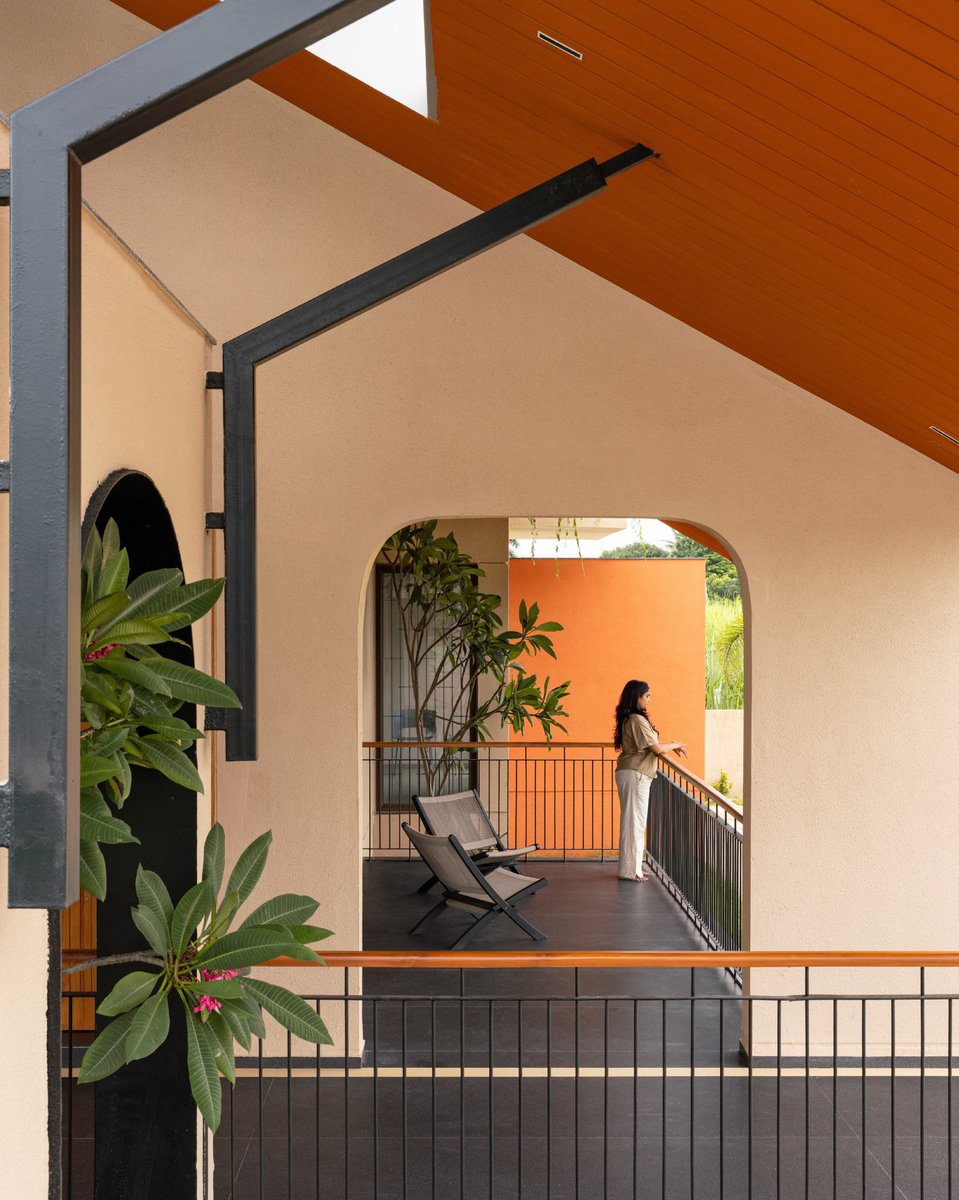
This house does a lot with a simple idea, a roof that becomes the architecture. The deep overhangs, exposed structure and warm materials give it character without trying too hard.
In less than five minutes, economist Dr Fred Muhumuza clinically dismantles our so-called devt schemes: PDM, Emyooga, NUSAF – all of them. He called them "political instruction" – not economics!
One is then forced to ask, who are the economists behind them?
https://t.co/nmZrRqxlc3
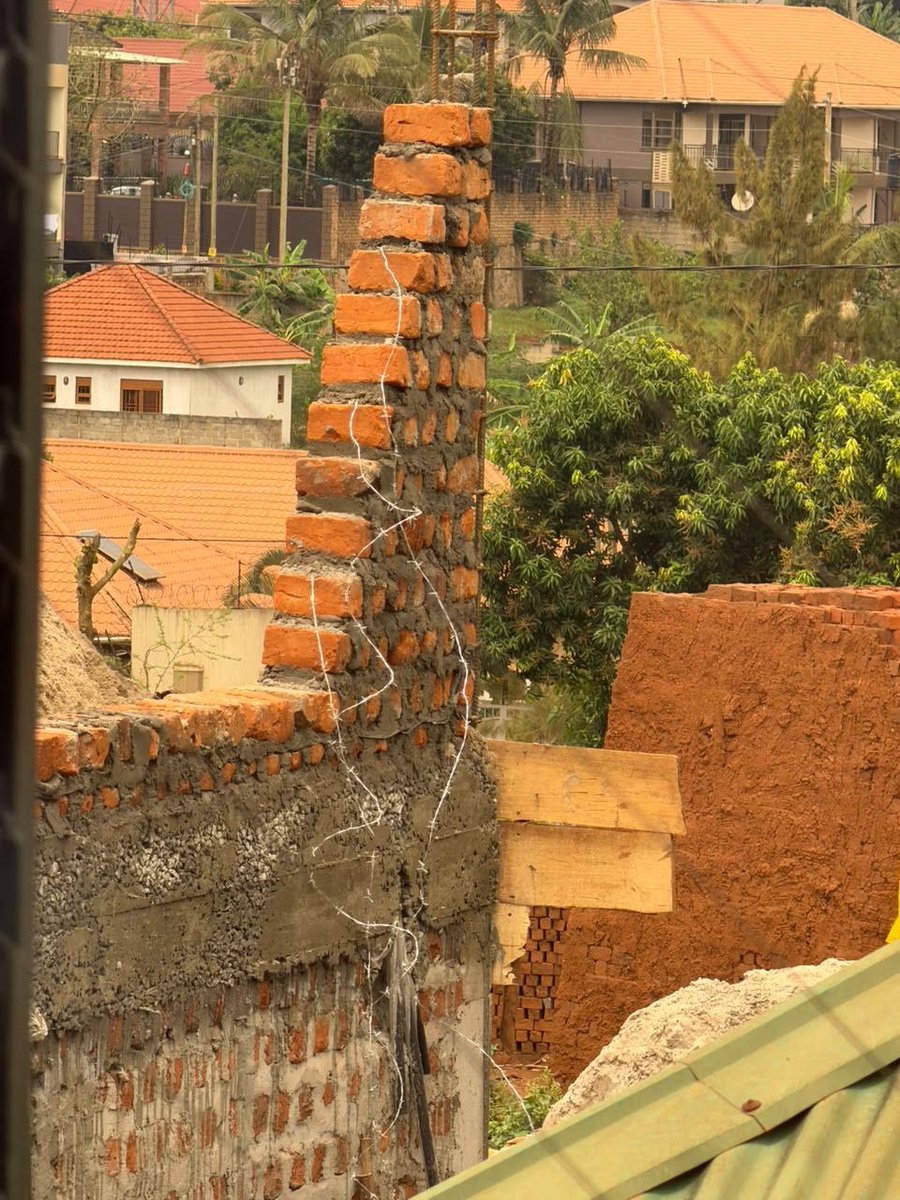
The wall is designed. Then somebody remembers payani (hoop iron).
=======
Let us save a homeowner some money today. I mean the person who has paid for a properly designed solid masonry wall, bought the specified materials and then been told that the wall needs hoop iron to become strong. Apparently, the drawing is treated only as a suggestion. The final engineering decision belongs to whoever sends the owner to the hardware shop.
The owner pays because nobody wants to be accused of refusing to buy strength. Unfortunately, buying metal and improving a wall are two different transactions. The hardware shop has answered a question that should first have reached a drawing.
This discussion is not new. Previously, I questioned the growing practice of putting hoop iron in every brick or block wall. The questions were straightforward. Must every wall have it? Does its absence mean that a wall must crack? Is an additional material necessary simply because somebody claims it improves structural integrity? Those questions have not expired because the practice has become popular.
Hoop iron had recognisable jobs before it became a compulsory item on some walling shopping lists. One familiar application was anchoring the wall plate, the timber member connecting the roof structure to the walls. Carpenters also used it to secure timber connections, including half-lap joints. In those applications, one can identify the members being connected and explain what the strap is supposed to hold. Moving the same material into a different arrangement requires a fresh explanation. It does not arrive with transferable powers.
Putting hoop iron into such a wall simply because somebody believes that every wall needs metal is construction superstition. The wall’s strength, stability and resistance to deterioration should already have been resolved in its design. An additional material earns its place by addressing an identified requirement. Being made of steel is not, by itself, a job description.
1. Strength.
Strength is a material property defined by the amount of material in a unit volume. Materials have a property called density, which describes the amount of material within that volume. The higher the density, the stronger the material. Steel, with its high density, is stronger than concrete. So, you now see the value of that physics lesson on measuring https://t.co/FloeXYh1Fv a wall system, strength is determined by the weakest link, the low-density link. This weakest link is normally the mortar joint. We want the mortar joints to be weak because we want cracks in a wall to pass through the mortar rather than through the bricks. Cement mortar can heal autogenously when conditions allow. It is also easier to repair mortar than a broken brick. Mortar in a wall is therefore required to be weak, with a strength of about 3 MPa.The masonry units, mortar, bonding arrangement and wall dimensions must together provide the required capacity. Loads pass through this assembly to the supporting foundation or beam. The design must address bearing conditions, eccentric loading and the properties of the masonry. So, a piece of metal embedded in the weakest component of a wall, the mortar, does not determine the wall’s strength.
2. Stability.
Stability is a slenderness ratio issue. A tall Dinka girl is more unstable than a short, stout Muganda girl with big nyash. The Dinka girl will leave you when you run out of cash. The Muganda girl will stay and connect you to a moneylender. I have not experienced either of these scenarios. I’m only quoting what my cousin Paul has just told me. We have just been talking on the phone.Anyway, stability is a section property issue. The wider the wall, the more stable it is. So, a 150 mm thick wall with payani is less stable than a 200 mm thick wall without payani. A 150 mm thick wall with payani is as stable as a 150 mm thick wall without it. In fact, including payani might introduce defects that weaken the wall’s resistance to lateral forces.The wall’s height, thickness and restraints determine how it resists the forces acting on it. A taller wall may require different proportions or additional support. Running a strip horizontally through its mortar does not increase its thickness, shorten its unsupported height or automatically provide lateral restraint. If those are the deficiencies, buying payani leaves the owner with the same problem and a smaller bank balance.
3. Weather resistance.
Durability, like strength, is defined by the weakest link in an infrastructure system. So, weak blocks and weak mortar will not be fixed by hoop iron. They will disintegrate. Suitable materials, sound workmanship and proper management of water and exposure protect the wall.Adding steel introduces another material that needs protection. Where that protection is inadequate, corrosion can damage the surrounding masonry. The owner may therefore pay to install a future repair bill.
===
The promise of crack control deserves equal scrutiny. A narrow strip cannot be credited with controlling cracks throughout a thick wall merely because steel is strong. Its amount, position, bond and connections must support that claim. Flexible strips laid with inconsistent bedding and casual overlaps do not establish dependable performance. Poor installation can introduce weak interfaces instead.
In my previous discussion, I also challenged the choice of a flat strip by asking why T12 deformed bars, whose ribs are intended to improve grip, were not being considered where reinforcement was actually required. The comparison brings us back to design. The reinforcement type, size, embedment, connections and space available must be considered together. Choosing whatever comes in a convenient roll does not resolve those questions.
This is where faith starts doing work that engineering has not done. The strip disappears into the mortar, the homeowner feels safer, and nobody has demonstrated what changed in the wall’s capacity. Confidence has increased. That is not the same measurement as strength.
Nor does an instruction in a bill of quantities settle the matter. Specifications can contain errors, especially details copied without examining their purpose. Repeat an error often enough and it becomes “normal practice”. The photocopier is innocent. It was never employed to reason.
The other question from my previous discussion remains relevant. Whose standard or design criterion is being followed, and should the supplier decide what the wall needs? A supplier can explain the properties of a product. The designer must establish whether the wall requires it. Selling a material and prescribing its structural application are different responsibilities, even when both people speak confidently.
A solid masonry wall adequately designed without hoop iron needs no ritual addition of payani. If the proposed wall or site conditions change, review the design and specify the necessary response. The homeowner has paid for a functioning wall. They should not also have to finance our construction superstitions.
Lastly, it's funny that even earth walls have now been introduced to payani. At this rate, termites will soon be asked to include it in their anthills before anyone approves their drawings. 😂