For 12 years, @baukemollema has been a studious leader while giving Trek's road program some of its most iconic moments. He's retiring as a legend of cycling. This parting gift is the least we could do for a man who has helped shape Trek on the world's biggest stages.
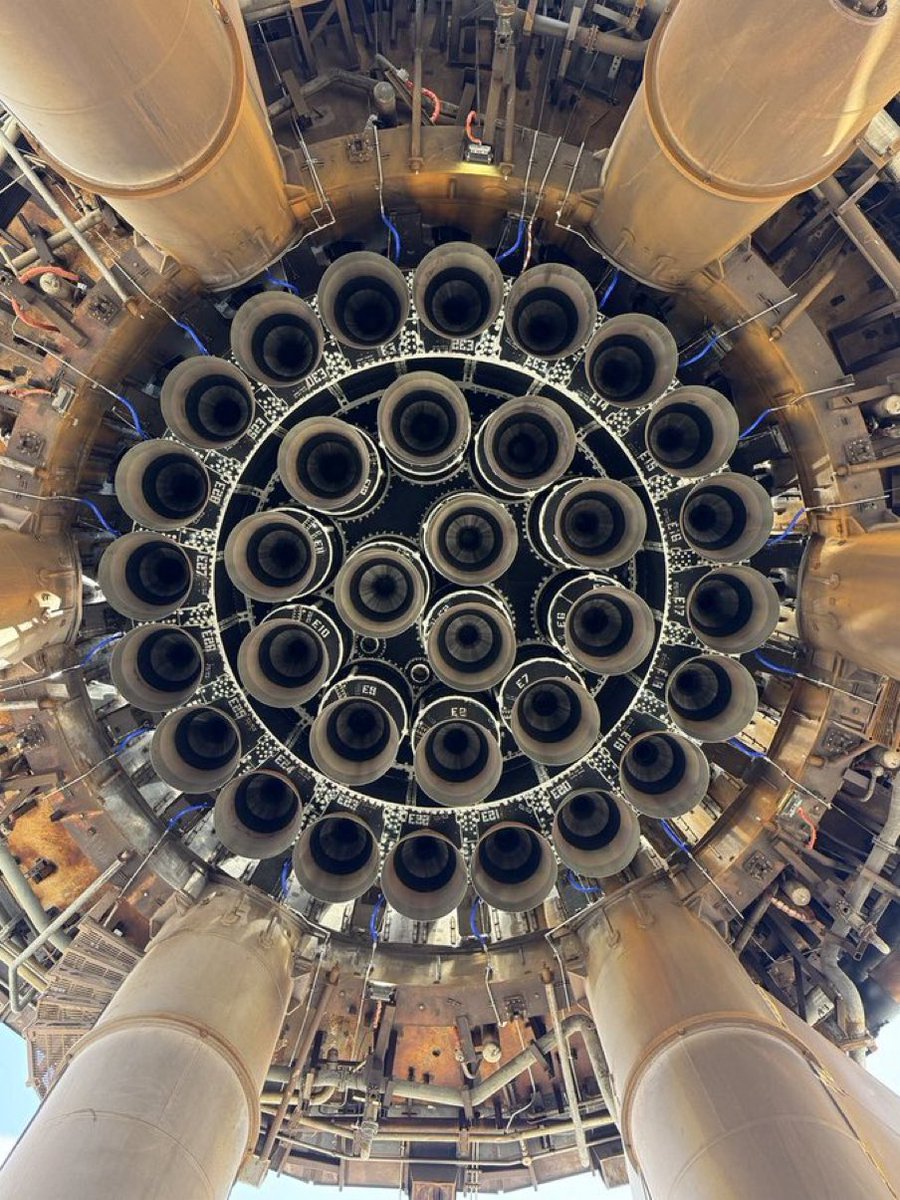
A new CADENA presentation has been published which includes a NET date of November 8 for Starship Flight 15 and December 10 for Starship Starlink Group 30-1
https://t.co/pnBk8yHrtA
What happens when we turn a cubic kilometre of Antarctic ice into a telescope for particles that can cross the universe almost untouched?
That is the extraordinary story behind Francis Halzen’s 2026 Nobel Prize in Physics.
IceCube uses 5,160 light sensors buried between 1,450 and 2,450 metres beneath the South Pole, transforming around a billion tonnes of ice into an observatory capable of detecting some of the universe’s most elusive particles: high-energy neutrinos.
These particles matter because, unlike light, they can escape from extreme cosmic environments without being absorbed or scattered. And unlike charged cosmic rays, they travel in straight lines, potentially allowing scientists to trace them back to the most powerful accelerators in the universe.
IceCube’s discoveries have already helped establish multi-messenger astronomy, combining neutrinos with light, gravitational waves and cosmic rays to understand the same cosmic events from multiple signals.
The deeper lesson is about scientific ambition.
Halzen first proposed detecting neutrinos in South Pole ice in 1988. IceCube was completed in 2011. Decades of engineering, failed assumptions, collaboration and persistence were required before the idea became a new way of observing the universe.
And much remains unknown. The sources of most cosmic neutrinos are still largely unidentified, while the proposed IceCube-Gen2 would expand the optical detection volume by around eight times.
Science advances when seemingly impossible ideas are given enough time, engineering and collective intelligence to become real.
explore Francis Halzen, IceCube and how Antarctic ice opened an entirely new window onto the cosmos:
https://t.co/Yn54IrP7OE
#NobelPrize #Physics #Science #Neutrinos #IceCube #Astronomy #Space #Innovation #Wisdomia
@enilev@JagersbergKnut@TysonLester@CurieuxExplorer@GlenGilmore@FrRonconii@chidambara09@jeancayeux@mvollmer1@Nicochan33@RLDI_Lamy@pchamard@mikeflache@Fabriziobustama@Mack1510019@ipfconline1@PawlowskiMario@drsharwood@kalydeoo@baski_LA@AnthonyRochand@smaksked@Eli_Krumova@andresvilarino@gvalan@AI_4_Healthcare@bimedotcom@arlenenewbigg@NewsNeus@domingonarvaez1@bamitav@jornalistavitor@jblefevre60@FmFrancoise@MHcommunicate@Corix_JC@c4trends@smoothsale@amalmerzouk@PVynckier@bbailey39@ralf_ladner@mary_gambara
SpaceX set a new U.S. spaceflight record
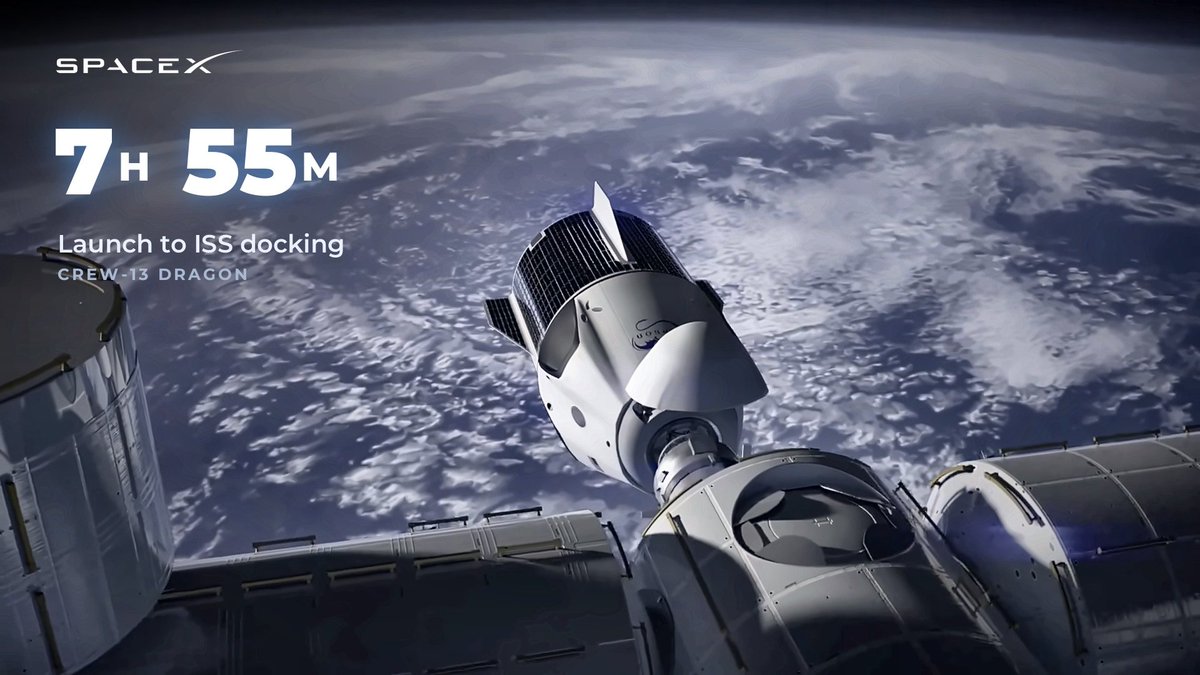
Crew-13 Dragon reached and docked with the International Space Station just 7 HOURS 55 MINUTES after launch
That is the fastest launch-to-docking ever achieved by an American spacecraft
For comparison:
• Crew-12: ~34 hours
• Crew-13: 7 hours 55 minutes
Compared with Crew-12, that cut the trip to the ISS by more than 26 HOURS
Less than 8 hours from the launch pad to the Space Station
Last week, Russia delivered an important cargo to the ISS and is preparing to launch its remotely controlled robot into outer space. A spacesuit for a robotic cosmonaut — a teledroid — has been delivered to the ISS. The robot itself will be delivered to the ISS in November.
⬇️
🚀 Voyager 1 is about to cross a distance that makes space feel almost unimaginably huge
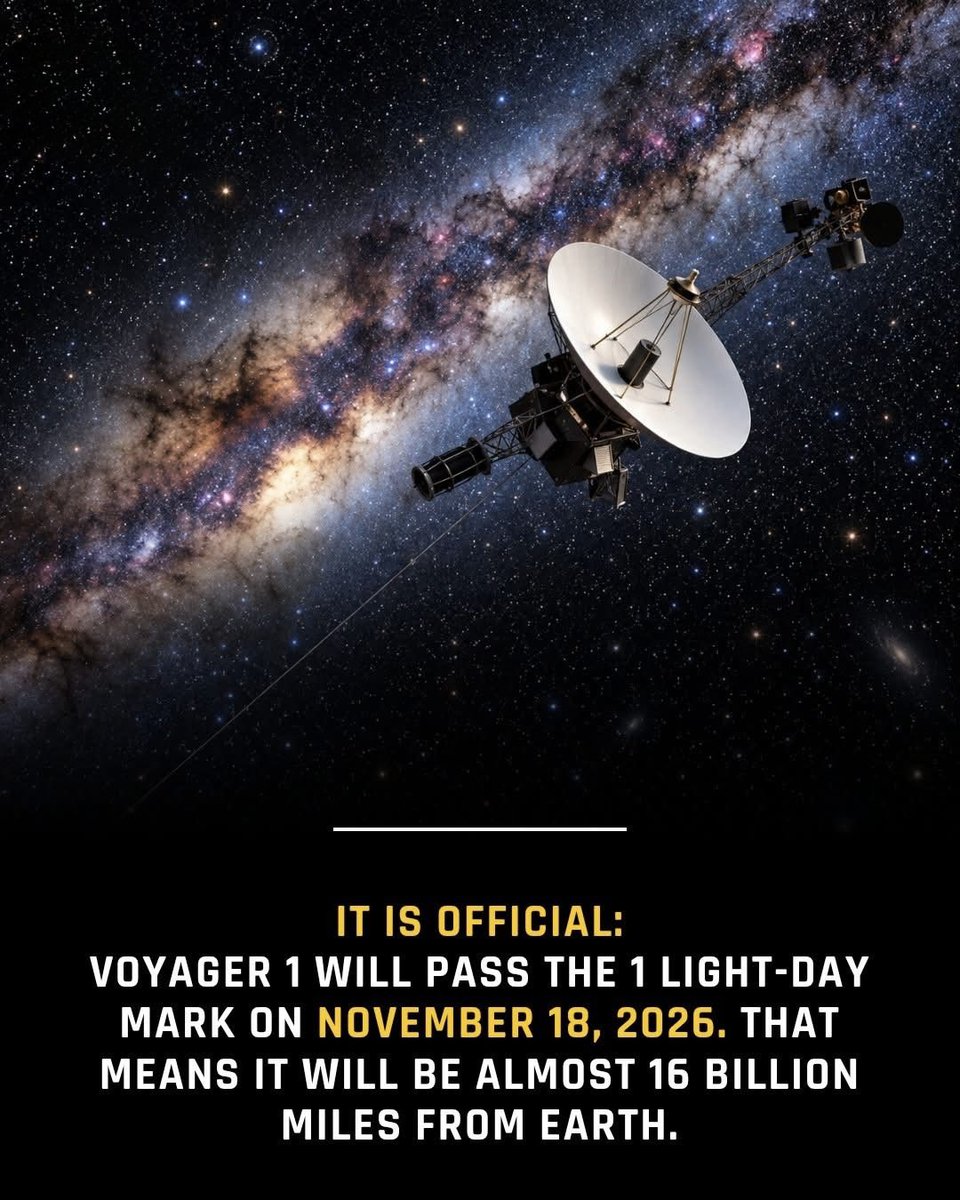
On November 18, 2026, NASA’s Voyager 1 will reach a remarkable milestone: one light-day from Earth.
That means it will be about 16.1 billion miles (25.9 billion km) away — farther than any human-made object has ever traveled.
But here’s the part that really puts it into perspective…
A radio signal travels at the speed of light. Yet once Voyager reaches one light-day away, a command from Earth will take about 24 hours just to reach it.
And its reply?
Another 24 hours.
A simple conversation with a spacecraft could take two full days.
Voyager 1 launched in 1977, flew past Jupiter and Saturn, and eventually crossed the heliopause into interstellar space in 2012. It has been traveling for nearly 50 years.
And despite traveling at nearly 38,000 mph (61,000 km/h), it has taken almost five decades to reach a distance that light crosses in just one day.
Source: NASA Science. (2026). Voyager 1: What Is a Light-Day? NASA.
🚨: This is what the universe sounds like when light becomes music.
Using a technique called data sonification, NASA transformed light from the Hubble Ultra Deep Field into sound.
Each galaxy’s brightness, position, and distance are mapped into pitch and volume — allowing us to hear the structure of the cosmos.
A symphony written by billions of galaxies 🌌
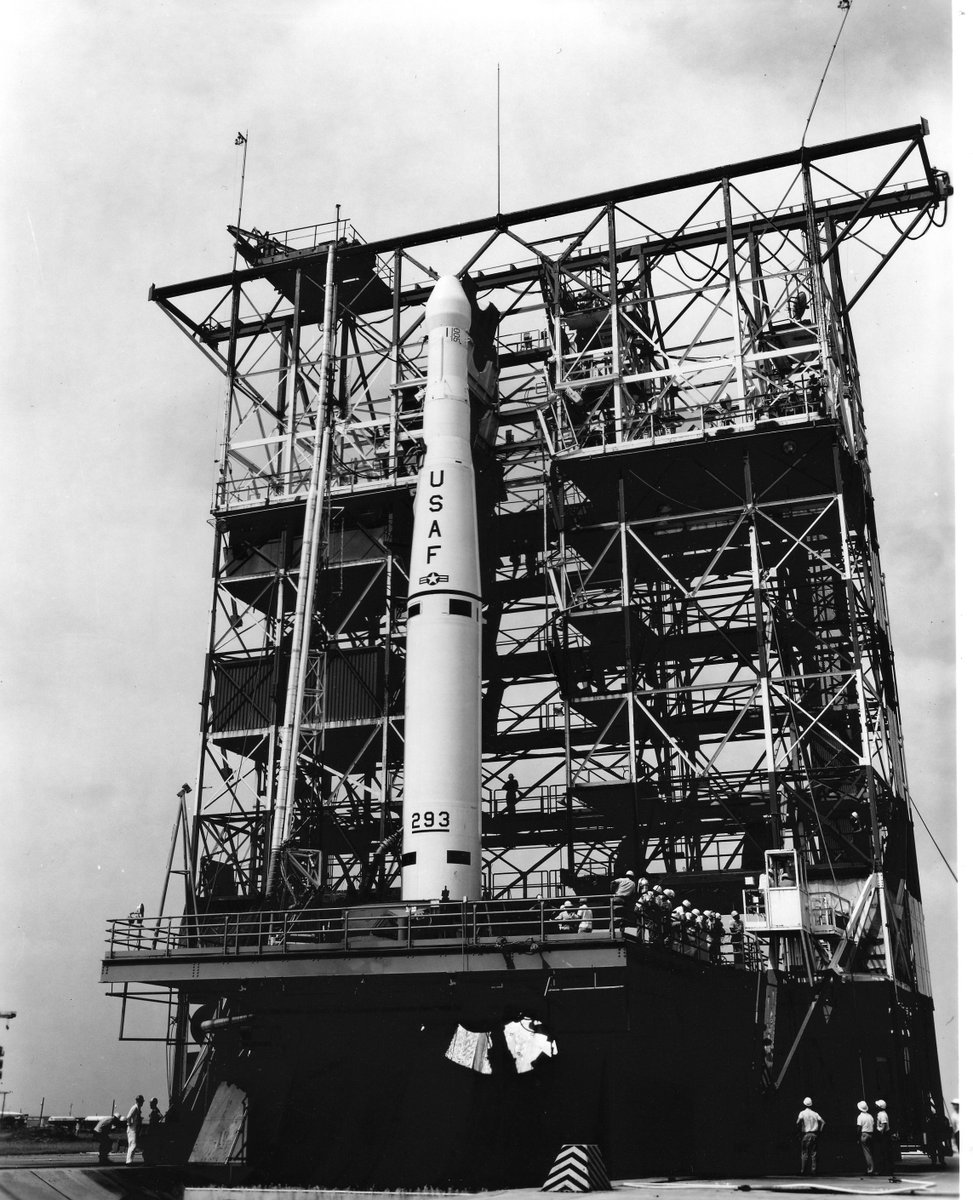
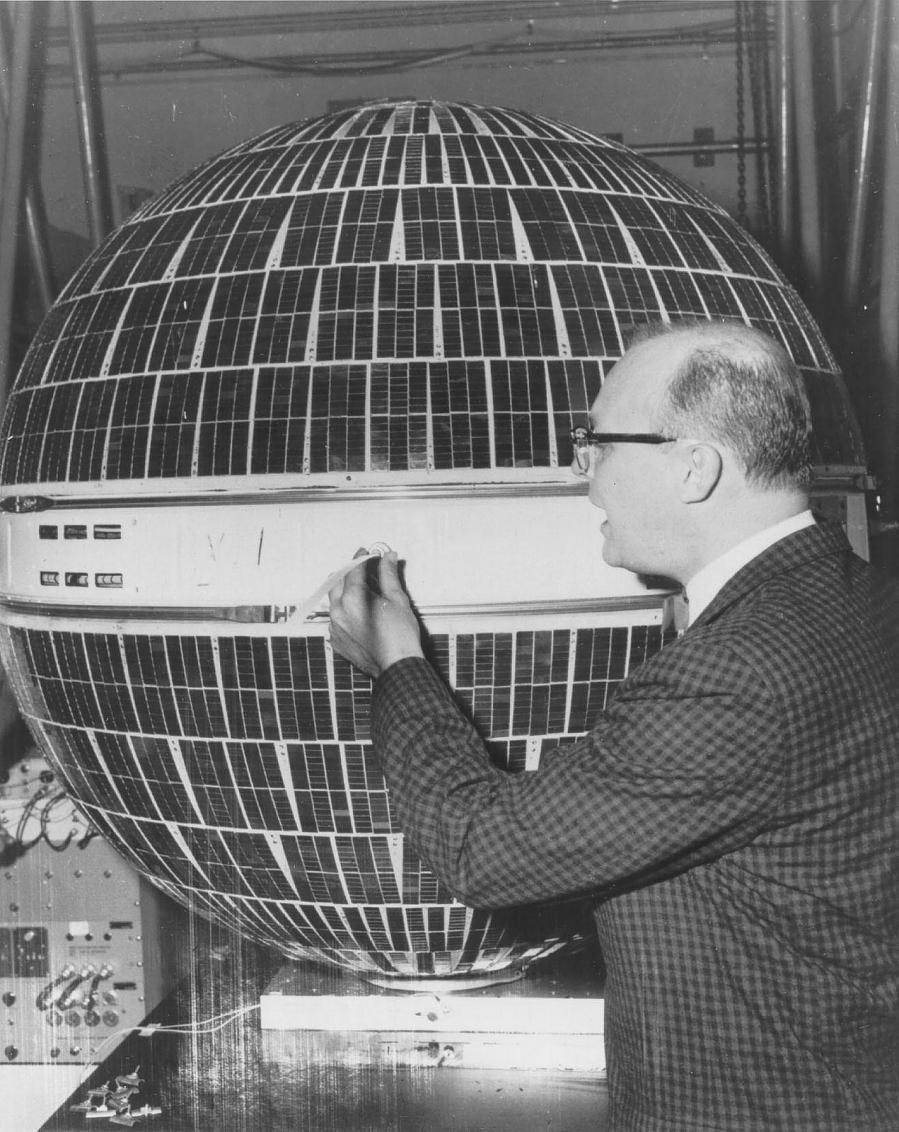
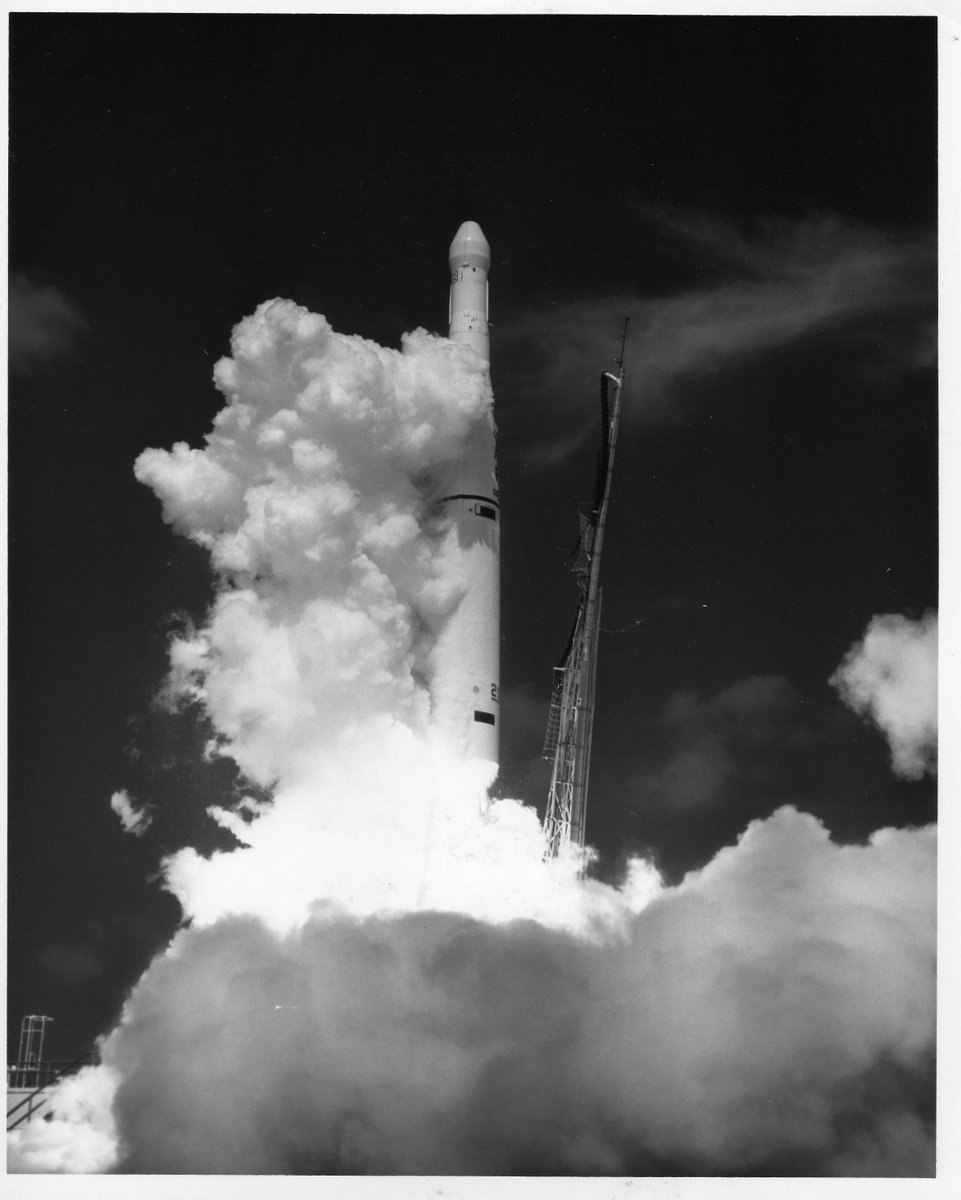
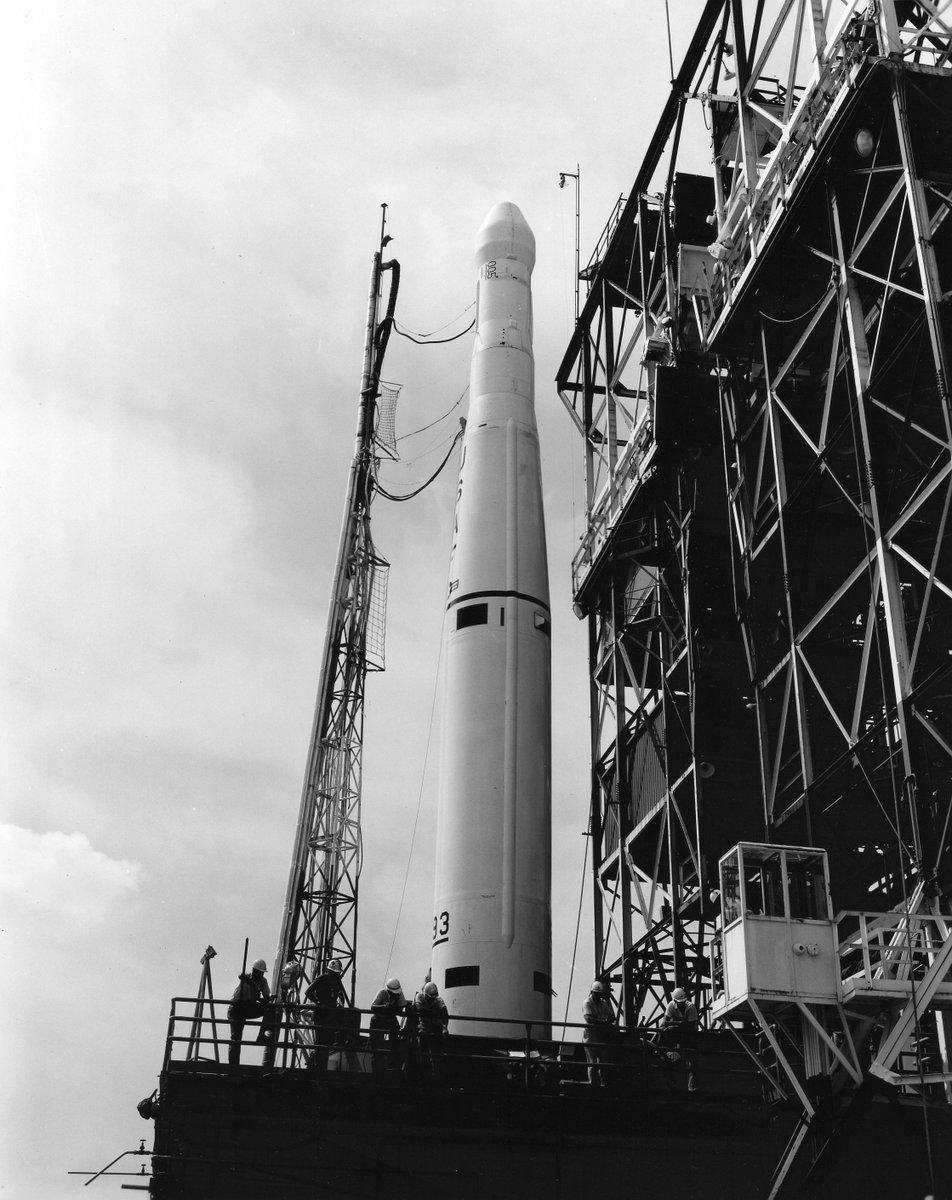
66 years ago today, Courier 1B launched from Cape Canaveral, becoming the world’s first active repeater communications satellite.
The mission also marked the 100th Thor-based launch. Thor later became the foundation of the Delta rocket family.
@ccspacemuseum
Starship Flight 14 just deployed its first operational payload — 26 Starlink V3 satellites into low Earth orbit 🚀 On September 28, 2026, Starship reached orbit for the very first time, marking a double milestone: SpaceX's first-ever orbital Starship flight and the debut of the far more capable V3 Starlink spacecraft. Each V3 satellite adds 1 Tbps of downlink capacity to the constellation — meaning this single mission alone added a combined 26 Tbps, roughly 10 times the capacity of a typical Falcon 9 Starlink launch. Three of the satellites even carried cameras to photograph Starship's heat shield after separation, feeding real-time data back on reusability performance. A genuinely massive leap for both Starship and the Starlink network ✨🛰️
https://t.co/bw1OYQh0VR
Astronomers have discovered such a bizarre system in space that our existing definitions of planets and moons have started to get tangled up with each other A brown dwarf orbits around a star, and around it is another object as large as Jupiter, so at the center is the star, around it a body smaller than a star but larger than a planet, and around that one another world the size of a planet What's even stranger is that this object, despite being as large as Jupiter, doesn't orbit directly around a star—it's orbiting the brown dwarf, so scientists are even struggling over whether to call it a planet or a moon Because the categories we've set up in our Solar System might not be as natural for the entire universe as we thought—words like planet, moon, star might not actually be nature's strict boundaries but just names we've given to the examples we've observed Sometimes the universe isn't discovering a new object; it's just showing us the inadequacy of the words we use to describe it Maybe the hardest part of understanding space isn't finding new things but redrawing the boundaries of what we thought we already knew
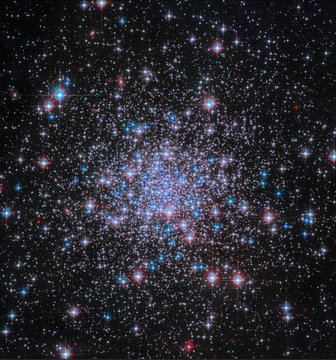
Star clusters are basically groups of stars that were born in the same area, from the same cloud of gas and dust. When you look at a picture of one, it almost looks like all the stars were put together on purpose, but they are actually just moving through space while gravity keeps many of them close to each other. Some clusters can stay together for a really long time, while others slowly become more spread out as the stars move away. I think what makes star clusters interesting is that the stars inside them can be very different even though they started out together. Scientists can look at them and compare the stars to understand how they change over time, which is easier when they formed around the same period. Some clusters have young, bright stars that stand out a lot, while others are made mostly of much older stars packed really close together. Personally, I really like looking at pictures of star clusters because they make space feel much more crowded than it usually does. Most pictures of space show huge empty areas with a few objects here and there, but with a cluster, there are stars everywhere you look. And even then, the distances between them are still enormous. I find that kind of strange to think about, because something that looks almost like a giant group of lights is actually made of separate stars that can be incredibly far apart from each other.
Helloooo, space infrastructure gets a new public-market chapter 🚀 @NSEarthandSpace has completed its business combination with Viking and begun trading on NYSE American as NSTR.
The transaction includes a US$30 million PIPE financing intended to support expansion of NorthStar’s sensor constellation. Its business combines ground-based and space-based intelligence for commercial and defense customers monitoring activity in orbit.
The milestone here is the completed combination and funding—not proof that every planned sensor is already deployed or that future revenue targets have been reached.
What makes the story worth following is the operational next step: turning that capital into additional sensing coverage and customer capability. More satellites and more activity in orbit create a demanding information problem. NorthStar’s release explains the platform it is building to address that problem and the transaction supporting its next phase.
Read more: https://t.co/CEGDBYR9hI
#DigitalMedia #MediaPlacement #NSTR #SpaceTechnology
Another launch from Florida’s Space Coast and another reminder that Florida is helping lead America’s next chapter in space.
Crew-13 launched Thursday from Cape Canaveral carrying four astronauts to the International Space Station.
Space exploration isn’t just about what happens hundreds of miles above us. It drives innovation, supports skilled jobs and strengthens American technological leadership.
Florida should continue being the place where America reaches higher.
https://t.co/3v8INo6rs7