"When the Beatles came along it was like a bomb going off for me. It was the biggest musical jolt of my life . . . all those [‘60s] bands were great, but there was something different about the chemistry of the Beatles, those four guys coming together at the same time. That music, somehow they were connected with something that was universal. It wasn’t about their time, but the human feeling, and that doesn’t really change.
"The songs reveal more and more to you each time you play them . . . it's a revelation to really play these songs, after a life of playing music. I learn little new things about the music and about myself every time I play them.
"It reminds me of how deceptively simple they are sometimes. If you analyze it in a conservatory kind of way, it doesn’t seem that complicated, but then what happens with it is so extraordinary. You listen for five seconds and then the song just latches onto you. You can’t shake it off. And it’s not because of some big corporate, commercial machinery that’s rammed it down our throats. It’s genuinely because of the music. It is amazing on a technical, harmonic/melodic level. The songs transcend things — there really is something transcendent about it.
"It’s incredible how Beatles music has stayed with us generation after generation. It’s not like when I was a kid and my parents were listening to Benny Goodman or Glenn Miller. There are young people listening to the Beatles now, just as there was then.
"It transcends all. For me they’re just these perfect gems of music."
--#BillFrisell
#Guitar #Jazz #Fusion #Composer #Grammys #AllWeAreSaying #BeautifulDreamer #Songs #Beatles #TheBeatles #Influence #GOAT
Sources: Jazz Weekly, 2013; Tucson Weekly, 2014; Interview with Donald Gibson, 2011
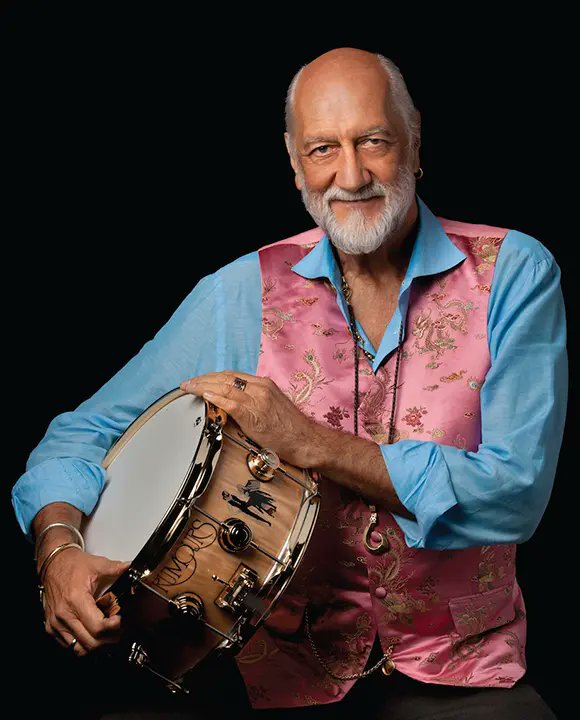
"They were tremendously successful all over the world. In England, the Beatles were our ambassadors to fame; they made the country famous, or more famous. It was tremendously exciting. Fascinating times. Got to go down to the studio and be with them on a few sessions. Just looking, you know. And we were doing fairly well at that point, Fleetwood Mac, but [they were] a totally different echelon of success, something that you couldn't conceive.
"'A Day In The Life' and 'Strawberry Fields' are storytelling, popular songwriting at its best. They have sociological meaning that didn’t necessarily hit you over the head until a bit later when you realized that the Beatles, as a force, was really trying to do something that was worth a damn, in conjunction with the music that they played. It’s just an example of an extraordinary, uplifting, passionate part of who the Beatles were.
"I remember in India, I was meditating almost all the time, and getting quite hot, like I had a fever. It turned out to be dysentery, but the local doctor diagnosed tonsillitis. I sat with John Lennon a lot, since he didn't feel well either from terrible jet lag and insomnia. He would stay up late, unable to sleep, and write the songs that appeared later on the Beatles' White Album. When I was at my lowest, he made a drawing of a turbaned Sikh genie holding a big snake and intoning, 'By the power within, and the power without, I cast your tonsil lighthouse out!' Sometimes, late at night, I can still hear John singing those sad songs he wrote during those evenings, like 'I'm So Tired.'
"The Fab Four is all too often thought of as just a bunch of young kids, but look where they went and what they did. The songs really amplify the depth as to the journey they took."
--#MickFleetwood
#Drums #FleetwoodMac @MickFleetwood #Grammys #HallOfFame #Beatles #TheBeatles #India #Fame #Songwriting #Evolution #Innovation
Sources: Later with Bob Costas, 1990; SiriusXM, 2017; My Life and Adventures in Fleetwood Mac, Fleetwood
“I fell in love with the Beatles' music (and simultaneously, of course, with their four faces-cum-personae) along with my children, two girls and a boy, in whom I discovered the frabjous falsetto shriek-cum-croon, the ineluctable beat, the flawless intonation, the utterly fresh lyrics, the Schubert-like flow of musical invention and the Fuck-You coolness of these Four Horsemen of Our Apocalypse, on the Ed Sullivan Show of 1964. Together we saw it, The Vision, in our inevitably different ways (I was forty-six!), but we saw the same Vision, and heard the same Dawn-Bird, Elephant-Trump, Fanfare of the Future . . .
“The notes healed, the words teased; or perhaps it was vice versa. But something teased, and something healed, year after year, Rigby after Rigby, Paperback after Norwegian . . .
"Meanwhile, there was a slim volume of pure verbal genius by a new author called John Lennon: In His Own Write. If this weren’t enough to rhapsodize upon, there were the notes (and the sylph-siren voice) of one McCartney. These two made a pair embodying creativity mostly unmatched during that fateful decade . . . John and Paul, Saints John and Paul, were, and made, and aureoled and beatified and eternalized the concept that shall always be known, remembered and deeply loved as The Beatles. To me, they were the best songwriters since Gershwin.
“And yet, the two were merely something, the four were It. The interdependence was astonishing, and in some ways appalling; do we really need all this to sustain us When We’re 64? Well, today I am almost 64, and three bars of 'A Day In The Life' still sustain me, rejuvenate me, inflame my senses and sensibilities.
“The Beatles are no more. But this week I am still jumping, weeping, remembering a good epoch, a golden decade, a fine time, a fine time . . .”
--#LeonardBernstein
#Maestro #Conductor #Composer #ClassicalMusic #Genius #Polymath #Grammys #Tonys #Emmys
#Influence #HallsOfFame #TheBeatles #GOATs
Sources: The Beatles, Geoffrey Stokes; interview with Jonathan Cott, 1989
Fernando Mendoza makes his first NFL start on Sunday, and a fan has asked everyone at Allegiant Stadium to stay in their seats when he scores.
The post went up Tuesday, the same day the Raiders made the quarterback change official, and it has been seen more than 730,000 times since.
"Stay seated when Fernando scores his first touchdown. Will be an epic gesture from fans to player. Pass it along."
The man who wrote it is Tom Joanides. Somebody replied underneath asking what the point of it was, which is a fair question if you do not know the family.
His father does not stand up. Fernando Mendoza Sr. stays in his seat when his son does something worth standing for, and he did it at the Peach Bowl last year, where somebody filmed it and it went around the internet. He did it at the Heisman ceremony. He did it in April. His wife Elsa has had multiple sclerosis for about 18 years and she watches from a wheelchair, so he sits.
It is not an accident either.
"Yeah, it's for sure a conscious effort."
Madison Williams of Sports Illustrated laid the whole thing out on draft night. Mendoza stayed home in Miami instead of going to the draft, and when the Raiders took him he went to his mother first, ahead of everybody, and his father leaned over and hugged him from the chair while the rest of the room was on its feet.
Elsa put a letter to her son in The Players' Tribune last December, thanking him for making her years with it easier than they would have been, and people keep coming back to one line in it.
"You've made me feel seen."
That is the thing a stadium is being asked to do on Sunday afternoon.
The football part is that on Tuesday the Raiders traded Kirk Cousins to Minnesota and handed the job to a rookie the same day, and general manager John Spytek picked his words carefully about it.
"I want to stop short of saying he's earned it."
Mendoza has been on an NFL field exactly once, late in a loss to New England in week 5, and he went 6 for 8 for 48 yards. Now Seattle comes to Las Vegas, and Seattle is the better team right now.
Joanides followed up a day later and tagged the MS Society.
"Fernando's dad stays seated to celebrate with Fernando's mom. I find it touching and cool."
Nobody official is behind any of this. The Raiders have not asked anyone for anything, a full stadium cannot really be organized from one phone, and plenty of people who saw the post have no idea why they are being asked to sit down. He also has to score first, which Seattle gets a say in.
But the idea is out there now, and it only works if enough people hear the reason before Sunday.
If he gets in, and the building stays down, his father will not be the only one sitting for once.
David Robinson was the first pick in the 1987 NBA draft and he did not play a game until 1989, because he had a job.
He was a lieutenant junior grade in the United States Navy.
He turned up at the Naval Academy in 1983 at six foot seven.
The height limit for a midshipman at the time was six foot six.
The Superintendent of the Naval Academy signed a waiver so that he could come in anyway.
Then he kept growing. By his second year he was seven feet. He finished at seven foot one.
At seven feet he could no longer serve as an unrestricted line officer, which is the job that puts you on a ship. The Navy had admitted a man by waiver who was now too tall to go to sea on one.
He had a way out. He could have left the academy, transferred somewhere else, sat out a year and been in the NBA in 1988.
He stayed.
The Secretary of the Navy at the time, John Lehman, worked out an arrangement. The five year commitment every graduate owes was cut to two years of active duty.
So San Antonio used the number one pick in the entire draft on a 21 year old who was contractually unavailable until the fall of 1989, and then waited for him.
He spent those two years at the submarine base at Kings Bay, Georgia, as assistant resident officer in charge of construction.
Jos Joseph of We Are The Mighty got him talking about that posting years afterward, and the piece of it he reached for first was not the submarines or the base or the uniform.
"Doing street lights for a new community."
He had not even been a starter as a freshman at Navy. He averaged 7.6 points that year.
Over the next three he won 82 games and was named the best player in college basketball.
He got to the Spurs in the fall of 1989, at 24, two years behind everybody drafted with him.
He was the rookie of the year. He played fourteen seasons, all of them in San Antonio, and he is in the Hall of Fame.
They call him the Admiral, which was never his rank. He left the Navy as a lieutenant junior grade and he has never once corrected anybody about it.
He has been asked ever since what the Navy gave a man who would have been fine without it, and the answer has not moved in all that time.
"The number-one lesson was the importance of teamwork."
"There's just such a pride in working together and serving a cause bigger than yourself."
Today is Veterans Day. The best college basketball player in America spent the two years after his draft running construction jobs on a submarine base in Georgia, because he had said he would.
Fernando Mendoza was standing in the Las Vegas Raiders locker room when he found out Kirk Cousins had been traded.
He had no inkling it was coming, he said afterward, and this is the nature of the business, which is what a quarterback is supposed to say into a microphone. The rest of it was not that.
The Raiders signed Kirk Cousins in April to play quarterback for them, and then they spent the first pick of the entire draft on Fernando Mendoza. Nobody in that building needed it explained to them. The kid was there to take the job.
Cousins taught him anyway. April to November is seven months of meetings, and he spent them handing everything he had to the one person in the building with the most to gain from his leaving.
"It would've been really easy for Kirk to be a little more dismissive. He had me with open arms and has taught me so many things."
"He has shared with no restrictions or no constraints, so I really appreciate him."
A veteran holding a starting job gave away everything he knew to the rookie hired to take it off him, and kept none of it back for himself.
Some of it had nothing to do with football.
"They've essentially taken me into their household when they were here, and they welcomed me with open arms."
When they were here. The Cousins family was in Las Vegas in the spring and the Cousins family is not in Las Vegas now, and Mendoza got the whole span of it into four words without trying to.
He said he is deeply thankful for everything the Cousins family has offered him, that the long hours in the quarterback room were extremely special, that he is going to miss him, and that he is excited to see Kirk in his future.
Then the question came around to Cousins being gone, and the answer came out tangled.
"Well, I mean, he's not gone. Like, he's gone from the Raiders forever. He's not gone forever."
On Sunday at 4:05 Eastern, Mendoza makes his first NFL start against the Seattle Seahawks, who are the reigning Super Bowl champions.
His head coach was asked whether he intends to shrink the playbook for a rookie making a first start against that defense, and Klint Kubiak is not peeling back anything.
"We're going to go do what the whole team does best, all 11, and then he does his part distributing the football."
Mendoza called the job a once in a lifetime opportunity, and said he is a lot more confident as a quarterback than he was, that he feels more developed, and that there are so many areas he has improved on.
Somebody sat in a room with him and did that.
On Sunday he runs an offense nobody is scaling back, in a building where the man who taught it to him does not work anymore.
Fun story about the 1985 Chicago Bears one and only loss:
Steve Fuller started the game because of a Jim McMahon injury. The Bears were 12-0 entering the Monday night game. After a disappointing performance from Fuller, the bears found themselves behind. Fuller got hurt and McMahon was forced to play, despite being hurt, to try and bring the bears back.
In the fourth quarter, McMahon was keenly aware of something. Walter Payton was on the verge of tying the NFL record for most consecutive 100 yard rushing games. He was at this point in the game short of 100 yards. McMahon came to the huddle and told the team something along the line of “hey guys, this game probably isn’t one we can win, but we can get Walter the record.” So, the team rallied around the QB to get the beloved Walter Payton a shot at the record. McMahon totally ignored Ditkas play call to drive the ball down the field to try to score in a hurry, and instead handed it to Walter Payton. Ditka went ballistic on the sideline.
McMahon came back to the huddle. Looked at the guys and said “Okay guys, I’m going to get killed for this but we have come this far. Same play.” The second they are lined up Ditka sees it isn’t what he called, again. He loses his mind. They hand it off to Walter again and he got broke the record.
Newspapers criticized the Bears for running the ball late rather than going for a score. It would have taken a score, an onside kick recovery, and another score just to tie. Not impossible. But Jim McMahon wanted to make sure Walter Payton, the greatest Chicago Bear of all time, the greatest RB of all time, the man who the “Man of the Year” award is named after, got his record.
Tom Brady lost a perfect 19-0 season because of one little habit with his finger.
Osi Umenyiora, the Giants defensive end, caught it on film two weeks before the Super Bowl. He pulled the whole defensive line into a room, showed them, and they went out and sacked Brady 5 times.
Here's the habit. Brady would walk up to the line and point at somebody on defense before he yelled "hut." Osi says that whenever Brady pointed, the ball was snapped on "hut," and whenever he skipped the point, the snap wasn't coming. He went back through all their games and says it held 100% of the time.
That sounds small until you think about how a pass rush works. On every play, the offensive linemen know when the ball is getting snapped and the defense doesn't. That's their whole edge. The big guys up front get to move first, and the pass rusher has to sit there and react, already a step behind someone who outweighs him and only has to get in his way.
Osi basically took that edge away from one of the best offensive lines in football. The 2007 Patriots had three Pro Bowl linemen. They scored 589 points, the most in NFL history at that point, and Brady got sacked just 21 times in 16 regular season games.
The Giants had actually played them in the last week of the regular season and lost 38-35. They got to Brady once that night. Five weeks later, it was the same quarterback and the same line, and the Giants sacked him 5 times and hit him 9 more. Osi says the difference was the two weeks he spent watching tape.
And get this. Earlier that same season, the NFL had fined Bill Belichick $500,000, the biggest fine any NFL coach had gotten up to that point. They also hit the team for another $250,000 and a first-round draft pick, all for filming the Jets' defensive signals from the sideline. So New England paid $750,000 and a first-rounder for stealing signals with a camera, and their perfect season ended because a defensive end found Brady's own signal sitting on regular game film, totally legal, for free.
Osi didn't even get a sack that night. Before the game, Brady had said his number one job was keeping #72 and #92 off him, meaning Osi and Michael Strahan. Justin Tuck got two sacks, and Strahan, Jay Alford and Kawika Mitchell got one each. Osi went home with 4 tackles, a hit and a fumble recovery. He found the most valuable piece of information in the building and gave it to everybody else.
Rookie Jay Alford sacked Brady with 19 seconds left to seal it, 17-14. Four years later, Brady said he still couldn't watch highlights of that game.
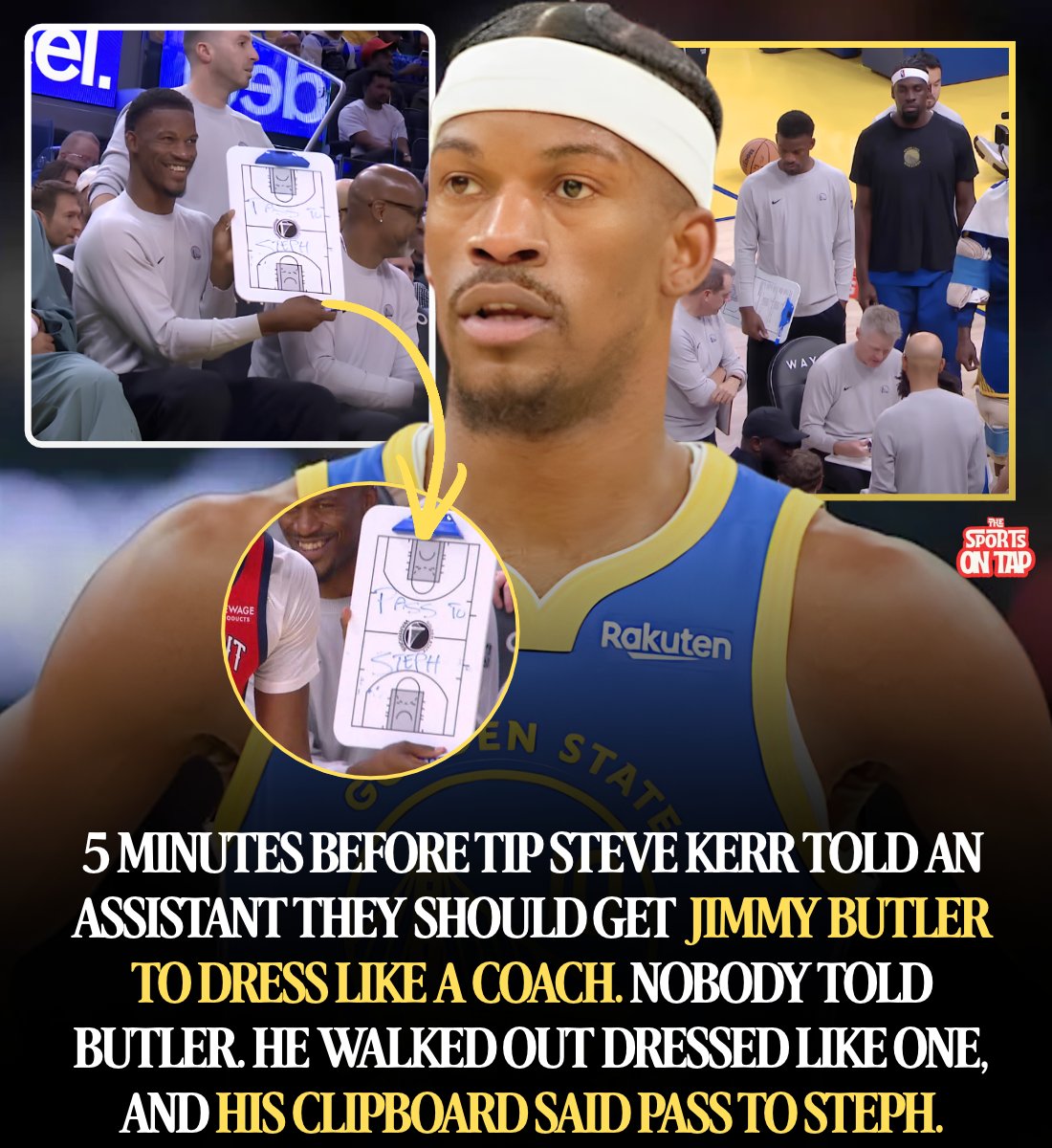
Jimmy Butler sat on the bench last night in the same grey sweatshirt as the assistant coaches, holding a clipboard, and the clipboard said PASS TO STEPH.
He is 37 and he has not played a second this season.
He tore the anterior cruciate ligament in his right knee last season. They operated in February. It cut last season short and nine months later he is still rehabbing it.
Three weeks ago, in a long interview with Anthony Slater at ESPN about the season he lost and the one he is trying to get back to, Butler kept coming back to his teammates.
"I really felt like I let Steph down."
"They took a chance, and I felt I let them down."
"I bet whenever I step on the floor, they're going to send more than one body."
So last night he dressed like the staff.
Steve Kerr never asked him to.
About five minutes before tip, Kerr turned to his assistant Khalid Robinson and said somebody ought to get Butler to dress like a coach one day.
Then Butler walked out dressed like a coach.
"It was funny because I don't know how this happened."
"I turned to Khalid. I said, did you tell him to do that."
"So it was, I guess, mental telepathy or something."
Butler does not dress like this. Kerr's word for what he normally wears to a game is fashionable. The coaches wear quarter zips and sweaters.
Last night he wore the quarter zip.
And he worked at it. Team fouls is the sort of thing an assistant is supposed to be tracking, and Kerr's assessment of his new assistant ran to two lines.
"He said all the right things, you know, team fouls."
"He was really acting the part. He was enjoying himself."
Yaxel Lendeborg said Butler gives him tips during games all the time, and that Monday night's tip was one line. Give the ball to Steph.
The bench did.
Stephen Curry scored 25. He is 38 years old. Somewhere inside those 25 points he went past DeMar DeRozan and into 16th on the all time scoring list, at 26,803 to DeRozan's 26,800.
Three of them scored over 20 and six of them got to double figures, on a night their most experienced player was sitting down with a pen.
The final was 138 to 87.
That is 51 points, the biggest win anybody in the league has managed this season.
It was their eighth in a row. They started the year 0-3 and have not lost a game since.
The next one is Wednesday in Houston, and Butler will not be playing in that one either.
A 37 year old nine months out from knee surgery put on the staff sweatshirt, picked up a clipboard, and wrote on it the name of the man he says he let down.
"I love to rock, I really do, it’s ultimately my favorite thing to do but I think you also need a balance as a songwriter. I saw that with the Beatles. They could rock really hard and they could also do ballads and cover both ends, and that’s what I wanted to do.
"They were a performing band, you know. You could tell that they were very, very comfortable performing and they really enjoyed doing it. [But] the one factor that stands out and makes them historic and makes them last is the creativity. Just the song structures, the chords, the way they are so unusual, and so pleasing. The chords to their songs are so intricate and different.
"They just got better and better. I remember being in Chicago in a parking lot when I heard 'Hey Jude.' And it was like, quit hitting me over the head with how great you are. I’m getting exhausted, you know? [laughs] When I heard 'Hey Jude,' it was like, 'you can’t keep getting this much better!'
"It was staggering. The creative surprises just kept coming, and that’s what made them so fascinating to me."
--#BobSeger
#SilverBulletBand @BobSeger #Heartland #HallOfFame #BillboardLegendOfLive #Songwriting #Beatles #TheBeatles #Influence #rocknroll #GOAT
Sources: Interview with Steven P. Wheeler, 2019; Here, There & Everywhere syndicated radio special, 2009
Put your hands on your hips. The bone under your palms is what put a 23-year-old NFL quarterback on the ground today, and it happened on one easy practice throw.
J.J. McCarthy took a shot from an Eagles linebacker, jogged to the Giants sideline on his own, picked up a ball to test it, and folded to one knee the second he let it go.
That bone is your iliac crest. The Giants called it a hip injury, and the medical expert OutKick had look at the tape thought it looked more like an oblique. Those two guesses land in the same spot, because your obliques, the muscles that wrap around your sides, are anchored right on that ridge.
And for a quarterback, that ridge is where the whole throw lives. His front foot plants, his hips turn toward the target first, and for a split second his chest stays cranked back so the obliques stretch tight between them, like pulling back a slingshot. Then they snap his chest around and his arm gets whipped through last with everything his legs built up.
Pitchers have been measured spinning their hips at 400 to 700 degrees a second, with the shoulder hitting around 7,000 degrees a second at release, which is the fastest any human joint has ever been clocked moving. Quarterbacks stand a little taller and throw a heavier ball, so their numbers come in lower, but it's the same chain, and that ridge sits right in the middle of it.
He could walk off the field fine because walking barely asks anything of those muscles. A throw runs the entire motion through them at full speed, which is exactly why trainers hand a hurt quarterback a football before they do anything else. They're checking whether his hips can still get energy up to his arm, and McCarthy had his answer in about a second.
You've probably felt a mild version of this if you've ever banged your side on a table. Walking around is no big deal, then you sneeze or reach into the back seat for something and it feels like getting zapped, because those same muscles fire when you cough and when you sit up in bed. Football has a name for a direct hit to that ridge, a hip pointer, and the X-rays usually come back totally normal while the guy can barely get off the turf.
Meanwhile Jameis Winston, who'd been benched for McCarthy just one game earlier, came in and drove the Giants 76 yards in 14 plays, burning almost eight minutes and finishing with a touchdown to Isaiah Likely. McCarthy came back out of the tunnel high-fiving guys on the bench and went back in with 17 seconds left in the third quarter. The Giants won 19-11, their first win in Philadelphia since 2013.
Six weeks ago he was the third-string quarterback in Minnesota, on the same team that traded up to draft him 10th overall, and they let him go for a fifth-round pick. He's 2-0 as a Giant.
Athens County, Ohio. The local food pantry runs on about $60,000 a year.
Roughly 1 in 5 people in the county do not always know where their next meal is coming from.
Then one December night, a quarterback who grew up there is standing on a stage in New York, holding the Heisman Trophy.
He uses part of his speech to talk about home.
His name is Joe Burrow.
Here is the whole thing.
Burrow grew up in Athens, where his dad, Jimmy, coached defense at Ohio University. He went on to LSU and had one of the greatest seasons in college football history.
When he won the Heisman, he did not just thank people.
"Coming from Southeast Ohio, it's a very impoverished area."
"The poverty rate is almost two times the national average, and there's so many people there that don't have a lot."
"I'm up here for all those kids in Athens and in Athens County that go home to not a lot of food on the table."
He never asked anyone for a dollar.
The next morning, an Athens man named Will Drabold started a fundraising page for the Athens County Food Pantry anyway.
Within 48 hours, more than 7,300 people had given more than $250,000. That was already more than the pantry usually brings in during an entire year.
The pantry's president, Karin Bright, could barely believe it.
"We're still trying to come to terms with the reality that this isn't a dream."
By the time the fundraiser closed at the end of January, it had raised more than $510,000.
That is about eight and a half years of the pantry's normal budget, from one speech.
Even Drabold did not see it coming.
"I did not think this was going to raise $510,000."
The Burrow family then set up the Joe Burrow Hunger Relief Fund to help other counties across Southeast Ohio.
His dad said it best. Powerful words from an influential person, he said, can make a big difference.
This morning, Burrow and the Cincinnati Bengals play the Atlanta Falcons at the Bernabeu in Madrid, the home of Real Madrid. It is his first trip to Spain.
He is coming in hot. Last week, he threw for 462 yards and five touchdowns and ran for the winning score in overtime of a 43-36 win over the Tennessee Titans.
Here is the honest part. One night of donations does not fix hunger in a place like Athens County. The need was there before the speech, and it is still there now.
But a lot more families got fed because a kid from Athens used the biggest night of his life to point back home.
He did not ask for anything. He just told the truth about where he came from.
For more stories like this, follow us on any platform @thesportsontap
"Ray Nitschke had great study habits and analyzed as much film as Bart Starr. Nitschke used to drive Vince Lombardi crazy during practice because he was able to call out all the offensive plays before the snap.
He would run around screaming:
"Watch out for the pass;
]Watch out for the draw!"
Vince would scream at him to shut up.
Ray would just grin, and after a play or two Lombardi would start screaming again.
The most amazing thing about Nitschke is that he played his entire career on one leg. Ray Nitschke`s left leg had been injured so much in High School and in College that the muscles had atrophied and never fully regenerated.
His left leg was 50% smaller than his right leg."
Domenic Gentile.
Green Bay Packer's trainer.
"Sometimes I thought of Ray Nitschke as more of an opponent than a teammate, he inflicted so much damage in practice.
He and Jimmy Taylor just didn’t know what it was like to brother-in-law, to ease up." "Instant Replay"
Jerry Kramer.
On July 2, 1963 a metal tower on the Packers practice field fell over on top of Ray Nitschke.
The tower drove a spike into Nitschke's helmet, but didn't injure him.
Lombardi ran over to see what had happened, but when told it had fallen on Ray Nitschke, Lombardi said:
"He'll be fine.
Get back to work!"
Ray Nitschke's helmet with the hole is currently on display in the Packer Hall of Fame in Green Bay.
Nitschke and Lombardi.
"I went to the Cirque du Soleil tribute to the Beatles and I was sitting in the second row, bawling. I tried not to be vocal, but I was so blown away when I saw that hologram of the four Beatles walking onstage, that just took me. The reality of the thing brought me to my knees . . . that just wiped me out.
"I love all the songs that they've done. I started finding my voice around the time the Beatles started playing and I bought everything they recorded. I learned all of their songs and taught them to my students in junior high school in Washington DC. When I made the transition from teaching in the classroom to entering the fray as a recording artist, I was listening to the Beatles. Everybody was listening to the Beatles.
"They created a lot of discussion in the black community, particularly in the black community of music. Because during those days we had a lot of doo-wop groups and we had Chuck Berry and we had Otis Redding, Wilson Pickett, and James Brown. And it seemed to me that when these guys came busting out of England, they busted out with all that influence. You could hear Chuck Berry, you could hear Otis Redding. You could hear it. It was wonderful. When I did 'Oh Darling' [on Let It Be Roberta] I thought it was a throwback. I thought 'Oh Darling' is a blues. I don't care how you look at it — it has blues (chord) changes. I didn't change any of the chords, I just sang it like it was a blues.
"The Beatles wear me out, they're too talented. Their music is so important, not only because the songs are easily accessed by even the layman's ears, but also by musicians. I could hear in the melodies a brilliance like Schubert. They were so far ahead of their time.
"In my life I’ve had the opportunity to cover so many beautiful, beautiful songs, with great melodies. And the Beatles have the largest collection of those songs for me. My passion [for their music] comes from the magical genius of the greatest songwriters of all time. Love, inspiration, friendship and my own life's lessons come together when I sing the songs they created."
--#RobertaFlack
#Roberta #Soul #Jazz #RandB #TheVoice #Grammys #HallsOfFame #TheBeatles #Songs #Original #Influence #GOAT
Sources: National Post, 2012; Soul&Jazz&Funk, 2012; The Guardian, 2015; Liner notes, 'Let It Be Roberta'
Rockwall, Texas. A dad makes his teenage son a deal before his junior season of high school football.
One dollar for every receiving yard.
It might be the worst deal a football dad ever made.
His name is Jaxon Smith-Njigba.
Here is the whole thing.
His dad, Maada Smith-Njigba, told FOX 4 in Dallas exactly how it worked.
"I used to pay Jaxon for yards. A dollar for a yard."
Sports were in him early. His mom, Jami Smith, told the station he was already interrupting his older brother's practices when he was 3 years old.
As a junior at Rockwall High School, Jaxon caught 97 passes for 1,828 yards and 20 touchdowns.
As a senior, he caught 104 passes for 2,094 yards and 35 touchdowns. He won Texas Gatorade Player of the Year and the Landry Award.
His dad still remembers some of the big nights, like a game against Longview where he figures his son went for about 350 yards, and another against Highland Park worth about 250.
When he added up the deal, he guessed it came to about $2,400 between junior and senior year.
The record book says 1,828 plus 2,094. That is 3,922 yards, or $3,922.
Either Dad's memory is generous to Dad, or Jaxon left $1,522 on the table.
And that is only two seasons. Over his whole high school career, Jaxon piled up 5,346 receiving yards and 82 touchdowns in 44 games. At a dollar a yard, that is $5,346.
Then he went to Ohio State. As a sophomore, he set the school's single-season receiving record with 1,606 yards. In the Rose Bowl, he caught 15 passes for 347 yards, a bowl record at the top level of college football.
At Dad's old rate, that season would have cost another $1,606. The Rose Bowl alone would have run him $347.
The Seattle Seahawks took him in the first round, 20th overall.
Last season, he led the league with 1,793 receiving yards, a franchise record.
He was named first-team All-Pro and Offensive Player of the Year, only the second Seahawk ever to win it, after Shaun Alexander.
Then the Seahawks beat the New England Patriots 29-13 to win the Super Bowl.
In March, Seattle gave him a four-year, $168 million extension, making him the highest-paid receiver in football.
At his dad's old rate, he would need 168 million yards to earn that. At last season's pace, that is about 93,700 seasons.
Here is the honest part. The Super Bowl was not his best night. He caught 4 passes for 27 yards. And the dollar-a-yard numbers come from his dad's memory, not a ledger, so nobody knows exactly what changed hands.
But it is easy to see why he kept running routes like every yard counted.
For two years, every yard did.
For more stories like this, follow us on any platform @thesportsontap
Al Michaels is calling the Ravens and the Jaguars tonight, he is 81 years old, and he has never eaten a vegetable.
Not as a bit. He means it.
"I always pushed the vegetables away," he told Chris Wallace. "To this day, no."
"And I guess what I've proven, Chris, is that man does not need vegetables to survive."
The one time it nearly happened, he was eating what he thought was a french fry at a restaurant and it turned out to be a brussels sprout. He told Pat McAfee it was so deep fried he could not tell.
That is the fun part. Here is the rest of him.
He was born in Brooklyn on November 12, 1944. He turns 82 next Thursday.
Before any of it he had a job as a broadcast assistant for the Los Angeles Lakers. It did not last.
He got his first real job in 1968, at 23 years old, calling games for the Hawaii Islanders of the Pacific Coast League. Triple A baseball, as far from the mainland as the job gets.
He called the Olympic hockey gold medal game in Sapporo in 1972, eight years before anybody knew what Lake Placid would be.
In 1980, at Lake Placid, he watched a group of American college kids beat the Soviet Union at hockey. With five seconds left he asked the country a four word question about miracles, then answered it himself. Forty six years later people still say it back to him in airports.
On October 17, 1989, he was on the air at Candlestick Park before Game 3 of the World Series when the ground started moving.
He got out the words "I'll tell you what, we're having an earthq" and the power went out.
When it came back, he stopped being a sportscaster. He reported, on live television, for about eight hours, on a disaster that had just happened underneath a baseball game.
He was nominated for an Emmy that year for news reporting. A sportscaster.
He has called 10 Super Bowls. Twenty years on Monday Night Football at ABC. Sixteen years on Sunday Night Football at NBC. This is his fifth season doing Thursday nights for Prime Video, alongside Kirk Herbstreit and Kaylee Hartung.
TONIGHT he is in Baltimore.
Three weeks ago somebody asked him how much longer he plans to do this.
"I've done the NFL for 41 years, which is half my life," he said. "Love it."
Then he said that at a certain time, it is time.
"If they come to me and say it's time to move on, I'm going 'fine, you guys have been fantastic. You've been great.'"
"And if I feel it's time, I'll know it."
And then, he says, he will thank them for the memories.
Fifty eight years in a booth. Ten Super Bowls. One earthquake. Zero vegetables.
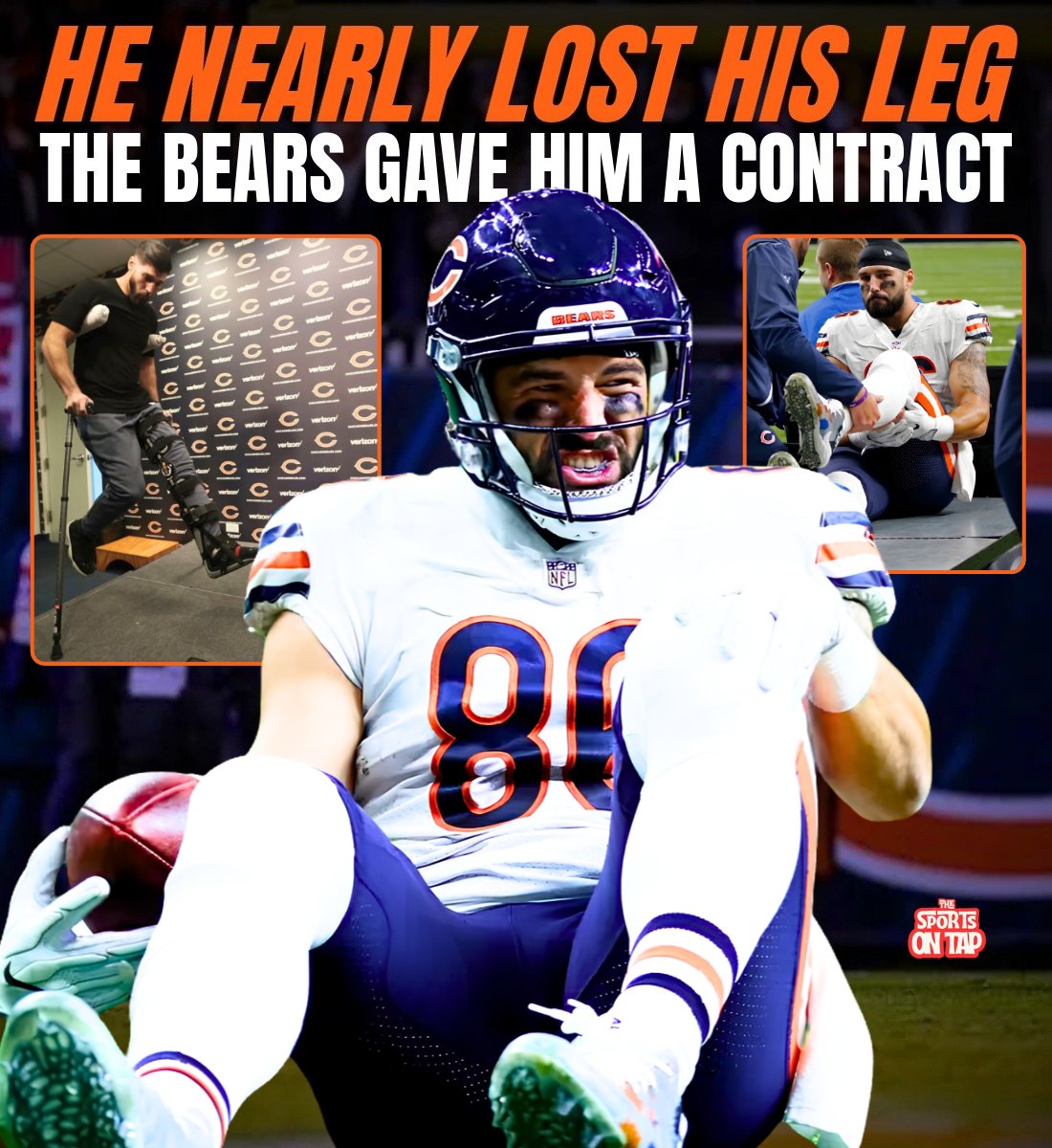
In New Orleans, a tight end for the Chicago Bears stretched out for a touchdown catch in the end zone and came down wrong.
His knee dislocated. An artery behind it tore. At the hospital, he told the doctor one thing.
"Save my leg, please."
Back at the stadium, the referees overturned the touchdown.
His name is Zach Miller.
Here is the whole thing.
Miller was a quarterback in college, at Nebraska Omaha. He had never played tight end. He learned the position from scratch, and the Jacksonville Jaguars drafted him anyway.
Then the injuries started. For years, he missed far more games than he played.
The Bears gave him a chance, and he finally became a starter. Over three seasons in Chicago, he caught 101 passes and 11 touchdowns.
Then came that night against the New Orleans Saints.
The Bears medical staff spotted a problem with the blood flow in his leg almost right away. That quick call got him into emergency surgery, and it saved his leg.
He went through nine surgeries after that.
The NFL later admitted that under its new catch rule, the touchdown would have counted. Even the Saints coach, Sean Payton, said Miller caught it.
By the next summer, nobody knew if he would ever play again. Miller was not ready to give up on it.
"There has not been a definitive, 'You can never do this again.'"
The Bears did not have to do anything for him.
Then general manager Ryan Pace called.
The Bears signed him to a one year contract. It meant he could keep rehabbing at Halas Hall with the team's doctors and trainers, and keep getting paid while he did it.
Miller gave the credit to the family that owns the team.
"That's a testament to the entire organization and the McCaskey family."
"I'm very thankful and just grateful to be a part of this family."
Around that time, he got the feeling back in his foot.
That season, his teammates voted him the winner of the Ed Block Courage Award.
His coach, Matt Nagy, described him as a humble, happy guy who just loves life.
The next spring, he finally said what everyone knew. He could not play anymore.
"To the McCaskey Family and the entire Bears organization, THANK YOU for changing my life!"
Here is the honest part. It was not a huge contract. If he did not play, it paid $458,000.
And the Bears had done something similar years earlier for receiver Johnny Knox, keeping him on the roster through a full season of recovery from a back injury before letting him go.
But the NFL is a business, and nobody would have blamed the Bears for moving on.
They kept him anyway, because he was still one of theirs.
For more stories like this, follow us on any platform @thesportsontap
Gardner Minshew came off the bench for the Arizona Cardinals on Sunday and beat the Dallas Cowboys in overtime.
A few years ago, he spent five months living in an old prison bus.
By choice.
Here is the whole thing.
Minshew grew up in Brandon, Mississippi. He broke his high school's passing records, and almost nobody recruited him.
So he took the long way. Troy. Then a junior college, Northwest Mississippi, where he won a national title. Then East Carolina, mostly as a backup, though he did set a school record with 52 completions in one game.
Alabama offered him a spot as a backup quarterback and a future job as a graduate assistant coach.
Then Mike Leach called from Washington State with a simpler pitch.
"Do you want to be a backup at Alabama or lead the nation in passing?"
Minshew picked Washington State, and he led the nation in passing. He threw for 4,480 yards, grew a famous mustache and finished fifth in the Heisman Trophy voting.
The Jacksonville Jaguars took him in the sixth round. Since then, he has played for six teams. Most of the time, he has been the backup.
So one offseason, he went all in. He bought an old bus that used to transport inmates and fixed it up himself.
Orange couch. Shag throw pillows. Flowery bedspreads from the seventies. Old album covers on the walls.
He parked it next to the gym where he trained in Florida and lived in it for five months. Wake up, walk to the gym, work, sleep, repeat.
When he reported to camp, he put the bus up for sale. Asking price, $25,000.
He wrote about what those months taught him. If you have a dream to chase, things to learn and people to love, you do not need much else.
Now he is in Arizona, still chasing it.
On Sunday in Dallas, the Cardinals were stuck. He came in for Jacoby Brissett late in the third quarter, with Arizona behind 17 to 3.
Minshew led touchdown drives on his first four possessions. The last one ended when he hit Michael Wilson for a 13 yard touchdown with 6 seconds left to tie it at 30.
In overtime, Chad Ryland hit a 42 yard field goal to win it 33 to 30.
Minshew finished 17 of 23 for 188 yards and three touchdowns, off the bench.
The next day, the Cardinals named him their starter.
Here is the honest part. Minshew is a journeyman. He has bounced around the league for years, and one great comeback does not make a season.
But he has been counted out at every level, from high school to the pros.
And he keeps finding his way back onto the field, even if he has to live in a bus to do it.
For more stories like this, follow us on any platform @thesportsontap









![Jimfrombaseball's tweet photo. "Ray Nitschke had great study habits and analyzed as much film as Bart Starr. Nitschke used to drive Vince Lombardi crazy during practice because he was able to call out all the offensive plays before the snap.
He would run around screaming:
"Watch out for the pass;
]Watch out for the draw!"
Vince would scream at him to shut up.
Ray would just grin, and after a play or two Lombardi would start screaming again.
The most amazing thing about Nitschke is that he played his entire career on one leg. Ray Nitschke`s left leg had been injured so much in High School and in College that the muscles had atrophied and never fully regenerated.
His left leg was 50% smaller than his right leg."
Domenic Gentile.
Green Bay Packer's trainer.
"Sometimes I thought of Ray Nitschke as more of an opponent than a teammate, he inflicted so much damage in practice.
He and Jimmy Taylor just didn’t know what it was like to brother-in-law, to ease up." "Instant Replay"
Jerry Kramer.
On July 2, 1963 a metal tower on the Packers practice field fell over on top of Ray Nitschke.
The tower drove a spike into Nitschke's helmet, but didn't injure him.
Lombardi ran over to see what had happened, but when told it had fallen on Ray Nitschke, Lombardi said:
"He'll be fine.
Get back to work!"
Ray Nitschke's helmet with the hole is currently on display in the Packer Hall of Fame in Green Bay.
Nitschke and Lombardi.](https://pbs.twimg.com/media/HWkBKlaXAAA35QS.png)