İhtisas Konuşmaları'nın 60.'sında Dr. Sheridan Polinsky'yi ağırlıyoruz.
⚫️An Egyptian Sufi in Late Mamluk Cairo: The Life and Thought of Ibn Mughayzil
🗣Dr. Sheridan Polinsky
📅19 Mayıs Salı 18:00
📍Özbekler Tekkesi
Başvuru için: https://t.co/Aorpzq8PNy
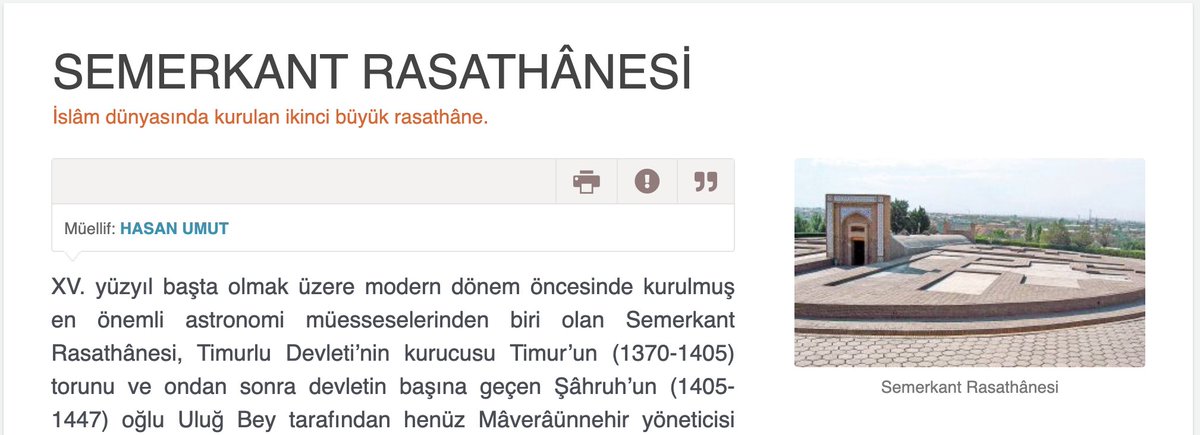
Modern öncesi dönemin en önemli rasathane tecrübelerinden olan Semerkant Rasathanesi üzerine yazdığım ansiklopedi maddesi artık yayında.
İlgilisi için linki paylaşayım:
https://t.co/MSnmyOVsje
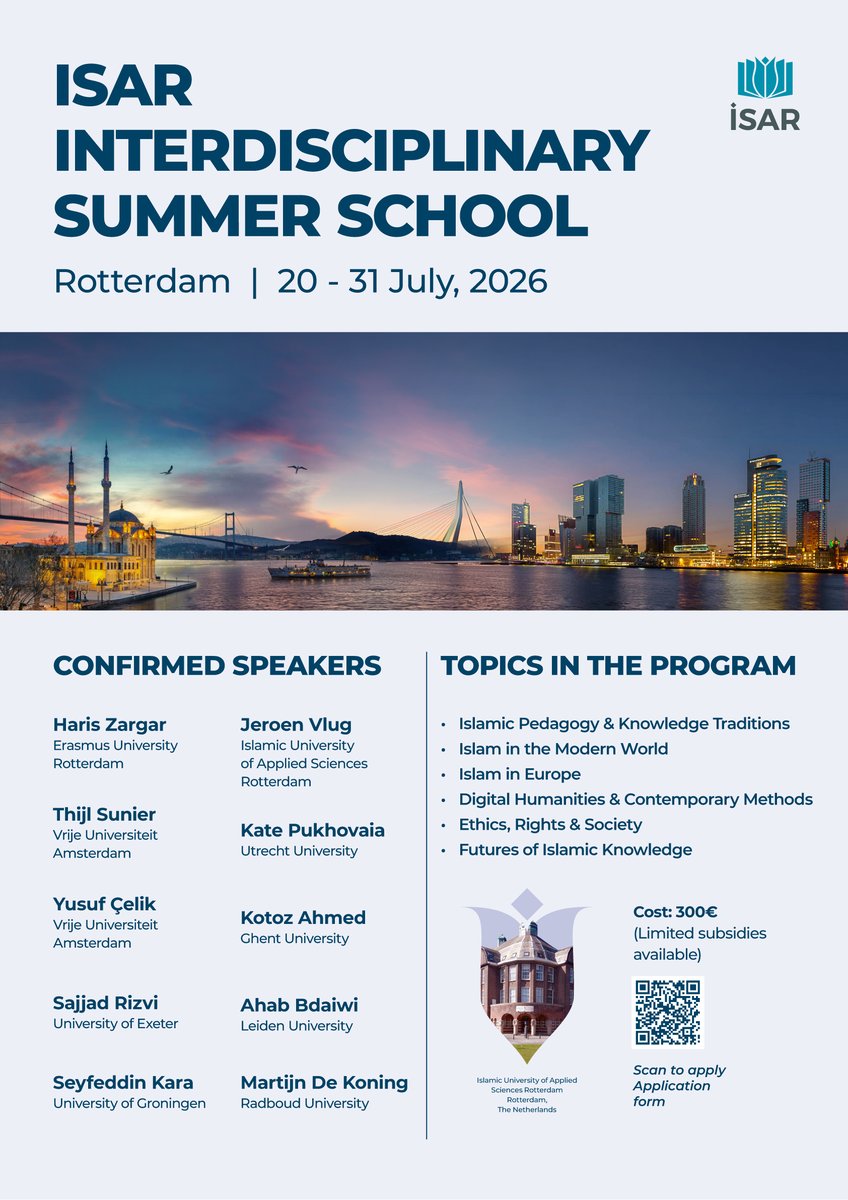
I’m co-organizing & lecturing at the 5th ISAR Interdisciplinary Summer School (Rotterdam, 20-31 July 2026).
A stellar line-up of scholars exploring Islamic pedagogy, Islam in Europe & the modern world, digital humanities, ethics, and the futures of Islamic knowledge.
Apply now!
Son yazım: Hristiyan ülkelerde cinayet oranı Müslüman ülkelerin üç katı. En büyük 19 Hristiyan ülkede cinayet oranı en büyük 19 Müslüman ülkenin beş buçuk katı! Bu verilerden hareketle Müslüman ülkelerin neden daha güvenli olduğu üzerine yazdım. İlginize. https://t.co/bWB1MDCrd6
“Boğaziçi University invites applications for open-rank faculty positions across multiple departments within its faculties and institutes.”
Details are at the link:
https://t.co/15imKU2FDo
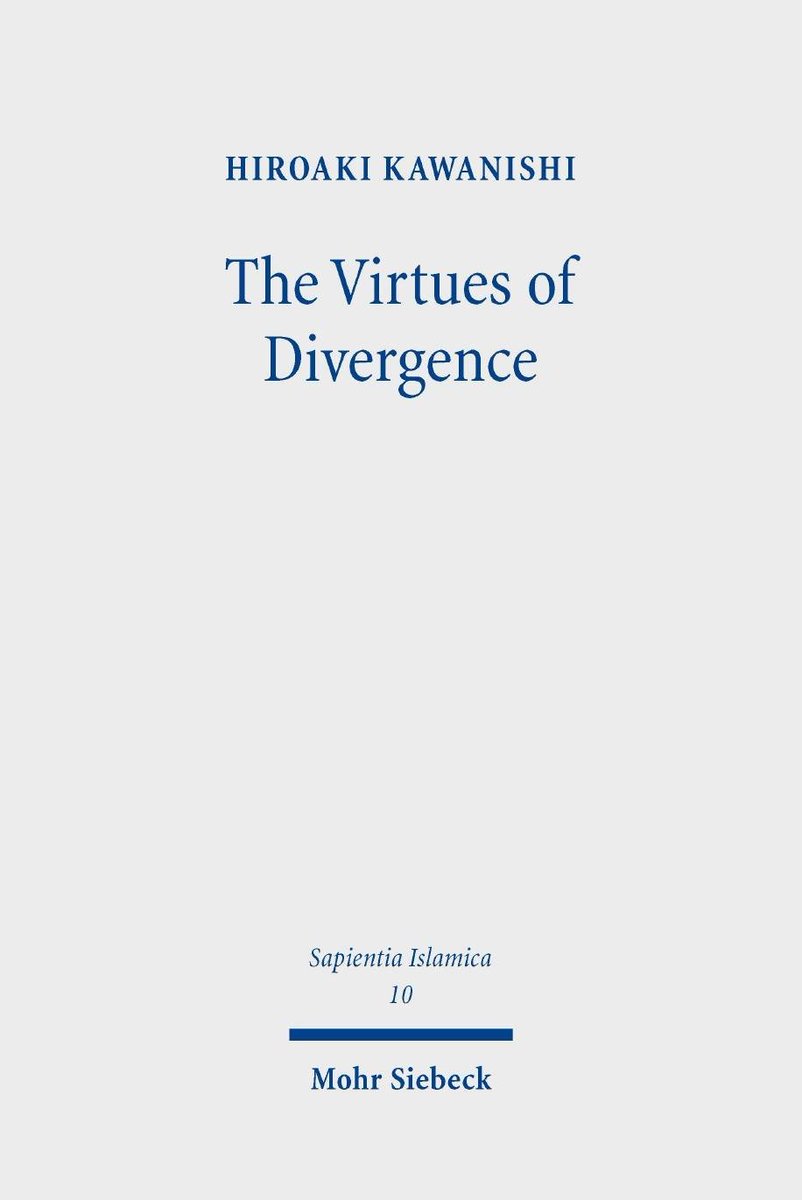
Review of Hiroaki Kawanishi, The Virtues of Divergence
This is my review of Hiroaki Kawanishi’s The Virtues of Divergence. I read the book with great interest on the first day of Ramaḍān. It is a rigorous and illuminating study of early-modern Ottoman theology. What follows is first a structured breakdown of the introduction and each of the five chapters. I then offer my own broader evaluation of the book’s contribution to the history of kalām.
INTRODUCTION
The introduction challenges the long-standing narrative that the seventeenth-century Ottoman world was intellectually stagnant. Instead of decline, Kawanishi argues for theological vitality. He does so through a close study of ʿAbd al-Ghanī al-Nābulusī and his engagement with Muḥammad ibn Yūsuf al-Sanūsī’s creed.
The introduction rejects simplified models such as “Ottoman Islam,” the automatic assumption of a Ḥanafī–Māturīdī orthodoxy, and the claim that Akbarian Sufism simply dominated intellectual life. Kawanishi shows instead that Ashʿarī, Māturīdī, philosophical, and Sufi traditions coexisted and interacted within the Ottoman madrasa world. By documenting the circulation of major kalām texts and demonstrating the substantial Ottoman reception of the Sanūsian creed, especially through al-Nābulusī’s four commentaries, the introduction establishes its core thesis: al-Nābulusī represents a distinctive synthesis of Ashʿarī kalām and Akbarian metaphysics across epistemology, cosmology, metaphysics, prophetology, and ethics.
Methodologically, the study combines manuscript work, intellectual history, and close textual analysis. The aim is not only to interpret al-Nābulusī but to illuminate the broader theological activity of the seventeenth century.
CH1. EPISTEMOLOGY
Chapter 1 establishes epistemology as foundational for kalām. Sound faith requires a defensible account of how knowledge is obtained. The chapter situates this concern within early-modern Ottoman religio-intellectual life, especially the rise of ʿilm-i-ḥāl catechisms, which sought to stabilise correct belief under confessional pressures.
The first part outlines al-Sanūsī’s rationalist framework. Rational reflection (naẓar) is the first obligation. Blind acceptance (taqlīd) is criticised. Certainty rests on al-ḥukm al-ʿaqlī and demonstrative reasoning (burhān), supported by revelation.
The second part turns to al-Nābulusī. Here, the tension begins. Al-Nābulusī both preserves and destabilises al-Sanūsī’s anti-taqlīd stance. Across his commentaries, he offers varied assessments. Sometimes he treats the muqallid as sinful but not an unbeliever. Sometimes he defends inward assent without full demonstration. More importantly, he introduces an Akbarian hierarchy of knowledge: from taqlīd, to rational proof, to kashf and direct witnessing. Reason is necessary but fragile. Ultimate verification depends on divine unveiling. The highest knowledge is paradoxical. It is the recognition of God’s ultimate unknowability.
CH2. COSMOLOGY
Chapter 2 situates al-Nābulusī within a robust Ottoman cosmological discourse shaped by the Tahāfut tradition and debates over al-umūr al-ʿāmma. The chapter first reconstructs al-Sanūsī’s Ashʿarī defence of temporal origination. Bodies and accidents are inseparable from change. What is inseparable from change cannot be pre-eternal. A determining factor must actualise one of two equally possible states. Creation ex nihilo is thus preserved through divine power and will.
Al-Nābulusī accepts this kalām structure. However, he reframes it through Akbarian metaphysics. Drawing on al-aʿyān al-thābita, he describes created realities as fixed in divine knowledge yet temporally manifested in the world. Origination becomes a transition from pre-eternal determination to created existence.
He also intervenes in the Ashʿarī–Ḥanbalī dispute over divine speech by reframing it through his synthetic ontology. The Ḥanbalī position affirms that the Qurʾān, with its letters and sounds, is uncreated. The later Ashʿarī position distinguishes between the pre-eternal divine speech (kalām nafsī) and its created linguistic expressions. Al-Nābulusī does not simply choose one side. Instead, he argues that the revealed Qurʾān, insofar as it appears in articulated letters and sounds, belongs to the realm of created manifestation. However, these letters and sounds correspond exactly to what is eternally fixed in divine knowledge. In that sense, the Qurʾān is pre-eternal with respect to its ontological grounding in divine knowledge, but created with respect to its temporal manifestation in the world.
CH3. METAPHYSICS
Chapter 3 contains the most philosophically ambitious part of the book. It begins with al-Sanūsī’s presentation of the twenty divine attributes and the classical Ashʿarī insistence on divine pre-eternity, unity, self-subsistence, and incomparability. In this framework, God is a necessary being (wājib al-wujūd), utterly distinct from creation, and not subject to composition, multiplicity, or change.
The discussion then turns to the post-Avicennian debate over the relationship between essence (dhāt) and existence (wujūd). Al-Nābulusī rejects the Avicennian view that existence is superadded to quiddity. For God, there is no distinction between essence and existence. God is not a being who has existence. He is the necessary existence itself. In this respect, al-Nābulusī stands firmly within Ashʿarī theology.
The distinctive move appears when al-Nābulusī integrates the Akbarian doctrine of waḥdat al-wujūd. He affirms that there is only one true existence, and that existence belongs properly to God alone. Created beings do not possess independent ontological standing. They are not substances alongside God. Rather, they are contingent manifestations, determinations, or disclosures of the one unqualified existence (al-wujūd al-muṭlaq). What appears as multiplicity is real at the level of manifestation, but not real as an independent source of being.
This is the point of synthesis. Al-Nābulusī preserves Ashʿarī transcendence (tanzīh). God remains absolutely distinct in essence and incomparable. At the same time, through waḥdat al-wujūd, he affirms that all things are grounded in and sustained by the single divine reality. Created forms are not incarnations of God, nor parts of Him, nor independent co-eternal entities. They are relational modes of manifestation (tajallī). Thus plurality is affirmed phenomenologically, while ontological unity is preserved metaphysically.
CH4. PROPHETOLOGY
Chapter 4 demonstrates how al-Nābulusī extends his synthesis of Ashʿarī kalām and Akbarian Sufism into prophetology. Kawanishi situates the discussion within the early-modern Ottoman context, where renewed debates emerged over Prophet Muḥammad’s superiority (afḍaliyyah), the miʿrāj, the nature of prophetic sainthood, and the theological status of controversial figures. Prophetology in this period was not static. It was a field of active doctrinal clarification and metaphysical expansion.
The chapter begins with al-Sanūsī’s kalām framework. Al-Sanūsī presents a structured account of the necessary, impossible, and possible qualities of messengers. Truthfulness (ṣidq), fidelity (amānah), and complete transmission of revelation (tablīgh) are necessary. Falsehood and concealment are impossible. Human limitations that do not compromise prophetic dignity are possible. This framework is rationally defended and grounded in scriptural authority. It secures the integrity of revelation and protects the epistemic authority of prophecy.
Al-Nābulusī adopts this structure without hesitation. He affirms the universality of Prophet Muḥammad’s mission and his finality as the seal of the prophets (khatm al-nubuwwa). His arguments here are recognisably kalām-based. Muḥammad’s superiority is defended through rational demonstration and Qurʾānic evidence. His law abrogates previous dispensations. His message addresses all humankind and jinn. At the level of doctrine, al-Nābulusī remains firmly within Ashʿarī orthodoxy.
The synthesis becomes visible when al-Nābulusī introduces Akbarian metaphysics. Drawing on waḥdat al-wujūd, he invokes the doctrine of the Muḥammadan Light (al-nūr al-muḥammadī) and the Muḥammadan Reality (al-ḥaqīqah al-muḥammadiyyah). In this framework, Muḥammad is not only the final historical messenger. He is the primordial spiritual principle through which all prophetic realities are grounded. The Muḥammadan Light precedes Adam. It functions as a metaphysical barzakh between God and creation. All prophetic missions unfold as determinations of that primordial reality.
This move does not negate finality. Rather, it reframes it. Legislative prophethood ends with Muḥammad. No new law emerges after him. Yet the Muḥammadan Reality remains ontologically operative. Sainthood (walāyah) continues as participation in that reality. In this way, prophetology is reconfigured through waḥdat al-wujūd while preserving the juridical and doctrinal finality of prophethood. Historical finality is maintained. Metaphysical continuity is affirmed.
CH5. ETHICS
Chapter 5 examines the problem of evil within the framework of early-modern Ottoman debates, particularly those shaped by Ṣadr al-Sharīʿa and al-Taftāzānī. The discussion focuses on the epistemology and metaphysics of good and evil, especially in relation to faith and disbelief.
The chapter first presents al-Sanūsī’s Ashʿarī framework. Good and evil are not essential qualities inhering in acts. They are relational and determined through revelation. Reason may recognise certain evaluative distinctions, but it does not generate moral obligation. Divine will is decisive in the existence of all events. Even disbelief occurs through divine will. This does not implya deficiency in God, because evil is not attributed to the divine essence but to the contingent order of created acts. Moral differentiation operates at the level of obligation, not at the level of divine being. This is standard Divine Command Theory.
Al-Nābulusī has a different stance. Through waḥdat al-wujūd, al-Nābulusī interprets all created realities as manifestations of divine names. Faith and disbelief correspond to distinct divine names, such as al-Hādī and al-Muḍill. Disbelief remains false and blameworthy at the level of sharīʿa. However, at the level of ḥaqīqa, it is not an independent ontological principle. It is a mode of manifestation within the differentiated disclosure of divine attributes. Evil is therefore not merely privation in a strict philosophical sense, nor is it an autonomous force. It is relational morally and manifestational ontologically. It belongs to the structure of divine self-disclosure without implying divine deficiency.
MY EVALUATION
To understand the force of this book, it is helpful to situate it within the broader development of kalām.
There is first the pre-Avicennian classical phase. Then there is post-Avicennian kalām, where Avicennian metaphysics reshapes theological reasoning, reaching a methodological height in figures such as Fakhr al-Dīn al-Rāzī and Sayf al-Dīn al-Āmidī. Finally, there is a post-Akbarian phase in which kalām becomes increasingly entangled with Akbarian metaphysics.
Historically, both al-Sanūsī and al-Nābulusī are post-Avicennian thinkers. Methodologically, however, they stand on very different ground. Al-Sanūsī resists Avicennianisation. His architecture remains structurally classical. He preserves pre-Avicennian suspicion of philosophical monomorphism and maintains earlier kalām grammar. Al-Nābulusī, by contrast, inhabits kalām through Akbarian metaphysics and a theophanic cosmology.
The book, therefore, reveals competing post-classical visions of what kalām should be. Al-Sanūsī retrieves the classical method. Al-Nābulusī reworks kalām through Akbarian metaphysics. This raises the deeper question. When we speak of “kalām,” whose kalām do we mean? The classical kalām? The Avicennian-inflected metaphysical theology of al-Rāzī? Or the Akbarian-infused kalām of al-Nābulusī? Kawanishi’s study demonstrates that kalām is not static. It is internally plural and contested. This, I think, is the real value of this book.
📚 Excited to co-organize the Second Graduate School of Islamic Humanities (July 13–17, 2026) at Leiden University!
🎓 Open to graduate students & early-career researchers.
Finally out! A fresch contribution to Early Modern Ottoman Kalām! Hiroaki Kawanishi, The Virtues of Divergence (Mohr Siebeck, 2026), explores 17th-century Ottoman kalām through ʿAbd al-Ghanī al-Nābulusī’s Sufi reception of al-Sanūsī’s creed.
@mohrsiebeck
https://t.co/QmbxJWPSLF
At last, my article on Muslim–Christian relations in the Ottoman era is out with @Religions_MDPI. A small step toward understanding Ibn Kemāl’s intellectual legacy.
📖 Open access here:
https://t.co/NMgzLDrkFt
🧵 Call for Papers: INTERNATIONAL SYMPOSIUM by the British Association for Islamic Studies (BRAIS). Join us to dissolve academic barriers across the Global Majority in a time of crisis, censorship, and structural inequality.
Details & submission: , (Dates: 24-25 January, 2026)
The goal of our symposium is to enable knowledge exchange and amplify underrepresented voices & epistemologies in Islamic Studies and related fields.
Psikoloji bölümlerinde vaka olarak okutulmalık. Öyle bir kendinin farkında olmama, kendi kusurlarını başkalarına yansıtma, bir şekilde hep başkalarının suçlama, dini her türlü kötülüklerini örtmek için kullanma ve saptırma. Ne ararsan var. Kur’an’da çok sık anlatılmaları ve hatalarının örnek verilmesi bu nedenle sanırım. Zira bir insanın ve insan grubunun sahip olabileceği en kötü özelliklerin müşahhas hali bunlar. İbretlik.
“The problem with that as well is you become very apologetic, you try to show that Islam is a safe religion”
Arnold Yasin Mol, lecturer and doctoral researcher in Islam and Comparative Philosophy, speaks to TRT World about the deeply rooted presence of Islamophobia across Dutch politics, the legal system, and society
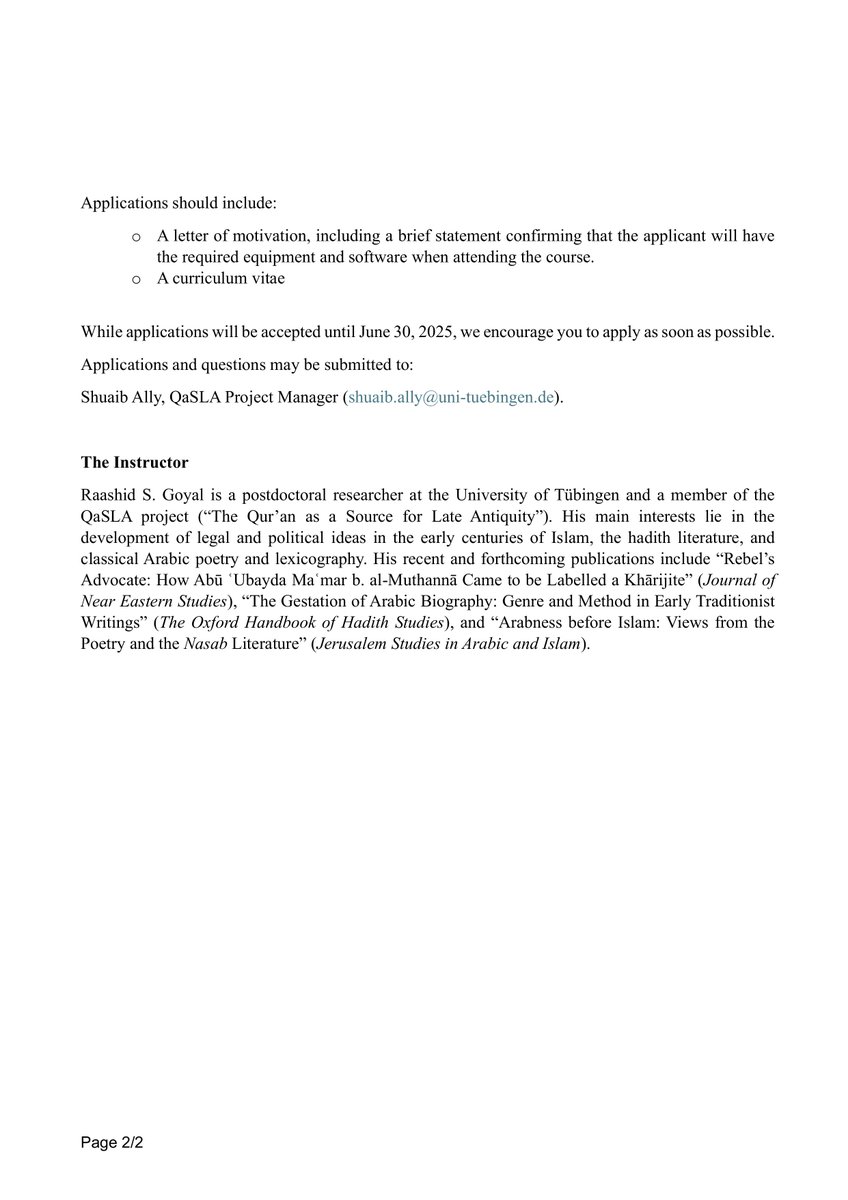
🖥️📚 Āthār wa ashʿār 2025
Four-day course on digital tools for Arabic & Islamic Studies — incl. Shamela 3.6, Arabic poetry, lexicons & more.
📍Tübingen | 🗓️ Oct 6–9, 2025
⏳ Application deadline: June 30
Applications are now open for the ISAR Interdisciplinary Islamic Summer School 2025!
🗓️ 28 Jul – 8 Aug '25
📍 Rotterdam
🎓 Join us for two weeks of lectures on Islamic knowledge, ethics, digital hum., and Muslim life in Europe.
🔗 https://t.co/V8VXEVRd10
🕰️ Deadline: 25 Jul '25
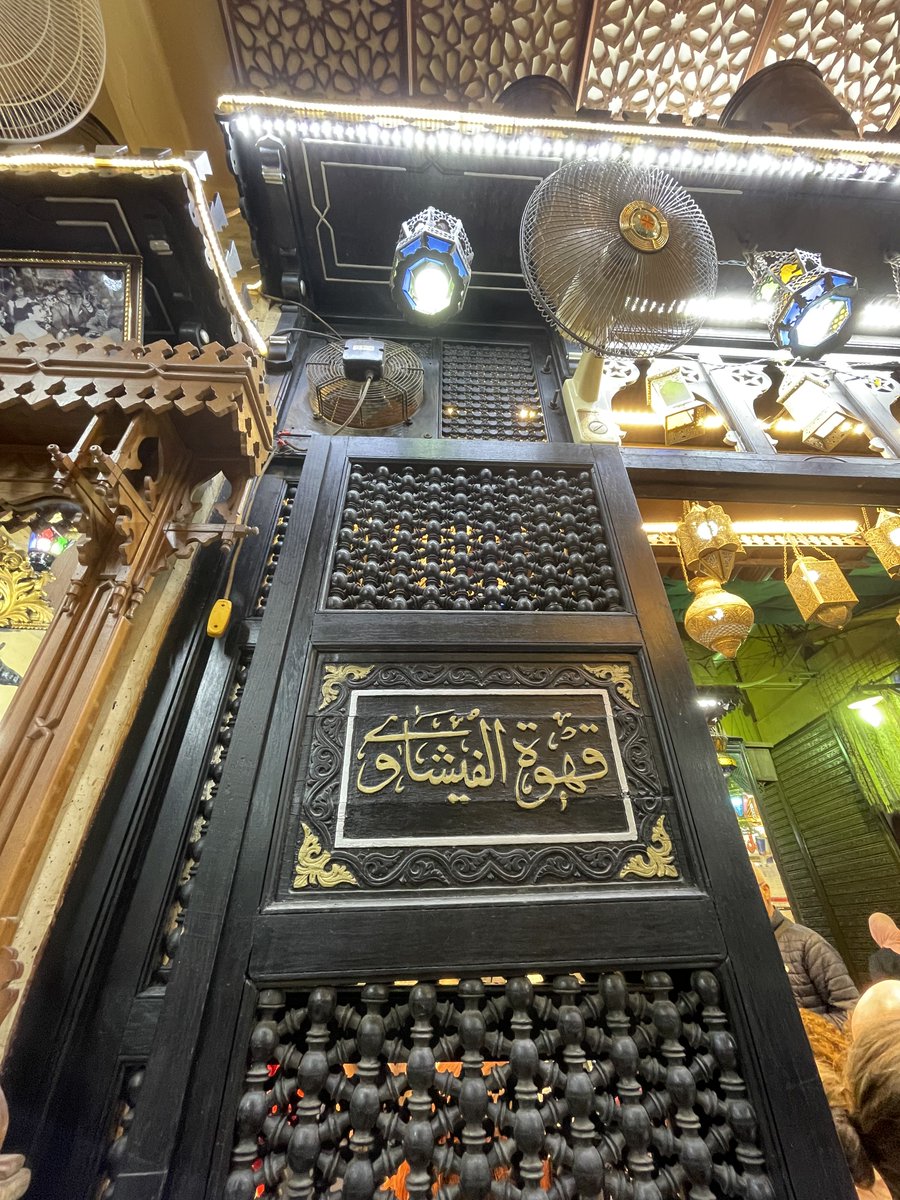
An inspiring week @AUC reflecting on the authority of silence in pre-modern Islamic thought. Grateful to @IdeoCairo, Dr. @frereAdrien, and Dr. Ahmad Khan for organising Constructing the Figure of the Salaf (7ᵗʰ–15ᵗʰ C.) and bringing together such thought-provoking voices.
I’m delighted to announce I’ve edited, annotated and introduced the first scholarly English version of Kitab al-tawhid, translated by Tahir Uluç. Our edition not only makes al-Maturidi’s theology accessible but allows his book to take its place as a classic of world literature.