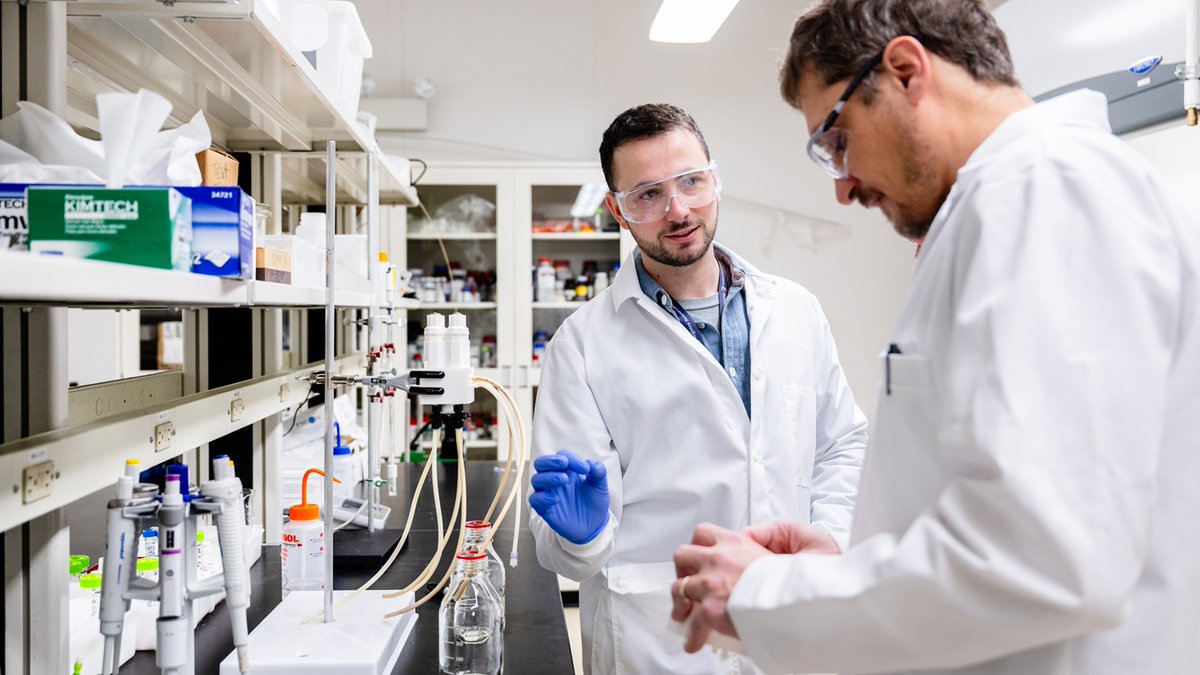
Scientific collaboration is helping move nuclear technologies closer to commercialization. Argonne is working with @DeepIsolation, @Oklo, @ShineFusion and @JAEA_en to advance used nuclear fuel recycling and waste disposal concepts - https://t.co/MqN2r6VLyF
The classroom is only the beginning for the next generation of nuclear experts. Learn how students from around the world gained hands-on experience at Argonne’s Small Modular Reactors Summer School and explored the future of nuclear energy - https://t.co/1AjM1PtoaH
One megawatt can power roughly 800 U.S. homes. But keeping the energy system reliable takes more than megawatts. ⚡
Argonne is advancing nuclear energy, hydropower, battery storage, and grid resilience to strengthen the systems we depend on - https://t.co/WoFLMSAaa0
Graduate students at this year’s Small Modular Reactors Summer School receive congratulations from Sean L. Jones, Argonne’s Deputy Laboratory Director for Science and Technology, after their group project presentations on the deployment of fast-neutron reactors.
@NEST_SMART_SMR
This week, Argonne hosted 35 graduate students in nuclear engineering as part of the Small Modular Reactors Summer School 2026. The one-week course on fast reactors and fuel cycles is organized by Argonne in collaboration with OECD Nuclear Energy Agency.
@NEST_SMART_SMR
80 years of discovery and Argonne isn't slowing down. From AI, X-ray science, next-gen energy, and stronger supply chains, the mission stays the same: science that strengthens the nation and improves lives. Read more - https://t.co/35Bsm1ZKo8
#Argonne80
The conversation is underway at #ArgonneOutLoud.
Argonne experts Steven DelaCruz, Nora Shaheen, and Xuan Zhang share how advances in nuclear science, materials research and national security help shape the future of energy and technology -Watch live: https://t.co/zxwg7Wafyb
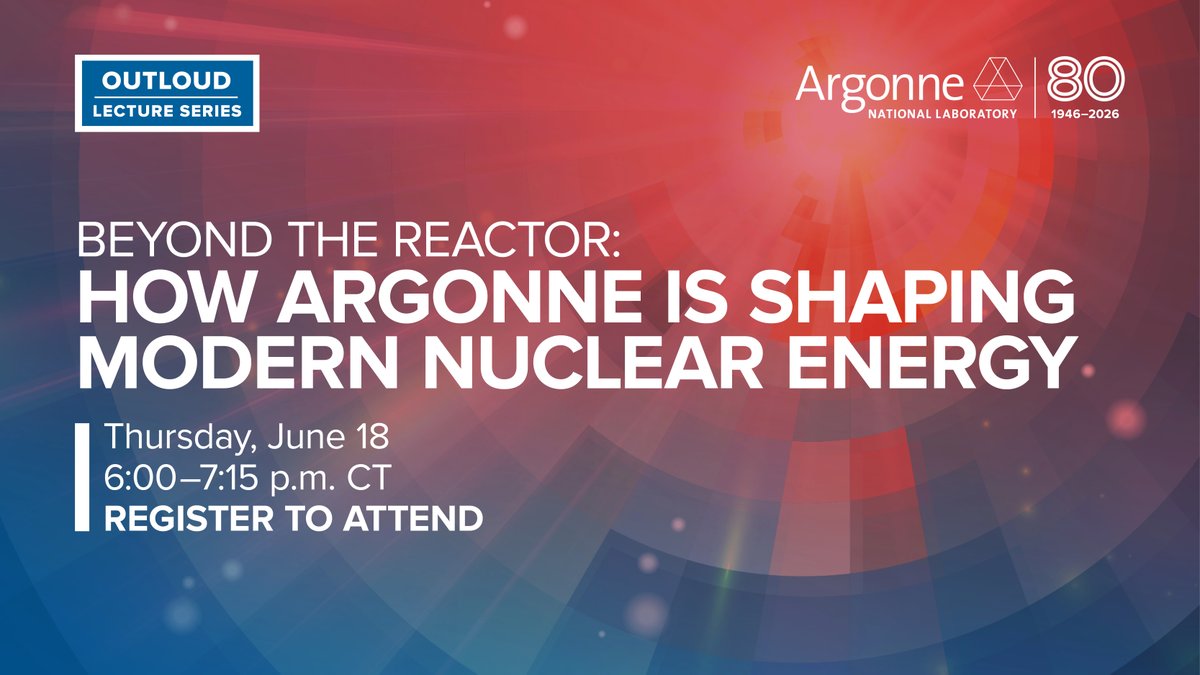
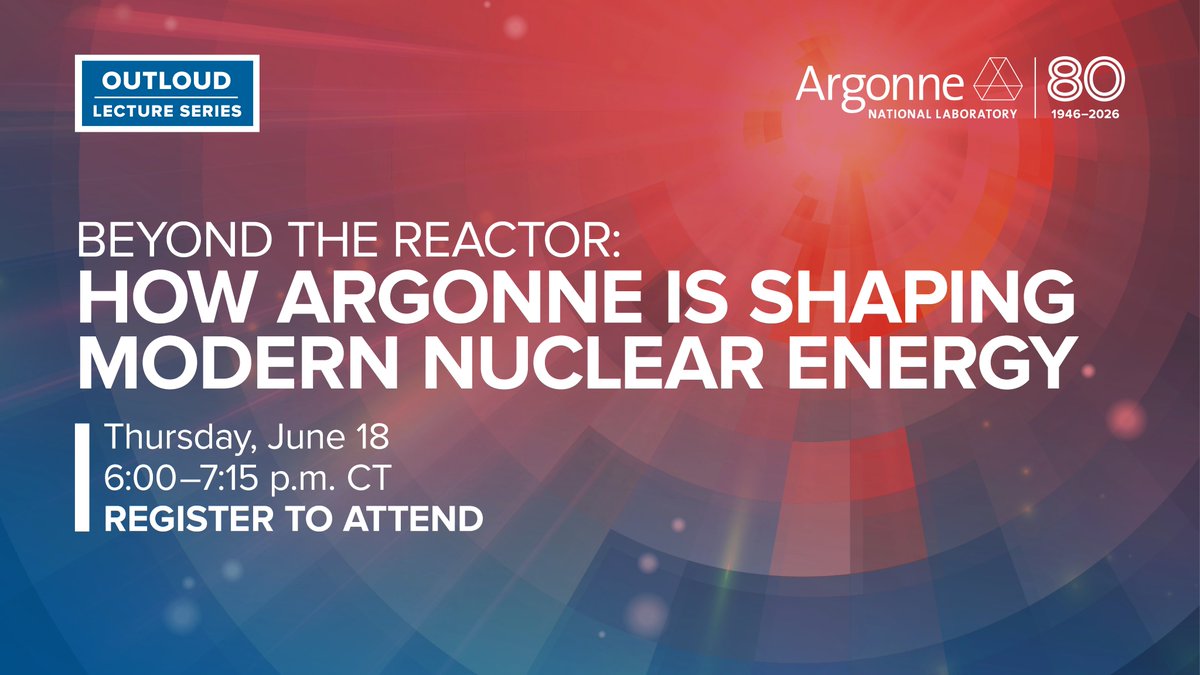
As part of #Argonne80, join us June 18 for #ArgonneOutLoud and explore the future of nuclear energy, from advanced reactors and fuel recycling to supercomputing and national security.
In-person registration closes June 10.
Reserve your seat today - https://t.co/Gl8lnkdsnF
The nuclear energy fuel cycle is made up of two phases: the front end and the back end.
The front end prepares uranium for use in nuclear reactors.
The back end ensures that used fuel is safely managed, recycled, or disposed of.
We’re baaaaaack! Argonne’s next Open House is scheduled for Saturday, June 27.
Want a reminder when registration opens? 👉🏽 https://t.co/aWxv0IK6Go
#ArgonnesOpen26
Get ready.
METL ROCKS 🤘: @Argonne is home to the largest liquid metal test facility in the U.S.
It’s used to test small and medium-sized components that will be used in sodium-cooled fast reactors.
As part of #Argonne80, join us in person for the next #ArgonneOutLoud to explore the future of nuclear energy — from fuel recycling and nuclear safeguards to advanced reactors and next-generation technologies.
Register now - https://t.co/Gl8lnkdsnF
80 years of discovery at Argonne, shaped by defining milestones. #Argonne80
1942: First self-sustaining nuclear reaction at @UChicago.
1946: Argonne becomes the 1st U.S. national lab.
See the thread for more moments from the ’40s ⬇️
Argonne is helping move advanced nuclear tech closer to everyday use. New Gateway for Accelerated Innovation in Nuclear (GAIN) awards from @ENERGY support work with @Zeno_Power and NuCube Energy, Inc. Read more! - https://t.co/UElVXokwYM
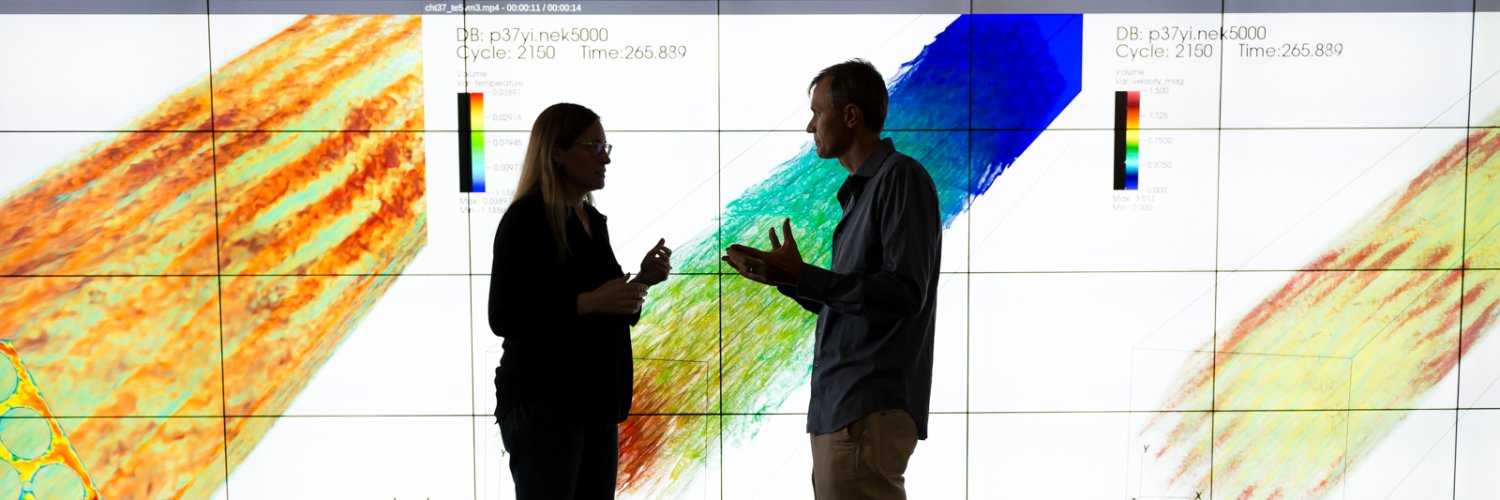
Fusion energy is promising, but complex. Argonne’s Aurora supercomputer is enabling detailed simulations that reveal how fusion plasmas behave. These insights help improve predictions in experimental devices, advancing fusion as a viable energy source - https://t.co/yxpgGC8cDZ
Kirsten Laurin-Kovitz has been elected to the Board of Directors for the American Nuclear Society. As the Associate Laboratory Director of Nuclear Technologies and National Security (NTNS) at Argonne, she advances nuclear innovation for a secure, resilient future.
Artificial intelligence is accelerating nuclear fuel research. Argonne scientists are transforming decades of experimental data into AI-driven tools that help design and evaluate advanced metallic fuels more efficiently https://t.co/6Nbmzs3SO0
Fission and fusion are two physical processes that produce massive amounts of energy from atoms.
They yield millions of times more energy than other power sources through nuclear reactions but differ in 5 key ways.
Fusion energy faces materials and engineering challenges before commercialization. Argonne researchers are applying advanced materials science and HPC to improve fusion reactor components and better understand performance under extreme conditions https://t.co/XSwqVvvpNn