This week, we showcased our maritime nuclear battery hardware at the Energy Sentry - Pentagon: DoW's Energy Innovation Expo.
The DoW’s most critical maritime missions urgently need reliable, long-duration power that can operate where conventional batteries and fuel logistics fall short.
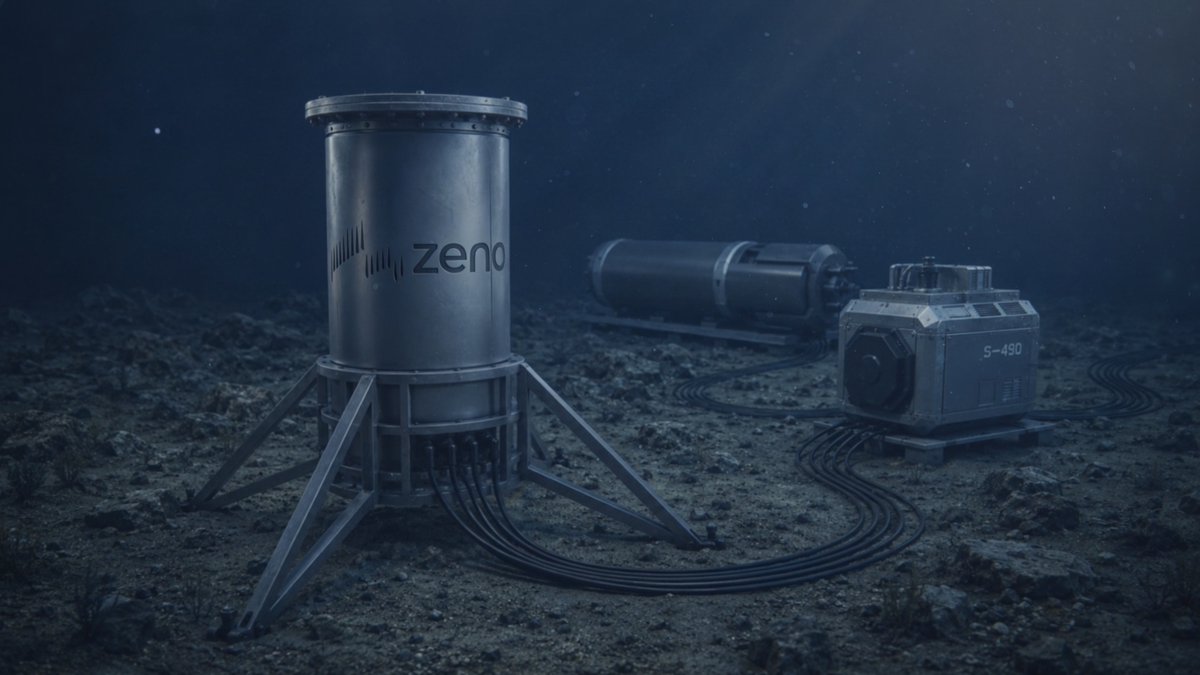
Our system is designed to keep undersea sensors and maritime systems running for years by converting heat from a compact strontium-90 source into electricity using a Stirling engine, then distributing that power through fiber-optic cable to devices on the seabed.
A permanent @NASAMoonBase needs spacecraft that can survive the two-week lunar night.
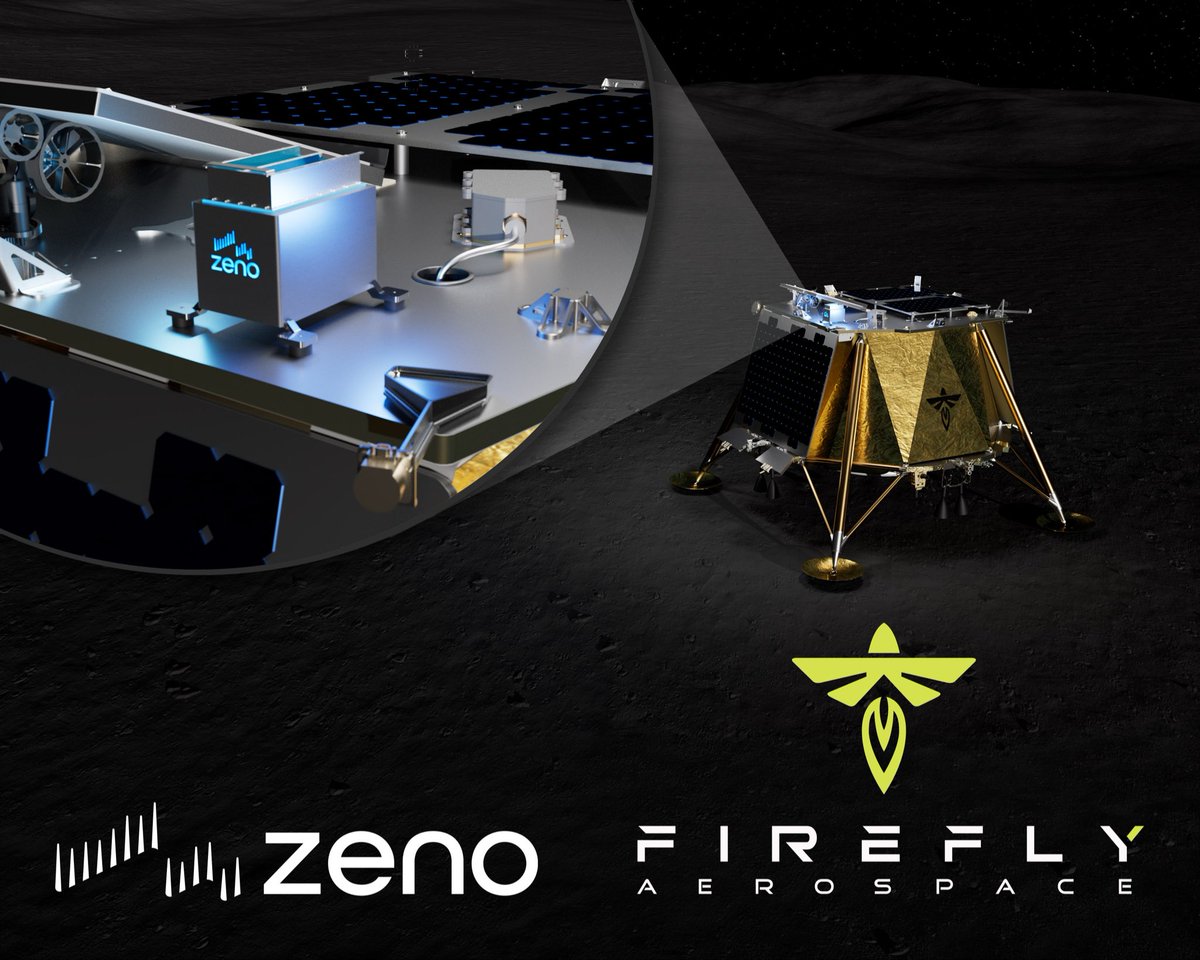
We’re building radioisotope heater units to keep critical equipment warm, with our first lunar deployment planned for 2028 with @FireflySpace.
@tybernstein joined @itsmoislam and @JackKuhr with @payloadspace today to discuss what comes next as we develop the tech to support sustained lunar operations.
Watch his segment starting at 24:00.
The Space & Defense Update is LIVE from @NASA@itsmoislam and @JackKuhr are joined today by:
– @GoesslerAlyssa, VP at AE Industrial Partners
– @tybernstein, Co-founder & CEO of @zeno_power
– Carlos Garcia-Galan, Moon Base Program Manager at NASA
– AJ Gemer, Co-founder & CTO of @LunarOutpostInc
– @endeffector, Founder & CEO of @Astrolab_Space
– @TaylorCSargent, Partner at @IndustriousVC
We’re digging into:
* Building NASA’s Moon base
* Nuclear power for surviving the lunar night
* The race to put rovers on the Moon
* Autonomous exploration & the lunar economy
* The investors backing the next generation of space companies
Comment if you love space (help us share the show!) 👇
https://t.co/XpPpxHu769
Tyler and Jonathan came as students to 1517 with an idea to dust off some old nuclear research and bring it to life.
We wrote them their first $50K check to get started. Now they're going to the Moon.
Be the first check, not the last!
Firefly is partnering with Zeno Power to provide a radioisotope power source for an upcoming CLPS mission. Zeno Power will use americium-241 for the RHU. (The Planetary Society has a useful comparison of americium-241 versus plutonium-238. https://t.co/NpJmaFbp0j)
We're bringing nuclear power to the Moon in 2028.
Today, @Zeno_Power announced an agreement with @FireflySpace to fly our Americium-241 Radioisotope Heater Unit (RHU) and Survive-the-Night Package on an upcoming Blue Ghost mission, in support of @NASAMoonBase.
The race back to the Moon is a race to stay, and staying means surviving the two-week lunar night when temperatures fall below -280°F. Today, America is behind.
Since 2019, China's Chang'e 4 mission has survived repeated lunar nights using radioisotope technology to stay alive. Recent U.S. lunar missions, relying on solar power and batteries, have not survived.
That's about to change.
After Blue Ghost completes its lunar-day operations, our RHU will provide continuous heat to keep the Survive-the-Night Package running through the dark as it transmits operational data back to Earth.
NASA's demand signal for this was explicit: it specifically incentivized this mission to demonstrate surviving the lunar night with radioisotope technology by 2028. With Firefly, we're answering that call.
Permanence is a power problem. @NASAMoonBase – and the dozens of missions in the coming years that will build toward a permanent lunar presence – will require nuclear at a scale that doesn't exist today. At Zeno, we're ready to meet that demand.
Ad Lunam Per Nuclear!
Thanks to the @zeno_power and @FireflySpace teams for working together to make this mission payload opportunity a reality with a Survive-the-Night Package (STNP) enabled by a Radioisotope Heater Unit (RHU)
@zeno_power just booked its first mission to the lunar surface. The nuclear energy startup is sending a 5W radioisotope heating unit to the Moon on board @FireflySpace's GHOST lander no earlier than 2028.
While the demo mission aims to validate Zeno's ability to keep its own payload running through the lunar night (at temps below -133ºC), it sets the stage for larger missions to operate 24/7, 365 on the lunar surface.
Full story by Payload reporter @Douglas__Gorman below.
We are teaming up with @FireflySpace to fly our Am-241 Radioisotope Heater Unit to the Moon on an upcoming Blue Ghost mission in 2028 - keeping a payload alive through the brutal cold and dark of lunar night.
@NASAAdmin has been clear: nuclear power is crucial to building @NASAMoonBase. Zeno is ready to deliver it.
Ad lunam per nuclear!
At Zeno, we're industrializing the production of radioisotopes to power the @NASAMoonBase. Watch @tybernstein's full @TEDx Talk here: https://t.co/M8zQ3kzuzI
China has been operating on the Moon since 2019, through every lunar night, running on nuclear power from radioisotopes.
America is returning to the Moon, this time to stay, and we need radioisotopes to ensure our spacecraft can survive the night. 🇺🇸
We've been selected by @NASA for a NIAC Phase I grant to study a new application of space nuclear technology: integrating compact nuclear batteries into astronaut spacesuits.
The project, EARENDIL, could help keep astronauts warm in the coldest permanently shadowed regions on the Moon, such as the lunar south pole.
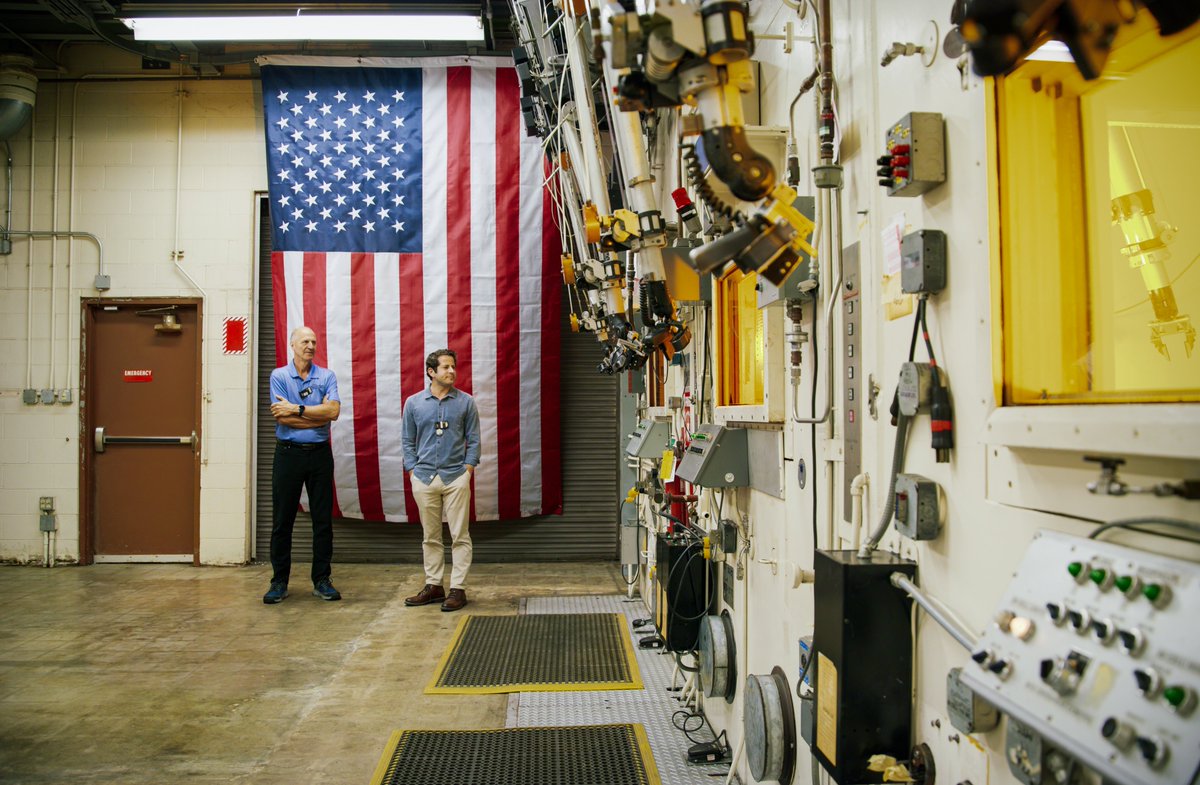
Major respect for the work at @ORNL. @NASAAdmin would love to host you at Zeno's hot cell facility at the Vallecitos Nuclear Center (est. 1957) to see firsthand where we'll build RHUs using alternative isotopes to Pu-238.
Couldn't agree more that legendary facilities from the first Atomic Age will support "Nuclear NASA"
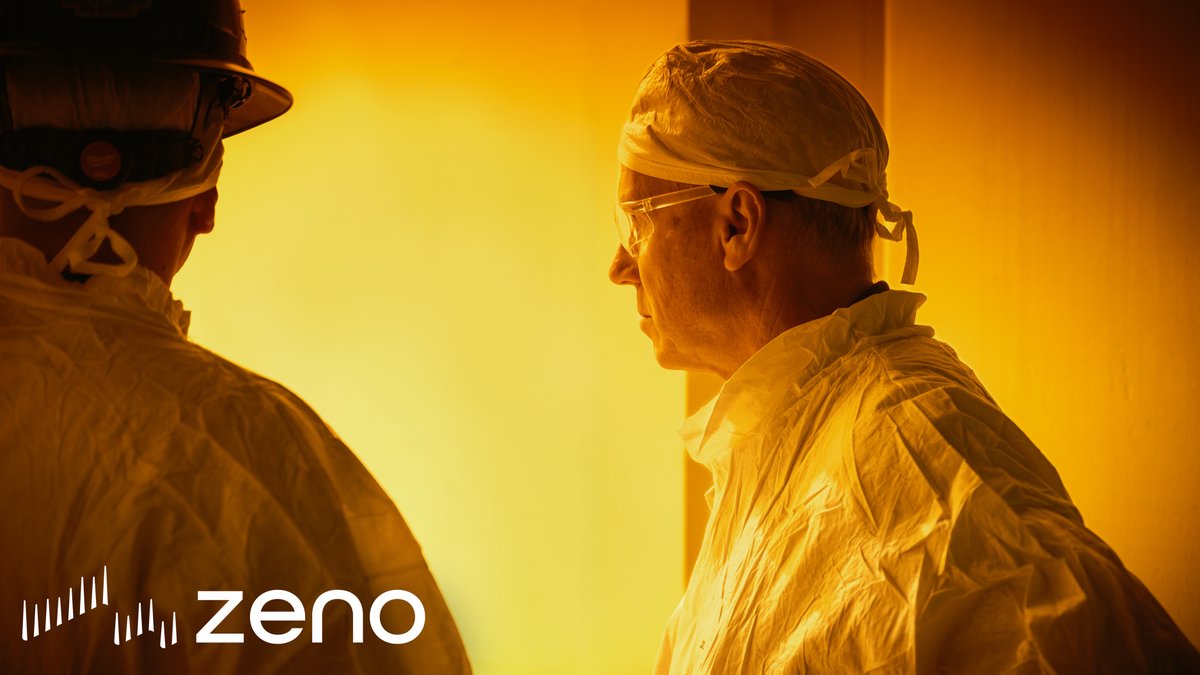
Meet John Krueger, our Radiological Infrastructure Lead. He's spent decades working in rad facilities, including managing isotope production at @ORNL.
In this video, he explains why the historic Vallecitos facility is so special, and what operations will look like as Zeno begins rad work at the site.
On July 20, 1969, Apollo 11 made history. Neil Armstrong and Buzz Aldrin became the first humans to land on the Moon.
What's less known: the mission also marked the first major use of nuclear energy on a crewed @NASA mission. 🧵
Now @NASA is preparing to return to the Moon, and this time the goal is to stay.
RHUs are back on the roadmap, planned to help systems survive the extreme conditions of the lunar South Pole region, the proposed site for the @NASAMoonBase.