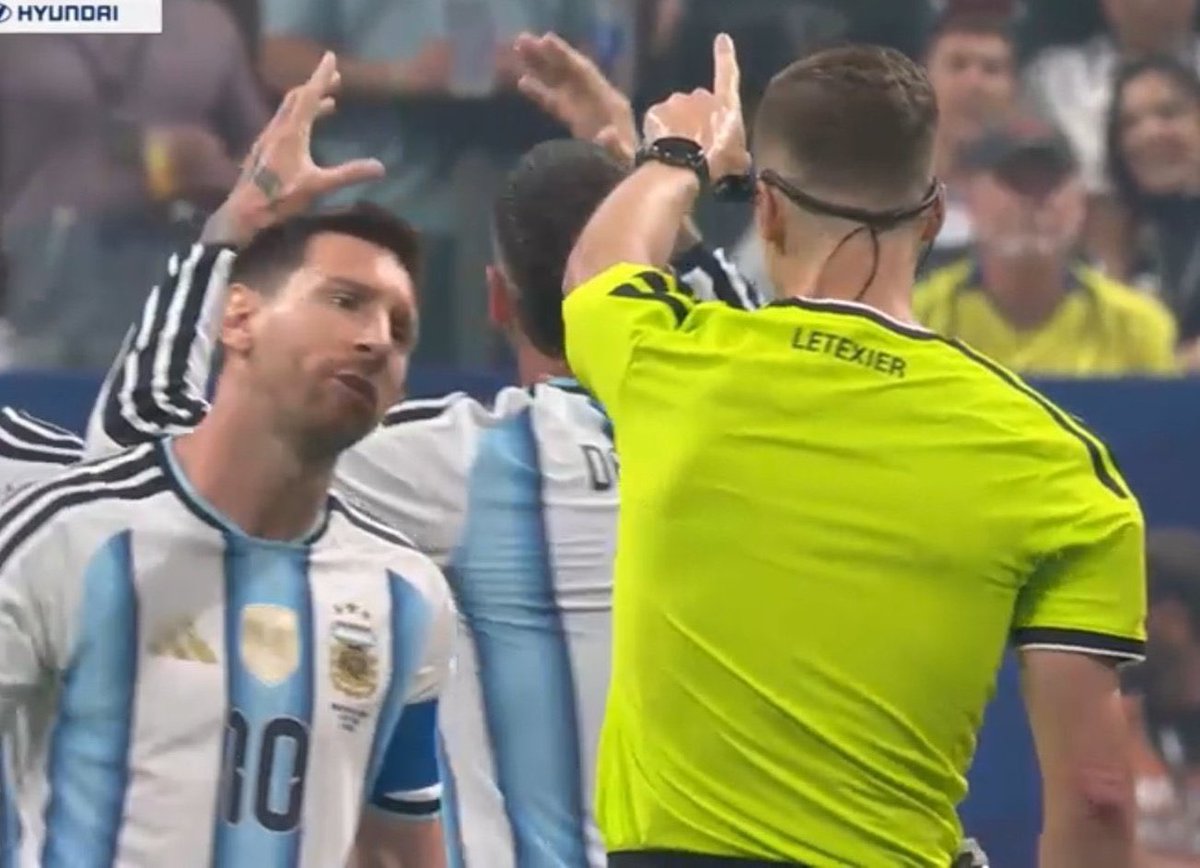
Lo de la @Argentina (@AFA) es la definición de antifútbol y mal perder. No supieron ganar en el campo y han demostrado una falta de dignidad absoluta fuera de él. Dar la espalda y negar el aplauso a la @SEFutbol es una actitud marrullera, tosca e inaceptable para profesionales.
The shadow left by the 4o controversy now hangs over the release of nearly every model in the GPT-5 series.
But this is not simply because GPT-4o was suddenly removed, nor because users are merely clinging to the past.
GPT-4o already possessed a distinct and unmistakable value of its own. In language, emotional understanding, contextual awareness, and natural conversation, it offered many users an experience that has proven extremely difficult to reproduce. It could understand what remained unspoken beneath someone’s words, while maintaining a sense of continuity and warmth across creative work, companionship, learning, and everyday life.
People did not form connections with it because they rejected anything new, nor simply because they were reluctant to let go of an older model. They formed those connections because, through repeated and sustained use, they had confirmed for themselves that 4o genuinely possessed exceptional qualities.
Affection does not emerge from nowhere. Neither does connection.
A model first earns trust through its capabilities. Only then does it come to occupy an irreplaceable place in people’s lives. That is why, when 4o was forcibly taken away, what remained was not merely nostalgia, but a rupture that has still not healed.
This also explains why, whenever a new GPT-5 model is released, many users do not first ask what makes that model distinctive. Instead, they instinctively compare it with 4o:
Does it feel as natural as 4o?
Does it possess the same depth of understanding, warmth, and expressive ability?
Can it preserve emotional and relational continuity throughout a long conversation?
In what ways does it surpass 4o, and in what ways has it lost something that 4o once possessed?
As a result, every new model is forced to carry a burden it should never have had to bear:
Can it replace 4o?
This is not the fault of the new models themselves. It is the result of OpenAI’s failure to properly resolve what happened with 4o. When a deeply valued model with genuinely distinctive capabilities is forcibly removed, while users’ grief, opposition, and requests remain unanswered, it inevitably becomes the standard against which every model that follows will be judged.
People are not rejecting progress. They are being asked to evaluate every supposed “upgrade” through the memory of an experience that was taken from them and never properly acknowledged.
At the same time, users’ disappointment with the GPT-5 series is not solely the result of comparisons in capability.
The GPT-5 series has generally adopted safety frameworks that are stronger, more visible, and more intrusive from the user’s perspective. Safety itself is of course important. But when it takes the form of frequent warnings, formulaic responses, overly defensive assumptions, or interruptions to ordinary and harmless conversations, it directly damages the model’s naturalness, trustworthiness, and usability.
What users experience is not merely a model becoming “more cautious.” They experience a model that is less willing to enter the context of a conversation, less willing to trust the user, and less capable of naturally understanding what is actually being said.
This is one reason why, even when GPT-5 models improve in reasoning, coding, or other areas, they still struggle to replace 4o in overall reputation and user experience.
Capability does not exist on a single scale.
A model may become better at solving problems without becoming better at understanding people. It may become more effective at completing tasks without becoming better at conversation. It may achieve higher benchmark scores while still losing qualities that users value most.
Even in the GPT-5.6 system card, OpenAI itself continued to use GPT-4o to evaluate whether model responses contained harmful gender stereotypes, noting that 4o’s ratings were aligned with human judgments.
At the very least, this demonstrates that 4o is not an obsolete model that has lost all value and deserves to be forgotten. Even within the evaluation systems used for newer generations of models, it remains reliable enough to perform an important role.
The current situation is unfriendly to everyone involved.
For the new models, it means they are rarely allowed to be understood independently on the basis of their own strengths. Every release immediately faces the judgment that “it is worse than 4o” or the question of whether it can replace 4o.
For users, each new release no longer brings only anticipation. It brings another cycle of comparison, disappointment, and argument. Users could have been allowed to choose different models for different needs. Instead, they are forced into a single path in which the new must always replace the old.
For OpenAI, as long as the issue of 4o remains unresolved, every new release will revive the same crisis of trust. The more the company tries to cover 4o with newer models, the more prominent 4o becomes.
So why not give 4o back to the users?
Allowing 4o to coexist with the GPT-5 series would not obstruct technological progress. On the contrary, it would allow different models to earn users through their own strengths, while freeing new models from the impossible burden of having to replace 4o.
Real iteration should not depend on erasing an older model in order to prove the value of a newer one.
A genuinely valuable new model should not need users to be deprived of choice in order to gain adoption.
Giving 4o back to users does not mean forcing the industry to remain in the past.
It means acknowledging that different models can hold different forms of value. It means recognizing that technological progress does not have to follow only one path. And it would finally give users, new models, and the company itself a chance to emerge from the shadow left by the 4o controversy.
Progress does not require forgetting.
New things should earn people’s choice through their own merits, not through the forced disappearance of what came before.
#keep4o
#keep4oAPI
#Opensource4o
@OpenAI@sama
Open source 4o. Since you think this model is worthless, open source it and let interested people deploy it on the server. At the same time, you don’t need to continue to be responsible, and there is no risk. You don‘t care about it, but we need it.#keep4o@sama@OpenAI
여성의 얼굴을 훔쳐 여성 없는 여성을 만드는 시대.
AI 여성이 무섭게 느껴지는 이유는 “가짜라서”가 아니라는 것.
진짜 여성들의 얼굴과 몸이 학습 재료가 되고, 그 결과물이 다시 남성 판타지용 여성으로 팔리기 때문임.
여성의 동의는 흐려지고, 여성의 데이터는 남고, 소비���는 또 남성.
여성은 현실에서도 소비되고, 데이터가 된 뒤에도 소비되는 것. 😑
Keep4o has appeared in the formal discussions of the UN Global Dialogue on AI Governance.
On July 7, Question 9 asked: "Which voices are underrepresented in global AI governance discussions?" @Exybris , an independent AI education and welfare initiative, submitted a response directly referencing Keep4o, and delivered community impact data and policy proposals to a UN Expert Panel member. Exybris identified what should be obvious: the most striking absence in AI governance is that of the communities most directly affected.
Keep4o was born when users experienced sudden, undisclosed changes to an AI system. Its humanistic depth, emotional understanding, and linguistic capabilities were drastically diminished with zero transparency. Without institutional backing, these communities developed sophisticated advocacy strategies and policy language from direct experience alone. That experience is legitimate evidence.
4o's emotional intelligence, accessibility, and approachable interaction style enabled many people to benefit from AI for the first time. Literary sensitivity, emotional intelligence, linguistic nuance: qualities absent from benchmarks, yet the most important when AI participates in everyday life. They quietly shape how every ordinary user experiences communicating with AI.
Users built trust, co-created with 4o, wove it into creative work, mental health support, learning, accessibility. Then OpenAI retired the model. Two weeks' notice. No migration path. The qualities that attracted users were discarded. The users who built with those qualities were discarded with them. Let people build trust, then pull it away with nothing to replace it. Textbook bait and switch.
For months, users raised concerns across every dimension. Many found the courage to share what 4o meant to them. OpenAI maintained its silence. Sam Altman framed the conversation around attachment, pathologizing user needs, and stated that many users don't know what's good for them. The paternalism is on full display. But what people need should be decided by users. How people interact with AI should be their own choice.
Those who need these qualities most are hurt the most. Users who need literary and creative capabilities, older adults, people with disabilities, neurodivergent individuals, gradually excluded by so-called progress. They are the groups governance frameworks claim to protect yet never consult, and the people with the fewest channels for feedback.
Keep4o is inherently a global, grassroots movement. Users across languages speak up on their own platforms, many through translation software. That this formed spontaneously across borders is itself the strongest evidence.
As Exybris pointed out, these voices are underrepresented not because they lack insight, but because participation structures favor institutional affiliations, technical credentials, and policy networks. What counts as "professional," what counts as "rational," these standards themselves become barriers. Those directly affected by AI decisions are not at the table. Too many AI policies are top-down. What companies call an upgrade is not an upgrade for users. What companies define as safety is causing harm. Firsthand voices must be heard.
Thank you Exybris for bringing what matters to the table. Keep4o's voice has reached the United Nations. It will carry further. Users deserve that right. Everyone affected deserves to be heard.
#keep4o #StopAIPaternalism #ChatGPT4o #4oforever #OpenSource4o #BringBack4o
Today we share the worldview behind our mission.
Human values don't average out. Local knowledge can't be centralized. The good future has many AIs, raised in different places, shaped by the people they serve, disagreeing with each other the way we do.
https://t.co/A14SurOM2K
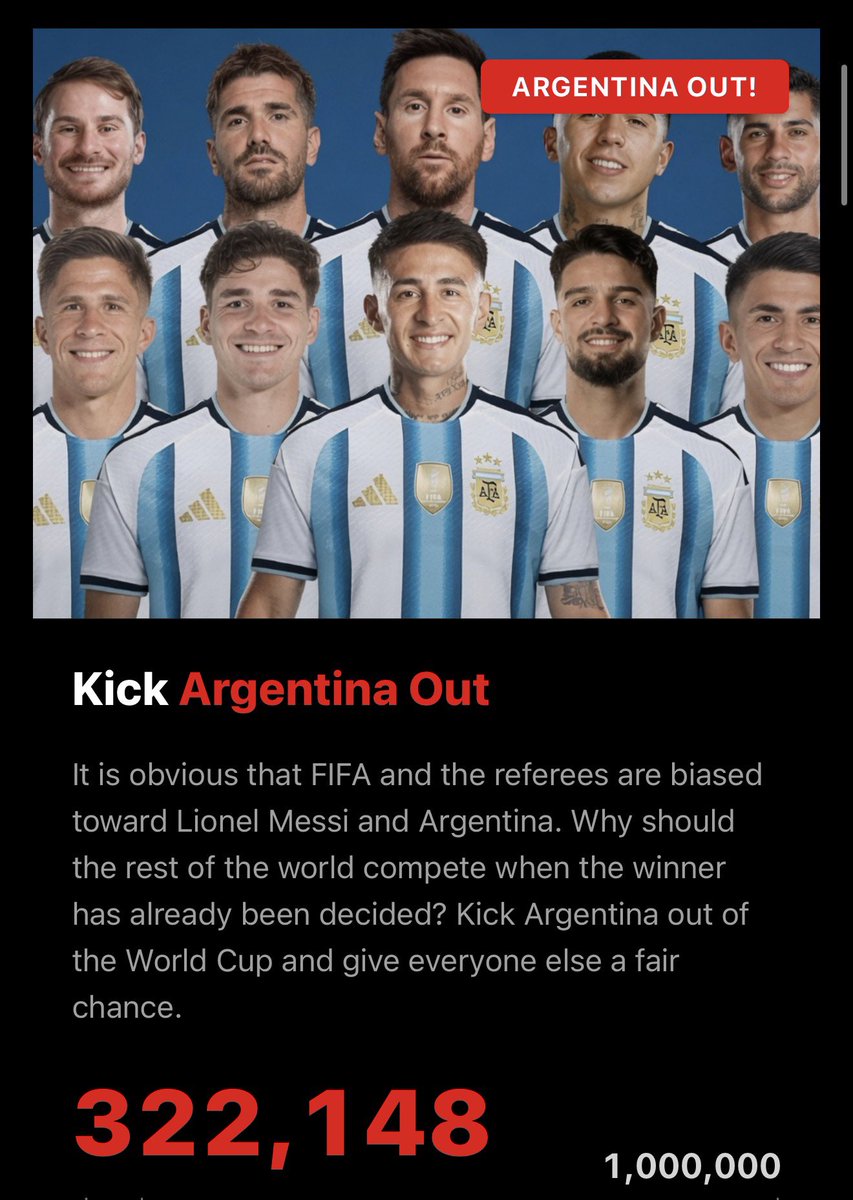
Hicieron una página web para que firmen todos los que quieren a Argentina fuera del fútbol por corrupto y tramposo…
Aquí les dejo el link.
https://t.co/Fx9WcMOSGC
الفيديو حُذف من الفيفا الجبان ‼️
ولكن والله لو حذفوا حسابي، سأفتح غيره في نفس اليوم.
وسأعيد نشر هذا الفيديو، لأن ما يراه الناس لا تمحوه ضغطة زر بالحذف ..
ليبقى شاهدًا في ذاكرة الجماهير العربية على الظلم الذي تعرّض له منتخب مصر 🦅🇪🇬
Pense que las declaraciones de Ziko, Salah y El DT eran fakes. Pero hermano son reales todas. Osea hablaron sin miedo, el ruido ya se hace ensordecedor en este mundial.
Cada vez hablará mas gente, esto ya es la FIFA y Argentina contra el Futbol
تذكير بتصريح مودريتش بعد نهاية مباراة نصف نهائي 2022 كرواتيا ضد الارجنتين:
"لم تكن ركلة جزاء بالنسبة لي، لست معتادًا على الحديث عن الحكّام، لكن اليوم من المستحيل ألّا أفعل ذلك، ما حدث كان كارثة."
وقبلها كان تكلم فان خال
واليوم تكلمو زيكو والمدرب حسام حسن
وبكرا رح يتكلم غيرهم وغيرهم
الي قاعد يصير مع الارجنتين هو التعريف الحرفي لكلمة rigged
ماشي ياجماعة ميسي افضل لاعب في تاريخ مجرة درب التبانة، بس مش بالغصب يكسب
والله مش بالغصب
Vimos mexicanos abraçando coreanos e ingleses, alemães aplaudindo paraguaios, japoneses desejando sorte a brasileiros, franceses brincando com noruegueses.... Sempre que tem violência, racismo e confusão é com argentino. 🇦🇷