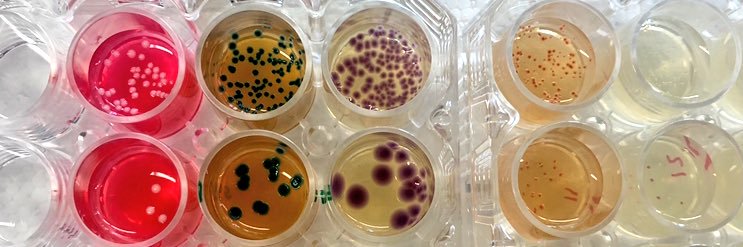
Behind the Paper is out! 🎉
In "Evolving solutions: breeding bacterial communities to battle pollution," we tell the story behind our recent artificial selection paper @NatureComms . Huge thanks to @saramitri , @owbjorn , Alice Haym and Geraldine Alberti
https://t.co/DTNGWQTOXS
Very proud that our paper "Artificial selection improves pollutant degradation by bacterial communities" is now published in #NatureCommunications! We propose a new method inspired by genetic algorithms to breed and optimize small #microbiomes.
Link: https://t.co/hcWuWuO7AQ
@penileyramirez@El_Universal_Mx Muy preocupante para la seguridad de los veracruzanos y el ecosistema @CuitlahuacGJ por favor infórmenos al respecto, y de ser cierto, importante actuar a la brevedad posible.
@nereisima Son albinos porque no producen melanina. Este pigmento es responsable de proteger el ADN de las células del daño por radiación solar. Si no hay exposición a la luz, producir melanina es un gasto energético innecesario
@lecteroide Cuentan los rumores que el chico del apartamento 5-12 tiene una carcacha que paso a pasito te puede llevar, como la flor, con tanto amor, a la biblioteca que tú quieras. Nomas es cosa de que guardes tu sana distancia y puedes ir con el 💕
@CTropini Phenotypic variability in colonies can sometimes be caused by small changes in humidity of Agar media. To avoid this you have to be super consistent with the technique and amount of time you dry your plates.
1) SARS-CoV-2 Vaccines - I promised a Tweetorial and here we go. This is going to be long and nerdy. But I'll make sure it is easy to understand. If you want more details, please just read this: https://t.co/XBnamI2pKk