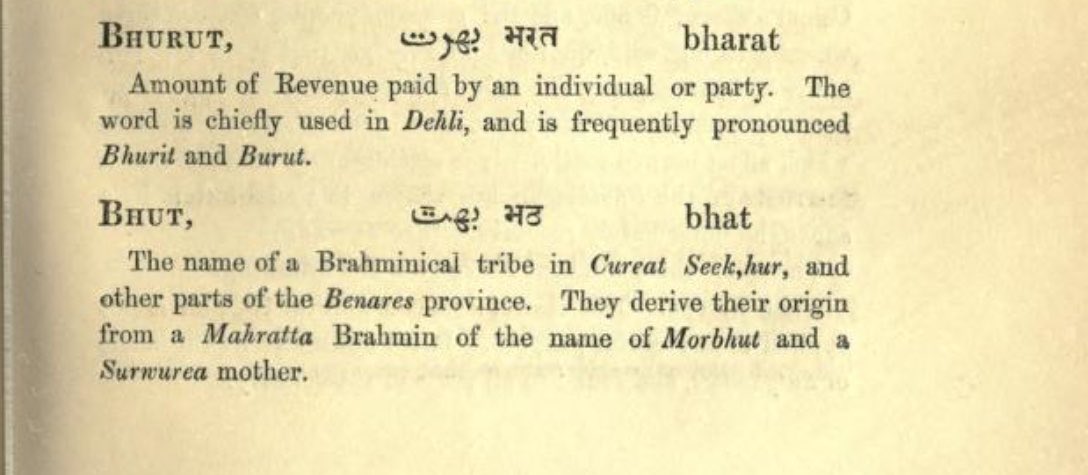
@dasyuslayer1 The Funnier part is that the snippet refers only to a Bahmin who was mislabelled as Mahratta instead of Mahratta Brahmin by the author. Imagine the level of cuckoldry
The author was also smart enough to provide references, he references Henry Elliot’s “Supplement to the Glossary of Indian Terms”, clearly showing that “Mahratta” here refers to a Marathi Brahmin named Morbhat so stop chimping out on that one single snippet you chimpanzee
@JimmyRao96@Rathatreya_@itisatom That “smart enough” author has also cited the source from where he quoted it.
when you’re done sucking his balls look it up before larping on that snippet again
@JimmyRao96@Rathatreya_@itisatom Dono alag nahi hai lawde, jisko leke tu naach raha hai usi ka cited source hai woh highlight karke diya hai fir bhi nahi dikhra kya
First of all, I had already read this commentary before you, 8 failed. I posted the Jaiminī Brāhmaṇa, and you’re showing that mantra from the Śatapatha Brāhmaṇa, idiot. The same mantra occurs in both the Śāḍviṃśa and Śatapatha Brāhmaṇas, but in the one I posted, Viśvāmitra is also being discussed.
I already knew before you that Indra goes there assuming Gautama’s form, which appears in the very next mantra. You don’t even know that Brāhmaṇas contain mantras, not ślokas. Here Sāyaṇa says that a Brahmana was born in the Kuśika gotra, which means Indra was a Brahmana. And don’t try to use the logic that Indra was called a Brahmana because he assumed Gautama’s form. That would actually contradict Sāyaṇa.
The second interpretation is that the son of the Kuśika Brahmana Indra assumed the form of Gautama. Either way, my point is proven, whether you take it as “born in the Kuśika gotra” or “the son of the Kuśika Brahmana.” Both support my argument, idiot.
kauśikaḥ kuśikagotrotpannaḥ kaścid brāhmaṇaḥ enām prakrtām ahalyām upanyeti sma ha || gatau iti parokse lit upanīti) upasargeņa upayann upagacchann) upayeme kilety arthaḥ || tasyā jāraḥ san tadbhartrsthāne tişthatīti kauśika brāhmaṇety upacārād amantryate ||
gautama iti ha bruvānaḥ yad vā gotamarūpeņa caran gautama iti janair ucyamāne gautama bruvānaḥ || bruvateḥ kartari vyatyayena karmani śānac | tasya sam-bodhanam gautama bruvāneti || tad vyācaşte ||
devāsurā ha devāś cāsurāś ca | kim | samyattāḥ paras-param yoddhum udyuktā ) āsan babhūvuḥ || tän anta-rena teşām madhye antarāntareņayukta iti dvitīyā | gotamo nāma rşiḥ śaśrāma śramam upāviśat || tam gotamam upetyopagamyendrah evam uvāca | asurā bha-vantam bādheran ata ihaiva smākam spa-śaś) caro bhūtvā bhavān caratv iti || evam uktavan-tam indram rşir aha aham eva) cārarūpeņa vartitum notsahe utsäham na karomīti || atha gautamavacanānan-taram indro bravīti | aham bhavato rūpeņa spaśaḥ san carānīti | tad anumanyate bhavān iti || punar gotamo bravīti he indra tvam yathā yena prakāreņa caritum manyase tathā careti || paścād indras tathaivācarad iti śeṣaḥ || sa indras tat tadānīm gotamo 'ham iti svayam vadan gautamarūpeņa gautama iti janair ucyamāno và cacareti || yat tad evācaraņam āha gautametiti | gautama bruvāņeti padasyaikadeśaḥ ekadeśopādānapratīteh || nigadaśeşam upādatte ||
ārşeyāņi nāmadheyāni, rşīnām nāmadheyāni
Those who do not even know the distinction between gotra and pravara are not worth wasting time explaining it to. There are several systems for understanding gotra and pravara. Gotras are of two types Ārṣa and Laukika for example, asamāna-pravarair vivāhah marriage is with persons who have different pravaras; asamāna-rşi-gotra-jātām (udvahet)3-a man must not marry a woman born in the same rși-gotra, that is, gotra as determined by the rși-names of the pravaras. The Vişnu-Smrti prohibits a woman of the same 'pravara of rșis' (asamānārşa-pravarā) as well as one of the same gotra (asagotrā). Manu apparently felt that the prohibition of gotra was sufficient by itself; but Yājñavalkya more explicitly says asamānārşa-gotra-jām, i.e. a woman of a different ārşa-gotra. The Mitākṣarā interprets this last expression as a Dvandva compound, 'of a different ārsa, i.e. pravara, and of a different gotra'. This is doubtful, and is certainly misleading, since it suggests to the reader that two separate prohibitions are intended. It has indeed even in modern times been stated that Brahmans avoid in marriage both gotra and pravara. The passage noted above from the Vişnu-Smrti is open to the same interpretation, although in this case the term asagotrā may have been intended simply to explain asamānārşa-pravarā. But in Yājñavalkya's phrase it is difficult to see any reason for preferring the Mitākşara's rendering. The word ārşa is primarily an adjective 'concerned with rșis' and could only have the sub-stantival meaning of pravara as the result of an ellipsis. It seems preferable to translate it as an adjective here; and this translation is further upheld by the Vişnu-Smrti (which could hardly intend ārşa-pravara to mean 'pravara and pravara'), and by the unmodified form of the Vaikhānasa Sūtra-rși-gotra.
Thus, Yājñavalkya here is quite clearly defining the kind of gotra that a man is to avoid: it is not gotra in the everyday sense of 'family', that is, not the laukika-gotra, but the arsa-gotra, that is, the gotra connected with the rșis. In brief, ārşa-gotra means, not 'pravara and gotra', but 'gotra as determined by the rși-names in one's pravara'. In the use of the pravaras, therefore, we are to see simply a mechanism whereby the exogamous group is defined, and the system preserved from the dissolution which the inexact usages of the word gotra might have brought about. The phrase ārşeyān ṛṣīn would naturally mean 'rșis who are also descendants of rșis', and in this sense, indeed, it occurs frequently enough in the later Vedic hymns, where the authors pride themselves on their hymn-composing ancestry. But in the case of the pravaras it is difficult to see the reason for the double requirement.
In fact, normally one rși in the pravara is not a 'descendant of a rși', but is himself the original rşi (mūlabhūta rșih) who is, so to say, the founder of the family. In the case of ārşeyān pūrvajān, 'ancestors who are descendants of rșis', the same objection holds. In the election of the priests prior to a sacrifice, the Sūtra injunction is normally that one should choose a Brahman who is ārşeya; and indeed in this connection the Yajur-veda uses the phrase rșir ārşeyah. This, however, is in order to guarantee the priest as a member of one of the authentic Brahman clans, as being the descendant of one of the gotra-rșis. It is clearly a distinct usage from that seen in the pravara-prescription though of course allied to it.
The neuter form, ārşeyāny apatyāni, would mean 'descendants who are descendants of rșis. abhí no arşa divya vásūny abhí viśvā parthivā pūyámānah:
Just as there are distinctions among human beings, there are distinctions among Brahmanas, among those who share Brāhmaṇatva there are distinctions of Gotra such as Vasiṣṭha and for each Gotra there are corresponding common ārṣeyas (ṛṣi lineages) i.e. Pravaras ~Medhātithi
@arishtanemis@Thekausikeyas Iss level ka ganwarpana Sach mein Alaag hi level ka hain yaar apne maanse kuch bhi bakchodi reel ke without Any evidence but jhaat bhaarka opinion & bole dusaron ko dehati, arrey ladjhat Pravaras if you read them aren't in any lateral sense connected to Gotra.
@Thekausikeyas@Scion_of_Agni Kisko samjha rahe ho bhai, anyone even with surface level knowledge of gotras and pravaras knows how the two are correlated but iske according pravaras are determined by Ved Sakha of the Purohit, iss dehati ko samjha ke koi faida nahi hai
Because names aren’t trademarked lodu, There have been multiple Rishis bearing same names, sage Darbhadharika (also called darabhattarika) was a bhargava, the name of atri in his pravara does not refers to the saptarsi but the son of shukra who himself was son of brighu
@arishtanemis well certainly like you don't know what Pravara means, pravara's aren't all for rishis belonging to one gotra fool 🤣🤣 if it is, then explain to me how does the pravara of Dārabhadārikā have both Atri & Brighu at once, take our orientalists opinion Shuff into ur arse, imbecile.
@Scion_of_Agni Abe doodhiye the only nigga speaking without a single substantiation is you, who told you only Mantradrishtas are rishis or only they can be the progenitor of gotras or pravaras ? Shandilya rsi, Kapila rsi & even Darabhattarika who you named are not mantradrishtas
@Scion_of_Agni Im convinced you don’t even know what larp means and just used it as a buzzword, Pravara also called Ārṣa, comes within gotra, the rsis of a pravara belong to the same gotra only and are the line of descent I didn’t misquote anything, read the footnote before chest thumping
When the Pongas refute the only snippet you have which made you believe you owned them with so now you channel your 96 Coolie mahratta Chalukyan larping dark energy into your unwash smelly armpits and start thumping it as a warcry to distract them over how fucked you are now
The author was also smart enough to provide references, he references Henry Elliot’s “Supplement to the Glossary of Indian Terms”, clearly showing that “Mahratta” here refers to a Marathi Brahmin named Morbhat so stop chimping out on that one single snippet you chimpanzee
The author is smart enough and has specifically used two different terms here in each 2nd and 3rd line, the "Mahratta" and "Mahratta Brahman".
Still this Bihari is coping this hard.
वैसे भी अपनी औरतों का मर्द मराठों के हाथों किया हुआ "चमत्कार" तू accept भी कैसे लेगा पोंगे?😂
@Jspeaks44 Abe lawdu, the very snippet you are using refers that claim to Elliot’s Supplement to the Glossary of Indian Terms, this is a classic quotation error, but for that you need to read stuff yourself rather than copy pasting snippets from others
SNITCHES R n't BITCHES
When a person lacks the intellect to reason, he starts distorting the meaning of words. Here, the meaning of Brahma is Brahmin, but by calling it Parambrahma and saying that the Brahmin is an incarnation of Brahma, what exactly has been proven? They themselves don't know what they want to say. I've already shown earlier that this person only does copypasting and nothing else.
sāma gāyasi brahmaputra iva savaneṣu śaṃsasi || RV 2.43.2
Someone who doesn't even know how to read the Matsya Purana will explain the Vedas? The word Kshatra appears alongside Brahma which shows that Brahma means the Brahmin, and Kshatra means the Kshatriya caste, as Sayanacharya has written in his commentary that Kshatra originated from Brahma and Kshatra manifested in the form of the Kshatriya caste. But the origin of the Brahmin is not mentioned here. Kshatran is indeed the Kshatriya caste, but how can Brahma not be Brahmin?
brahmakshatre anu dvayyaḥ prajā asrijyanta hutādas cāhutādas ca, brahmaivānu hutādah kshatram anv ahutāda. etā vai prajā hutādo yad brähmaņā, athaitā ahutādo yad rājanyo vaisyaḥ sūdras 2 tā-bhyo yajña udakrāmat, tam brahmakshatre. Aitareya Brahmana panchika 7.18.20
brahmā vā ṛtvijām bhiṣaktamastadya evartvijām bhiṣaktamastenaivainametadyajñam bhiṣajyati. Sathpatha brahmana.14.2.2.19
pūrvapakṣāparapakṣayorāptimatimucyata iti brahmaṇartvijā manasā candreṇa mano vai yajñasya brahmā tadyadidam manaḥ so'sau candraḥ sa brahmā sā muktiḥ sātimuktiḥ. Sathpatha brahmana.14.6.1.7.
kṣatriyasya | udeṣām bāhū atiramudvarco atho balam kṣiṇomi brahmaṇāmitrānunnayāmi svāṃ ahamiti yathaiva kṣiṇuyādamitrānunnayetsvānevametadāhobhetvevaite ādadhyādayaṃ vā agnirbrahma ca kṣatraṃ cemamevaitadagnimetābhyāmubhābhyāṃ saminddhe brahmaṇā ca kṣatreṇa ca. Sathpatha brahmana Verse. 6.6.3.15
sa kṣatraṃ varuṇaḥ | brahma mitramupamantrayāṃ cakra upa māvartasva saṃsṛjāvahai purastvā karavai tvatprasūtaḥ karma karavā iti tatheti tau samasṛjetāṃ tata eṣa maitrāvaruṇo graho'bhavat. Sathpatha brahmana Verse.4.1.4.4
Sayana has written that Brahma appeared in the form of a Brahmin even then Sayana is establishing that Brahma in its subtle form is the Brahmin, and its power Kshatra originates from Brahma which is repeatedly seen in the Vedas.
etāvadevoktvā sādayedetāvadvā idaṃ sarvaṃ yāvadbrahma kṣatraṃ viḍindrāgnī vā idaṃ sarvaṃ tasmādetāvadevoktvā sādayediti
Sathpatha brahmana Verse. 4.2.2.14
nāmetyāyuvānā iva hi marīcayaḥ plavante sa na idam brahma kṣatram pātviti tasyokto bandhuḥ
Sathpatha brahmana Verse 9.4.1.8
In the Vedas, the meaning of Brahma is Brahmin, therefore wherever there is mention of the four varnas there is Brahma Brahmin, then Kshatra and Vish. I have many such mantras.
Brāhma vāi brāhmanāh Śathpatha brāhmaṇa. 13.1.5.3
Samānartha vetau Brahmaṇ sabdo Brāhmaṇa sabdo cha. Pāninī Vyākaraṇa.5.1.1
Now coming to the Atharvaveda: in the Atharvaveda, the word Brahma is used for the Brahmin varna.
यथा॒ ब्रह्म॑ च क्ष॒त्रं च॒ न बि॑भी॒तो न
रिष्य॑तः। ए॒वा मे॑ प्राण॒ मा बि॑भेः ॥
Atharaveda 2.15.4
अतो॒ वै ब्रह्म॑च क्ष॒त्रं चोद॑तिष्ठतां॒ ते अ॑ब्रूतां॒ कं प्र वि॑शा॒वेति॑ ॥ Atharaveda 15.10.3
बृह॒स्पति॑म् । ए॒व । ब्रह्म॑ । प्र । वि॒श॒तु । इन्द्र॑म् । क्ष॒त्रम् । तथा॑ । वै । इति॑ ॥ Atharaveda 15.10.4
They could not refute the Shatapatha and Brihadaranyaka, so again they have tried to distort its meaning from Sayana’s commentary itself.
tasyāmāghārayati | siṃhyasi svāhetyathāparayoruttarasyāṃ siṃhyasyādityavaniḥ svāhetyathāparayordakṣiṇasyāṃ siṃhyasi brahmavaniḥ kṣatravaniḥ svāheti bahvī vai yajuḥṣvāśīstadbrahma ca kṣatraṃ cāśāsta ubhe vīrye Śathpatha brāhmaṇa verse.3.5.2.11
adbhyo'gnirbrahmataḥ kṣatramaśmano lohamutthitam |
teṣāṃ sarvatragaṃ tejaḥ svāsu yoniṣu śāmyati. Manusmriti verse 9.321.
adbhyo'gnirbrahmataḥ kṣatramaśmano lohamutthitam |
teṣāṃ sarvatragaṃ tejaḥ svāsu yoniṣu śāmyati ||
MBH.Verse 12.56.24 - 5.15.34