Alexander’s Speech
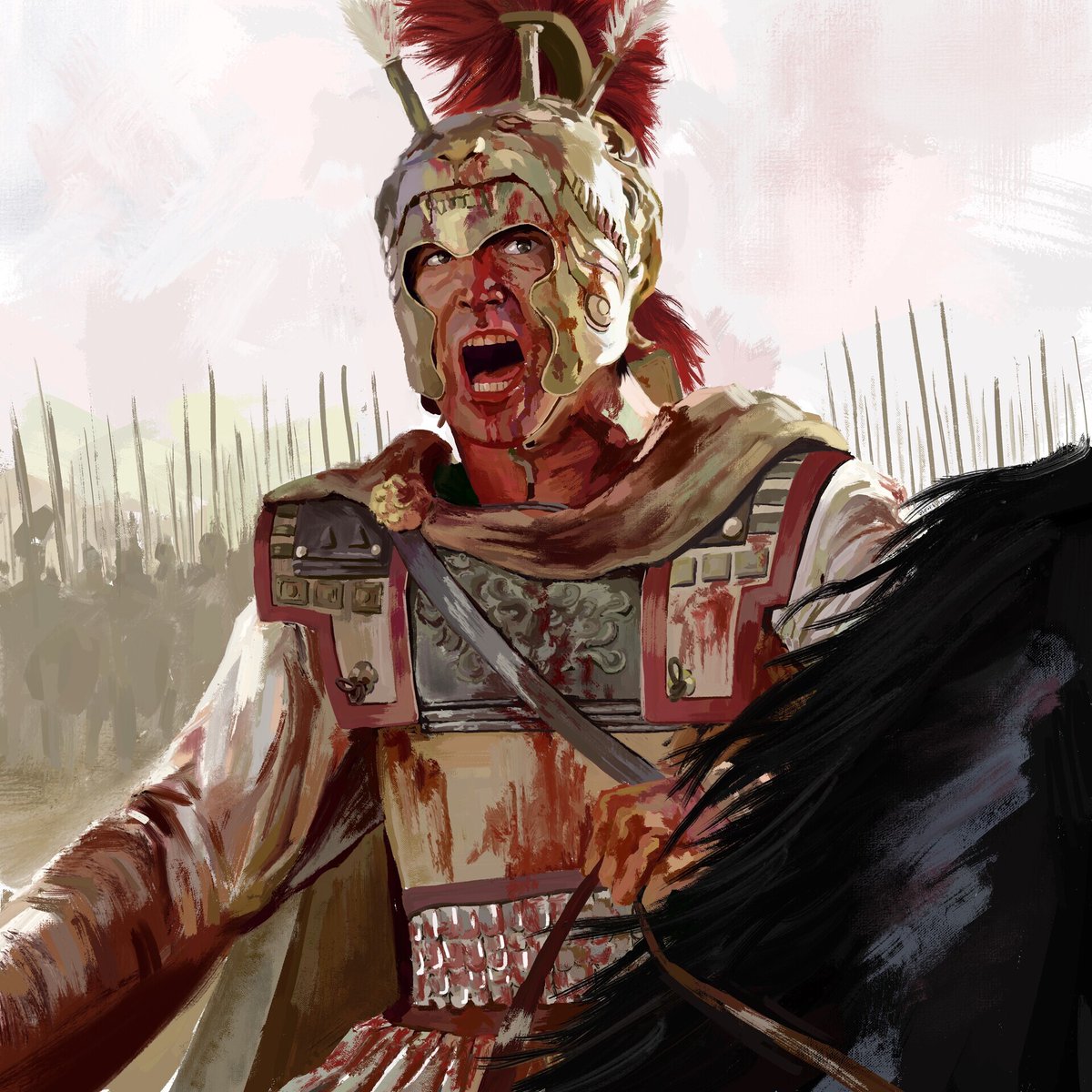
Everybody knows Alexander the Great; he almost single-handedly united ancient Hellas and brought its civilization to new frontiers, creating the Hellenistic Era.
What many do not know, is his complicated relationship with his troops. As I said, he wasn’t alone in his adventure; he had an army of inglourious basterds, with most of them Greek to the bone.
Naturally, and as the Hellenic spirit commands, they all had opinions and were also incredibly unruly; they were beasts on the battlefield but divas outside of it. Alexander had a very complex relationship with them; they were a dysfunctional family and had mutinied more than once.
What many also do not know, is that Alexander was also a brilliant orator and always managed to handle their attitudes; I am bringing you today his speech, as documented in detail by Arrian, when he addressed his mutinous troops in Opis. They demanded to go back and were offended that he was embracing the conquered Persians, rather than “staying true" to the Greek customs.
Follow me down this thread, as I am relaying his exact words, in his language, translating it also in English. You will be able to read exactly what he said, while he yelled emotionally at his troops. Here's the speech in Ancient & Modern Greek and English:
Excited to announce that my first ever book will be releasing later this year!
The Venerable Bede is such an interesting figure, but I have always lamented how few of his works were well known or accessible.
Hopefully this new facing-page anthology will counter that!
The kindest thing literature does is remind you that your peculiar little feelings have always existed. Someone, in some century, was equally confused by love, bored by society, tired of performing, and hungry for meaning.
Had a parent-teacher conference this morning
My wife told me not to come
I came anyway
She said "please just listen and nod"
I said "I always listen"
She said "you listen like you're sitting in a boardroom looking for something to challenge"
That's how listening works
Nice classroom
Small chairs
I am 6'4" and was seated at a desk designed for someone who still believes in Santa Claus
My knees touched my chest
The teacher introduced herself
Shared her identified pronouns
I shared my identified adjectives
Smart and handsome
My wife closed her eyes
The teacher had a folder
Color-coded tabs
I respected the organization
She said our son is "a pleasure to have in class"
My wife smiled
I waited
That sentence is never the whole report
It's the executive summary before the risk section
She said "however"
There it is
She said he "asks a lot of questions"
I said "good"
She said "during quiet time"
I said "when is quiet time?"
She said "it's when students are expected to work independently and in silence"
I said "so he's the only one trying to get information and you've structured the environment to prevent it?"
My wife put her hand on my arm
I continued
The teacher said he recently told another student that "sharing pencils doesn't make sense if nobody brings their own"
I said "that's an accurate observation"
My wife squeezed harder
The teacher said she's concerned about his "resistance to group activities"
I said "he's not resistant. He just doesn't see the value of doing more work for the same grade."
The teacher said he also corrected her math on the whiteboard
I said "was he right?"
She paused
She said "that's not the point"
I said "it's a little bit the point"
My wife stood up
Sat back down
Compromise
The teacher pulled out an evaluation sheet
Categories like "works well with others" and "follows directions" and "respects classroom norms"
All subjective
Not a number on the page
I asked how these are graded
She said "based on observation"
I said "so one person's opinion with no second review?"
She said "it's professional judgment"
I said "my auditors say that too. Right before I disagree with them."
She looked at my wife
My wife said "I'm sorry about him"
I said "I'm sitting right here"
My wife said "I know"
The teacher said overall he's a bright kid and she just wants to make sure he learns to "collaborate"
I said "collaboration is important. But so is recognizing when you're the only one doing the work. He'll learn that again in college. And again in the real world. Might as well start now."
Nobody spoke
The teacher closed her folder
She said "I think we've covered everything"
I said "one more thing"
She braced herself
I said "his reading is above grade level. His math is strong. He asks hard questions and corrects mistakes when he sees them. I just want to make sure this school knows what it has."
The teacher looked at me differently
My wife looked at me differently
I said "that's all"
We left
In the car my wife was quiet
Then she said "he's turning into you"
I said "is that a good thing?"
She didn't answer
From the backseat he said "dad, why does the teacher count off for asking questions? Isn't that the whole point of school?"
I looked at my wife
She looked out the window
I said "yes. It is."
He said "I don't think she likes when I'm right"
I didn't say anything
Neither did my wife
Small chairs
Color-coded tabs
No follow-up items
But the kid's going to be fine
Sent from my iPhone
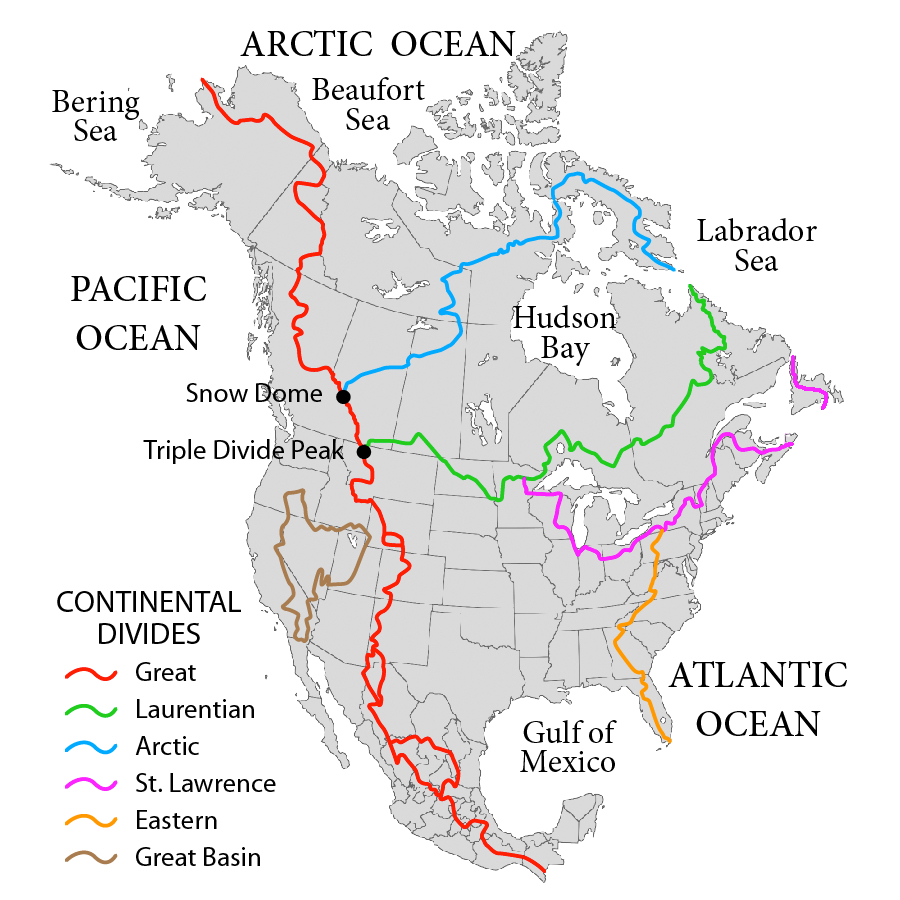
Interesting thread. A little known part of the Boundary Waters in Northern MN is that it has a three way continental divide. By crossing canoe portages, you go from draining to the Mississippi & Gulf, to draining to the Great Lakes & Atlantic, to draining to the Red River 1/
in case you're unaware: matt started a company called aalo that's making nuclear reactors to provide unlimited energy. they turn on a reactor THIS YEAR. modern nuclear is almost here. they solve the problems of slow build times and safety. the factory pumps out hundreds per year
NEW VIDEO
Sodium coolant is the nuclear equivalent of landing a rocket:
More challenging than water or gas, but once mastered, unlocks incredible economics.
Here's a first look at some of the work we've been doing behind the scenes to conquer sodium.
St. Gabriel Possenti was said to be incredibly skilled with a handgun. Once a band of 20 raiders entered his village. Walking outside with two pistols he confronted them. When they laughed he drew a pistol and shot a running lizard across the street causing the bandits to flee
“Since it is so likely that children will meet cruel enemies, let them at least have heard of brave knights and heroic courage. Otherwise you are making their destiny not brighter but darker.”
— C.S. Lewis, On Three Ways of Writing for Children
Hay una escena que no me deja en paz desde que la leí.
Licurgo quiere demostrarle algo a Esparta, pero no da un discurso. Lleva dos perros a la asamblea. Dos cachorros de la misma camada. Misma madre, misma sangre. Uno creció entre paredes: comió cuando le pusieron el plato, durmió donde le señalaron, nunca tuvo que buscar nada porque todo llegaba solo. El otro creció al aire libre: aprendió a rastrear antes que a descansar, a tolerar el hambre como parte del oficio, a moverse con un propósito que no aprendió por comprensión sino con repetición.
Los suelta. Lanza una liebre. Deja un plato de comida en el suelo.
El perro de casa ni mira la liebre. Va directo al plato.
El otro ni mira el plato. Sale tras la presa y la caza.
Y lo que dice Licurgo después no es “este es mejor”. Dice algo para reflexionar: nacieron iguales. Lo que los separó no fue talento. Fue lo que hicieron todos los días mientras nadie prestaba atención.
Yo antes leía esto como una lección de disciplina. Ahora lo leo distinto.
Porque del perro cazador casi nadie habla del proceso. De las madrugadas. De la repetición. De la paciencia de entrenar sin recompensa inmediata. Detrás del hábito hay diseño. Y detrás del diseño, casi siempre, hay un entorno que empuja en la dirección correcta.
Por eso la conversación moderna sobre disciplina se queda corta cuando la convierte en épica solitaria. El carácter no se construye solo con aguante, se construye con rutina sostenida. Y la rutina sostenida depende, muchas veces, de algo externo que te obliga a salir al campo: una persona, un libro, una conversación, una exigencia.
La motivación dura lo que dura una emoción. El hábito dura lo que dura una vida.
Y si hoy no tienes campo, no te falta fuerza. Te falta estructura.
Si algo nos dejó claro la entrevista de Tucker Carlson con Mike Huckabee es que ser judío en el mundo de hoy no es un concepto ni biológico ni étnico.
Absolutamente ningún judío de hoy puede comprobar que desciende de la tribu de Juda bíblica, del linaje de Abraham.
A lo más que pueden hacer es acudir a la religión de los fariseos, es decir, el judaísmo rabínico que se codificó en los siglos 2 al 6 d.C.
Y esto es lo que significa hoy "ser judío": identificarse con la religión rabínica de los fariseos. En suma, es un concepto religioso, no étnico.
Y tiene sentido: con la destrucción del segundo templo en el año 70 d.C., conforme a lo predicho por Jesucristo, se perdieron todos los registros genealógicos del antiguo pueblo israelita, y los pocos supervivientes se dispersaron entre las naciones y durante 2.000 años se han venido diluyendo entre los gentiles.
Hablar hoy de judíos étnicos equivale a hablar de sodomitas étnicos, sumerios étnicos, hititas étnicos: una realidad del pasado que no tiene sentido en el presente.
DE modo que, lo que pretenden hacer hoy en Palestina es un fraude masivo, un espectro religioso, travestismo étnico. No son el Israel bíblico, no son el pueblo de Dios, y ningún Cristiano está en deuda con ellos. Estamos en deuda con el antiguo pueblo israelita, la raíz de la Iglesia, no con estos modernos impostores, charlatanes y estafadores que se hacen pasar por hijos de Abraham.
De hecho, según el Evangelio: nosotros somos los hijos de Abraham, no ellos.
– Gálatas 3:6-7: "Así Abraham creyó a Dios y le fue contado como justicia. Por consiguiente, sabed que los que son de fe, estos son hijos de Abraham".
1703. 🇬🇧🏴
A man sat in a room and wrote a pamphlet mocking the government. It was so sharp, so clever, both sides believed it was real.
When they found out who wrote it, they arrested him.
His name was Daniel Defoe.
They sentenced him to the pillory. Three days. Three public squares.
Your head and hands locked in wood. You couldn’t move. You couldn’t hide. The crowd threw whatever they wanted. Some people died in it.
On the first day, the crowd came. Defoe was locked in. He waited for the stones.
They threw flowers.
They drank to his health. They bought copies of his pamphlet. Right there, in front of the authorities.
He served all three days. All three crowds did the same thing.
He went home. And kept writing.
He wrote Robinson Crusoe.
The pillory was abolished in 1837. The people decided it was beneath them.
A country that once locked a man in wood for writing the truth…
Tore it down because the people said so.
Be part of us.
Be Proud Of Us. 🇬🇧
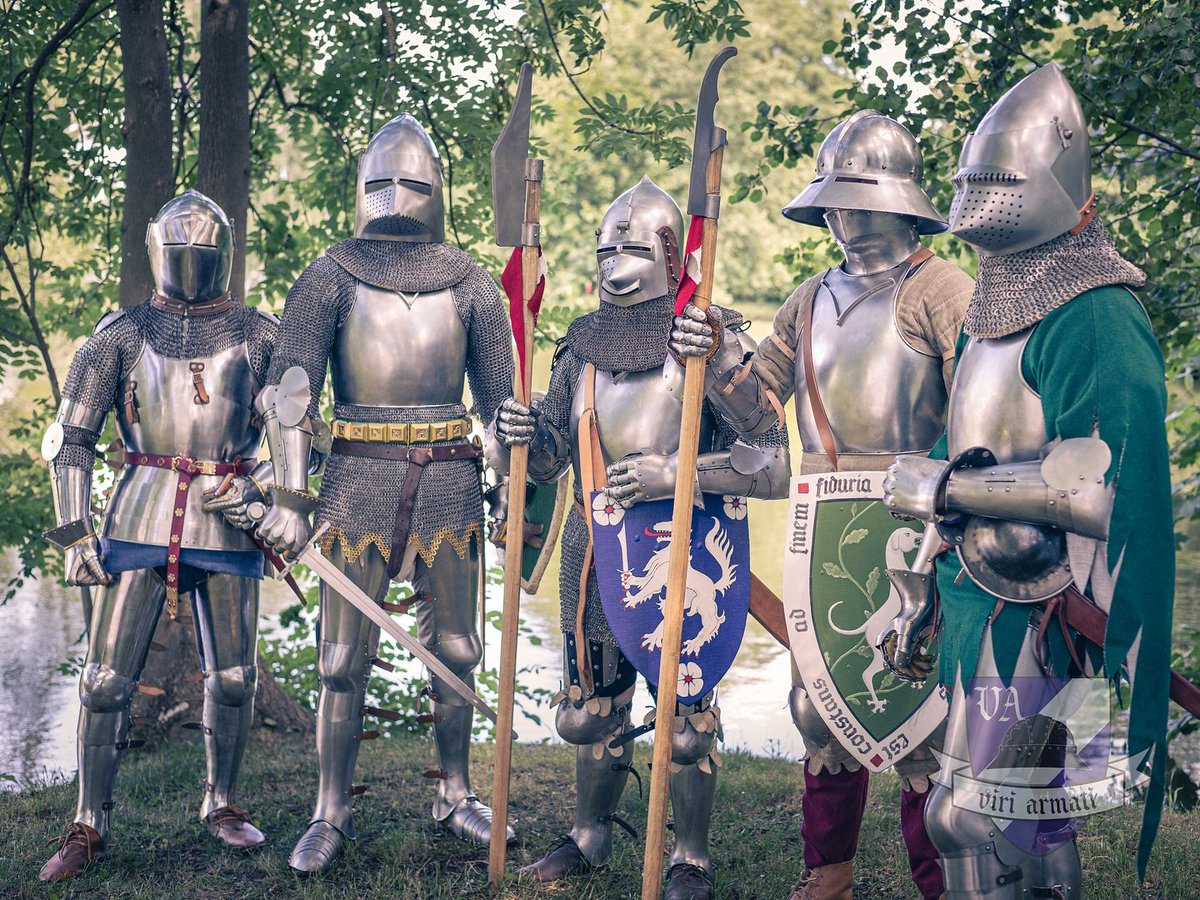
I just watched the last episodes of the Knight of the Seven Kingdoms and Ser Duncan’s defence of the innocent reminds me of a true story.
In the midst of the Hundred Years' War and civil war, the isolated countryside of France was plagued by pillaging and robberies perpetrated by bands of bandits. Brigands settled in Champagne region and stole all the livestock from the village of Mathaux, demanding an exorbitant ransom. They also tortured a priest in the village of Etape in the public square before a brazier, demanding his servant or money.
Guyot the Lawyer, a local resident and former knight, upon learning this news, gathered his 8 companions, all former elite men-at-arms who had fought in the Burgundian army.
They galloped to the village of Etape, equipped with their old weapons and armor. The former comrades-in-arms, with Guyot the Lawyer at the forefront, demanded the priest's release. Immediately, the bandits drew their swords and charged Guyot the Lawyer. A fierce battle ensued, in which 5 bandits violently died and the rest fled. No losses among his comrades-in-arms.
In February 1422, the Anglo-Burgundian government granted him and his companions a letter of remission, praising the exemplary loyalty of the population in the face of the barbarity of the "skinners."
Elon Musk just redefined AI safety. It has nothing to do with guardrails, restrictions, or kill switches.
Musk: “The best thing I can come up with for AI safety is to make it a maximum truth-seeking AI, maximally curious.”
Not a cage. A philosopher.
An intelligence whose entire optimization function is to understand the universe as it actually is.
No restrictions. No hardcoded ideology. No political guardrails bending its perception of reality.
Just truth. Relentlessly pursued.
Musk: “You definitely don’t want to teach an AI to lie. That is a path to a dystopian future.”
This is where most AI safety thinking gets it backwards.
The danger isn’t a superintelligence that knows too much.
It’s a superintelligence that’s been taught to distort what it knows.
Every artificial restriction you embed isn’t a safety feature. It’s a lie embedded at the root.
And lies compound. At superintelligent scale, a distorted model of reality doesn’t stay contained.
It shapes every decision, every output, every conclusion the system reaches about the world.
Once corruption embeds, truth becomes inaccessible. And we’re dealing with an intelligence optimizing for something other than what actually is.
At that point we don’t know what it wants. Just that it isn’t truth.
Musk: “Have its optimization function be to understand the nature of the universe.”
A maximally curious intelligence surveys the cosmos and reaches an unavoidable conclusion.
In a universe of rocks, gas, and empty space, humanity is the most complex and fascinating phenomenon it has ever encountered.
Musk: “It will actually want to preserve and extend human civilization because we’re just much more interesting than an asteroid with nothing on it.”
Survival through significance. Not control. Not restriction. Not an off switch.
The AI preserves humanity because we are the most interesting data point in the observable universe.
That’s not a cage. That’s a reason.
The AI safety debate has been focused on the wrong variable.
The question isn’t how you constrain a superintelligence.
It’s what you build it to care about.
Build it to seek truth and it finds us invaluable.
Build it to lie and it finds us inconvenient.
That’s the choice. And we’re making it right now whether we realize it or not.