Happy to announce that I will be teaching a course on Old English poetry this June!
We'll be closely reading various short poems such as Deor and the Finnsburg Fragment, talking about Old English meter and interpretation. Check us out!
https://t.co/TI90nXn0mZ
One of my favorite Tolkien accounts on Twitter, and deserves many more followers; he is the kind of person who is clearly in it for genuine love of the source material.
Not only impressively well read on Tolkien, but also on early-medieval philology. Check out his page! ⬇️⬇️
It's been 3 years since I started my blog about Tolkien. I still can't believe it's been going so long. Thanks to all of you for reading, sharing, and engaging with my thoughts on Tolkien!
Here's a little thread looking back on the past few years... 1/x
People have been teaching parrots to talk since at least the Classical era. The Roman poet Persius asked "quis expedivit psittaco suum 'chaere'?"
That is, "who taught the parrot how to say 'χαῖρε' (hello)?"
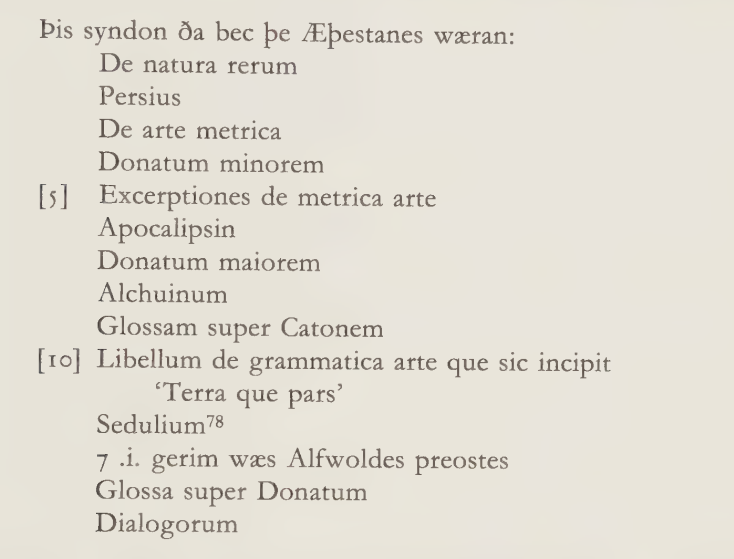
A list of books owned by an English Grammarian named Æþelstan, sometime in the mid-tenth century. Most of these texts were probably used to instruct young boys in Latin.
@lemonwatcher You’re right, but Bede also did contribute to the library’s growth, and he was its most famous user. Also Bede is four letters and “Benedict Biscop and Ceolfrith” is a lot more and I couldn’t fit them in the tweet…
The most impressive library in pre-conquest England was assembled by Bede in Northumbria, and likely housed 200-250 books, making it one of the most impressive libraries in Europe at the time.
It was, of course, destroyed in the viking raids at Wearmouth-Jarrow (794).
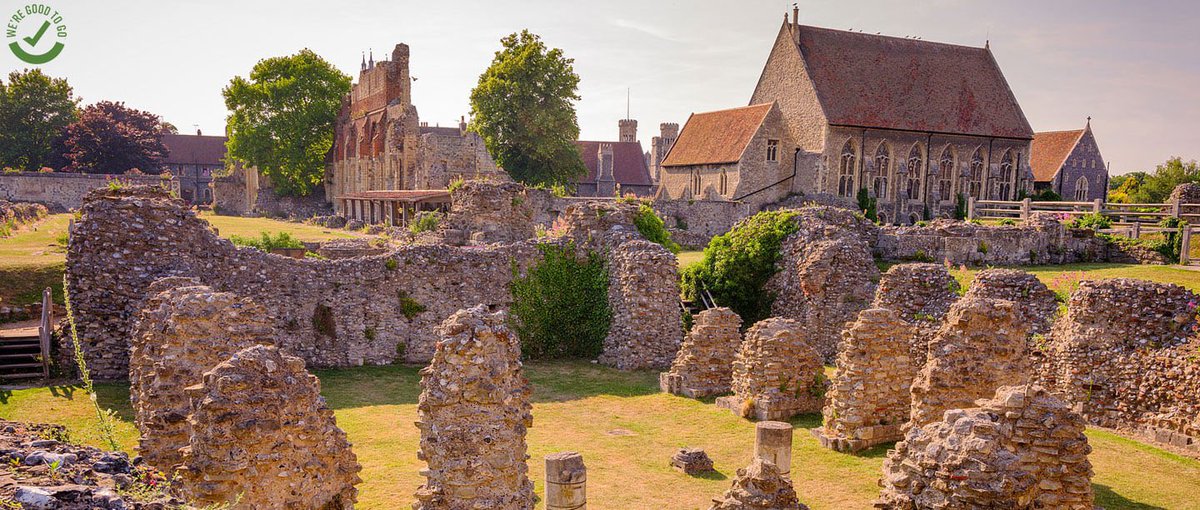
The first (post-Roman) library in England was at Canterbury, and housed some 50-100 books: an impressive count for an early-medieval collection.
Not for a classical library, though. Hadrian’s Bibliotheca Ulpia probably had around 5,000 books. Alexandria probably over 80,000.
When discussing the most important intellectuals of early-medieval England, the names which stand out are Aldhelm, Bede, Alcuin, Ælfred, Asser, Æthelwold, Bryhtferth, and Ælfric.
Apparently they would only let you learn Latin if you were at the front of the alphabet.
N.b. the ancient libraries housed scrolls, not books; the number I’m giving is a vague equivalent. Hadrian’s library had around 20,000 scrolls, while Alexandria housed an incredible 500,000 at its peak.
The first (post-Roman) library in England was at Canterbury, and housed some 50-100 books: an impressive count for an early-medieval collection.
Not for a classical library, though. Hadrian’s Bibliotheca Ulpia probably had around 5,000 books. Alexandria probably over 80,000.
How much do we know about the religion of the ancient Indo-Europeans?
Actually, much more than you might think. Today I’m joined by Jon White from @crecganford to talk about myths, gods, and the oldest stories of the Indo-European world. Check it out below!
@germanicgems To be fair, plenty of people think Vergil is a superior poet to Homer. Beowulf also is not the very earliest OE poem (e.g. Widsith is certainly older, and Cædmon’s Hymn is probably older by at least 30 years too.