One of the most compelling ideas I encountered this year was the ancient Greek perception of time in two distinct forms: ‘Kronos’ and ‘Kairos’. Their contrast helped me understand a feeling I’ve carried for years but never quite named: time anxiety, the persistent fear that I’m not making the most of my time.
In English, we have only one word for time, but the Greeks were more precise. Kronos refers to chronological, measurable time. Think of it as the hours, minutes, and seconds that structure our schedules and calendars. It is the version of time that moves in a straight line, divided into boxes we often feel pressured to fill with as many tasks, milestones, and achievements as possible.
Kairos, on the other hand, is almost its opposite. It describes the quality of time rather than its quantity: the elastic, subjective experience of moments that sometimes rush by and sometimes stretch out endlessly. Kairos invites depth instead of speed. When we inhabit Kairos, we stop tallying productivity and instead ask ourselves whether we feel present, engaged, and alive. And in doing so, time anxiety loosens its grip.
The distinction matters because we live in a profoundly Kronos-driven society. Our calendars look like pieces of lego. Infact, there is an unspoken Kronos timeline for our lives too (when we’re expected to buy a house, get married, have children and so on). Falling “off-schedule” often carries a sense of shame, as if failing to fill the boxes on time means failing overall. Kronos makes us efficient, but it also make us robotic.
I realized that our mental well-being tends to flourish in Kairos. Organic, immersive experiences such as creativity, connection, presence don’t obey clocks. They can’t be forced into evenly sized blocks. And while it might be impossible to live in Kairos constantly, the challenge is not to reject Kronos but to carve out moments of Kairos within it.
The easiest way I have implemented this in my life is asking myself this question - “What is a non-quantifiable way of measuring success today?” My answers to this question range from learning a new song on guitar, going for a long walk without any gadget, cooking a new meal, or just yapping with my friends for 2 hours.
As a result, I feel the best way to optimize my time is to find ways to build Kairos into my life deliberately: choosing depth over speed, quality over quantity, and aliveness over mere productivity. Living between Kronos and Kairos is not about choosing one over the other but about learning to move intentionally between them, measuring our days not just by what we accomplish, but by how we live them.
The next evolution of Hermes Agent is here!
Introducing Hermes Desktop: everything you love about Hermes, now native on your machine.
First demoed in Jensen's GTC keynote, it's now in public preview.
🏃♂️ I've gamified my own run so I can race my own ghost with the Meta Ray-Ban Display.
I built a web app for the glasses, loaded a previous GPX from Strava, and dropped game mechanics on top.
Pick up coins when you keep pace, sprint zones reward extra points if you push, and a mini leaderboard on the lens shows how you're tracking against your past self in real time.
Best part: it actually works. Seeing your ghost 20 m ahead is a way stronger nudge than any number on a watch. 😅
I'm suspicious of that that whole story about Uber blowing their AI budget and being disappointed in the results - I dug into it and it appears to have been built on very shaky foundations
An undervalued reason to be optimistic about gen-AI investment is that even if the tech is overbuilt and the hype is a bubble (which I doubt), most of the stack has big uses outside gen-AI.
Data centers = Cloud computing
Transformers = Data compression, sequencing (e.g. genomics)
GPUs = graphics, imaging, modelling, crypto
Vector databases = Indexing and archiving knowledge
Power, networking = wide uses
Water = drinking
new in-depth blog post time: Inside the Transformer: The Life of a Token
a deep dive into a modern dense transformer, i cover YaRN (why does pairwise coordinate rotation induce positional information?), hybrid attention (getting to 160k context length), soft capping, QK normalization, etc. as the token flows through the transformer
bonus transformer math: FLOPs/token formula (and when is 6N formula broken), cluster sizing (how big of a cluster do you need given the model/data size and experiment throughput of interest), and more
Can't believe i am doing this
Just Open Sourced the Largest Synthetic Parallel Multilingual OCR dataset
> 1M+ Document Images
> 22 Languages (Arabic, Bengali, German, English, Spanish, French, Gujarati, Hindi, Italian, Japanese, Kannada, Korean, Malayalam, Marathi, Odia, Punjabi, Russian, Sanskrit, Tamil, Telugu, Thai, Chinese)
> 6 Tasks (OCR, Layout Detection, Layout-aware Translation, Document VQA, Cross-lingual Retrieval, Document VLM Pretraining)
ps: this is the 2025 corpus. 2026 is ~5× bigger (~4.4M images, sharper renders, cleaner annotations) reach out to @cognitivelab_ai or [email protected] for more info
How do you know your agent is still running after you close the lid?
I became a bit obsessed with putting some RGB LEDs for a status indicator into the SD Card slot on my MacBook Pro.
I never use that slot, so it's a perfect place.
How on earth is that India convincing Dutch for supplying lithography machines is not a major news but that Melody toffee ? 😭
What a hell of negotiation it needed to pull this, lol.
This is literally access to one of the most strategically controlled technologies on Earth 💀
India trains the engineer.
America files the patents.
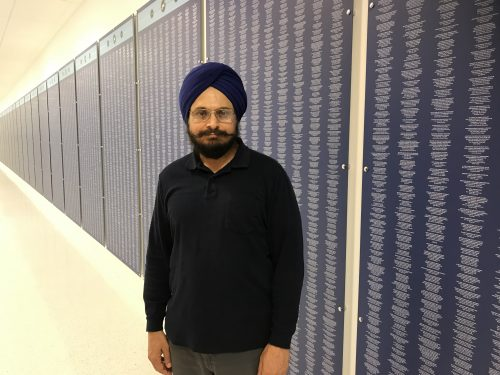
Gurtej Sandhu was raised in Amritsar and trained at IIT Delhi.
He now holds 1,299 US patents at Micron, Edison topped out at 1,093.
Sandhu is the 7th most prolific inventor in American history.
His titanium nitride deposition work is why every DRAM cell in your phone and every GPU training a foundation model actually holds charge.
Micron, Samsung, and SK Hynix own 95% of global DRAM.
None of them are Indian.
We export the inventor.
We import the chip.
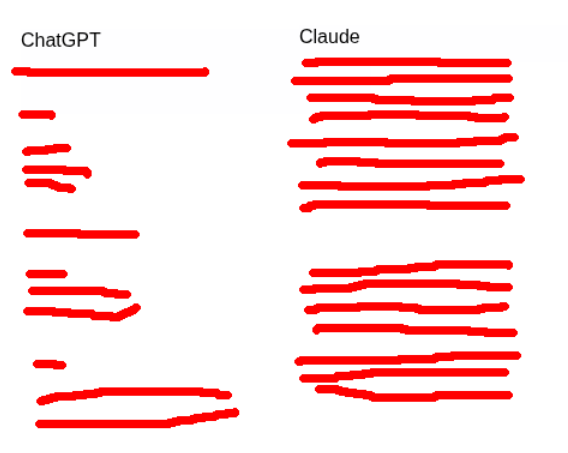
if you write some really good code these days everyone thinks you did it with Claude Code. if you lose a lot of weight everyone thinks you did it with Ozempic. at least you can still be really good at dancing. they don't make ozempic or Claude Code for being good at dancing