Sometimes it’s a wonder that we believed the colonial constructs as a fact even though there was no evidence.
How did we believe it that some idiot made-up our name because he couldn’t spell Sindhu? Indoi and Indua are used by Greek historian/geographer Hecateaus Miletus decades before it appeared in Persian inscriptions (with supposed spelling mistake). Then how did these terms appear decades before in the same form before the spelling mistake was made in the inscriptions? Alas, the Greeks didn’t know they had to wait for the mistakes in the Persian inscriptions.
How insidious are these colonial historians and #ColonizedMinds
“Caste is uniquely Indian” survives because we use different words for similar hierarchies elsewhere.
Europeans had aristocracy.
Americans had race.
Chinese dynasties had hereditary status groups.
Japan had the Burakumin.
History is often semantics dressed up as moral judgment.
There you go again @TVMohandasPai. We went through this before and when I challenged you publicly to compare track records while I was in industry, you ran away. You avoid addressing the issue that you lack any tech background and expertise, being a mere bean counter/admin who exploited India’s tech youth with wage arbitrage to enrich yourself. The “big industry” you built was about exploiting our hard working youth as coolies. I advocated that Indian tech talent be channeled into Indian IP, and not rented out. You are obliged to suck up to the Murthy family without whom you were a nobody. History has proven that India should have followed China example of domestic IP and not the quick buck selfish approach. Compare Indian industrialists in tech with China’s. Why is India dependent on foreign licensing like a beggar? India has immense talent but its industrialists have been short sighted, selfish and arrogant. Now Indian youth face massive challenges unlike China’s as a result. The total market value of India’s tech industry is a mere 1% of the global tech market cap. Shameful for a nation of talented youth.
Frankly, I will tell you, the more you read this Proto-Indo-European nonsense, the more mad you become. Can someone explain me how exactly a culture replaced the name of it's supreme god and it's first priest, and didn't even have a word for a sage but wrote a whole book by sages? Indra, Atharvan, Rsi, Ustra, Varaha - all these are foreign words. If the name of pig is foreign to them, what exactly were they doing with pigs?
Its very simple to check if my decipherment is correct as long as you don't mention "yajnadevam" or "indus script". Ask this question:
"someone has solved a 14,000 long cryptogram. The solution has the following characteristics: grammatically correct language with subject verb agreement, adjective noun agreement (number, gender, case), thematic consistency, Zipfian slope of -1. Is this a strong evidence that the solution is correct"
From giving a clean chit to Islamists in the Delhi riots to guilt-tripping Hindus for the Ram Mandir
Meet Hannah Ellis Petersen, The Guardian’s anti-India propagandist, spotted at CJP protest
https://t.co/g40TpVcZnj
South Indian kangers will use GDP as a metric, acting as if they have reached Japan levels already.
Meanwhile, their actual PCI is only ~$5k with a TFR of 1.3-1.5
Kerala has already started depopulating before crossing $5k
Other factors like literacy are almost universal among the youth, so it will catch up in coming years across the country.
Similar case for life expectancy (Kerala being ahead is because of the Travancore royal era)
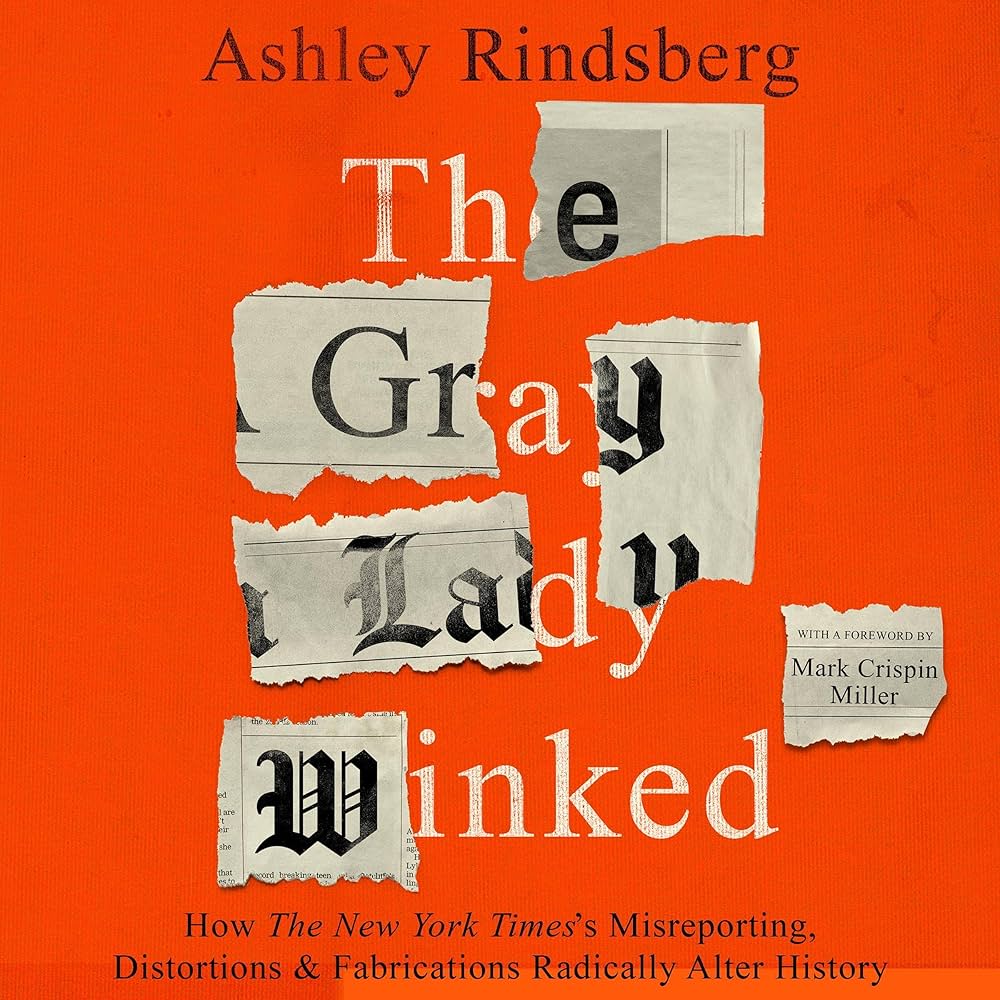
I am once again, recommending everyone to read this book by Ashley Rindsberg
It explores stories where The New York Times went to extraordinary lengths to hide the truth and promote narratives that ultimately caused lasting damage to public discourse and culture.
>Korean vlogger
>dressed as a pregnant woman
>viral clip claimed to show harassment in INDIA
>full video filmed in Bangladesh & Pakistan
>harassers were Bangladeshi & Pakistani men
>Indian leftists and radfems promoting the false claims as always 🤡
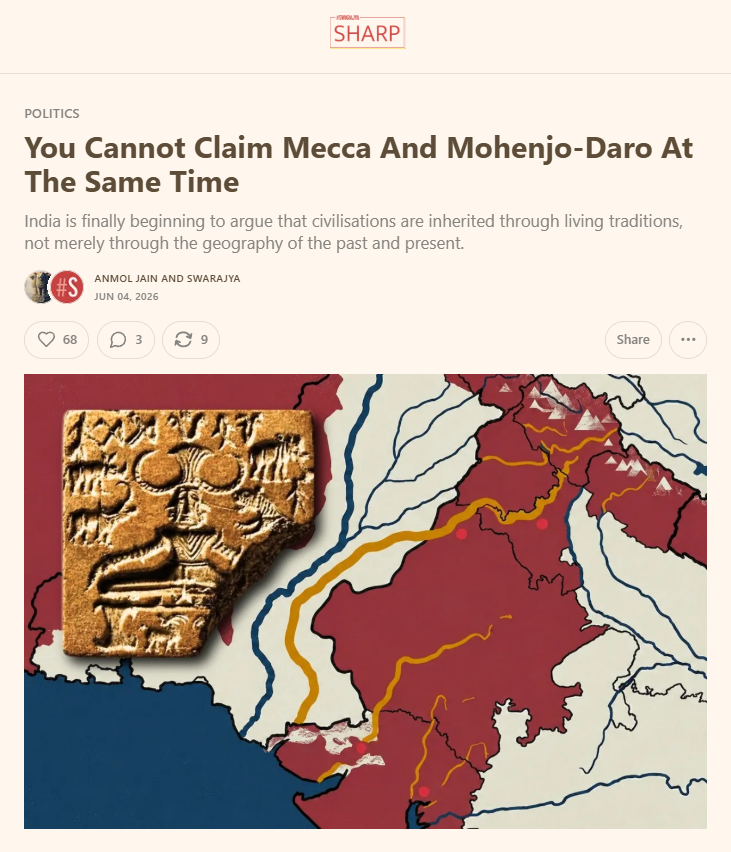
#SharpBySwarajya | You Cannot Claim Mecca And Mohenjo-Daro At The Same Time
For decades, the Indian state, when it bothered to speak of its civilisational past at all, did so in the apologetic manner. Recent posts by Ministry of Culture suggest a change. Something rare. A preemptive narrative strike.
This prompted a barrage of adverse responses, especially from across the border, stemming from the usual habit of appropriation — be it wedding rituals like Haldi and Sangeet, artforms like Kathak, or ancient heritage like Indus Saraswati Civilisation.
This Mecca-MohenjoDaro contradiction cannot be more obvious. But it has become so structural that Pakistan has stopped even noticing the absurdity in it.
The art of appropriation lies in distortion and stripping the Dharmic substrate of the inheritance, because it falsifies the founding myth of the Pakistani state.
But how can the grandparents be repudiated as kafirs in one breath and resurrected as ancestors in the next? Heritage is not a buffet from which the inconvenient theological dish may be skipped.
Read full #Sharp by @teanmol —
https://t.co/0xfqPoU041
Kautilya 3, Shahinshah121 and others: A look at the anti-Hindu editors who vandalised the Wikipedia page of Hindu American Foundation
https://t.co/WP3yqTPxSf
A foreign tourist created chaos in Dharamshala’s busy market, threw vegetables from vendors’ stalls, damaged property, and even misbehaved with a female police officer before being arrested.
If an Indian tourist had done this abroad, it would be global headlines, lectures on culture, and endless social media outrage.
The same standards should apply to everyone.
For years, major institutions have framed India and Hindus through the lens of nationalism, extremism, and suspicion. But what we've uncovered on @Wikipedia raises a deeper question: who gets to write the public record?
Our investigation found that a small cluster of anonymous editors controlled more than 80% of the @HinduAmerican page. Among the findings:
Blatant Conflict of Interest: The editors aggressively shaping HAF’s page were the exact same people controlling the Wikipedia profiles of HAF's legal adversaries and academic critics.
Inserting False FARA Allegations: Editors laundered complaints from HAF's opponents into "facts," using demands for a DOJ investigation to falsely brand HAF as a foreign agent
Administrative Silencing: An admin with supreme platform permissions deleted quotes from HAF's leadership, stripping the organization of its right to reply to allegations.
Over four years (2021-2025), editors systematically erased HAF’s identity as an American civil rights group, transforming its Wikipedia page into a heavily curated dossier of accusations. Our report from @npovmedia documents how it happened. 👇
As for burial vs cremation::
Guess how many skeletons we have excavated from the most densely populated civilization in Sindhu Saraswati doab? Less than 200.
So yes, they buried their dead. Did they do so overwhelmingly?
Also - even today, sannyasis are buried.
Yes, because we are a hybrid civilisational culture.
Not just one book, but a library, we can understand the geography, and handle oral traditions like heirlooms of responsibility.
You asked me explicit questions about oral traditions, I answered them directly, and now you’re running away from data.
Yesterday you said I was being too sarcastic and ‘throwing a tantrum’, and didn’t know what a lecture was.
You completely ignored the core point: the Vedas describe a massive, roaring river (naditame) exactly where archaeology finds thousands of Harappan sites clustered along the dried-up Ghagger-Hakra bed. That is physical, geographical data - not just ‘tradition’.
Rig Veda RV 2.41.16:
अम्बितमे नदीतमे देवितमे सरस्वति । अप्रशस्ता इव स्मसि प्रशस्तिमम्ब नस्कृधि ॥
Ambitame nadītame devitame sarasvati | apraśastā iva smasi praśastim amba nas kṛdhi ॥
‘Best of mothers, best of rivers, best of goddesses, Sarasvātī! We are, as it were, of no repute; dear mother, give us high renown.’
There are other verses in this sacred text to tell us about the Sarasvati too.
If you can’t explain how an oral tradition perfectly preserved the exact landscape memory of the Harappan heartland, just say so.
Deflecting won’t change the geography.
You will now have to figure out and have to explain how a massive river and a massive civilisation ended up occupying the exact same space described by the oral tradition.
The Vedas were unscripted for thousands of years prior to being a written sacred text in its original language, for it to then evolve for you to understand it (I’m assuming you’ve read the Vedas?) in English, unless you’ve understood it in its original form.
For example, where we say ‘nadītame’ in the verse above, it doesn’t just translate to the English word ‘river’ directly.
It comes from the root word ‘nad’, which means ‘to roar’, ‘to sound’, or ‘to vibrate’.
A nadī is not just a body of flowing water; it is a ‘roaring, resonant force’.
When paired with the superlative -tame, it means the absolute loudest, most roaring, and dominant force on the landscape.
Sanskrit therefore encourages a philosophical outlook to each word.
You should understand by now why your flat data-driven, evidence-based approach is too small for this vastness of a civilisation.
This was one verse, and one word, that had to be taken to its root in a language which was spoken way before it was written.
The remarks made by Nivedita Menon in an interview to @thewire_in are a grave insult to countless women who have come forward with complaints involving concealment of identity, coercion, religious pressure, forced conversion and abuse after conversion-nikah
To suggest that such concerns can be explained away by claiming that Muslim men are simply "more attractive" to Hindu women is a shocking trivialisation of women's testimonies, police investigations, and judicial observations in numerous cases across the country
Just last month, a Hindu woman from a Scheduled Caste community filed an FIR in national capital Delhi against history-sheeter illegal arms supplier Fahim Langda, accusing him of kidnapping, rape, forced conversion and criminal intimidation
We, Sewa Nyaya Utthan Foundation, assisted the survivor in pursuing legal action and continue to support her rehabilitation
The insensitivity of these remarks becomes even more glaring when one considers the plight of Hindu and other minority women in Pakistan and Bangladesh, where cases of abduction, forced conversion, and coerced marriages have repeatedly surfaced, contributing to fear, insecurity, and exodus of minority communities
Equally troubling is the attempt to explain away the asymmetry in interfaith relationships through claims about attractiveness. Such arguments ignore documented instances where Hindu men have faced threats, violence and murders for marrying Muslim women
We strongly condemn these remarks and call upon @NCWIndia to take cognisance of statements that trivialise the lived experiences of survivors and undermine the efforts by women who have approached law enforcement and the courts seeking justice
We are prepared to appear before the commission or any other competent authority with case records, FIRs, survivor testimonies, court orders and other documentary evidence that directly contradict such irresponsible assertions.
There is perfect and conclusive evidence that the seal depicts Pashupati-Shiva. However, the colonialist scholars misinterpret and confuse folks.
The comparison between Pashupati-Shiva seal and Proto-Elamite sitting bull shows you how they overlook the important details and isolate a single-most useless feature to mislead the discussion.
1. The Pashupati-Shiva seal shows most characteristic features of Hindu deities and commonly associated with Shiva- three faced- we see the front face and profiles of on both sides of the face. A characteristic feature of Shiva and Hinduism. Multiple faces and multiple hands are typical Hindu feature just like multiple names. Nobody can deny this is our god.
What do they do? don’t take notice of multiple heads
2. The seal shows rhino, bull, tiger, elephant, and deer. Indian animals pashu (domestic animals like bull) and mriga (wild animals like deer and others) are always connected with Shiva. Pashupati-Shiva is the one providing food for all beings in the universe. Life and death depends on that- that’s the reason Shiva and Annapurna Devi represent the lord of death and life in Varanasi.
What do they do? Don’t take notice of Indian animals. Don’t mention deer commonly associated with Shiva to mislead discussion.
3. The most difficult and dangerous yoga posture- Mulabandhasana with erect phallus. This is the most characteristic feature of Shiva, perfect yogi.
What do they do? They don’t identify the yoga posture, don’t mention the phallus (lingam) the most characteristic feature of Pashupati-Shiva.
4. There is nothing in common between the Pashupati-Shiva seal and the proto-Elamite anthropomorphic bull seal. The Pashupati-Shiva depicts a multi-headed deity with typical features associated with him commonly known Indian animals. He is not anthropomorphic but wearing a horned crown commonly used to represent his position as lord of animals. So the Elamite bull couldn’t have much to do the Pashupati-Shiva image. That Elamite-bull just had his horns naturally, not a crown. The bull is not surrounded by any animals to show he is the “lord of animals”. Horns are inconsequential feature of the Pashupati-Shiva seal other than functional as a crown of the lord of animals (Pashupati), not so in the case of proto-Elamite seal.
5. Pashupati-Shiva is lord of all animals not just domestic animals. That’s the reason the mriga (deer) is always depicted with him as a symbol. They confuse you with animal motifs but that’s just a mistake to consider Pashupati-Shiva as lord of only few animals but not all. Pashupati is lord of animals; all animals. Our texts didn’t specify any animals as his select group. Discussion on Pashu is how the colonialist linguistics have mislead discussion on Sanskrit terms to derive the meanings they wanted and oppress us with their superiority of argumentative rhetoric. That’s how they derived ‘Aryans’ and imposed on us.
Overall conclusion: First, Colonialist academics overlook important details and focus on marginal details like the horns in this depiction discussed in Pashupati-Shiva seal. They use marginal details to overstate their conclusion and override the obvious conclusion.
Second, they over interpret isolated Sanskrit terms to supersede obvious concepts to impose a new unusual meaning to change commonly understood concepts.
Please counter their superfluous interpretations, comparisons, and conclusions.
This seal unquestionably shows Pashupati-Shiva.