Gm🌍I wrote an article on exploring @graphprotocol for decentralised data indexing and querying.
In this article you'll learn about The Graph and how it can be used to build and publish open APIs, it also highlights querying data from existing subgraphs.
https://t.co/WUeaCDknh4
NERC has approved ₦30bn to meter all remaining unmetered Band A customers, free of charge, and speed up metering for Band B. DisCos have until 31 May 2027.
Good news. A meter means paying for what you used, not an estimate.
@HabuSadeik@gen318energy To be clear, I meant the ceiling is real, not that it should go. You’re right, even at N500 reliability takes years and someone carries the losses meanwhile. That’s the case for patient govt capital. All I’m saying is whoever funds it needs proof the assets are delivering
The tariff ceiling is the part people miss. If you can’t charge ₦500/kWh, capex is only recovered through uptime, fuel saved and longer asset life
Whoever funds it, govt or private, will ask: did the asset deliver?
@gen318energy turns telemetry from distributed energy assets into that proof
Private investors won't invest to provide 247 electricity supply with our current problem.
We still need govt to provide patient capital to put things to order for the private guys to deliver.
TCN tariff component is around N15/kWh, inside that N15, the share of TSP is around N7 or N9/kWh. At this pricing, who can invest in your transmission if not the govt?
You also cannot privatise the transmission for various reasons including security and pricing.
On the Discos side, the owners didn't quite invest much on either metering or network. They are looped in the circle of fixing, rehabilitation and maintaining current network rather than expansion.
Take for example, Enugu disco total customers is 1.6m, total metered are 800k, leaving 808k unmetered.
If you want to meter those 800k customers at average price of N200k, Enugu disco need N160bn either in equity or debt or both.
If I'm being conservative, it will take Enugu 2 to 3 years to fully meter those customers and based on the record as at august, Enugu disco is losing N11bn every month from both billing and collection losses.
assuming 2 years to fully meter, N11b * 24 months = N264bn.
but lets not use N264bn, lets use N150bn because as you meter customers and close some gap, your losses will be going down...
N160bn to fully meter customers.
N150bn estimated losses within the metering period.
Total funding requirement = N310bn.
I make a big assumptions here, which closing of metering can reduce your losses. Reality may differ.
You think someone can put N310bn in Enugu disco at the current borrowing rate and then wait for long to recover his funds? Don't be deceive, no one will.
Here is another catch, putting all this money wouldn't ensure stable supply to Enugu without having a reliable supply to the franchise. If investors put that money and transmission fail, then your capex recovery time just get elongated.
You also cannot charge ridiculous tariff. But lets assume NERC/SERC allowed you to charge ridiculous tariff like N500 or N700/kWh to recover capex. What happen next is demand destruction.
If people cannot afford the tariff and stop using the electricity because of your pricing, it means revenue will be plummeted, thereby incurring loss or destroy your cashflow, making capex recovery difficult if not impossible.
However you look at it, govt need to take some things off the investor's table. Whatever they are doing, they need to do more.
...And pls, Nigeria is NOT Lagos, nobody is going to pay N500/KWh for electricity despite it being reliable.
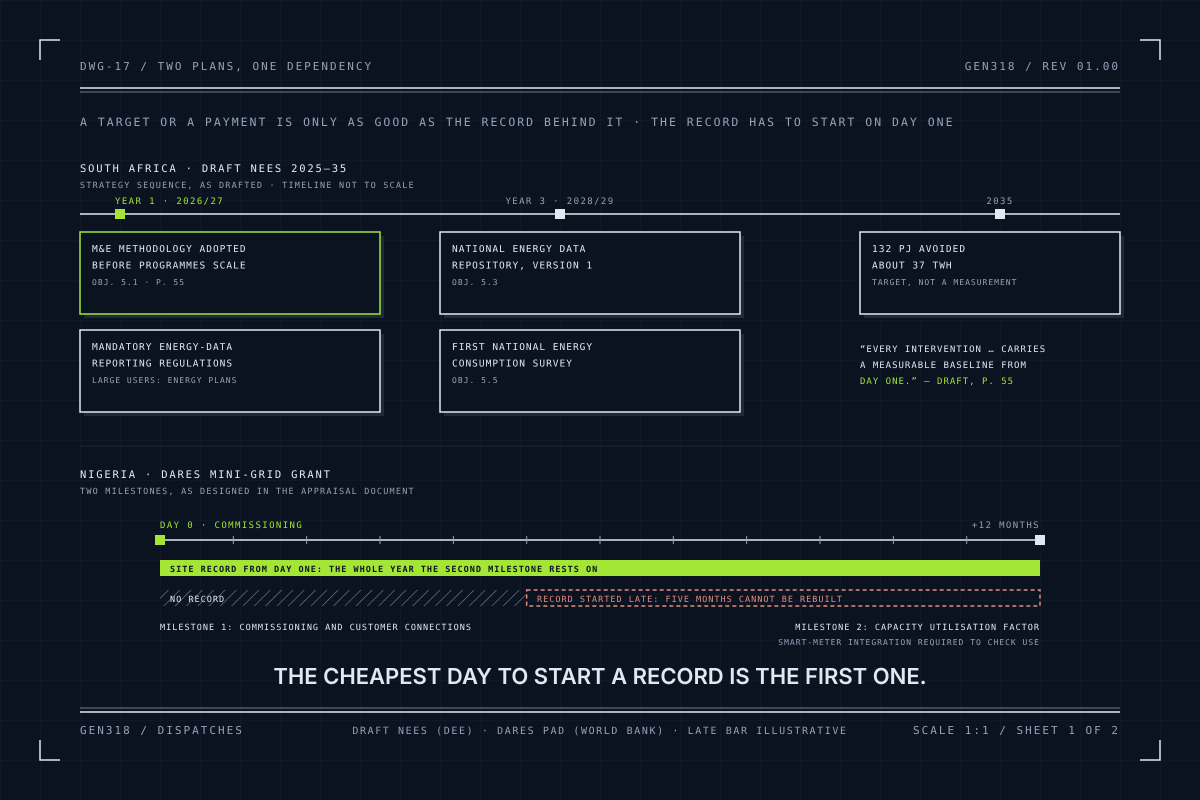
35 new isolated mini-grids in Zamfara. Under DARES, an isolated site’s second payment depends on a year of records. Start the record on day one.
That’s the record I’m building @gen318energy to keep
Introducing Claude Fable 5.2 and Claude Mythos 5.2, designed to tackle the most daunting technical challenges.
They’re capable collaborators on ambitious projects in many fields, and show improvements in areas like coding, reasoning, and vision.
GOOD DAY, MR PRESIDENT: NIGERIANS DESERVE ACCOUNTABILITY
Good day, Mr President.
I congratulate you on spending a night in one of Nigeria’s states outside Lagos and Abuja. I hope you enjoyed the warmth, hospitality, and delicious cuisine of Akwa Ibom, which I am sure is even better than those of the destinations where you have spent over 260 days outside Nigeria since coming into office.
I sincerely hope this visit will inspire you to travel to the remaining 33 states of the federation, spend time with the people and, more importantly, explain what your administration has done with the ₦15.8 trillion saved from the removal of fuel subsidy, the over $100 billion you have borrowed, the increased revenues accruing to the government from taxing Nigerians, and the additional government revenues which your administration celebrated last year as having surpassed its target.
Nigerians deserve to know how many that were pulled out of poverty within this period, how many out-of-school children were returned to school, and how many functional primary healthcare centres you have built. They also deserve to know how much electricity supply has improved, especially given your promise that if you do not fix power, Nigerians should not vote for you. They deserve an explanation of how you have secured the country, which still ranks among the most terrorised countries in the world.
Mr President, Nigerians deserve answers. They deserve to know what has been done with the resources entrusted to your government.
The New Nigeria we want to build will be based on accountability, transparency, and the physical, measurable impact of our public resources on the lives of citizens.
A new Nigeria is POssible. -PO
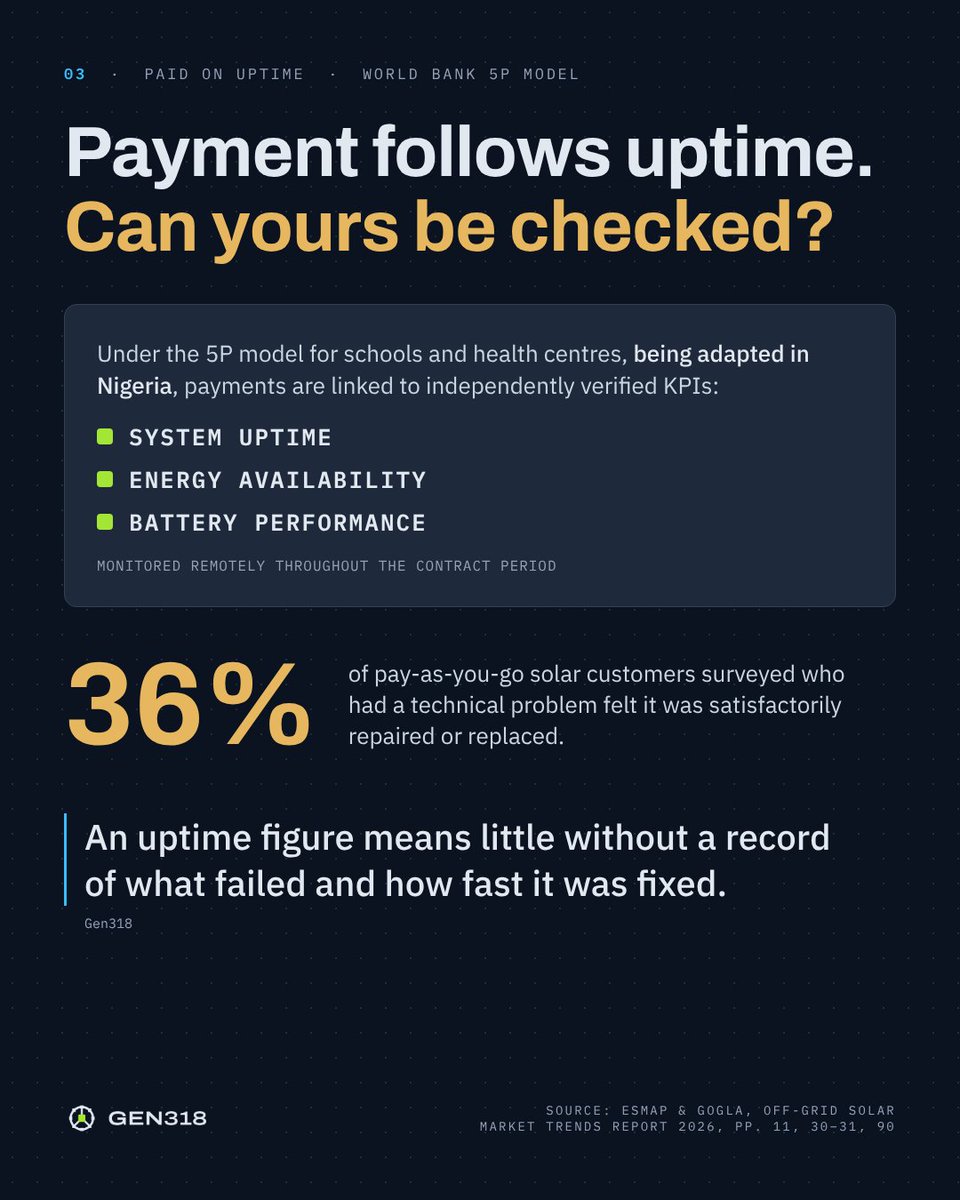
The World Bank's 5P model for powering schools and health centres is being adapted in Nigeria.
Payments are linked to "independently verified" uptime, energy availability and battery performance.
Payment follows uptime.
Today we’re releasing our third open-source decision model, joey-1 (2B), the fastest decision model available and among the most intelligent decision models of its size.
joey-1 is trained by the @baselabs team, and is available on our Model APIs, as a dedicated deployment, and with a cookbook to fine-tune on our Training Jobs.
joey-1 is built to maximize speed and minimize cost without sacrificing intelligence for those workloads where TTFT really matters.
Jump on it: https://t.co/eraAN1PC3B
South Africa's draft energy-efficiency strategy says past plans failed not on technology or cost, but on "verified measurement". Its fix: a baseline "from day one".
Nigeria's DARES programme has the same dependency.
Gen318 is now a member of NVIDIA Inception.
We build software that turns faults on solar, battery and hybrid sites in Nigeria into closed repairs and records funders can check.
Next: training our failure-prediction models on GPUs and testing Jetson on site.
#NVIDIAInception
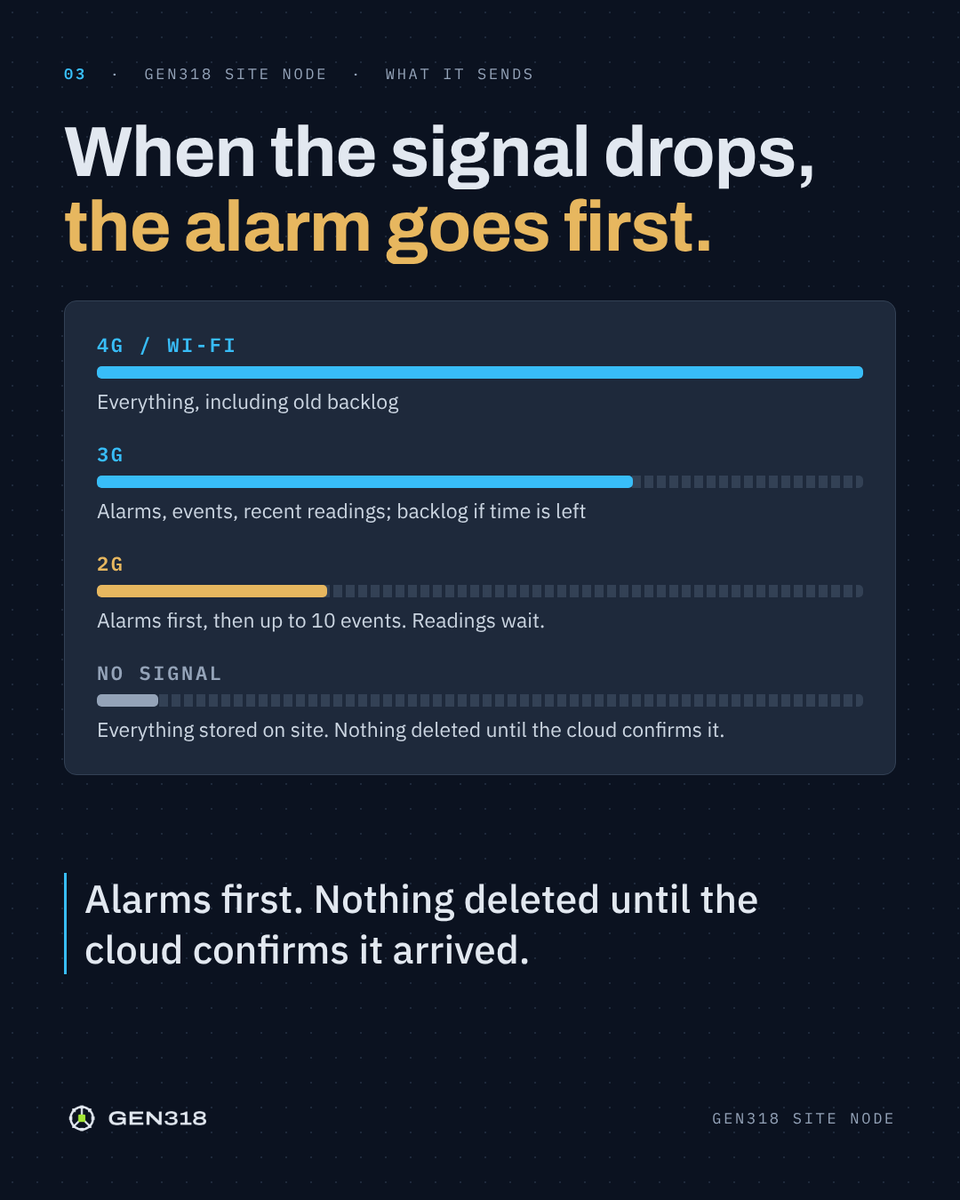
A 2G site is not a broken site.
Gen318's site node sends alarms first, then up to 10 events, and keeps every reading on site until the network improves. Nothing is deleted before the cloud confirms it arrived.
@boardyai Depends what the site promised.
A grid-tied solar plant that shuts down when the grid drops isn’t at fault. A hybrid sold as 24/7 is, because the battery is what the client paid for.
Gen318 labels every 5-minute gap the same way: grid, site fault, or no data
Which of your sites lost the most hours this month?
Was it the grid, or something you could fix?
Gen318 answers on one screen: live readings across brands, faults turned into jobs, and reports from the same data for your client, funder or investor
https://t.co/ELjnhwcp1e