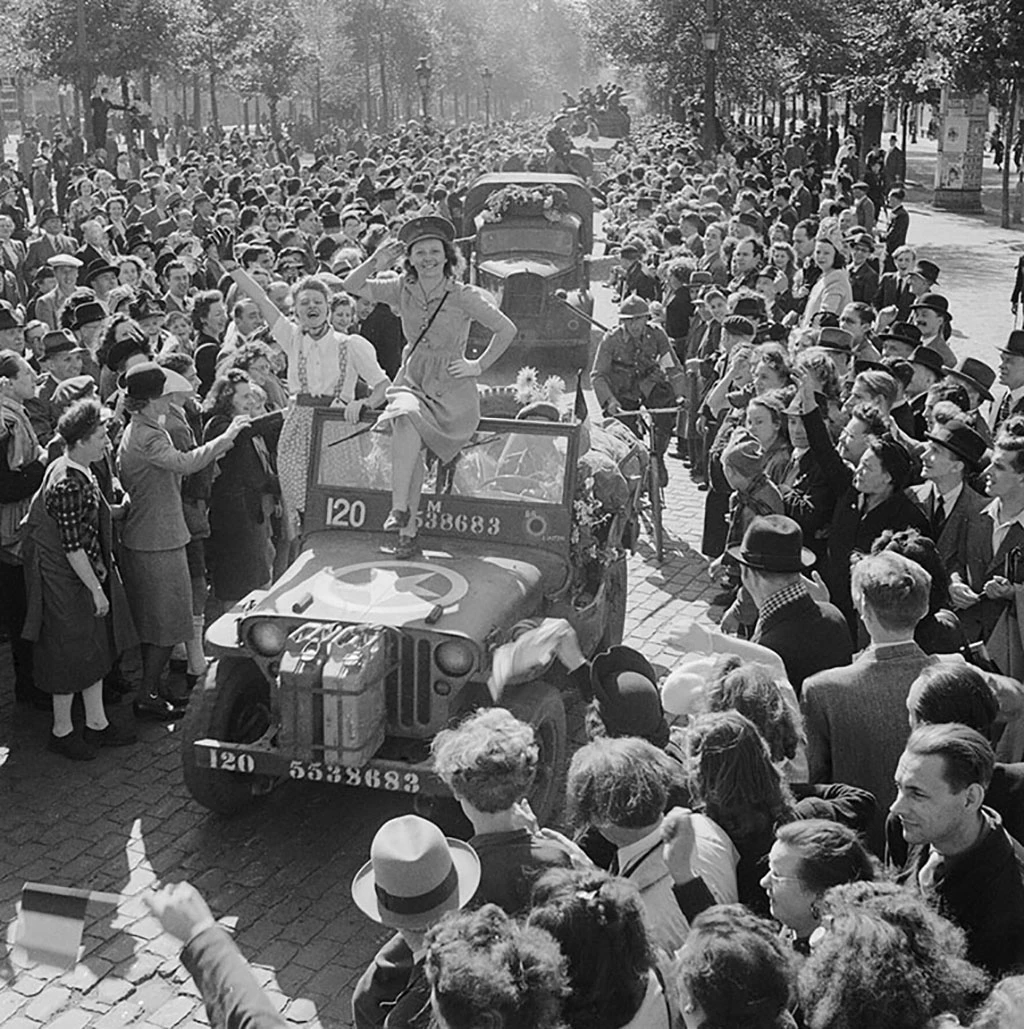
September 3, 1944. Five years to the day after Britain declared war, British tanks roll into Brussels, and the capital of Belgium erupts in one of the wildest celebrations of the entire liberation of Europe. After the breakout from Normandy, the Allied armies were moving so fast that they covered the ground in a headlong rush, and Brussels fell almost before the Germans knew it was threatened.
The context was the great pursuit. After the German army in France was shattered at Falaise and the Allies broke out, they raced east and north across France and into Belgium at astonishing speed, the tanks covering enormous distances in days, the Germans in headlong retreat, barely able to form a defensive line anywhere. Paris had been liberated at the end of August. Now it was Belgium's turn.
The Guards Armoured Division of the British Second Army made a spectacular dash for Brussels, covering something like 75 miles in a single day, an extraordinary advance, to reach the city on the evening of the 3rd. The Germans, caught off balance, could not hold it. The British tanks rolled into the capital in the early evening, and the city simply exploded with joy.
The scenes were incredible, even by the standards of a liberated city. After four years of occupation, the people of Brussels poured into the streets in their hundreds of thousands, mobbing the tanks, climbing all over them, showering the soldiers with flowers, fruit, kisses, and drink, waving flags that had been hidden for years, weeping and singing and dancing. The advance essentially came to a halt because the tanks could barely move through the ecstatic crowds. It was chaos, joyous chaos, one of the great outpourings of relief and gratitude of the whole war.
There was hard fighting still, some German resistance in the city and, the next day, the vital capture of the great port of Antwerp nearby, taken with its docks almost intact, a huge prize the Allies desperately needed. But the 3rd belonged to Brussels and its liberation.
There is a neat and moving symmetry in the date. On September 3, 1939, Chamberlain had told a grim, frightened Britain that it was at war. Five years to the day later, on September 3, 1944, British soldiers were being kissed and garlanded by the free people of a liberated European capital. The war was very far from over, and hard months lay ahead, including the disaster at Arnhem just weeks away. But on this date the contrast between the beginning and the turning of the war could hardly have been sharper.
Here is the scene in Poland on September 3, 1939, the third day of the war, and it is a day of soaring hope and deepening catastrophe, at the same time.
In Warsaw, and in cities across Poland, the 3rd was, for a few hours, a day of something close to joy. The news came over the radio that Britain and France had declared war on Germany. For the Poles, this was the thing they had prayed for. They were not alone. The great powers of the West, their allies, had come in. Surely now Germany would be crushed between the Poles in the east and the British and French in the west; surely the French army would come storming across the German frontier at any moment; surely salvation was at hand.
The relief spilled into the streets. In Warsaw, crowds gathered outside the British and French embassies, cheering, singing, weeping with gratitude and hope. People carried the Allied flags. The British ambassador came out to the crowd. There was an outpouring of affection and belief that the tide would now turn, that the friends of Poland had kept their word and the war would be won. For that afternoon, in the middle of the bombing and the retreat, the Poles allowed themselves to hope they had been saved.
They had not. This is the tragedy sitting underneath the celebrations. The declarations of war were real, but they were, for Poland, almost empty. Britain and France had no plan and no intention of launching a serious offensive to relieve Poland. The French army made only a tiny, cautious, pinprick advance a few miles into the Saar and then stopped; the British could do next to nothing on land for months. What followed in the west was the long, strange lull the world would call the Phoney War. The West had declared war to honor its guarantee, but it would not, and largely could not, actually fight for Poland. The cheering crowds outside the embassies in Warsaw were celebrating a rescue that was never going to come. Poland would be left to face Germany, and soon the Soviet Union, essentially alone.
And while the crowds cheered, the front was collapsing. This is the other half of the 3rd. In the south, the decisive breakthrough was widening. German motorized units drove into the city of Częstochowa on the morning of the 3rd, taking it without a fight, because the Polish army holding it had already been forced to withdraw. The panzers of the German 10th Army, the main armored fist, were now seizing bridgeheads across the Warta River against desperate Polish resistance, punching through the last natural barriers on the road toward the capital. The speed of it was the killer. The German columns were moving so fast that the Polish high command could barely keep track of where the enemy was, let alone coordinate a defense; orders arrived out of date, units found the Germans already behind them, and the whole Polish army was being knocked off balance and forced into a general retreat it could not control.
Overhead, the Luftwaffe kept hammering. The roads were rivers of refugees now, and the German aircraft strafed them, bombed the towns, and cut the rail lines, so that movement and supply were breaking down everywhere.
And in the north, one of the darkest episodes of the campaign was unfolding, at Bydgoszcz, called Bromberg by the Germans, a city with a large ethnic German minority. As Polish troops retreated through the city on the 3rd, they were fired on from buildings, apparently by members of the German minority acting as fifth columnists and snipers. In the chaos and fury and fear of a city under attack with the enemy seemingly within, Polish soldiers and civilians hunted down and killed a number of the ethnic Germans they believed responsible. This became known as Bloody Sunday, and it is a genuinely murky and contested event, a real incident of fifth-column shooting and real reprisal killings tangled together in the panic. What is not murky is what the Germans did with it. When they took the city days later, they seized on Bloody Sunday as a pretext, wildly inflating the number of German dead into the thousands, and used it to justify a savage campaign of reprisal, murdering many hundreds, probably thousands, of Polish civilians at Bydgoszcz in the weeks that followed, in a part of the city that came to be called the Valley of Death. It was an early, ugly example of how the Germans would use any incident, real or invented, to license mass murder.
So that is Poland on September 3, 1939. In the cities, crowds weeping with joy outside the Allied embassies, sure that rescue had come. On the front, the panzers across the Warta and Częstochowa fallen and the army in a retreat it could not stop. On the roads, refugees under the bombs. And in the north, at Bydgoszcz, the fifth-column shootings and reprisals that the Germans would twist into a pretext for slaughter. The hope of that afternoon and the reality of that front could not have been further apart. Poland believed, on the 3rd, that it had been saved. In truth it was already lost, and alone.
Today in 1939, a solemn Prime Minister Neville Chamberlain announces over the radio that Britain and Germany are at war. The decision follows Berlin's refusal to withdraw from Poland. France also declares war. "My long struggle to win peace has failed," Chamberlain admits.
On this day in 1943, the Allies invade Italy. The campaign to conquer what Winston Churchill calls "the soft underbelly of the Axis" will see some of the most savage fighting of the entire war.
The Ultimate RESIDENT EVIL Panel is OUT NOW on the ROE YouTube! this was such an incredible experience, and I am so grateful to have been a part of it. If you are a resident evil fan, you need to check this out. I hope you guys all enjoy it. 🙌🧟♂️
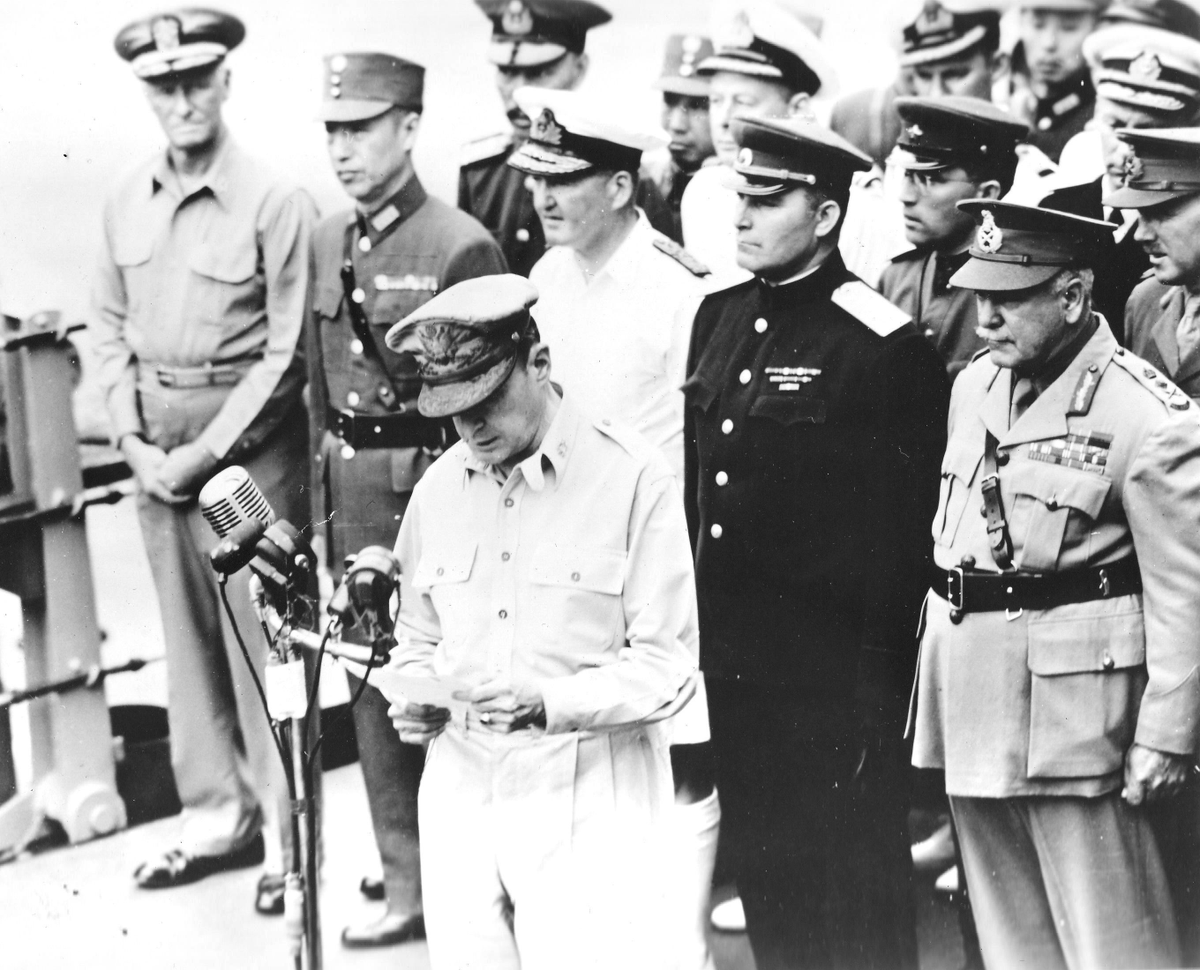
Chester Nimitz, Xu Yongchang, Bruce Fraser, Kuzma Derevyanko, and Thomas Blamey behind Douglas MacArthur aboard USS Missouri during the surrender ceremony, Tokyo Bay, Japan, 2 Sep 1945.