The best Grokbot alternative is finally here.
Turnstone has been in private beta, and after working closely with more than 200 users, we are excited to launch it to the public.
Bring the AI subscriptions you already pay for and try it out. It's completely free.
@QuantinuumQC@Oracle curious about the "built-in calibration" part from the systems side.`
`when helios recalibrates, does OCI see it as a reservation or downtime window jobs can plan around, or does it stay hidden behind the queue?
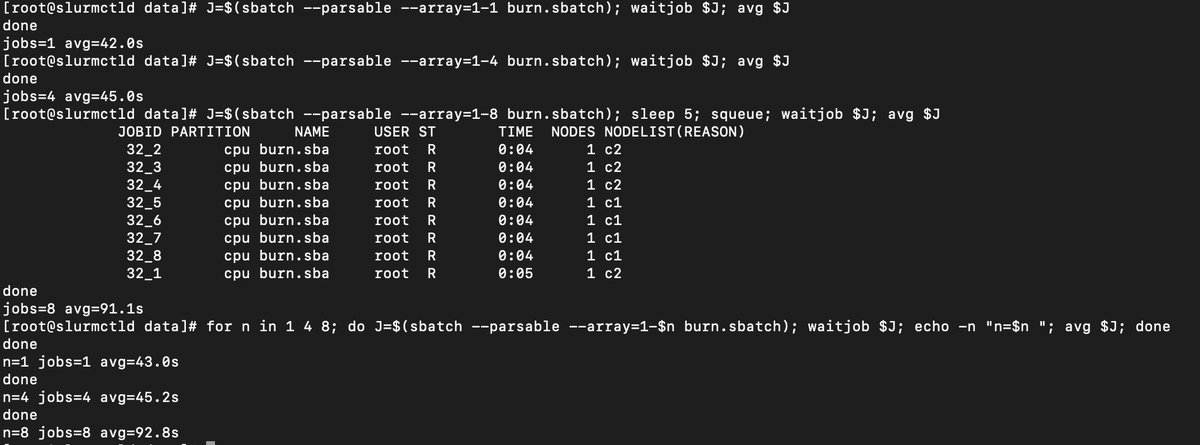
week 0: plain slurm on a 4-cpu docker cluster, before any qpu.
slurm saw 8 cpus on a 4-cpu vm.
1 job: 43s, 4 jobs: 45.2s, 8 jobs: 92.8s (2.16x)
it believed the config, not the hardware.
a scheduler only knows what it's told. 4 more surprises below 👇
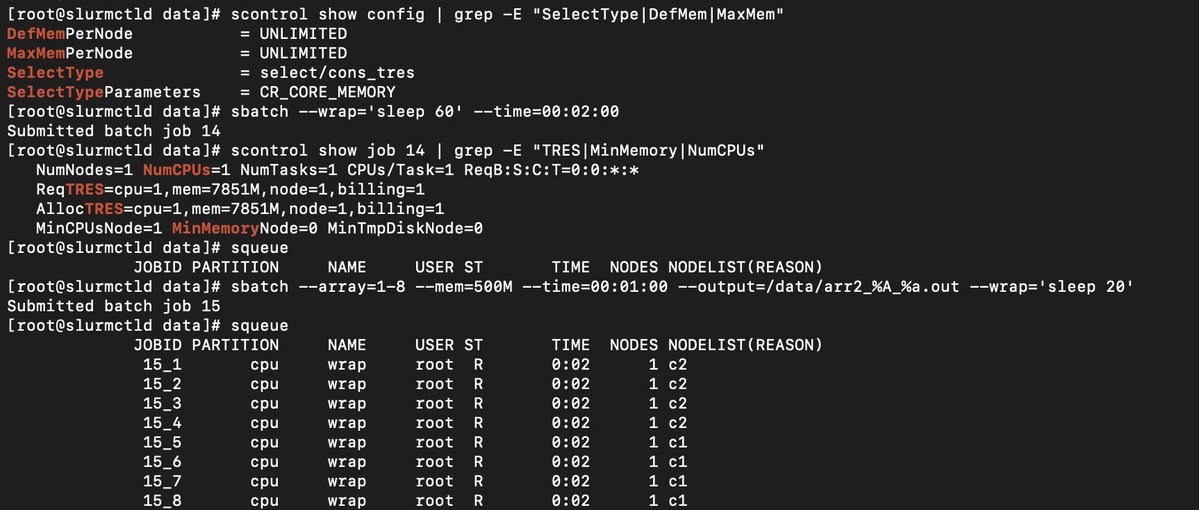
a 1-cpu job took a whole 4-cpu node.
AllocTRES: cpu=1,mem=7851M
CR_CORE_MEMORY + DefMemPerNode=UNLIMITED meant every job asked for all the memory.
my array ran 2 at a time. with --mem=500M, 8 at once.
@Alice__Bob this is the gap i'm poking at. slurm only sees a qpu as a count unless something tells it more. who do you expect to own that state: the vendor, the hpc center, or a layer in between?
@Travis_Sch makes sense. an agent adapting to available resources still needs something to report that state, like calibration windows or recal downtime. do you see that coming from the scheduler, the QPU vendor, or a new layer in between?
@Jij_Inc@orcacomputing@bp_plc@nqcc_official nice concrete number. curious how the ~1 hour splits between classical work and time on the PT-3 itself, and whether queueing for the device is in there. that ratio is what decides how a cluster should share the QPU
@qbraid_official@nvidia scheduling QPU + GPUs together is the interesting part from the systems side. does the scheduler use live calibration state when placing or reserving jobs, or is calibration surfaced separately? curious how a recal window shows up in reservations
@Qruise_ai tracking QPU params over time is exactly what HPC schedulers never see. to slurm the QPU is a static resource, so a job queued against this morning's fidelity can run after things drift. is System Info exposed via an API? curious if it could feed a scheduler as live node state
the calibration-aware resource manager is exactly what i'm trying to measure. one question: slurm plans backfill from submit-time limits, so a 15-min calibration poll can be fresher than the plan using it. do queued jobs get re-scored when the suitability score changes, or only at dispatch?