We are a culture change business.
We empower your people to think different and work smarter together, enabling your business to adapt and innovate at speed.
My latest book: ‘Alone with Nature’ is out today - capturing six years of researching what happens when we spend time alone in nature. Thank you @BloomsburyAcad and so many others for making this possible
https://t.co/bcZ0xQv19c
🌿 Are you a coach or therapist looking to integrate the power of nature into your practice?
🌿Drawing Nature In is a groundbreaking 3-Day experience led by @EugHughes and @TrebbeJ
🍀25th -27th April, central london
https://t.co/ETfcXeyllx
2 places remain!
ADHD Isn’t A Trauma Reaction. Newer approaches to ADHD are shedding light on its complex origins, challenges, and gifts. It's time to fundamentally change the ADHD victim narrative that is so prominent in our culture. Here are 17 points in support of my argument:
1. ADHD is not laziness or a trauma response. It's neither! These falsehoods are so popular, yet so wrong. We need a more accurate narrative about ADHD, one that recognizes the complex etiology of this diagnosis as well as the potential strengths and weaknesses of ADHD.
2. ADHD is a combination of different extreme personality traits that are related to each other but exist on a continuum *among all of us*. This includes low organization and attentional control and high impulsivity and risk-taking.
3. A growing number of psychologists and psychiatrists are moving toward a continuum and symptom-focused approach to understanding ADHD as well as other traditional psychiatric classifications. This is a paradigm shift! https://t.co/BiG7XS0JxL
4. This newer approach acknowledges that ADHD is not an illness. It argues that deviations from the norm in neural functioning may serve as a risk factor for psychopathology but are not in themselves necessary nor sufficient to identify psychopathology: https://t.co/nHqnRynkVd
5. Research clearly shows that ADHD has a very strong genetic basis. In fact, ADHD is among the most heritable psychiatric diagnoses— twin and family studies have estimated that the heritability of ADHD is between 72 and 88 percent across the lifespan. https://t.co/8LzHJDP3Vw
6. Dr. Gabor Maté argues that no gene for ADHD exists. He’s wrong! Twenty-seven specific genetic variants have been identified for ADHD. The specific genes that confer risk for ADHD are not just general "sensitivity" genes". https://t.co/LHTXn49JG3 https://t.co/d6j5TqUVwA
7. Early childhood parenting style has very little effect on the development of ADHD. Dr. Maté may have the causality exactly backwards: ADHD-related traits predict subsequent adverse childhood experiences. In many cases, a bidirectional relationship exists. As one team of researchers put it, “bidirectional relationships between ADHD and ACEs may ensnare children in developmental pathways predictive of poor outcomes.”
https://t.co/S7kbx0DsOp https://t.co/bBeBQIqr0r
8. Chaotic and stressful early family environments can ABSOLUTELY exacerbate ADHD-related traits. But this is not the same thing as saying that ADHD is primarily the result of trauma in childhood. For those with a different genetic proclivity, trauma may affect them differently.
9. While childhood trauma "changes the brain" and can have long-lasting biological effects, *anything* that affects us persistently can change our brain and biology! That includes a variety of techniques to “rewire our brain” and help us learn, grow, and find healing.
10. I agree with Dr. Maté about the potential for healing among adults diagnosed with ADHD but I don't believe his ADHD victim mindset narrative is likely to empower someone to pursue healing and self-acceptance.
11. Dr. Maté ’s narrative marks the parent of a child diagnosed with ADHD as a bad parent and marks the child (or adult) with an ADHD diagnosis as a person with a history of family trauma— even though most people diagnosed with ADHD have no history of family trauma!
12. Dr. Maté's narrative also treats ADHD as an illness. While ADHD is associated with a range of adverse life outcomes, there are also a lot of benefits in our society to people who do not conform, who are risk-takers, who do not “play nice”, and who have a rich imagination.
13. For some people diagnosed with ADHD, their divergent thinking and difficulties with rule-following actually allow them to think outside the box more creatively. Their overactive "Imagination brain Network" can enable them to think more creatively. https://t.co/LbvIxRxpNv
14. Many people diagnosed with ADHD report the ability to “hyperfocus” on things they intrinsically care about, getting into the flow state for very long periods of time. Being highly intelligent and also having an ADHD diagnosis may increase your chances of creative thinking!
15. In summary, all personality traits have trade-offs, and ADHD traits are no different. ADHD is not a superpower (but can be), nor is it a disorder (but it can be). The complex truth is far more empowering and likely to lead to the self-acceptance, agency, and healing.
16. I believe the complex truth about ADHD offers more hope for human agency than either environmental determinism or genetic determinism. Who would want to be completely at the mercy either of society or of our genetics? Thankfully, we aren’t completely subject to either.
17. To all those with an ADHD diagnosis, may you live long and thrive, not trying to find “blame” for who you are, but taking responsibility for your psychological makeup and steering the course of your life in the way you truly want with self-compassion and creativity.
For more references and additional nuance, see: https://t.co/gMXC5UWSxr @PsychToday
🌿 Are you ready to transform your practice in 2025 by integrating the power of nature?
🌿Drawing Nature In is a groundbreaking 3-Day experience for coaches, therapists, and educators.
Join internationally renowned pioneers in the field, @TrebbeJohnson and @EugHughes.
BIG NEWS!
The Director Development Experience program (DDE) that we deliver with @adidas has won a coveted @atd Excellence In Practice Award for Leadership/Management Development.
#leadershipdevelopment#leadership#learning
Artgym client @AXA GO are looking for a new Global Talent Development Coordinator.
This is an amazing opportunity to work with a world-leading Talent and Leadership Development team.
Job details & link: https://t.co/ijxD9laspQ
#leadership#learninganddevelopment#recruiting
Creating an inclusive workplace is not just the right thing to do; it's also essential for business success.
But how do we overcome barriers to #inclusivity?
@HarvardHBS share some advice from experts:
https://t.co/HRQ41IlFec
#diversity#inclusiveworkplace#equality#dei
Folk musicians in India performed better when recording songs asynchronously.
HBR posit that working asynchronously fuels #creativity, particularly for those who feel marginalised in the workplace, through fostering creative freedom.
https://t.co/aKlNfozEUj
#research#async
Why Managers Should Think More Like Hackers
HBR proposes that managers could benefit adopting a "hacker mindset" to complex problems, to find solutions when it feels impossible.
https://t.co/pArzjAR85m
#hacking#leadershipdevelopment#personaldevelopment#coaching
Specialise or Generalise?
Why not #hybridise?
By developing expertise in 2 or more areas, you can see patterns, make distinctive contributions & provide unique perspectives through this combined knowledge.
What is your style of expertise?
(Source: @kepano )
#learning
At Artgym we aim to be constant learners.
So we loved reading this thought-provoking essay by @SvenSchnieders, reminding us of the importance of childlike curiosity, and how to reignite that natural impulse for learning.
https://t.co/rTpcOwDuTD
#constantlearning#landd
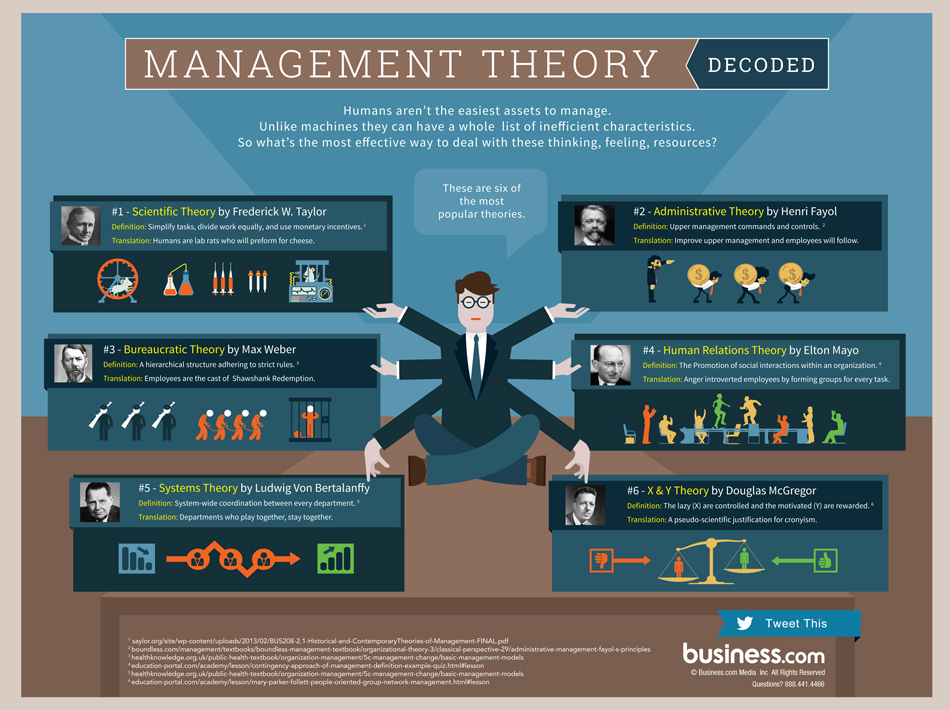
It's easy to feel overloaded with theories of the "best" #management methods.
In truth - there is no "best" method, but it can be helpful to understand various management styles, so you can build a hybrid model that best suits your team.
https://t.co/U4zCse7NF0
#leadership