(1/5)
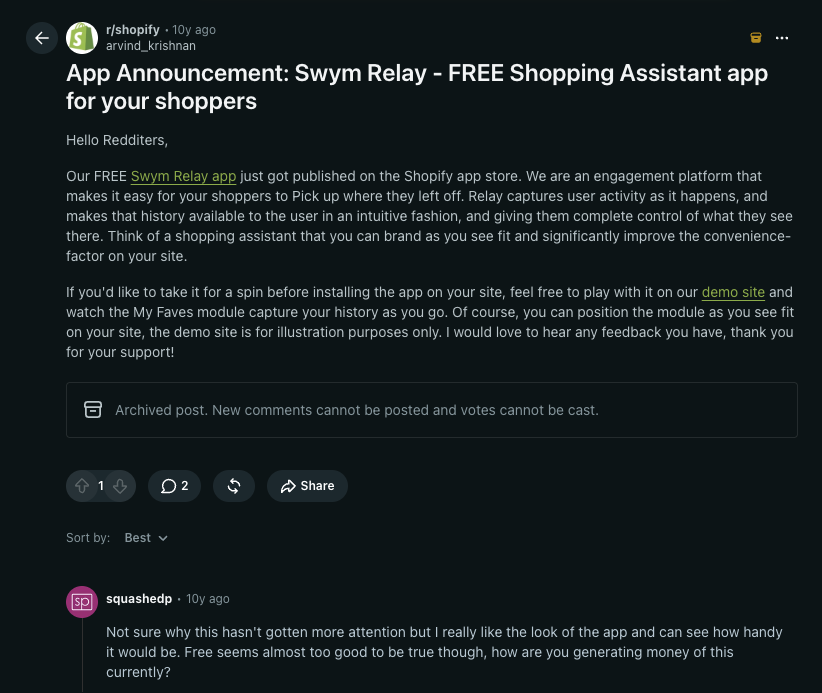
10 years ago, I hit "submit" on this Reddit post asking r/shopify to test our free app. We didn't even know how to charge for it. Fast forward a decade, and that simple app has grown into an enterprise platform generating mid-eight figures in cumulative revenue.A quick story for founders: 🧵👇
What if the most important number in commerce is one that doesn’t exist yet?
@arvindax calls it Intent Yield. We’ve been thinking about this at @getswym for a long time.
Building AI-first is changing how we turn that thinking into reality. https://t.co/rbhAW9EgSM
@arvindax@getswym Find out how well your site turns declared intent into revenue. Run the tool to generate your Intent Yield score here: https://t.co/tjJyliCyeY
Rev per employee at Zoho is an estimated $83K vs. ~$500K for Salesforce or ~350K for Hubspot. Not exactly apples-to-apples, but that's the crux of the challenge. Solving for that at scale isn't easy, esp when you have ~20K employees.
The business outlook for software is uncertain and AI has raised costs dramatically with a) massive 4-fold increase in server prices which we need for data centers b) AI usage increasing rapidly, leading to much higher expenses, which we are trying to control.
On top of that is the challenging geopolitical backdrop.
We have cut down on our marketing budget. We have also told our employees that we cannot have our usual pay increase this year. I have apolgized for not being able to avoid this.
We will work hard to avoid mass layoffs but the outlook for software jobs in general is grim. We have not been growing our employee count for 18 months now.
Most of our employees understand the situation. I am thankful to them.
We are in the middle of reinventing ourselves. The next 3-5 years will decide how our reinvention has worked. Please pray for us 🙏
The math increasingly comes down to revenue per employee in an AI-first future. The sooner you recalibrate, the better. Companies in India have historically thrown people at the problem because labor arbitrage was real, but with AI, that’s no longer true. Adapt now, or perish.
Was wondering why Motwani ji hadn’t shared her wisdom on what India should do about Elon and Starlink. She didn’t disappoint. Sepoy, thy color is brown.
Couldn’t agree more.
Also their position ignores the fact that founders evolve a great deal with context and experience - and that shapes their perspective on finding an efficient path to scale that balances product and capital allocation.
The way great founders become great capital allocators is by investing in their own pockets of value only they can access via their moat.
Not every great product founder ends up with an investable platform business, so vision really matters.
So Parm and Will are both wrong.
The way great founders become great capital allocators is by investing in their own pockets of value only they can access via their moat.
Not every great product founder ends up with an investable platform business, so vision really matters.
So Parm and Will are both wrong.
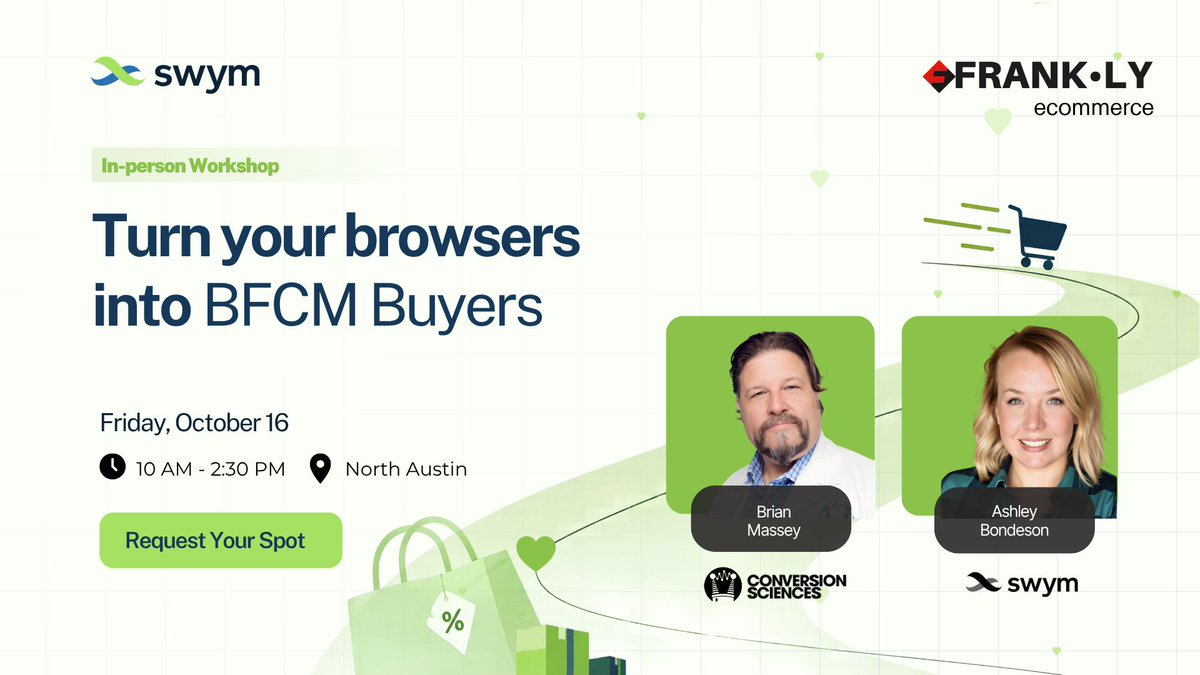
Cards on the table: let’s talk about your #BFCM plan!
We’re spending Oct 16 in Austin with Frankly Ecommerce and Brian Massey of Conversion Sciences, getting into offers, landing pages, waitlists, and the BFCM decisions that are still up for debate.
Then over lunch, our own Ashley Bondeson is joining Patrick Scott Pitman to talk wishlist and back-in-stock flows: what gets shoppers to come back, what tends to convert, and the first thing she’d set up if there were only an afternoon to work with.
If you’re in Austin and still making BFCM calls, you’ll probably want to be in this one. Comment below for the invite.
Pick your problem with Meherish and see which part of your wishlist strategy you should be working on next.
A lot of brands start with the obvious use cases: wishlist reminders, back-in-stock, price-drop and low-stock alerts. But that doesn’t have to be where your wishlist strategy stops!
You can use wishlist behavior to build segments, bring saved products into winbacks, add them to newsletters, or even use them in post-purchase flows. The session walks through how to move from the basic triggered flows into more of those use cases.
Catch the full Wishlist Plus × Klaviyo session on YouTube.