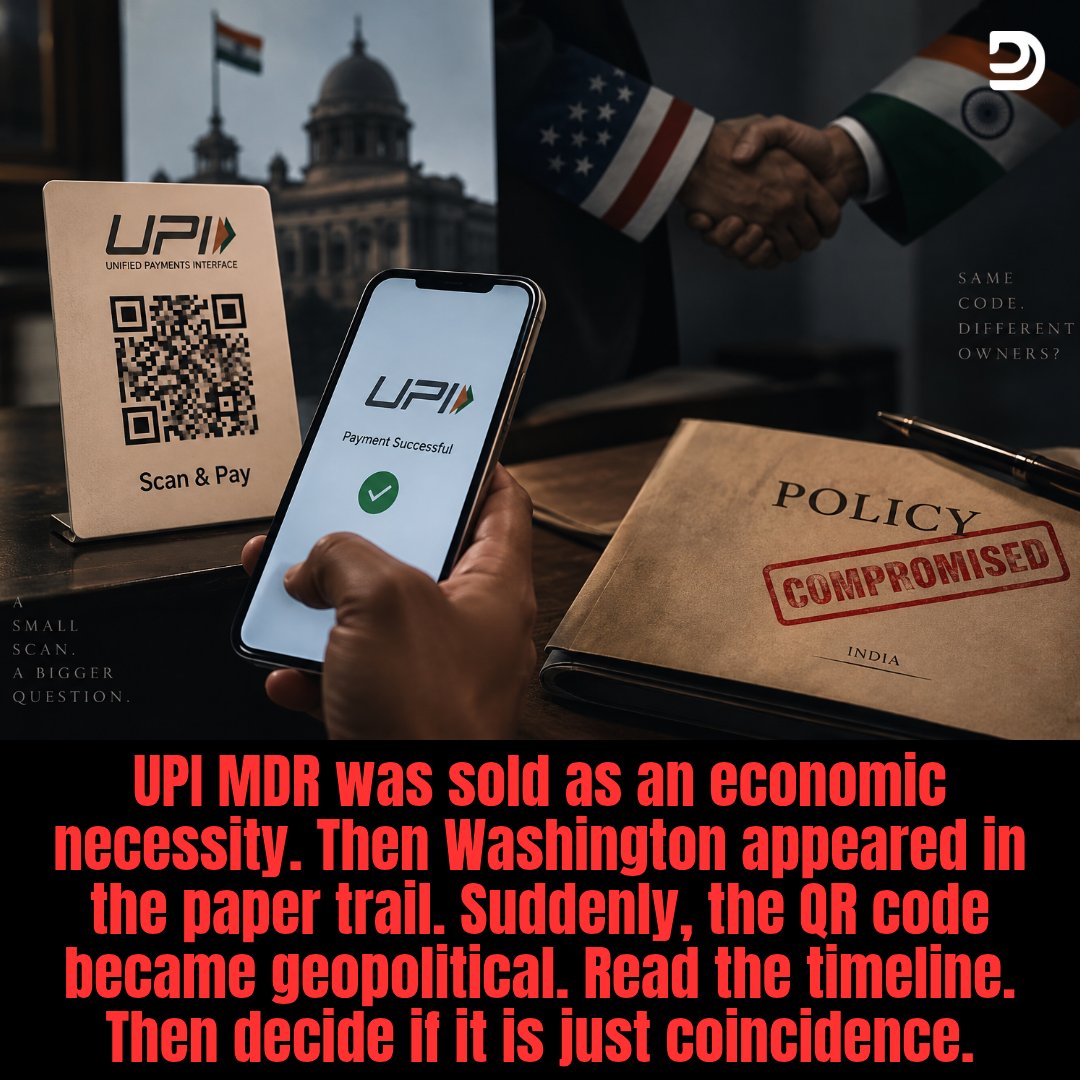
Making UPI transactions chargeable looks innocent.
The paperwork does not.
There is a geopolitical shadow behind that QR code.
And the timeline is the part almost nobody is reporting.
21 June 2018.
Mastercard complained to the US Trade Representative.
Its concern was simple.
India was favouring RuPay.
It called India's approach protectionist.
9 Aug 2021.
Visa CEO Alfred Kelly and other executives met USTR.
Again, the concern was a "level playing field".
Visa said Indian policies appeared to favour NPCI.
17 Sept 2025.
USTR formally invited American companies to report foreign trade barriers.
India's payment system came under the scanner again.
30 Oct 2025.
The National Foreign Trade Council submitted its report.
Its concern?
Indian payment policies favoured domestic players over foreign ones.
Q1 2026.
Visa's US lobbying disclosures again listed payment issues involving India.
The agencies involved?
USTR.
Treasury.
Commerce.
State Department.
National Security Council.
31 March 2026.
USTR put its concerns on record.
India's payment policies favoured domestic players.
That was the complaint.
A "non-level playing field".
Then came India.
Aug 2026.
New Taxation Bill 2026 was passed.
The policy framework changed.
Sept 2026.
UPI MDR arrived.
Does this prove America caused it?
No.
But the timeline deserves attention.
Because the direction matters.
India has now opened a Pandora's box.
Today it is 0.4%.
Today it starts above ₹2,000 for specified merchants.
Tomorrow?
Lower slabs could come.
More categories could come.
Rules can change again.
And remember one number.
Who controls India's UPI app market?
PhonePe: 45.87%.
Google Pay: 32.43%.
Paytm: 8.07%.
PhonePe is controlled by Walmart.
American.
Google Pay belongs to Google.
Again, American.
PhonePe + Google Pay control about 78% of India's UPI volume.
Think about that.
UPI was built in India.
NPCI built the rail.
Indian banks built the plumbing.
Indian citizens created the scale.
Now MDR creates a revenue pool around that scale.
Who stands closest to it?
The companies already processing the transactions.
And the two biggest are American-controlled.
And Visa and Mastercard?
Zero-MDR UPI gave merchants something card networks cannot.
A payment rail with no merchant fee.
That advantage has now narrowed.
And we are killing it.
And once UPI becomes monetisable,
The fight for India's payment traffic changes.
Existing giants have more reason to fight.
New players get a clearer business case.
India has opened the door.
Maybe only an inch today.
But doors rarely remain an inch open forever.
My question is simple.
Did Bharat build the world's greatest payment rail only to slowly monetise it for someone else?
केंद्राच्या जागांवरील झोपडपट्टीवासीयांना हक्काचे घर कधी?
मुंबईतील रेल्वे, मुंबई पोर्ट ऑथॉरिटी (MbPA) आणि संरक्षण विभागासारख्या केंद्र सरकारच्या जमिनींवर अनेक दशके वास्तव्य करणाऱ्या लाखो नागरिकांना आजही स्वतःच्या 'पक्क्या घरापासून' वंचित राहावे लागत आहे. या समस्येवर कायमस्वरूपी तोडगा काढण्यासाठी माननीय पंतप्रधान श्री. नरेंद्र मोदी जी (@narendramodi ji) यांना सविस्तर पत्र लिहून राज्याच्या 'एसआरए' (SRA) धर्तीवर केंद्राचे एकसमान पुनर्वसन धोरण लागू करण्याची मागणी केली.
तसेच, मुंबई पोर्ट ट्रस्ट, रेल्वे, संरक्षण विभागाच्या जागांवरील रहिवाशांना 'पक्के घर' देण्याची आणि दक्षिण मुंबईतील दारुखाना येथील बेघर झालेल्या ९८ कुटुंबांचे तातडीने पुनर्वसन करण्याची मागणी केली.
महाराष्ट्र शासनाने झोपडपट्टी पुनर्वसन प्राधिकरणाच्या (SRA) माध्यमातून पात्र झोपडपट्टीवासीयांना कायमस्वरूपी पक्की घरे देण्याचे यशस्वी मॉडेल राबवले आहे. मात्र, मुंबईतील मोठा भूखंड हा केंद्र सरकारच्या विविध मंत्रालयांच्या (उदा. रेल्वे, पोर्ट ट्रस्ट, विमानतळ प्राधिकरण, बार्क) अखत्यारीत येतो. या जमिनी राज्याच्या पुनर्वसन धोरणाच्या कक्षेबाहेर असल्याने, राज्यात एक सक्षम यंत्रणा असूनही लाखो रहिवासी आजही अनिश्चिततेच्या छायेत आणि गैरसोयीत जगत आहेत.
समान पुनर्वसन धोरणाअभावी काही ठिकाणी नागरिकांना घरासाठी आर्थिक भुर्दंड सहन करावा लागतो, तर राज्याच्या धोरणांतर्गत काहींना मोफत घरे मिळतात. हा भेदभाव दूर करून आर्थिकदृष्ट्या दुर्बल घटकांसाठी एकसमान आणि न्याय्य धोरण राबवण्याची गरज आहे, ह्याकडे मी माननीय पंतप्रधानांचे लक्ष वेधले आहे. तसेच, जोपर्यंत कायमस्वरूपी पुनर्वसन होत नाही, तोपर्यंत कोणत्याही पात्र रहिवाशाला विस्थापित केले जाऊ नये. कुटुंबांना बेघर करून आणि मुलांच्या शिक्षणात खंड पाडून विकास होऊ शकत नाही, अशी स्पष्ट भूमिका मांडली आहे.
पत्रातील प्रमुख मागण्या आणि सूचना:
१. तातडीने एकसमान पुनर्वसन धोरण तयार करावे.
२. महाराष्ट्र शासनाने राबवलेल्या यशस्वी झोपडपट्टी पुनर्वसन प्राधिकरणाच्या (SRA) मॉडेलशी केंद्र सरकारच्या जमीन मालकी असलेल्या संस्थांच्या पुनर्वसन आराखड्याची सांगड घालावी.
३. जोपर्यंत कायमस्वरूपी पुनर्वसन होत नाही, तोपर्यंत कोणत्याही पात्र रहिवाशाला विस्थापित केले जाऊ नये.
४. पुनर्वसन प्रकल्पांमध्ये समन्वय साधण्यासाठी आंतर-मंत्रालयीन यंत्रणा स्थापन करावी.
५. कालबद्ध पुनर्विकास करावा, जेणेकरून पात्र रहिवाशांच्या पुनर्वसनानंत मोकळी झालेली जमीन व्यापक जनहितासाठी वापरली जाऊ शकेल.
६. मुंबई पोर्ट ऑथॉरिटीच्या जमिनीवर दारुखाना येथे राहणाऱ्या सुमारे ९८ झोपडपट्टीधारक कुटुंबांचे तात्काळ पुनर्वसन करण्याचे निर्देश द्यावेत.
७. भविष्यातील अतिक्रमणे रोखण्यासाठी विद्यमान झोपड्यांचे 'जिओ-टॅगिंग' (Geo-tagging) करावे.
मला आशा आहे, पत्रातील मुद्द्यांचे गांभीर्य लक्षात घेऊन मुंबईतील केंद्र सरकारच्या जमिनींसाठी सर्वसमावेशक धोरण आखून हजारो कुटुंबांना त्यांच्या हक्काचे घर उपलब्ध करून देण्याच्या दृष्टीने केंद्र सरकार सकारात्मक पावले उचलेल.
- खासदार अरविंद सावंत
नेते, शिवसेना (उद्धव बाळासाहेब ठाकरे)
#ArvindSawant #दक्षिणमुंबई #आपलामाणूस #ShivsenaUBT
Kargil Vijay Diwas
I extend my tribute to all the brave officers and jawans of the Indian forces for their exemplary courage, sacrifice and victory in protecting our nation.
Also today on this day, I fondly remember my friend late Col. Sonam Wangchuk MVC, his bravery shall continue to inspire generations to come.