USA has ChatGPT
USA has Grok
USA has Claude
USA has Gemini
USA has Llama
USA has Copilot
China has DeepSeek
China has Qwen
China has Ernie
China has GLM
China has Kimi
China has MiniMax
Europe has?
Jokes aside, there’s a saying called 君子讷于言而敏于行, which means a true gentleman is slow and cautious in speech but quick and diligent in action.
The full line from the Analects of Confucius is “君子欲讷于言而敏于行.” It emphasizes speaking less and doing more—avoiding empty talk or constant self-promotion, while focusing energy on real results. Actions speak louder than words.
This is exactly the spirit people see in DeepSeek: no endless hype, no big promises every other week. They go quiet for months, put in the work, then release a model that competes with the best at a fraction of the cost… and disappear again. Pure “slow in speech, swift in action.”
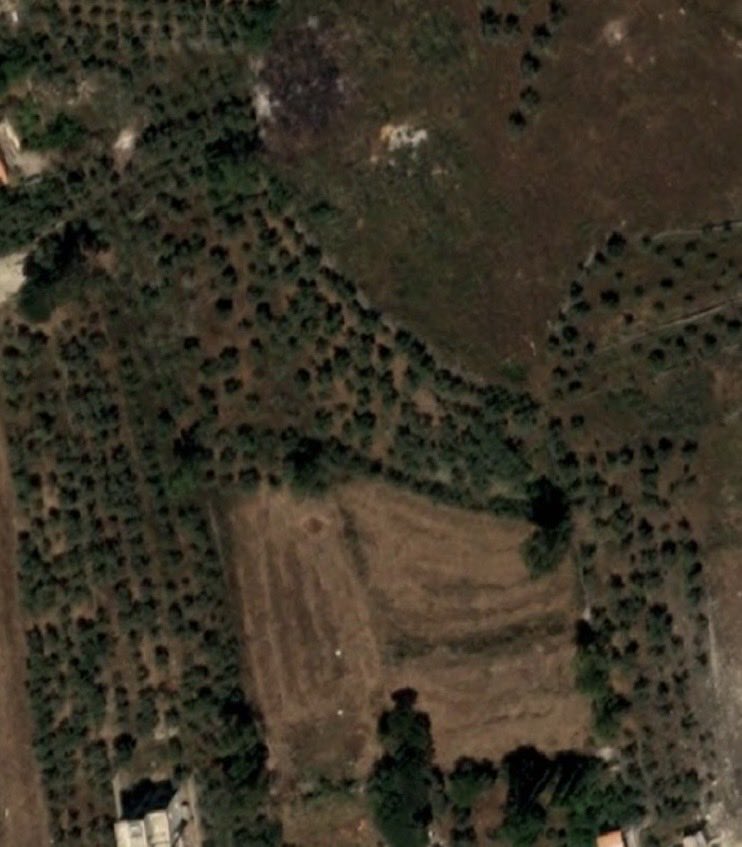
Cet automne, pour la première fois depuis 250 ans, ma famille ne récoltera pas d'olives au Liban.
Nos 600 oliviers ont été arrachés du sol par l'armée israélienne, racines comprises, et emportés. Les plus vieux avaient 500 ans !
Cette terre, mon grand-père la tenait de son arrière-grand-père. En deux siècles et demi, ma famille a acheté de la terre. Elle n'en a jamais vendu un mètre, pas un seul jour. Chez nous, on ne construit pas sur la terre. On y plante. Ces arbres ont survécu à plusieurs guerres. Ils ont survécu à tout.
Regardez les deux photos. À gauche, notre terre le 25 juin, la veille de la signature de l'accord entre le Liban et Israël. À droite, la même terre le 20 juillet.
Il ne reste rien. Et c’est justement ça, la preuve. Un incendie laisse des troncs noirs debout. Une frappe laisse des cratères. Ici, pas un tronc calciné, pas une souche, pas un débris. Une terre nue, raclée, griffée par les chenilles des engins. Déterrer un olivier de 500 ans sans le tuer demande des pelleteuses, un savoir-faire, des camions et une destination. Ce n’est pas un dégât de guerre. C’est une opération, sur une terre où il n’y avait ni armes, ni combattants, ni présence militaire. Ma famille n'a jamais été liée de près ou de loin au Hezbollah, et elle ne le sera jamais. Il n'y avait que des arbres, et des gens qui les taillent depuis huit générations.
D'après les témoignages qui nous parviennent, ces arbres auraient été emportés de l'autre côté de la frontière, vers Israël.
L'accord signé entre le Liban et Israël, censé préparer la paix, protège les biens des civils. Je demande simplement qu'il soit appliqué : que le sort des arbres déterrés soit établi, que ceux qui sont encore vivants soient rendus. Si nos arbres sont vivants quelque part, ils peuvent revenir. Je ne cherche pas une vengeance. Je cherche une adresse !
J'ai hésité à écrire ces lignes, pour ne pas provoquer des réactions d'un côté comme de l'autre. Mais je refuse de faire le deuil de ces oliviers. Dans ces arbres vit l'âme de mon grand-père, ancien général de la police libanaise, un homme qui a toujours cru dans la paix, dans les humains et dans la lumière. Il taillait ces arbres à mains nues. Il répétait : “on ne vend pas la terre, on la transmet”
Je lui dois de ne pas me taire.
🚨 La IA china ya no cría rebeldes.
Después de ver la entrevista con Yang Zhilin, fundador de Kimi, mi conclusión es directa:
Esta nueva generación de emprendedores de inteligencia artificial ha perdido por completo el espíritu combativo y disruptivo que tenían Jack Ma, Wang Jianlin y Liu Qiangdong.
Ya no pelean contra el sistema.
No les importa quién se sienta en la cabecera de la mesa ni hacia dónde apunta la cabeza del pez.
Son brillantes, educados y… extremadamente obedientes.
Yang Zhilin es el ejemplo perfecto: se graduó como el mejor estudiante de su promoción en Tsinghua con notas perfectas en todas las materias.
¿Estamos viendo el futuro de la IA en China… o el final de los locos que la hicieron grande?
¿Qué opinas tú? 👇
A remarkable vantage point in Shanghai: I was among a limited number of attendees from Western academic and nonprofit organizations invited to the opening ceremony of #WAIC2026, seated only a few rows from the stage.
President Xi Jinping presented four major themes for global AI governance: open innovation and collaboration; security and continued human control; cultural inclusion; and multilateral coordination.
His central proposition was unmistakable: China intends to present its approach to AI—including open-source development and support for the Global South—as global rather than exclusively national. Xi argued that AI should not become a “solo performance” by one country, but a “symphony of global cooperation.”
UN Secretary-General António Guterres offered an important test for every national AI strategy: technology must serve people—not the other way around.
These statements deserve analysis rather than simple acceptance. Later this week, I’ll write about what Xi’s framework means for open-source AI, U.S. strategic interests, the Global South and the emerging contest over global AI governance.
It has been a busy week in Shanghai. More soon on Substack.
#opensourceai
China understands that leadership in AI is not just about building the most capable models. It is about shaping the rules, norms, and institutions that will govern how AI is developed and used around the world. Xi Jinping's remarks today at the World Artificial Intelligence Conference in Shanghai are an important reminder that Beijing intends to lead on both fronts. Beijing is moving with purpose, bringing nearly 30 countries along with it as signatories to a new China-backed AI organization, giving it a growing platform to shape international standards and extend its influence around the world.
It didn’t have to be this way; in fact, the United States once led this effort. During my time in the Biden Administration, we secured voluntary commitments from frontier AI companies on safety, security, and trust. My colleagues and I then worked with the G7 to internationalize those principles, as well as with the UK on safety. We secured the first ever UN General Assembly resolution on AI by broad consensus.
That work gave the United States a strong foundation from which to lead. It showed that innovation and governance could advance together, and that America could bring other countries with us.
Meanwhile, the Trump Administration’s approach to AI governance continues to swing between embracing it and rejecting it. That inconsistency — together with our cratering credibility and growing trust deficit around the world — puts our technological leadership and our diplomatic influence in peril.
If America's approach to AI governance continues to vacillate and if we continue to alienate countries near and far, we will cede far more than a diplomatic initiative. We will allow China to shape the rules, standards, and norms that will govern the defining technology of this century. The question is not whether those rules will be written, but who writes them. I, for one, would prefer it to be America.
https://t.co/36zZUXBoVK