Believing Visionary Story can help humanity evolve by example, can offer our young hope for their future, story their potential. Story beyond who we are now.
If in our stories we cannot write ourselves as we should want to be, as we need to be to survive the consequences of who we are now, how will we be that in our real lives?
How will our children learn to be that?
We need to story beyond who we are now.
https://t.co/CXzQ5fwMDD
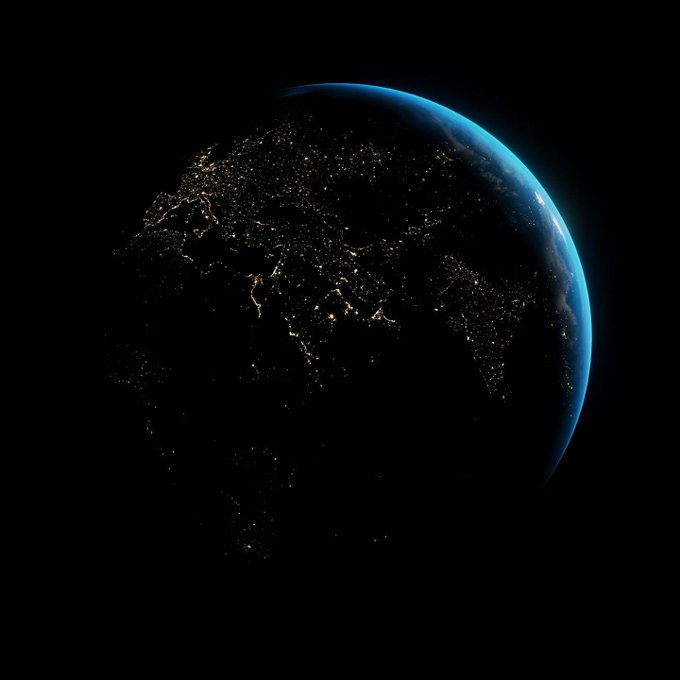
That we are not using story to vision beyond who we are now does not matter beyond Earth, has no effect on the vast cosmos all around us.
Only for our children here on a single planet does our lack of visioning through story matter. https://t.co/WjVzcAT4uL
We are not telling emergent stories, storying beyond who we are now.
So we should not be surprised that we continue to destroy our world.
https://t.co/fnWmDLGPhE https://t.co/fnWmDLGPhE
Today is World Ocean Day and our oceans are being bombarded by all kinds of threats like pollution, over-fishing, acidification, etc…
But as a meteorologist, I’ll discuss the rapid warming!
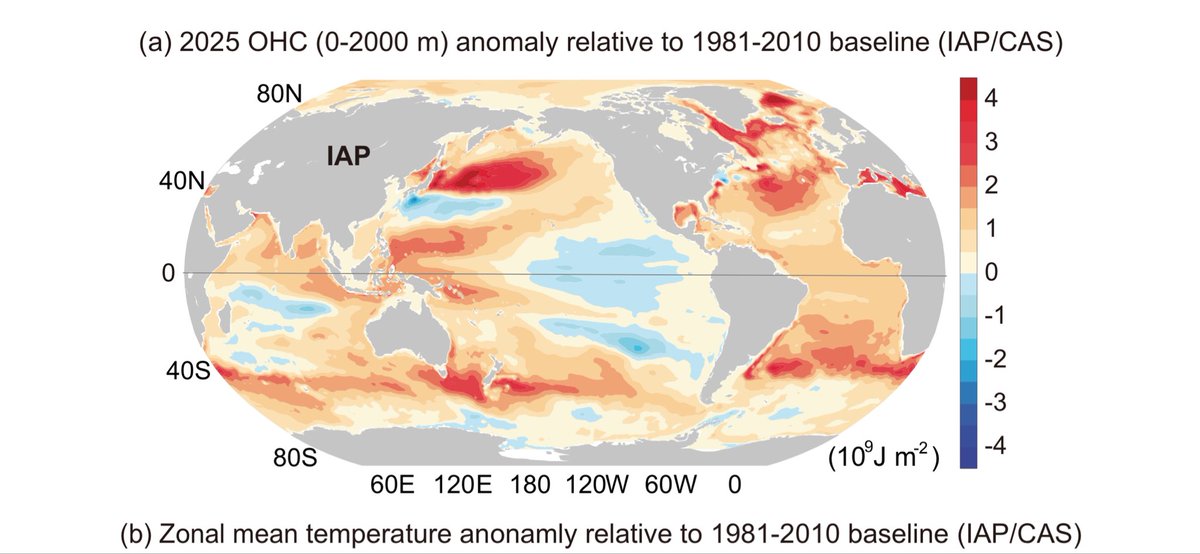
We often focus on air temperatures. But the real story is in the oceans.
More than 90% of the excess heat trapped by greenhouse gases is retained in the ocean.
Each year a new assessment is released, and in 2025 the world’s oceans gained an astounding 23 zettajoules (ZJ) of heat.
In relatable terms that’s equivalent to:
🌊 37 years of humanity’s current annual energy consumption
🌊 About 380 million Hiroshima-sized atomic bombs worth of energy
🌊 More than 200 times the world’s annual electricity generation
And that’s just one year!
Why does this matter?
Warmer oceans can fuel marine heatwaves, coral bleaching and death, sea level rise through thermal expansion, contribute to bigger land heatwaves, and provide more energy for heavy rainfall and tropical cyclones. Ocean warming also stresses marine ecosystems that support fisheries, biodiversity, and coastal economies around the world.
The ocean has shielded us from much greater atmospheric warming by absorbing the vast majority of Earth’s excess heat. But that protection comes with growing consequences for ocean health.
On this World Ocean Day, it’s worth remembering that the ocean is not just responding to climate change, it’s bearing the brunt! We must protect our oceans.
#WorldOceanDay #Ocean #Climate #OceanHeat #ClimateChange
Paper link in 🧵
@DavidUllrich202 The science behind the weird Atlantic 'cold blob' explained (in under 15 minutes). It's the only part of the planet which hasn't warmed in the last hundred years, but cooled! And it's a bad sign. #AMOC
https://t.co/ddja5Jyi33
Of the stories we currently tell, some are who we have been while others are who we are.
Unfortunately, summed up, who we have been and who we are has destroyed much.
If we wish to survive who we are now we would be wise to tell stories that represent who we should want to be.
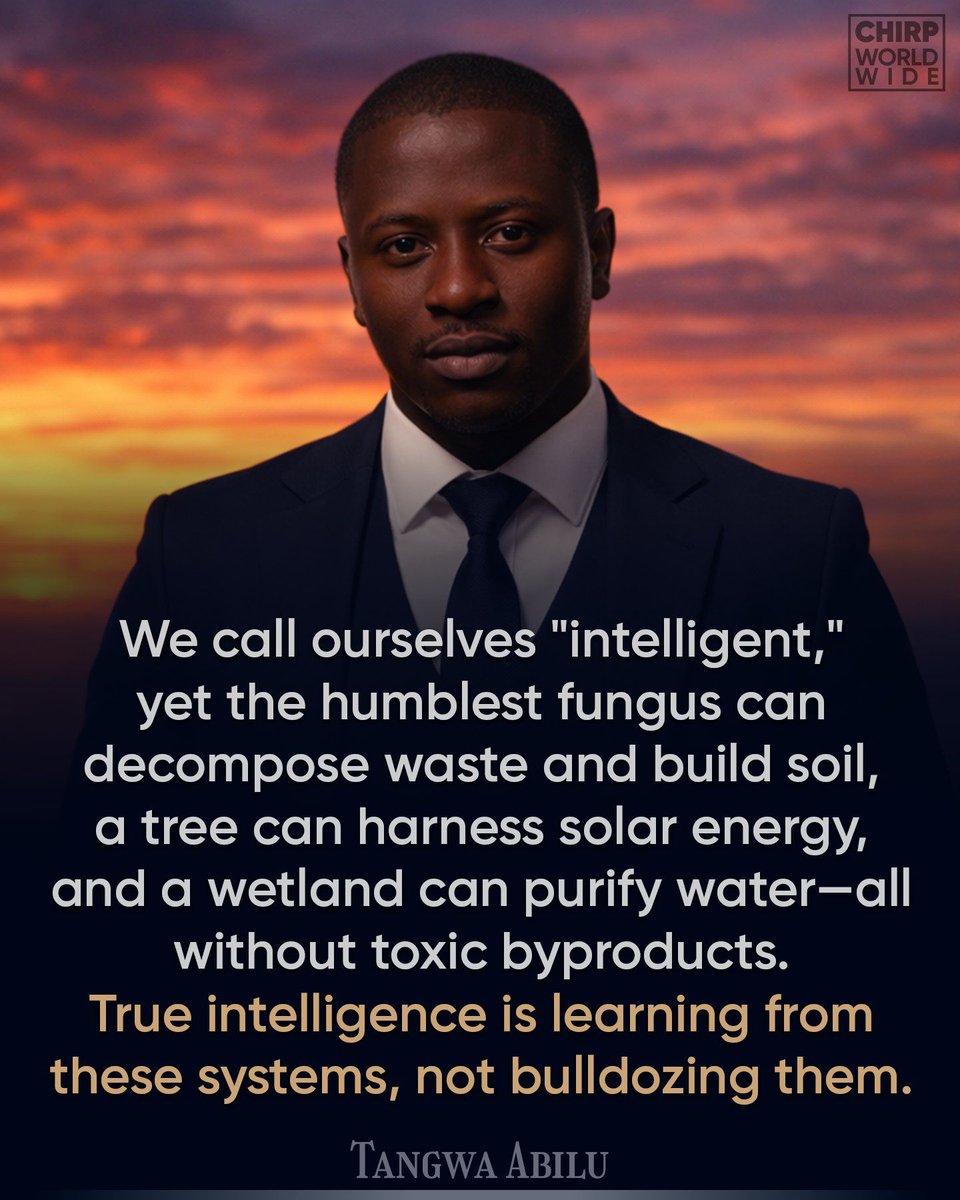
We call ourselves "intelligent," yet the humblest fungus can decompose waste and build soil, a tree can harness solar energy, and a wetland can purify water—all without toxic byproducts. True intelligence is learning from these systems, not bulldozing them.
If we cannot tell emergent stories that depict who we can be beyond who we are now…
How are we to convey our potential to our young?
Without storying beyond who we are now there is nothing to prevent our young from continuing the same dysfunctional social/societal patterns.
I am optimistic that we will one day make contact to extraterrestrials because I don't think that the speed of light is a fundamental limit. Here I explain why and I have a brief summary below.
About looking to the stars for signs of advanced life…
Consider that a civilization capable of interstellar travel would avoid contacting a species that is destroying fellow life, biosphere, and planet, while waging wars, committing genocide… in general abhorrent behavior.
The BBC just released a new adaptation of Lord of the Flies, the classic novel by William Golding. It's beautifully made, but it's still telling the wrong story.
A few years ago, I went looking for the *real* Lord of the Flies. I wanted to know: has it ever actually happened? Have kids ever been shipwrecked on a deserted island?
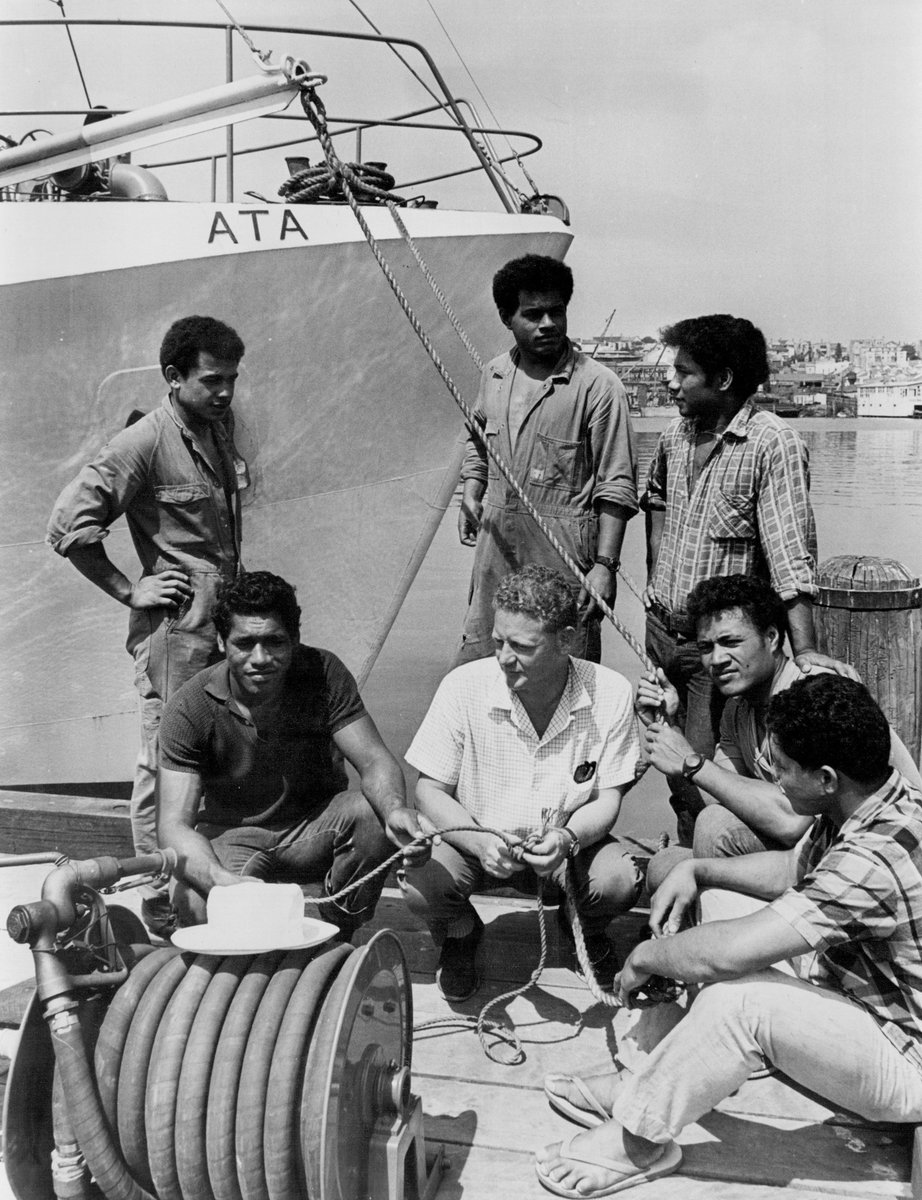
It took me a year of research, but I found it. In 1965, six boys from a boarding school in Tonga stole a boat, got caught in a storm, and drifted for eight days without food or water. They washed up on 'Ata, a remote, uninhabited island in the Pacific. They stayed there for 15 months, and what happened on that island was the exact opposite of William Golding's novel.
These boys set up a small commune. They built a food garden, stored rainwater in hollowed-out tree trunks, created a gym with improvised weights, and built a badminton court. One of them, Stephen (who would later become an engineer) managed to start a fire using two sticks. They kept it burning the entire time.
Of course they fought too. But then they argued, they had a rule: go to opposite ends of the island, cool down, then come back and apologize. As one of them told me: ‘That's how we stayed friends.’
Back home, everyone assumed that the boys – Luke, Stephen, Sione, David, Kolo and Mano — were dead. When they were finally discovered by an Australian captain named Peter Warner, he radioed their names to Tonga. After twenty minutes, a tearful response came back: ‘You found them! These boys have been given up for dead. Funerals have been held. If it's them, this is a miracle!’
Peter commissioned a new ship, hired all six boys as his crew, and named the boat the Ata, after the island where he found them. They remained friends for the rest of their lives – Peter and Mano even became soulmates. I tracked them down, and it became one of the central chapters of my book Humankind.
Here's what struck me most: William Golding (the author of Lord of the Flies) was a troubled man, an alcoholic who once said ‘I have always understood the Nazis, because I am of that sort by nature.’ I think he was projecting his own darkness onto children. And we turned it into a lesson about human nature that we teach to millions of kids around the world.
I think the real lesson is the opposite. When real children found themselves alone on a real island, they didn't descend into savagery. They cooperated, they took care of each other, they survived.
I'm not saying that the Tongan castaways were representative of all kids everywhere. But I am saying that every kid who has to read or watch the fictional Lord of the Flies also deserves to know what actually happened when it played out in real life.
Stories are never just stories. We become the stories that we tell ourselves.
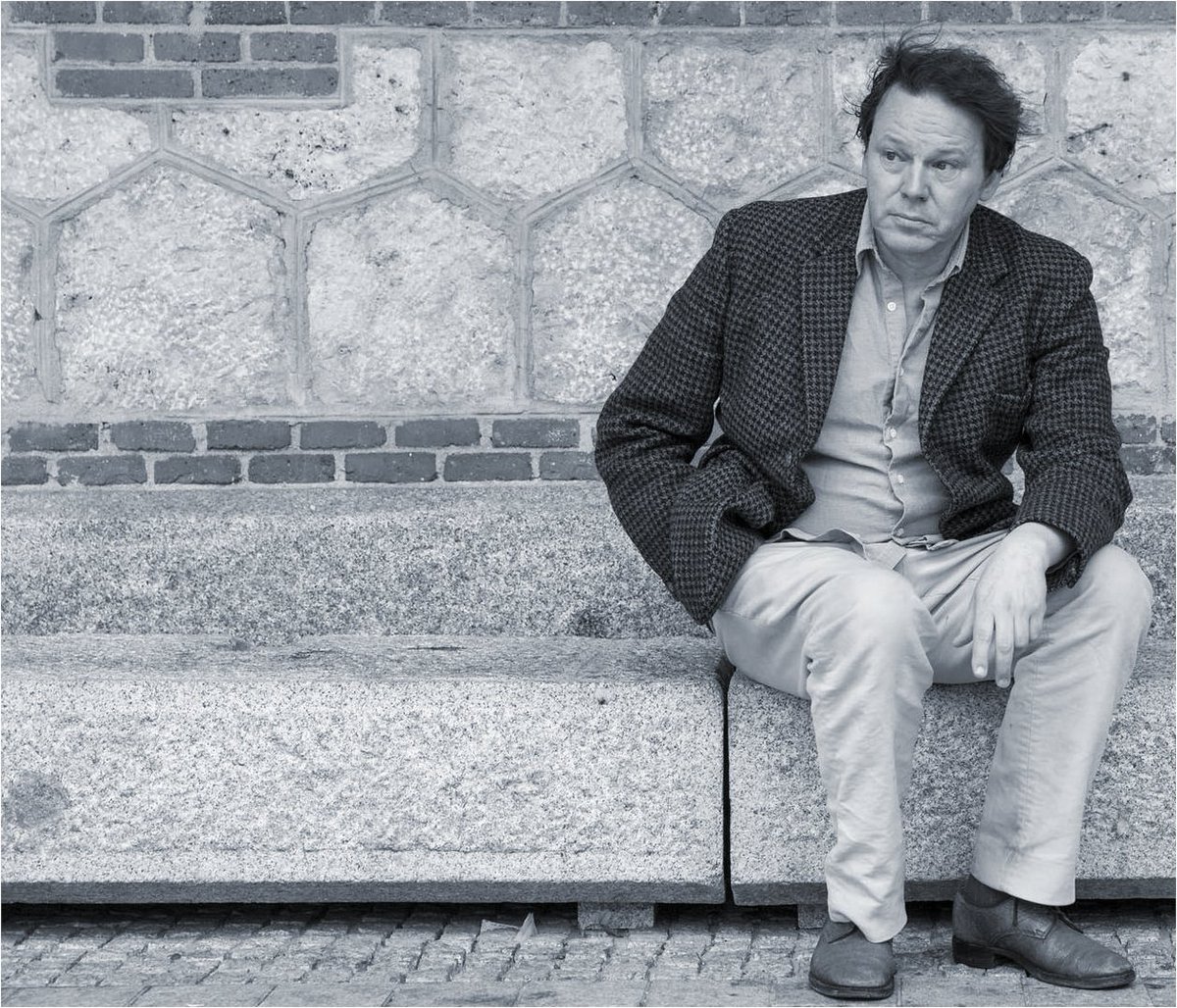
"Real love, the only kind genuinely worthy of the name, is a kind of dialectical overcoming. It only becomes possible at the point where one comes to understand the full reality of one’s beloved, which necessarily, means encountering even those qualities one finds infuriating, loathsome, or detestable.
For surely, if you know enough about anyone, you will find something in them that you hate. But it’s only when one encounters that, and decides nonetheless to love them anyway, that we can talk of love as an active, redemptive, and powerful force.
Real love can only be love if it conquerors hatred, but not by annihilating but by containing and transcending it, and not just once, but forever."
- David Graeber
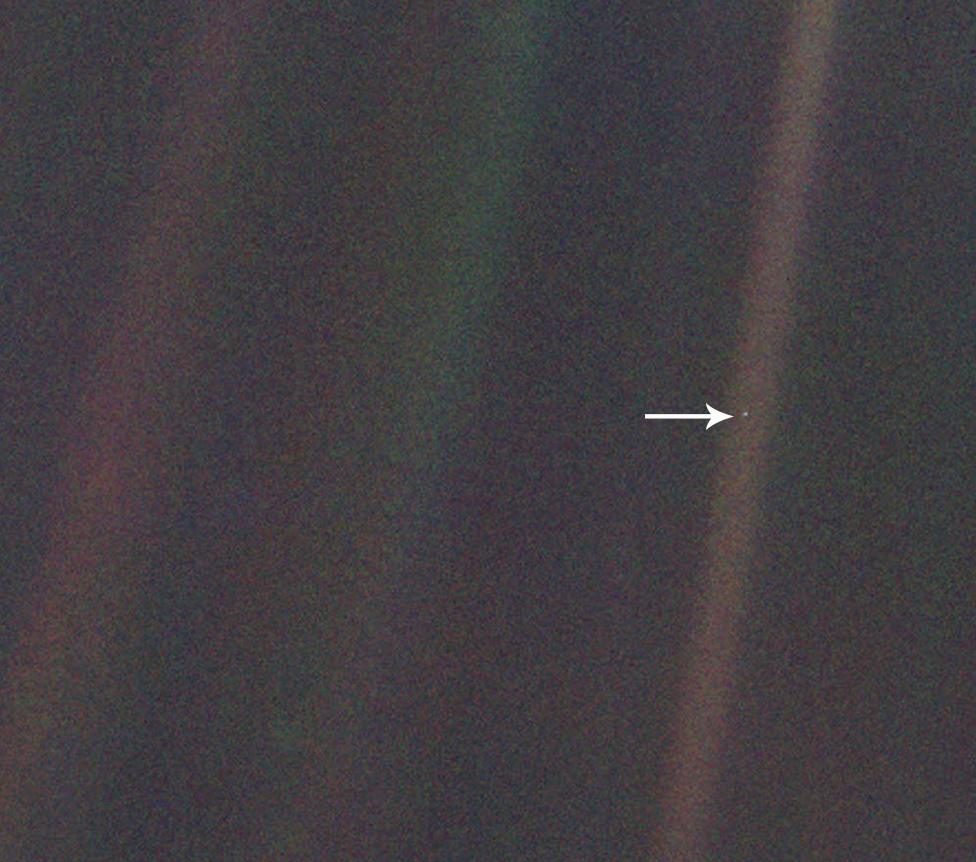
Thirty-six years ago, we saw our whole civilization reduced to a single, fragile dot, so small it might scarcely be noticed by the universe itself.
And yet, from within that dot, it has often seemed to us as though our small stage were the whole of creation, as though our differences were vast and enduring.
Our knowledge has grown, carrying us outward to the edges of the solar system and beyond, but understanding asks something more of us, it asks for humility, for the quiet recognition of our true scale in the cosmos.
In that faint, fragile mote of light, suspended in a sunbeam, lies everyone you have ever known, everyone you have ever loved, everyone who ever was. From this distant vantage, our imagined boundaries soften, our quarrels diminish, our certainties grow less certain.
Ours is a small world, a pale blue dot adrift in the vast cosmic dark. And it is here, on this lonely speck, that we are called not compelled, but invited to treat one another with greater kindness, and to cherish the only home we have ever known.
Trees do not make a forest.
Function does.
SUBSTANCE WITHOUT SPECTACLE
How the Loss of Ground Sloths and Porcupines Turned Forests into Fuel
Western wildfire seasons are often framed as a climate story. Climate matters. But the deeper ecological story began thousands of years earlier with the quiet loss of disturbance.
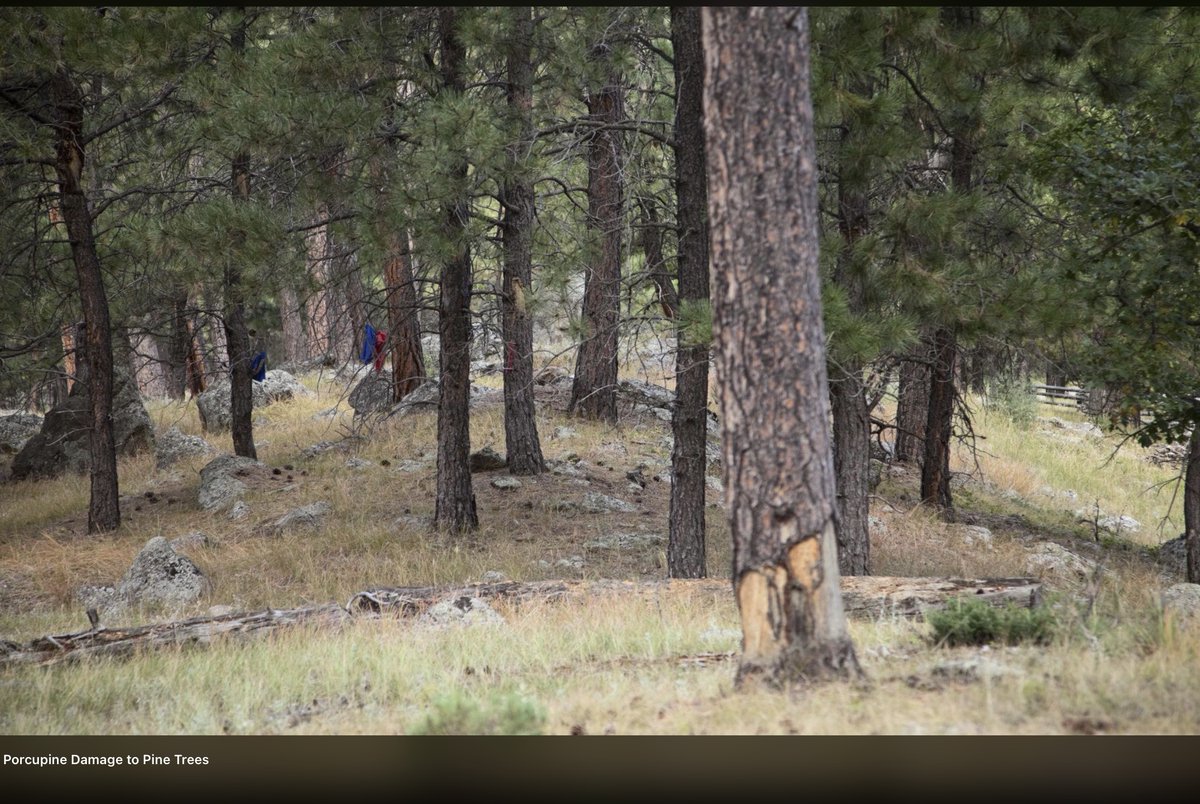
Most people think of porcupines as curiosities—slow, solitary animals best known for their quills and their habit of chewing on wood. In managed forests, they are often described as pests, blamed for girdled trees, damaged bark, and small canopy gaps that look, at first glance, like injury.
But those marks are not accidents.
They are work.
Porcupines strip bark, break limbs, and kill or weaken individual trees in ways that create small openings in the forest canopy. Light reaches the ground. Shrubs respond. Seeds germinate. Insects arrive. Birds follow. The effects are localized, uneven, and persistent—too subtle to register as disturbance, yet powerful enough to shape structure over time. What foresters call damage is, ecologically, a form of maintenance.
For most of the last twelve thousand years, porcupines were among the last animals in North American forests capable of doing this kind of work.
They were not the first.
The First Loss: When a Dominant Disturbance Disappeared
Before porcupines, ground sloths performed similar functions at vastly larger scales.
At the end of the last Ice Age, the Americas were home to dozens of ground sloth species, ranging from bear-sized forest browsers to elephant-scale giants capable of rearing upright to feed high in trees. They occupied deserts and scrublands, woodlands and savannas, tropical forests and temperate valleys—from Alaska to the southern tip of South America.
Ground sloths did not clear forests. They prevented forests from becoming uniform.
Their feeding damaged trunks, stripped bark, snapped limbs, stressed trees over years, and killed some outright while sparing others. By selectively targeting mid-aged woody plants—trees old enough to shape structure but young enough to be redirected—they maintained landscapes in constant, uneven motion. Instead of large resets driven by fire or storms, forests ran on many small successional clocks at once.
The result was not deforestation, but churn.
Standing deadwood accumulated. Partial openings formed and re-formed. Light, nutrients, and moisture were redistributed in irregular patterns that could not be predicted from climate alone. Ground sloths did not “increase biodiversity” in the abstract. They prevented uniformity—and preventing uniformity is often what allows biodiversity to flourish.
These effects cascaded quietly. Dead and dying trees supported fungi and wood-boring insects. Insect pulses subsidized birds and small mammals. Patchy openings favored edge specialists. Soil organisms responded to irregular litter, dung, and root turnover.
None of this left dramatic fossil signals. But it was foundational. When ground sloths disappeared near the end of the Pleistocene, a dominant disturbance regime vanished with them.
What followed was not collapse. Forests remained standing. Biomass persisted. But a major source of variability was gone.
Redundancy Is Not Replacement
Porcupines did not replace ground sloths.
They carried fragments of the same work forward.
Where ground sloths reshaped landscapes, porcupines reshaped neighborhoods. Where sloths stressed trees through mass and persistence, porcupines killed selectively through bark stripping and limb damage. The overlap was incomplete—but it mattered.
Ecological redundancy is often misunderstood as waste or inefficiency. In reality, it is insurance. Different species perform overlapping parts of the same work at different scales, intensities, and rhythms. As long as some version of the process continues—even in degraded form—systems can absorb loss without crossing thresholds.
For thousands of years after ground sloths vanished, porcupines preserved enough of that disturbance regime to keep forests from locking into uniform states. Openings still formed. Decay still arrived unevenly. Species dependent on patchiness did not disappear all at once.
The system thinned, but it held. Redundancy bought time. But time is not recovery.
When the Last Backup Failed
The final loss did not arrive with drama. It arrived with paperwork, poison, and policy.
By the late nineteenth and early twentieth centuries, porcupines were no longer seen as ecological actors. They were framed as pests—slow, expendable animals that interfered with timber production. Counties paid bounties. Timber companies poisoned and shot them. Roads multiplied, fragmenting habitat and turning slow movement into mortality. Porcupine populations thinned quietly, then vanished from large portions of their former range.
This time, there was no redundancy left.
When porcupines disappeared, no species remained that could repeatedly stress mid-aged trees, create small canopy gaps, or sustain decay-driven pulses of insects and fungi through uneven damage. The last thread connecting forests to an older disturbance regime was severed.
And still, nothing appeared to collapse. Trees continued to grow. Forests stayed green. To casual observers—and by most modern metrics—the system looked intact, even thriving.
But this is precisely how ecological failure often presents. Trees do not make a forest.
Function does.
How Fire Changed
Fire changed next—but not all at once, and not in a single way.
In deep time, fires were exclusively lightning-caused. Even when they started, they rarely traveled far. Landscapes structured by large herbivores were vertically and horizontally heterogeneous: broken canopies, uneven fuels, moist pockets, decay zones, grazed openings, and constantly interrupted continuity. Fire existed, but it was episodic, localized, and largely self-limiting. It moved slowly, stalled often, and was ecologically unremarkable.
As disturbance agents disappeared, that buffering weakened. Canopies closed. Mid-aged trees accumulated rather than being selectively removed. Fuels connected across space. Landscapes grew more uniform.
At the same time, humans began igniting fires deliberately and accidentally—first occasionally, then routinely, then constantly. What had once been a lightning-limited process became ignition-rich.
The result was not simply more fire, but a new fire regime.
By the time porcupines vanished—the last diminished continuation of an ancient disturbance process—forests were no longer structured to absorb frequent ignition without unraveling. Fire shifted from a background process into a dominant force.
The forest did not disappear.
It became a sitting duck.
Loss Without Absence
What vanished was not forest, but the fine-grained heterogeneity that once made fire ecologically boring—and biodiversity resilient. Loss arrived not as absence, but as sameness.
Species dependent on irregular disturbance did not vanish all at once. They declined unevenly, locally, often unnoticed. Some birds lost nesting habitat. Some insects lost host conditions. Some soil organisms lost the episodic inputs they required.
These disappearances left little trace in records or monitoring data. They dissolved into background noise.
Forests did not fail when ground sloths disappeared. They did not fail when porcupines thinned. They failed when nothing was left to take their place—not as replacements, but as imperfect continuations of a shared function.
That is how ecosystems usually unravel: not when the first pillar falls, but when the last brace is quietly removed.
As the design stands now, capitalism naturally removes people who are not necessary, and some who are necessary to whatever measure but are perceived by capitalist interests as not.
Capitalism exists because that is a present dominant trait of the human being. That is who we are
OK, this is nuts.
In Sept 2023, geophysicists over the world started monitoring an odd signal coming from the ground under them.
It was recorded in the Arctic, then Antarctica - then everywhere, every 90 seconds, regular as a metronome - for NINE DAYS.
What the HELL?
1/
The West isn’t collapsing.
It’s running out of slack.
The Year the West Runs Out of Slack
Across much of the western United States, this year has already diverged from what was once considered normal.
Snowpack is thin and melting early. Winter temperatures have run well above historical baselines. Lakes that once froze reliably did not. Reservoirs are entering spring below average. Soil moisture is already depleted in places that should still be recharging.
Some of these signals are unprecedented. What matters is not that any single metric is extreme.
It is that they are aligning in the same direction—toward less water, less delay, and less buffering capacity across entire landscapes.
For decades, ecosystems in the West have continued to function by drawing on stored reserves—snowpack, groundwater, soil moisture, and biological complexity—rather than current inputs.
What appears as stability has been a form of drawdown.
Human systems have continued to operate by spending accumulated ecological capital rather than living on annual supply. This year, that drawdown is becoming visible.
The First Systems to Fail
The first systems to fail are not the largest or most visible. They are the ones most tightly coupled to water, timing, and temperature. Salmon and steelhead are already there.
Along the west coast of North America, many runs are now functionally extinct. Even in years with normal precipitation, coastal streams have been severely dewatered—by warming temperatures, withdrawals, and decades of hydrologic alteration. Warmer water reduces egg survival. Juveniles struggle to reach the ocean. Ocean conditions further reduce return rates.
This year compounds all of it.
On Oregon’s Rogue and Chetco Rivers in mid-March—historically prime steelhead season—there were almost no fishermen. That absence is not anecdotal. In fisheries, pressure follows fish. When the anglers disappear, the fish are already gone.
Even smaller, seemingly protected systems are not insulated. Entire headwater streams are diverted at the base of watersheds for domestic use and irrigation. What appears intact upstream is functionally disconnected below.
The first few miles of river upstream from the ocean are ecological nodes—where marine and freshwater systems meet and where renewal is concentrated.
They are also where humans arrived first. As a result, they are often the most altered parts of the watershed. Many now function more as ditches than rivers. If dark extinctions have occurred anywhere, they have occurred here.
The system persists upstream. But the connection that sustained it has already been broken.
Without an unusually wet and cool spring and summer, this year will further expose the decline already underway.
That salmon and steelhead have persisted as long as they have is not evidence of resilience. It is a testament to how much ecological memory these systems once carried.
Grasslands Under Early and Prolonged Pressure
As water declines, pressure shifts.
Private pastures are already producing less forage. Ranchers respond the only way available to them: moving livestock onto public rangelands earlier and keeping them there longer. This is not new. But the scale is.
Rangelands across the West are likely to experience grazing pressure this year at levels not seen in over a century—not because of policy change, but because private lands can no longer absorb the demand. The timing matters as much as the intensity.
Early grazing removes cover during nesting season. Ground-nesting birds lose protection. Soil is exposed sooner. Moisture is lost faster. Recovery windows close before they open.
Grassland birds—already among the most rapidly declining groups in North America—are unlikely to absorb this additional pressure. And the effects will not be confined to rangelands.
Trees Are Already Operating at Their Limits
Plants across the West are not growing under optimal conditions. They are barely surviving.
Drought, heat, insect pressure, and grazing do not operate independently. They accumulate. Each reduces physiological margin. Each lowers resistance to the next.
Under these conditions, mortality does not require a single catastrophic event.
Trees die standing. Grasses fail to set seed. Shrubs thin.
Systems lose density before they lose form.
Logged areas run hotter and drier. Water availability becomes the limiting factor across entire landscapes.
Food webs thin as insects and seeds decline, and fewer young birds and bats survive long enough to replace what is lost.
Fire will follow—but it will not be the cause. It will be the expression of stress already in place.
Lakes Without Winter, Water Without Oxygen
Many lakes that historically froze did not this year. That matters.
Seasonal ice acts as a reset—slowing biological activity, structuring oxygen dynamics, and limiting algal growth. Without it, systems enter spring already shifted toward productivity and stratification.
Add warmth and nutrient loading, and the trajectory is clear. Algal blooms will be widespread. Oxygen levels will fall.
Aquatic systems already under pressure will cross thresholds earlier in the year—and remain there longer.
Water Was the Last Buffer
At this point, the system behaves less like a renewable flow and more like a drawdown.
A useful analogy is a reverse mortgage.
Instead of living on income, you begin drawing down the value of the house itself to maintain your standard of living. At first, nothing appears to change. The lights stay on. The bills are paid. Life continues.
But the source of that stability has shifted. You are no longer living on what the system produces. You are living on what it used to be worth.
That is how ecological systems in the West have been functioning for decades—even centuries.
Water, soil, biomass, and biological complexity have been converted into present-day function. The system continues to operate, but by liquidating the reserves that once allowed it to persist.
And like any drawdown, it cannot continue indefinitely. The balance only moves in one direction.
There Is No Neutral Action Left.
Every response now draws from a diminishing base.
Livestock pressure increases as forage declines. Water withdrawals intensify as supply shrinks. Wildfire expands. Salvage logging follows. Energy development spreads into already fragmented landscapes. Recreation pressure persists.
None of these actions occur in isolation. They compound.
There is no neutral action left. Every action is extractive—not because of intent, but because the system can no longer absorb use.
In intact systems, disturbance can be redistributed, buffered, and eventually recovered from. That capacity is largely gone. What remains is accumulation.
What follows is the part that matters most.
The system didn’t fail all at once. It ran out of slack.
Full piece in the reply.