I am honored to receive the Distinguished Achievement Award for Researcher of the Year 2023 from the University of Manchester, and very pleased for the recognition of my research on materials screening & carbon capture technology.
https://t.co/WT02tu2ORY
#JobAlert
We are hiring for a Senior Adsorption Process Engineer to join our Process Systems Engineering team at @ImmaterialLtd . This is an exciting opportunity for those who want to play a key role in a growing engineering team.
https://t.co/Yt9wbLFSbR
@rasoulipour نکته دیگری که بنظرم رسید تاج افراسیابه. بیشتر شبیه استایل تاج پادشاهان اروپا��ی در قرون وسطی هست! بنظرم توجه به این جزئیات ازین نظر مهمه که حال و هوای ایرانی-شرقی داستان رو حفظ می کنه و اون رو از داستانهای فانتزی هالیوودی که بر پیش زمینه اسطوره های اروپایی ساخته شده متمایز میکنه.
@rasoulipour بی نظیر! اینکه از تلفظ ایرانی جای-نامها (مثلا جیحون) استفاده می کنید خیلی عالیه (شاید «آمو» بهتر هم میبود) با اینحال چون متن داستان به زبان انگلیسی است (پس قاعدتا مخاطب غیرایرانی مد نظره) شاید بد نباشه در داخل پرانتز معادل انگلیسی جای-نامها هم ذکر بشه (جیحون = the Oxus).
Our (Jim Sawada & @RajendranArvind) paper on steam #adsorption equilibrium was just published in J. Chem. Eng. Data! We quantified steam on #CALF20, Lewatit, and an act. carbon for steam-purge TSA processes. It's also my first as a corresponding author!
https://t.co/LqUBrBXhcR
@darren_broom Norway’s beauty definitely goes beyond its snowy days! 😃 I’d suggest traveling from June to Aug along the west coast. it’s a real paradise! 🇳🇴
Please share/apply 🔊
#PhD and #Master opportunities in our team to work on #AI/ #ML for molecule/materials discovery!
Application by writing me an email (contact information: https://t.co/K5ZYNTZvZV)
Please RT. Recruiting two postdocs in my group, one computational and one experimental in gas adsorption and MOFs. Start ideally in April 2024. Please email me at [email protected] for informal enquiries.
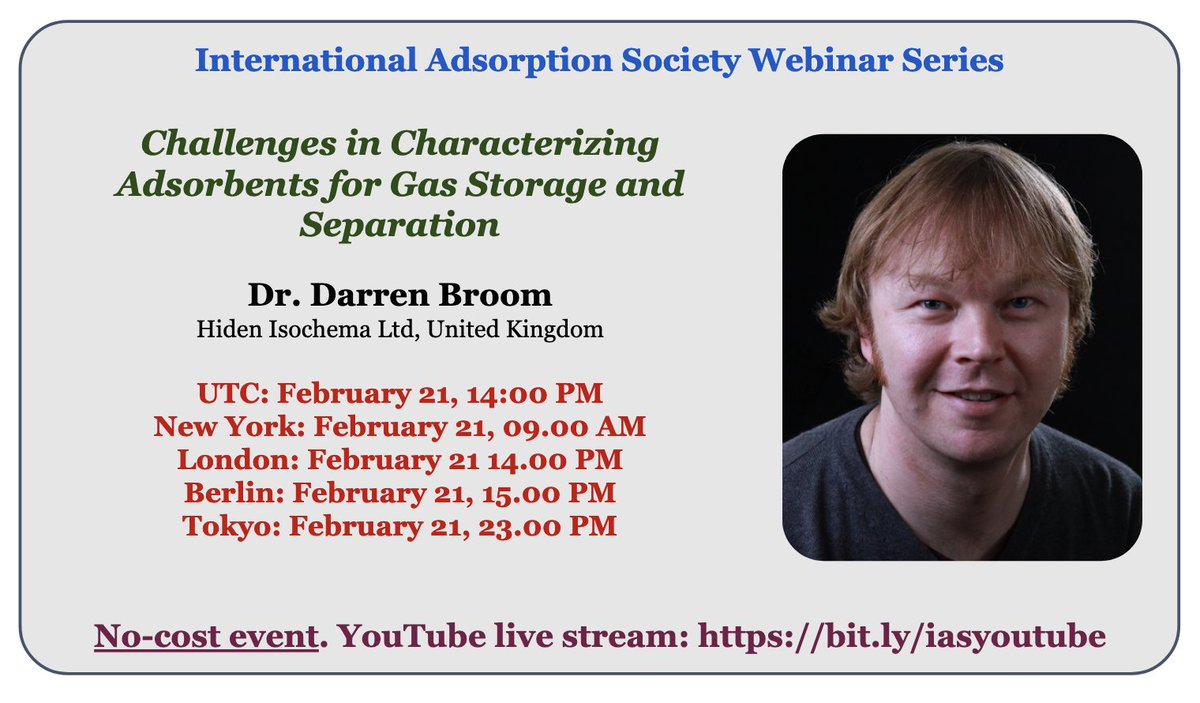
Join us for the next #IASWebinar by Darren Broom on the challenges of characterizing adsorbents for gas storage and separation. Time: Feb. 21, 1400 UTC YouTube: https://t.co/ciTHHt253m
@PuerAchaemenius@farridnejad الان منظور بریان اینه که کتاب بدیع اثری آماتوری است و یا اینکه در تایید نظر او در مورد تحریف تاریخ هخامنش�� توسط اروپاییها داره صحبت می کنه؟! 🤔 متاسفانه ترجمه گوگل خیلی کمک کننده نبود!
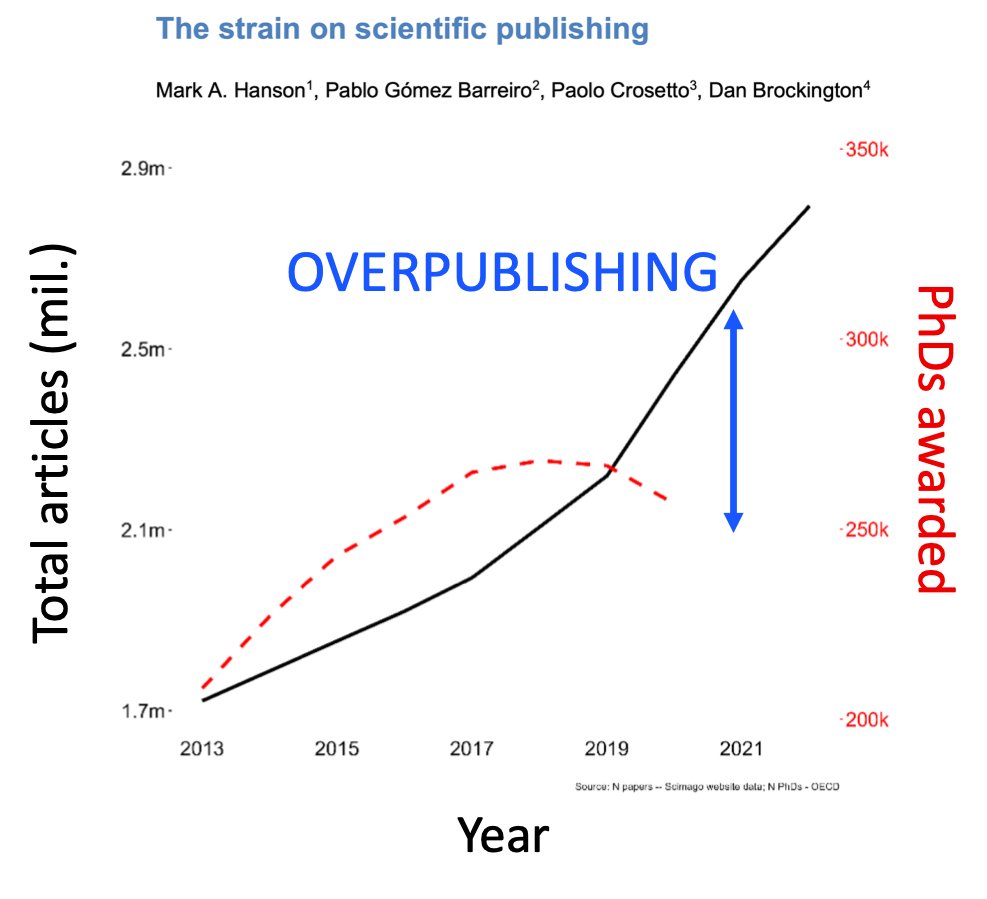
Overpublishing puts enormous stress on students and PIs.
And brings tons of money to publishers in STEM.
A new study shows that the number of papers is increasing FASTER than the number of #PhD graduates.
It’s an amazing work with very useful statistics. Huge kudos to the authors!
▫️
Main outcomes:
1️⃣ In 2022 the number of articles is 47% higher than in 2016. The amount of writing, reviewing and editing workload per scientist is increased enormously.
2️⃣ “Special issues” is a strategy for publishing lots of papers with reduced review time. This is possible due to the “publish or perish” pressure and clearly benefits the publishers.
3️⃣ The publishing time varies widely!
MDPI = 37 days. Frontiers = 72 days. Elsevier = 134 days. Springer = 157 days. Nature = 185 days.
4️⃣ The article rejection rates do not seem to correlate with publisher growth. However, rejection rates decline with increased use of special issue publishing.
5️⃣ Certain for-profit gold-open-access publishers create an increasing number of special issues, with uniquely reduced turnaround times, and in specific cases, high impact inflation and reduced rejection rates.
6️⃣ The authors suggest a new metric - Impact Inflation, which is reflected in self-citation within the same journal. For example, MDPI has a high impact inflation due to excessive self-citation compared to other publishers.
Conclusions and my opinion:
- Scientists have to spend a lot more time on reviewing and writing than before (on average).
- The more papers are published, the more the quality is compromised.
- Scientific progress has become partially bound to the business models of publishers and their revenue (a sad reality today).
- There is a huge lack of transparency. Much of these data had to be ‘web-scraped’ from numerous sources in order to get a full picture. We clearly need regulators to mandate open access to publisher’s statistics.
- Reduce the number of special issues! Those typically have low standards.
▫️
Science, publishing and funding make a trio that is very hard to disentangle.
However, research quality is controlled by the community.
This is why preprint + community review can make a big difference.
#AcademicTwitter #AcademicChatter
If you are lucky enough to be at @Euromof2023#EuroMOF2023, check out poster by Conor Cleeton (P202) on why computational ranking of materials should be taken with a very serious pinch of salt :) Together with IBM @IBM, @IBMResearch