As part of the “India Responsible Capital Conference” (#IRCC2024) track, co-located with #IMRC2024, Prof Anish Sugathan and Prof Neerav Nagar of @CESGR_IIMA invite you to share your research submissions by July 31.
Details at: https://t.co/AT1VA7lBjq
https://t.co/GKCL8DdCZM
Cricket. Business. Politics.
IIMA's MBA Class of 1985 has to its credit a distinguished sports commentator (Harsha Bhogle), a woman billionaire (Falguni Nayar) and now a Lok Sabha Parliamentarian- Shri. Krishna Prasad Tenneti.
https://t.co/Br0GhLM9o9
#Theni dt is combination of many things from diverse agri crop farms, hills, forest, rivers..etc. It has 1080sqkm(38% of dt area) of farm land & 1183sqkm(42%) forest. With Cumbum & Varushanadu valley makes is one of the scenic dt in TN. Theni leads in agriculture productivity 1/4
Yesterday’s column on the sensational case of The New York Times v Microsoft and Open AI, which pitches copyright v AI. Is it ‘fair use’ to ‘ingest’ NY Times reportage for ChatGPT? #AI#OpenAI#Microsoft#NYTimes@IndianExpress
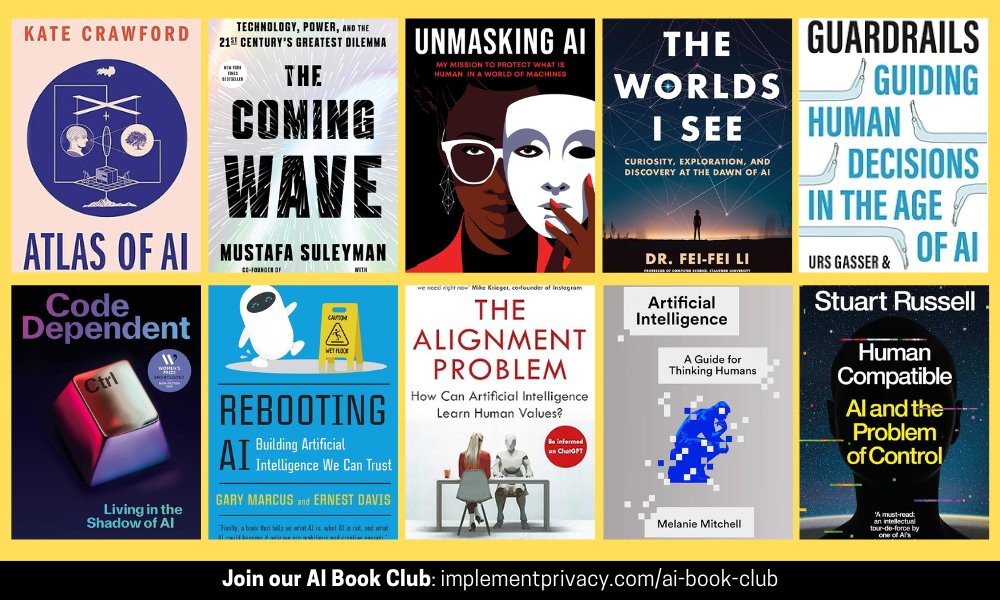
📚If you are overwhelmed by the amount of AI-related information, these are some of the most interesting books on the topic published in the last few years:
➵ Atlas of AI, by @katecrawford
➵ The Coming Wave, by @mustafasuleyman & @michaelbhaskar
➵ Unmasking AI, by @jovialjoy
➵ The Worlds I See, by @drfeifei
➵ Guardrails, by @ugasser & @Viktor_MS
➵ Code Dependent, by @madhumita29
➵ Rebooting AI, by @GaryMarcus & Ernest Davis
➵ The Alignment Problem, by @brianchristian
➵ Artificial Intelligence: A Guide for Thinking Humans, by @MelMitchell1
➵ Human Compatible, by Stuart Russell
➡️Are you an avid reader, interested in discussing AI-related books? Join our AI Book Club!
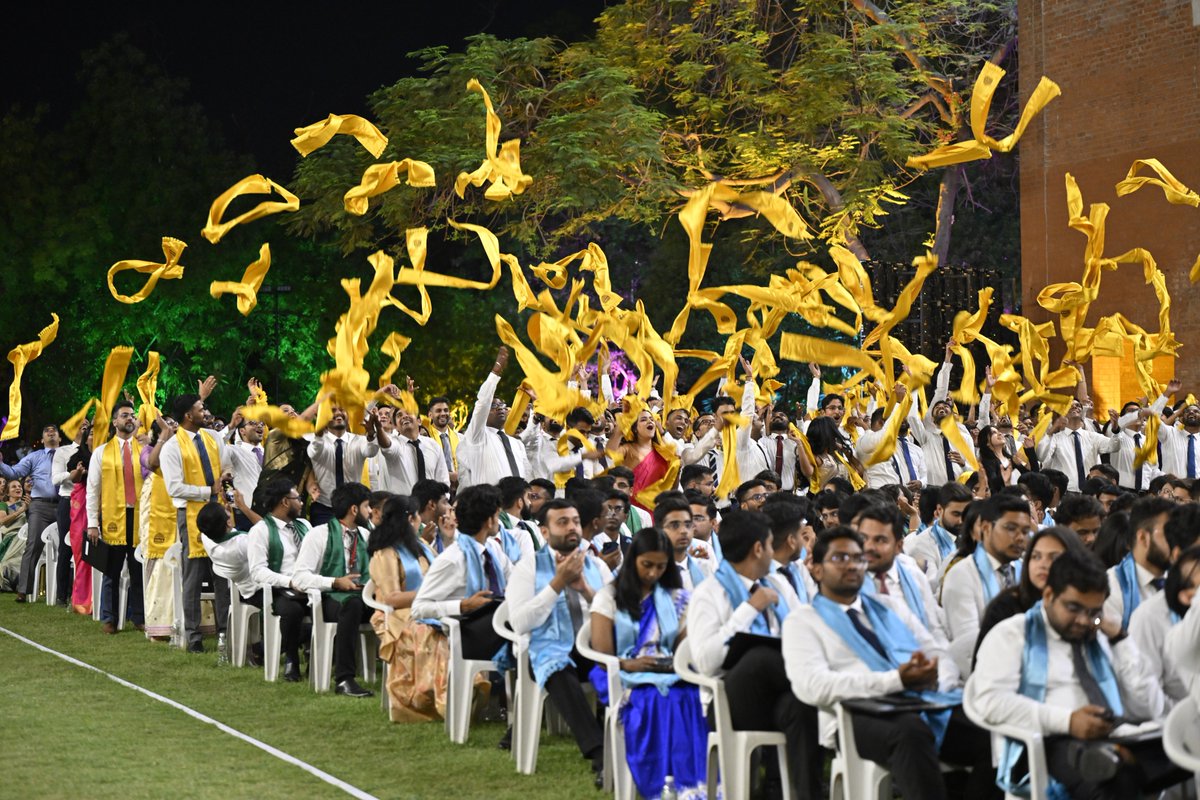
The 59th Convocation ceremony of #IIMA held this evening saw a total of 610 students from various programmes walk proudly to the stage to receive their degrees. Ms Madhabi Puri Buch, Chairperson, SEBI and an esteemed alumna of IIMA, graced the occasion as the Chief Guest.
🚨 BREAKING: The UN General Assembly adopted the first global resolution on AI. Important points below:
➡️ A first important aspect of this resolution is that the UN recognizes that AI can help accelerate the achievement of the 17 Sustainable Development Goals, and it stresses the urgency of "achieving global consensus on safe, secure, and trustworthy artificial intelligence systems." Below are 17 Sustainable Development Goals:
1. No poverty
2. Zero hunger
3. Good health and well-being
4. Quality Education
5. Gender equality
6. Clean water and sanitation
7. Affordable and clean energy
8. Decent work and economic growth
9. Industry, innovation and infrastructure
10. Reduced inequalities
11. Sustainable cities and economies
12. Responsible consumption and production
13. Climate action
14. Life below water
15. Life on land
16. Peace, justice and strong institutions
17. Partnership for the goals
-
➡️ On page 3 of the resolution, the UN recognizes possible downsides of the use of AI "without adequate safeguards or in a manner inconsistent with international law," for example:
➵ "hinder progress towards the achievement of the 2030 Agenda for Sustainable Development and its Sustainable Development Goals and undermine sustainable development in its three dimensions – economic, social, and environmental;
➵ widen digital divides between and within countries;
➵ reinforce structural inequalities and biases;
➵ lead to discrimination;
➵ undermine information integrity and access to information;
➵ undercut the protection, promotion, and enjoyment of human rights and fundamental freedoms, including the right not to be subject to unlawful or arbitrary interference with one’s privacy;
➵ increase the potential risk for accidents and compound threats from malicious actors"
-
➡️ It also encourages Member States to enact AI regulation and AI policies on various topics, including privacy. They mention:
"Safeguarding privacy and the protection of personal data when testing and evaluating systems, and for transparency and reporting requirements in compliance with applicable international, national and subnational legal frameworks, including on the use of personal data throughout the life cycle of artificial intelligence systems"
-
➡️ Overall, it's an interesting summary of a global perspective on the meaning of “safe, secure, and trustworthy” AI.
➡️ To learn more about AI policy and regulation: subscribe to my weekly newsletter.
Breaking barriers and achieving new milestones, Tarun Kumar Vashisth, a PhD graduate from #IIMA, is all set to make history. A visually impaired since birth, Tarun will soon join @IIMBodhGaya as an assistant professor.
Read the full story: https://t.co/KrzFPWtrRo
#IIMAInNews
⛔ Say NO to sharenting: protect children's privacy. In the age of AI deepfakes, the harm can be amplified. READ THIS:
If you have kids (or take care of kids), it is a bad idea to document their lives on social media. This behavior is called sharenting, and it can have negative consequences for the child.
Most adults don't realize they are sharing their child's pictures online to get the dopamine hit that comes with likes, comments & shares. There is no positive outcome for the child to be seen by the parent's online connections (or strangers).
There is also the problem of the lack of agreement, as children are sometimes too small to understand what is going on, and even when they can understand and tell their parents how they feel about it, they are frequently not consulted by the parent (who just goes, takes a picture and posts it).
It is possible that a few years from now, the child will be very unhappy to discover that so many private moments were shared online by the parent. This is already happening, and some are suing the parents, as the first generation of children born in the social media age is now turning 18 and discovering that their private lives were used to get publicity and social validation for the parents.
I do not think that most parents have bad intentions. We, the parents, are from a different generation, and what we find acceptable & cute, they might see as wrong & inexcusable.
Whatever is uploaded online, even only “for friends,” has the potential to circulate forever. It takes only a screenshot or re-upload.
There are serious privacy and security issues involved in sharing anything about a child or teenager online, including identity fraud, exposing the child to predators, and cyberbullying.
Depending on the age of the child, there could emerge mental health, and trust issues with a parent or caretaker who cannot respect the child’s boundaries and personal wishes.
In the context of the current generative AI wave and the spread of AI deepfakes, the potential harm is amplified: malicious actors will attempt to exploit children by producing explicit imagery with their faces (such as what happened recently with Taylor Swift). The potential psychological & physical harm is real, and parents and caregivers should be aware and cautious.
➳ Alternatives to sharenting:
- if you want to connect with relatives and close friends, why not send the picture or video privately using a secure channel?
- if you want to talk about parenthood online, why not do so without exposing the child?
➳ Best solutions:
- why not enjoy being with the child without posting anything? They will love it.
- the world will remain the same if you do not post any child's pictures online. If you really need to post something, post a selfie of yourself.
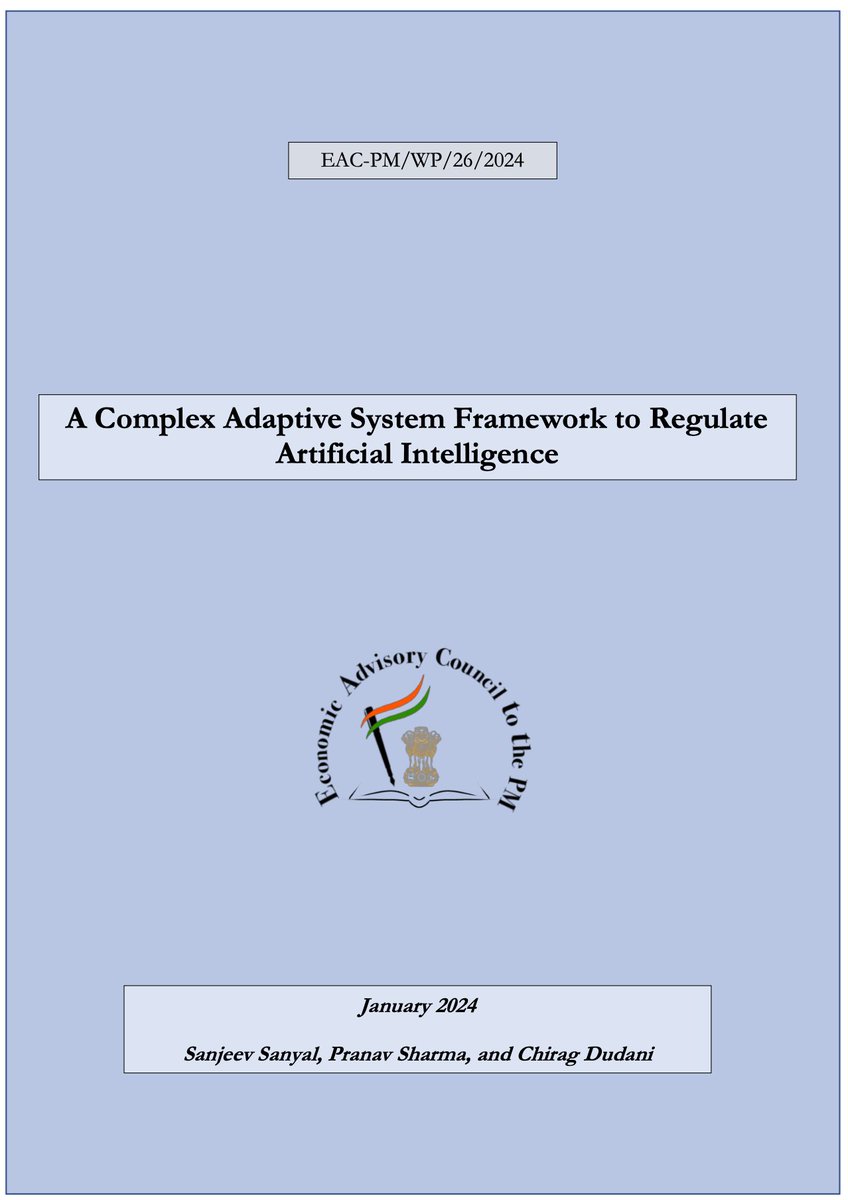
AI offers benefits but could also pose significant risks - "AI systems bring potential dangers, such as the prospect of "runaway AI" where systems recursively self-improve beyond human control." @SanjeevSanyal, Pranav Sharma & Chirag Dudani write. 1/8 https://t.co/hxZJMb2J20
We are hiring.
Centre for Trade and Investment Law is hiring highly motivated lawyers to join the exciting position of Associate, Young Professional and Research Associate. Candidates may apply on or before 27 Sept. 2023.
Click here for more information: https://t.co/3L5tcTBFbC
Chandrayaan-3 Mission:
'India🇮🇳,
I reached my destination
and you too!'
: Chandrayaan-3
Chandrayaan-3 has successfully
soft-landed on the moon 🌖!.
Congratulations, India🇮🇳!
#Chandrayaan_3#Ch3
Is the world without ISDS, a world with(out) justice? -> give in to our provocation and submit your abstract for our #SAIL conference @ErasmusESL / November 23-24. More info on details and submission here: https://t.co/FoaSFWuWKp
Delighted to share that Makkalin Arasaimaippu Sattam, the Tamil translation of A People's Constitution is available. Grateful to Prof Vincen, Ethir Veleyeedu and @kan_writersside for making this happen. (1)