Excited to announce our recent paper at @abscibio developing deep learning-based codon optimization. Using LLMs we learn natural patterns of codon usage, predict expression levels and use our models to design high expressing CDSs on proteins outside our training set. Thread (1/N)
Today, we announce a breakthrough in AI drug design: we are the first to design AND validate new therapeutic antibodies with zero-shot #generativeAI. De novo antibodies are here!
Read our preprint: https://t.co/3eI1N8FGfr
#JPM23
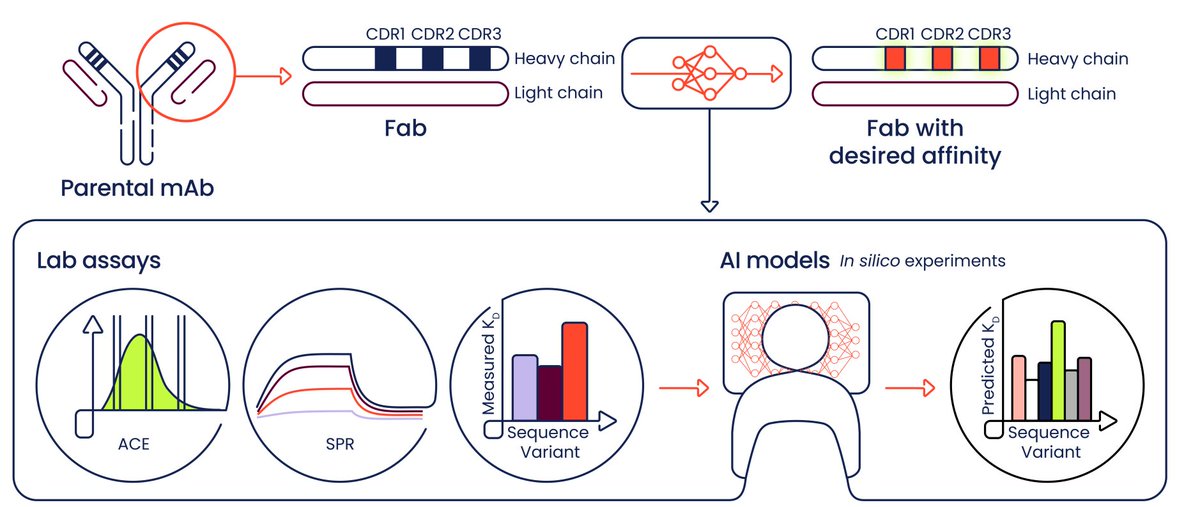
🚨We are releasing a new #manuscript highlighting how our AI-based drug discovery platform can rapidly optimize parameters critical to drug development.
🔬Wet-lab data shows that our AI-generated protein drugs exhibit their designed qualities.
Paper: https://t.co/NFUWw9y9RY
It's been exciting working with all the different teams at @abscibio to make this preprint happen. Huge shoutout to @RobSpreafico for driving this effort forward!
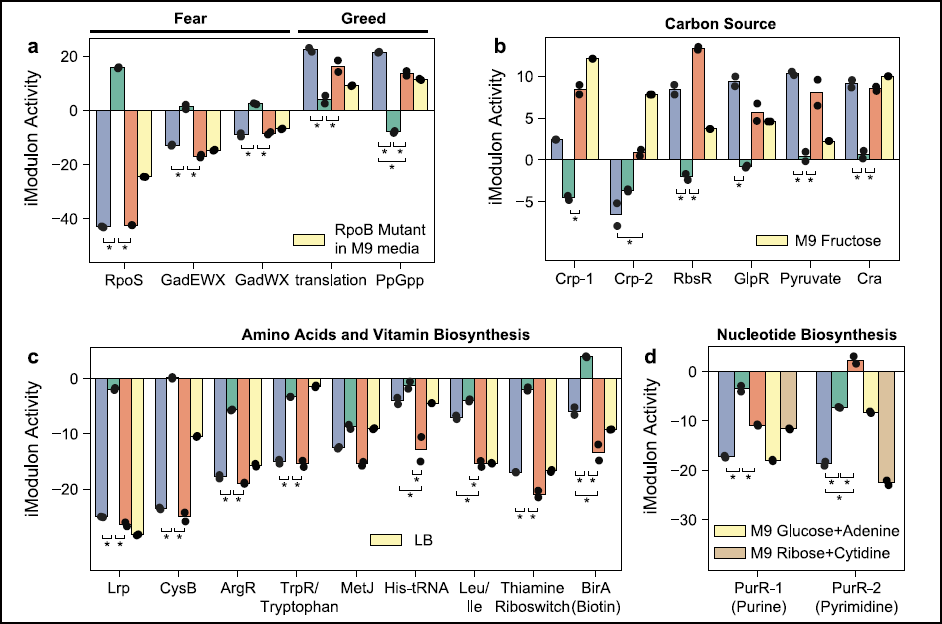
new in @mSphereJ from Anand Sastry @asastry1 Nick Dillon @Nick_Dillon_PhD we apply machine learning and iModulon analysis to bacterial RNAseq datasets to understand the roots of environment-dependent changes in antibiotic susceptibility
FEAR vs. GREED
https://t.co/DqswnktWnq
In a new publication, @asastry1 and colleagues show that a common structure underlies all E. coli gene expression datasets, and predict three novel regulons for the bacteria. https://t.co/opiSvlsXeK @DTUBiosustain
Our paper, "An evidence review of face masks against COVID-19", written by a cross-disciplinary team of 19 international experts, was published in the Proceedings of the National Academy of Sciences today.
No time for the paper? Then read this thread!
https://t.co/bx65CtkTva
Our work benchmarking joint multi-omics dimensionality reduction approaches in cancer is finally out on @NatureComms !
https://t.co/DKhOcYOoJs
Thanks to all those who contributed @BaudotAnais@CelHern
Denis Thieffry, Elisabeth Remy, Aurelien Naldi, Pooya Zakeri
.@KRychel27 and @asastry1 from @ucsd_sbrg present the systems-level regulatory structure underlying gene expression in Bacillus subtilis.
https://t.co/1fJ75FhxCN
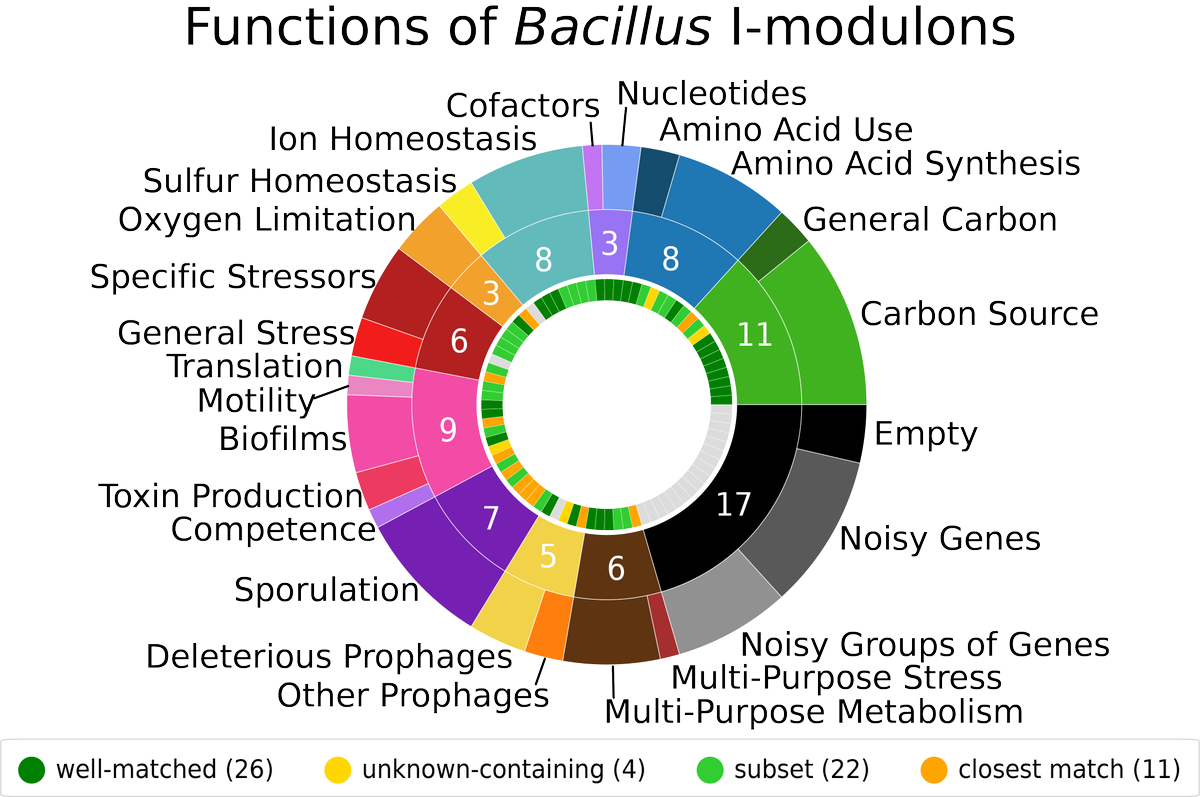
Our iModulon decomposition of Bacillus subtilis reveals evidence for 5 putative relationships between metabolic, lifestyle, and stress functions, plus a data-driven summary of sporulation. https://t.co/LHMurovnTu @DTUBiosustain@UCSDJacobs@NatureComms
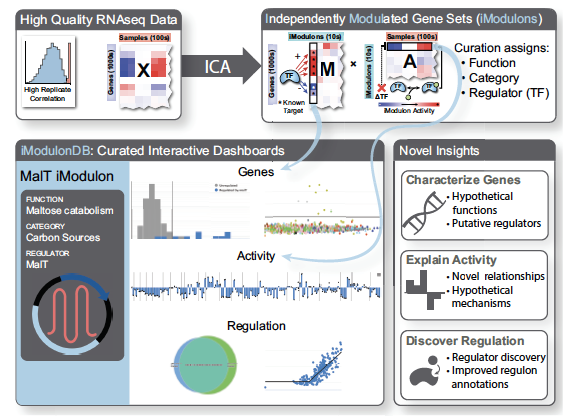
iModulonDB (https://t.co/Y7m1sVGEA2) is a new knowledgebase
of prokaryotic transcriptional regulation
computed from high-quality transcriptomic datasets
using ICA. https://t.co/yQykotiWCc @DTUBiosustain@UCSDJacobs
Exciting new postdoc opening at UCSD https://t.co/z5gtiIZdFw to analyze large amounts of diverse data re: #autism (e.g., genetics, RNA-seq, clinical data, imaging). Building off of our recent exciting work https://t.co/v0VhzfsaPo https://t.co/87cUmyG4hw
https://t.co/Nusvincbbx
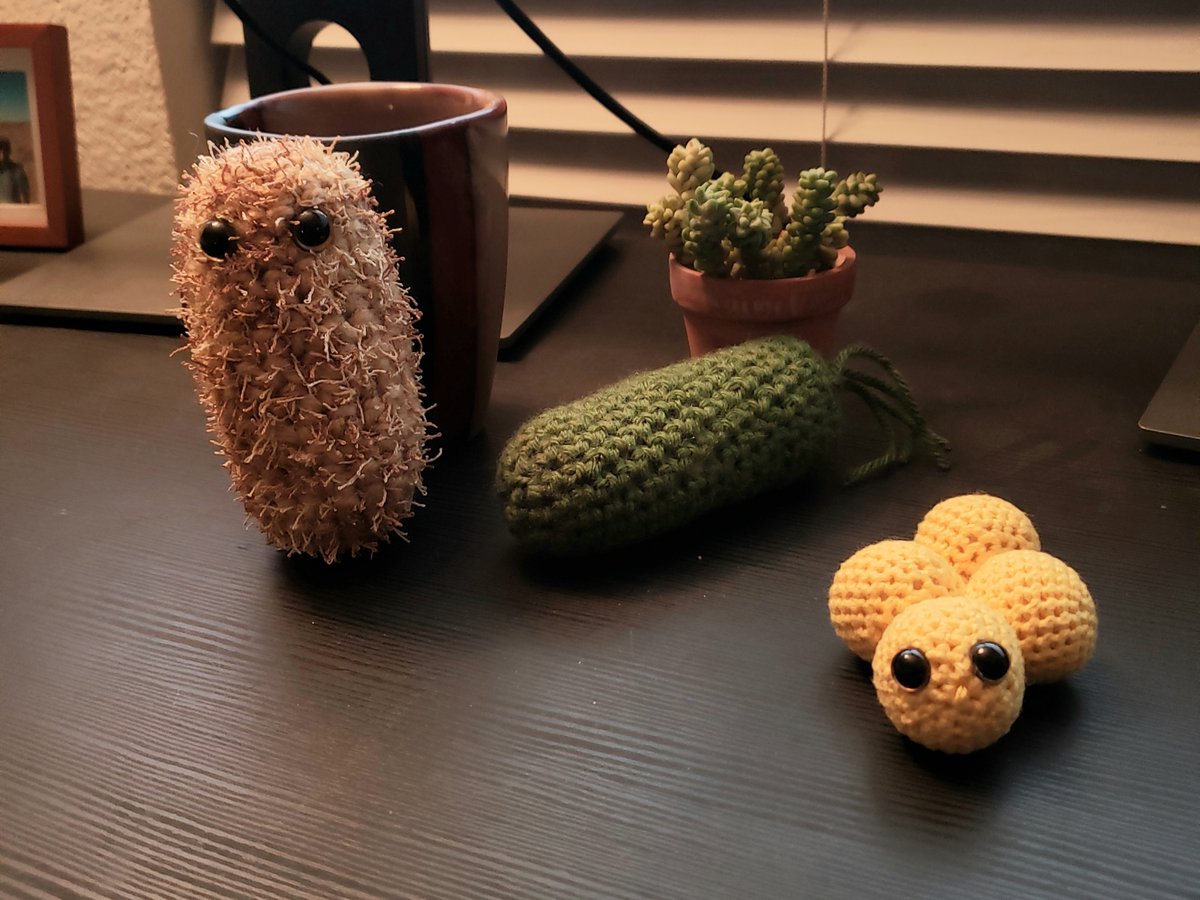
Meet my quarantine project! From left to right: Lydia the Clostridia, Colin the E. coli, and Steph aureus (aka Mrs.A). I forgot to put eyes when making the E. coli, so I guess he's technically Coln
The i-modulon structure of the Bacillus transcriptome is now available, with 63 i-modulons associated with a known transcription factor. https://t.co/Q1WCPnEb9a @biorxiv_sysbio