@olliefirth_ by "he is staying" i just think he means that teta loves the club and doesnt intend to leave unless he is asked to do so. more of a warcry rather than something to worry about i guess.
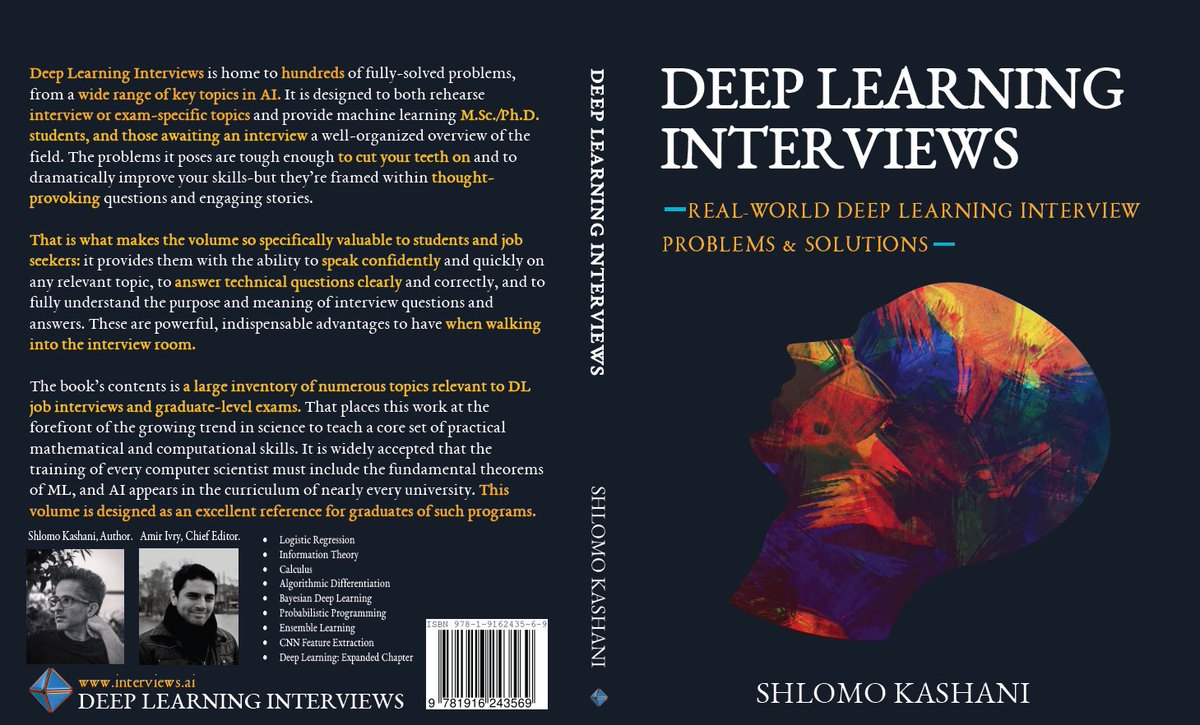
This book alone can change your ML interview game🙀
If you're serious about AI, ML, or landing top-tier roles... this book is DIFFERENT.
• Real-world deep learning interview problems
• Step-by-step solutions
• Covers ML math, probability, CNNs, Bayesian DL & more
• Designed for people who actually want to understand, not just memorize
This isn’t basic theory.
This is the kind of prep that makes you walk into interviews confident.
And I’m giving it FREE to first 4500
How to get it :
1️⃣ Follow me MUST (So i can dm you)
2️⃣ Like this post
3️⃣ Comment “DL”
4️⃣ RT to help others level up
If you’re preparing for ML interviews in 2026, this could literally change your trajectory.
No fluff. No gatekeeping.
Let’s build killers in AI. 🚀🔥
If you're preparing for interviews, apart from DSA, projects, and CS fundamentals, remember that some companies also ask puzzles. I was asked one in an SDE Intern interview, where I got rejected.
Here are some resources to help you ace such puzzles asked in interviews.
Huge computer science result:
A Tsinghua professor JUST discovered the fastest shortest path algorithm for graphs in 40yrs.
This improves on Turing award winner Tarjan’s O(m + nlogn) with Dijkstra’s, something every Computer Science student learns in college.
"Complete Maths Roadmap for Machine Learning "
There are 3 pillars for maths involved in Machine Learning -
1) Algebra
2) Probability Theory
3) Calculus
Open thread
1/3 🧵
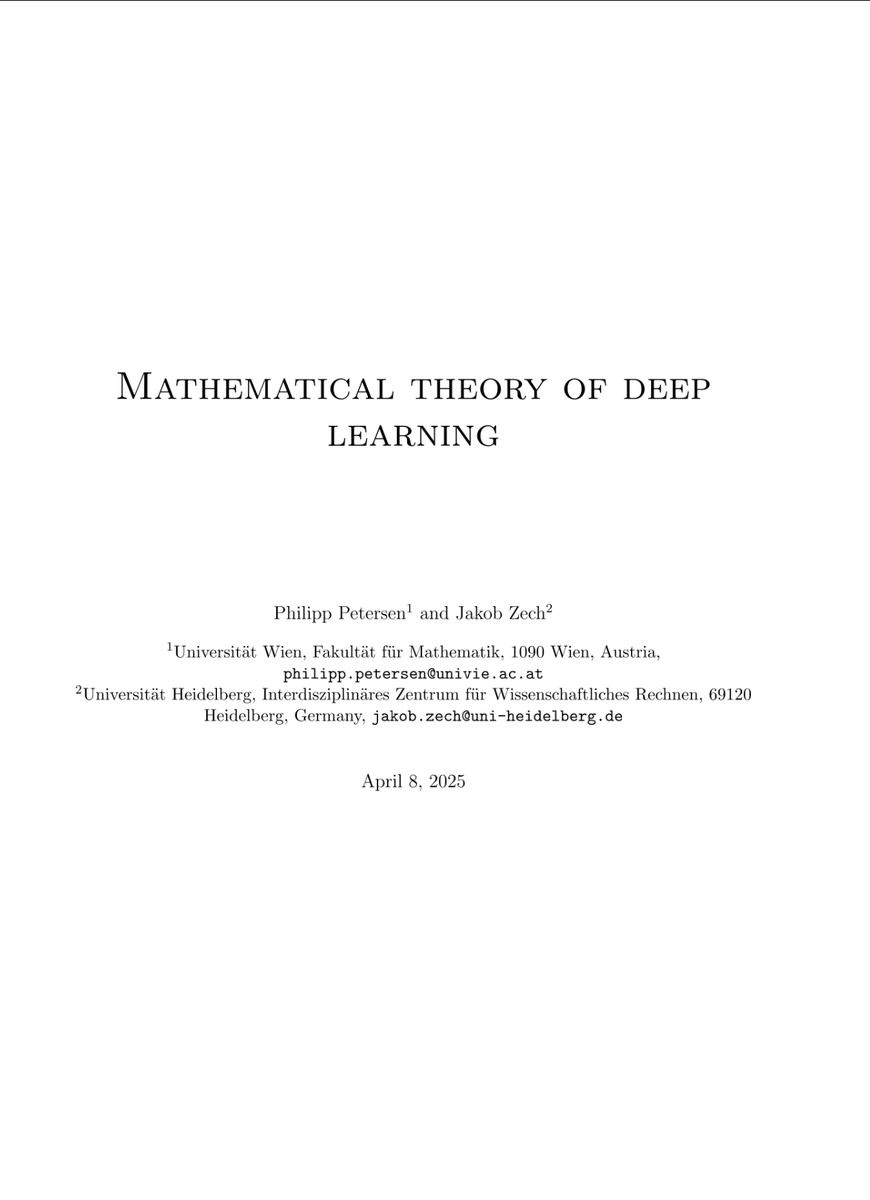
𝗠𝗮𝘁𝗵𝗲𝗺𝗮𝘁𝗶𝗰𝗮𝗹 𝗧𝗵𝗲𝗼𝗿𝘆 𝗢𝗳 𝗗𝗲𝗲𝗽 𝗟𝗲𝗮𝗿𝗻𝗶𝗻𝗴
This book will help you to build an understanding of fundamental mathematical concepts in deep learning.
𝗖𝗼𝘃𝗲𝗿𝘀:
- Foundations and Scope of Deep Learning
- Neural Network Architectures and Activation Functions
- Universal Approximation and Expressivity
- High-Dimensional Approximation Theory
- Optimization Algorithms and Training Dynamics
- Neural Tangent Kernel and Infinite-Width Limits
- Loss Landscape Geometry
- Function Space Properties of Neural Networks
- Statistical Learning and Generalization Theory
PDF attached in comment.