AI writing C++ was never the hard part. Anyone can generate 200 confident lines. The hard part is the three hours after, when you find out what it actually did.
@ByteAsk does those three hours for you. Build, test, sanitize, then you review. It’s the first AI tool that shows its work.
Your AI-built app works. But do you actually know what’s inside it? 👇
People building with Claude or Codex can ship features fast. Very few can answer “what happens when someone checks out?” or “is anything in here exposed?”
Floorplan answers both. It’s a free Claude Code and Codex plugin that reads your codebase and draws the diagram nobody drew: every part, file, endpoint and screen, each with a plain-English name.
“Takes card payments at checkout”, not “Stripe API wrapper.” One switch flips it to the developer view.
The part I like most is the built-in Health check. It catches the classic mistakes in AI-built apps:
→ API keys left in the code or sent to the browser
→ Supabase tables anyone can read
→ Firebase rules left open
→ Stripe webhooks anyone could fake
→ endpoints with no sign-in
Two commands to install. Works on monorepos and multi-repo setups. Supports TypeScript, Python, Go, Rust, Java and more.
🔗 https://t.co/nGKmPyAl9d
Just found out you can take a screenshot of a tweet directly from the share menu.
I mean, people don't need any bot for that now. 😂 They should stop tagging them from now on.
Your AI-built app works. But do you actually know what’s inside it? 👇
People building with Claude or Codex can ship features fast. Very few can answer “what happens when someone checks out?” or “is anything in here exposed?”
Floorplan answers both. It’s a free Claude Code and Codex plugin that reads your codebase and draws the diagram nobody drew: every part, file, endpoint and screen, each with a plain-English name.
“Takes card payments at checkout”, not “Stripe API wrapper.” One switch flips it to the developer view.
The part I like most is the built-in Health check. It catches the classic mistakes in AI-built apps:
→ API keys left in the code or sent to the browser
→ Supabase tables anyone can read
→ Firebase rules left open
→ Stripe webhooks anyone could fake
→ endpoints with no sign-in
Two commands to install. Works on monorepos and multi-repo setups. Supports TypeScript, Python, Go, Rust, Java and more.
🔗 https://t.co/nGKmPyAl9d
𝘃𝗟𝗟𝗠 𝘃𝘀 𝗦𝗚𝗟𝗮𝗻𝗴
If you’re self-hosting an LLM, you will hit this choice sooner or later.
vLLM or SGLang?
Both are open source. Both batch requests on the fly, cache memory, and give you an OpenAI-style API. On paper they look almost the same. The difference is in what each one cares about most.
vLLM started with PagedAttention. It splits the model’s memory into small blocks and places them anywhere on the GPU, so very little space goes to waste. Over time it has grown into the safe, broad choice: lots of models, lots of hardware, many LoRA adapters, and the biggest community.
SGLang started with RadixAttention. It keeps past requests in a tree. When a new request shares the same start, like the same system prompt or the same chat history, it reuses that work and only computes what is new. That makes a real difference for chat apps, agents, and RAG, where many requests begin the same way.
So my simple rule:
Lots of repeated prompts and multi-step flows? Try SGLang. Need wide model and hardware support with less friction? Start with vLLM.
And please don’t pick based on someone else’s benchmark chart. Both take one command to start. Run your own traffic through both and look at your own numbers.
I made this visual to break down the differences side by side.
AI writing C++ was never the hard part. Anyone can generate 200 confident lines. The hard part is the three hours after, when you find out what it actually did.
@ByteAsk does those three hours for you. Build, test, sanitize, then you review. It’s the first AI tool that shows its work.
Introducing @ByteAsk
Your AI C++ engineer, and a swarm of them
> SOTA on multi SWE bench (C/C++)
> 60% fewer tokens wrt cc/codex
> auto debug/perf/optimize/test with native C/C++ tools
Free plan. Open Source.
https://t.co/FhvdqMcdtp
𝗞𝗩 𝗖𝗮𝗰𝗵𝗶𝗻𝗴 𝗘𝘅𝗽𝗹𝗮𝗶𝗻𝗲𝗱
Ever wondered how LLMs remember thousands of tokens without processing everything from scratch every time?
That's where KV Caching comes in.
When an LLM generates a response, it doesn't need to recompute the Key and Value representations of all previous tokens at every step.
Instead, it stores them in a cache and reuses them while generating the next token.
Sounds simple, but this makes a huge difference in inference speed and computational efficiency.
Here's what happens:
- During prefill, the model processes the prompt and stores the Keys and Values.
- During decoding, it computes Q, K and V only for the new token.
- The new K and V are added to the existing cache.
- Previous KV values are reused instead of being recomputed.
But there's one important thing to understand: KV Caching doesn't eliminate attention over previous tokens. It eliminates the need to recompute their Keys and Values.
As context grows, KV cache memory can become a major bottleneck.
That's why techniques like:
- MQA (Multi-Query Attention)
- GQA (Grouped-Query Attention)
- PagedAttention
- Prefix Caching
play an important role in making LLM inference more efficient.
Understanding KV Caching is essential if you're learning how LLM inference actually works or building systems that serve LLMs at scale.
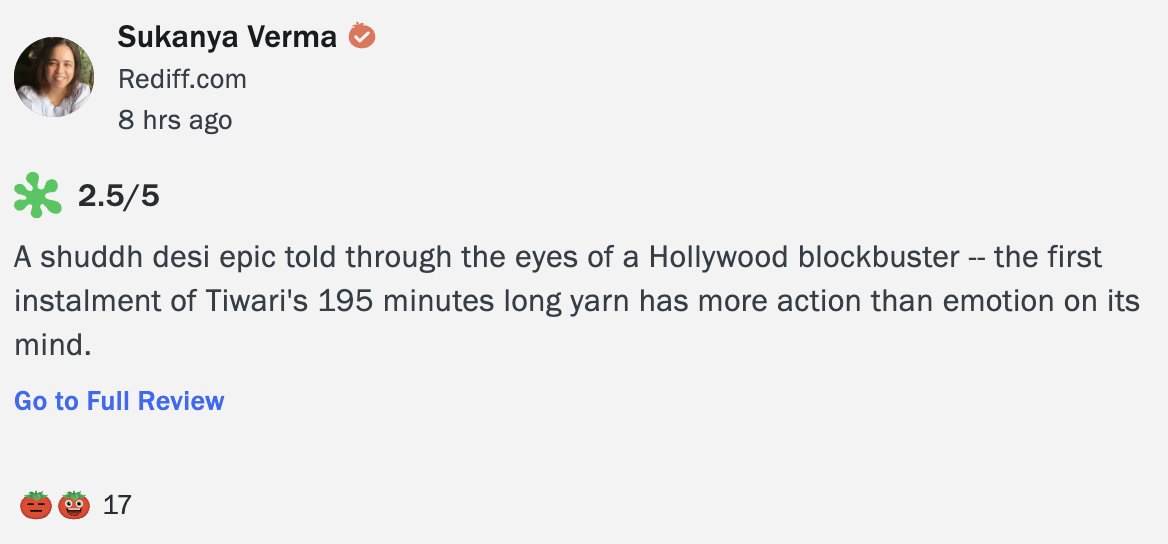
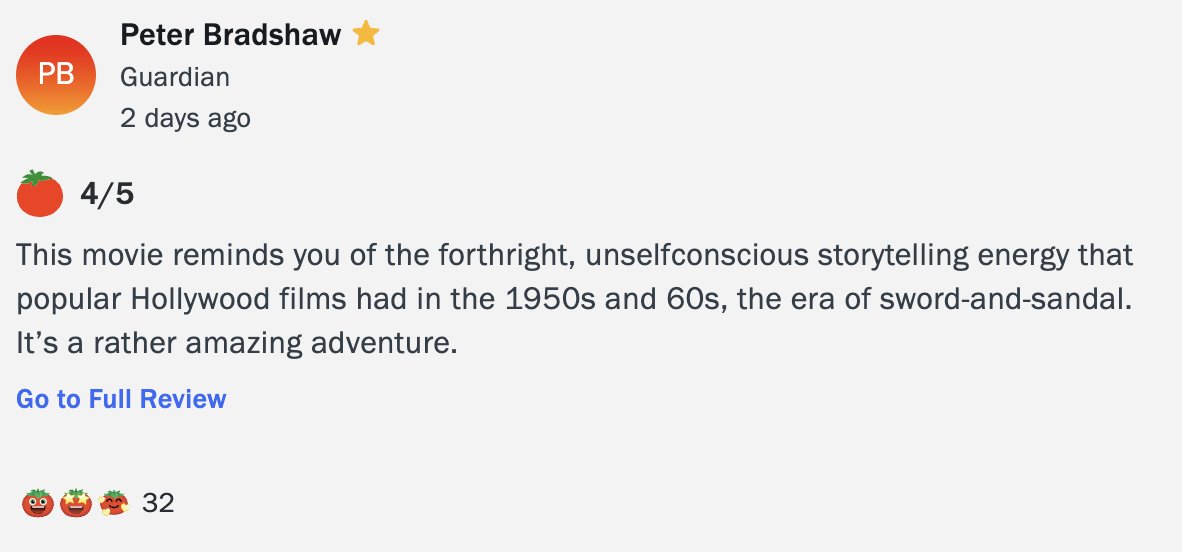
Ramayana-Rise Of Legend ⭐️⭐️⭐️⭐️
Ramayana is a story almost every Indian already knows. But honestly, people should have gone to watch the movie for its cinematic experience and spectacle rather than sitting around looking for the smallest possible mistakes.
Mostly I am talking about Indians here. Because I am seeing more appreciation from outsiders than Indians now. The movie is really nice. It's superb visually. The story still remains the same, almost what I have been hearing from childhood.
The most negative feedback seems to be coming from Indians themselves. Either it's fanbases of competing actors trying to ensure the film doesn't cross their favourite actor's box office collections, without even watching it, or people like KRK, who seem more interested in spreading hatred than having an actual understanding of cinema.
I genuinely don't think most Indian critics understand VFX at the level required to judge a film like this. Some do, of course, but even then, there's a clear bias.
The same people who have delivered Oscar-winning VFX work 8 times are now being questioned for their work on Ramayana, while nobody seems to have had the same level of criticism for Dune.
Guys, seriously, Dune and Ramayana operate in completely different cinematic spaces. You cannot judge both with the same expectations.
Criticism is absolutely fine. But at least watch the film, understand the craft, and then talk about it. Don't let fan wars, personal biases, or hatred decide how you judge someone's work.
Go watch the movie. It's a nicely made movie. All actors did their job really well.
Thanks vivek. The whole team delivered well. Kudos to Namit for picking up this project even after knowing the story is very sentiment to people and can backfire.
Tremendous job, Indian cinema needs more movies like this. We need this universe to expand. Hopefully the Hamuan movie is soon. 🤞
Ramayana-Rise Of Legend ⭐️⭐️⭐️⭐️
Ramayana is a story almost every Indian already knows. But honestly, people should have gone to watch the movie for its cinematic experience and spectacle rather than sitting around looking for the smallest possible mistakes.
Mostly I am talking about Indians here. Because I am seeing more appreciation from outsiders than Indians now. The movie is really nice. It's superb visually. The story still remains the same, almost what I have been hearing from childhood.
The most negative feedback seems to be coming from Indians themselves. Either it's fanbases of competing actors trying to ensure the film doesn't cross their favourite actor's box office collections, without even watching it, or people like KRK, who seem more interested in spreading hatred than having an actual understanding of cinema.
I genuinely don't think most Indian critics understand VFX at the level required to judge a film like this. Some do, of course, but even then, there's a clear bias.
The same people who have delivered Oscar-winning VFX work 8 times are now being questioned for their work on Ramayana, while nobody seems to have had the same level of criticism for Dune.
Guys, seriously, Dune and Ramayana operate in completely different cinematic spaces. You cannot judge both with the same expectations.
Criticism is absolutely fine. But at least watch the film, understand the craft, and then talk about it. Don't let fan wars, personal biases, or hatred decide how you judge someone's work.
Go watch the movie. It's a nicely made movie. All actors did their job really well.