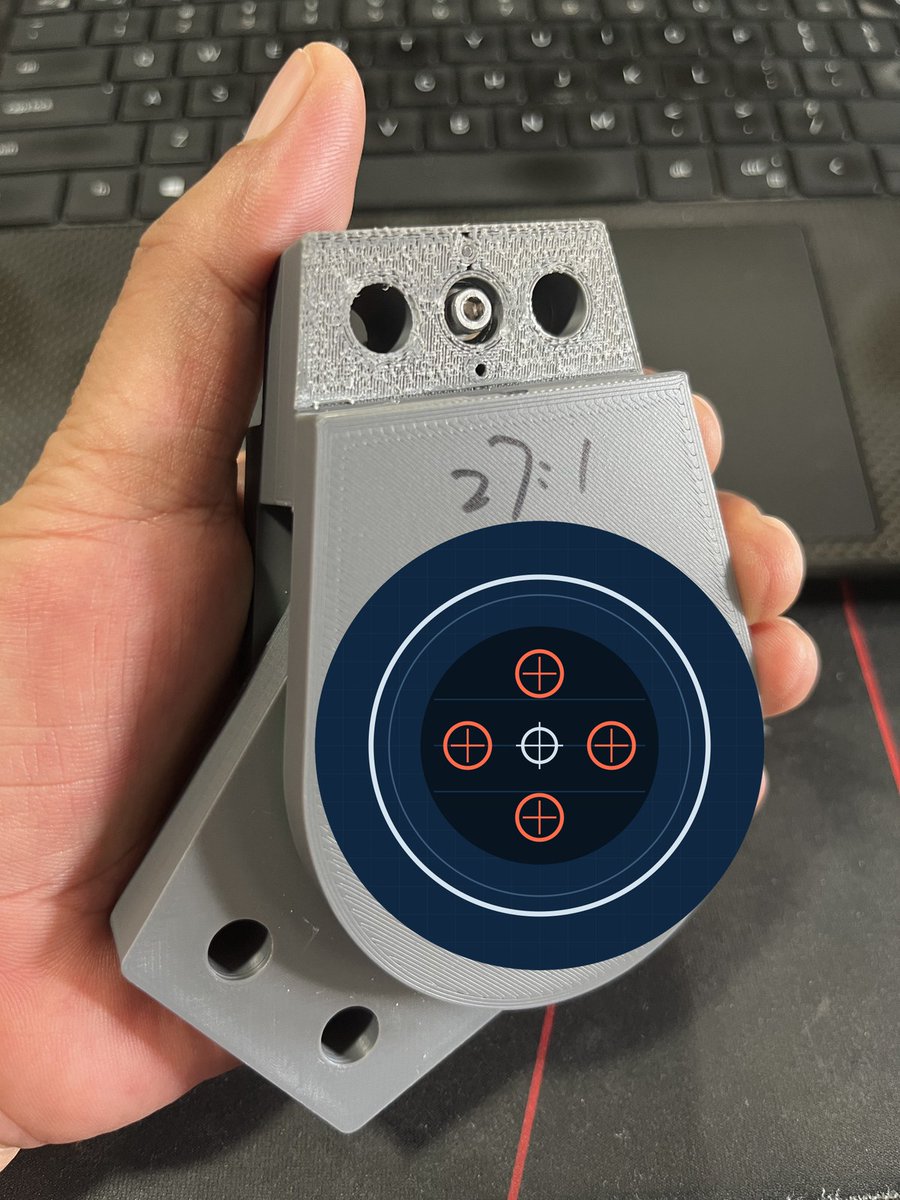
A new planetary gearbox: carrierless, bearingless, single-stage 25-40:1 class, designed for full size humanoid robot with 20kg payload. Building in public. 🌞
No planet carrier. No ball bearings. No cross-roller bearings.
The output is fully supported anyway.
Single-stage 27:1 - and the raw 3D print already backdrives by hand.
Build it in public, for the load-bearing joints of full-size humanoids.
Multi-stage planetary is today's default, and a reasonable one: cheap, tolerant, backdrivable at modest ratio.
The catch is ratio. One stage runs out near 8-10:1; the joint wants 25-40:1. Stacking a second doubles the parts and erodes the backdrivability.
Harmonic, RV/cycloidal, and multi-stage planetary reducers dominate industrial robots.
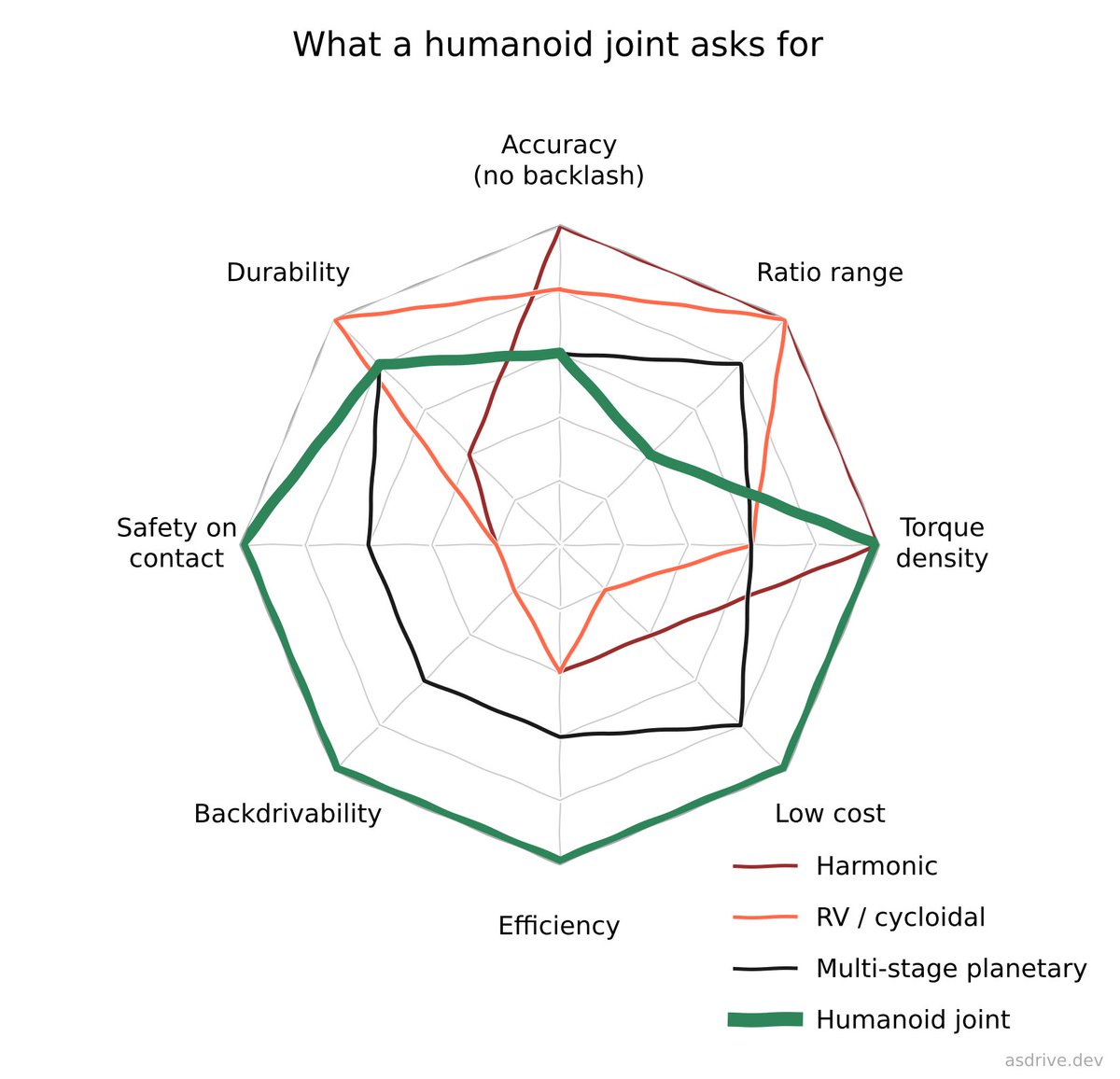
Plot them against what a humanoid joint actually demands (green) and none of them covers it.
Harmonic drives excel at precision and packaging: zero backlash, 50:1 and up in a thin, light unit.
But the gear train works by flexing a steel cup — and that costs both efficiency and durability.
Harmonic. RV. Multi-stage planetary. The three gearboxes that run industrial robots.
Plot them against what a humanoid joint actually demands (green) and none of them covers it.
Five axes where the joint asks for everything. The incumbents reach full marks on one.
@realgalleryx Right framing. One addition: walking joints absorb energy every footfall — a reducer that can't pass force backward pays in heat and battery.
https://t.co/VTu1dvLrmh
A humanoid demo needs to survive three minutes on stage. A product needs to survive a shift.
It is usually called a motor problem. Mostly it isn't.
Battery. Heat. Payload. Durability. Safety. Cost. Trace each to its bottleneck — they all end at the same component: the gearbox.