#LLMs for coding face the same skepticism as #ORMs for #SQL did in 2010. 😏
Seriously, go back 15 years on the Wayback Machine and you’ll see endless arguments and flame wars about how it was just “crazy” to expect the #Django or #RubyOnRails Object-Relational Mappers (ORM) to generate optimal SQL migrations and queries! 🧐
People would write long essays on the importance of understanding and hand-tuning every line of SQL in your codebase! Though, I can’t recall the last time that was important for teams outside of Big Tech—in which case, such scaling concerns are typically handled for you by the custom, internal infrastructure/frameworks you use at those companies. 🤓
And while it’s true that startups like @instagram and @YouVersion eventually had to worry about such scaling problems, a sea successful startups with less traffic sailed to success solely on backs of these frameworks! 🤩
Additionally, what we’re quick to dismiss as vibe-coded, “AI slop” is usually at least 80% right from the start, follows best practices if prompted half-decently, and always remembers the important accessibility features that humans forget. 😅
While LLMs are incapable of truly understanding the code they generate, they’re remarkably good “power tools” that expedite the tedium of typing, and allow us to deliver more finished features per month to our users than before—and that’s really all that matters. 😁
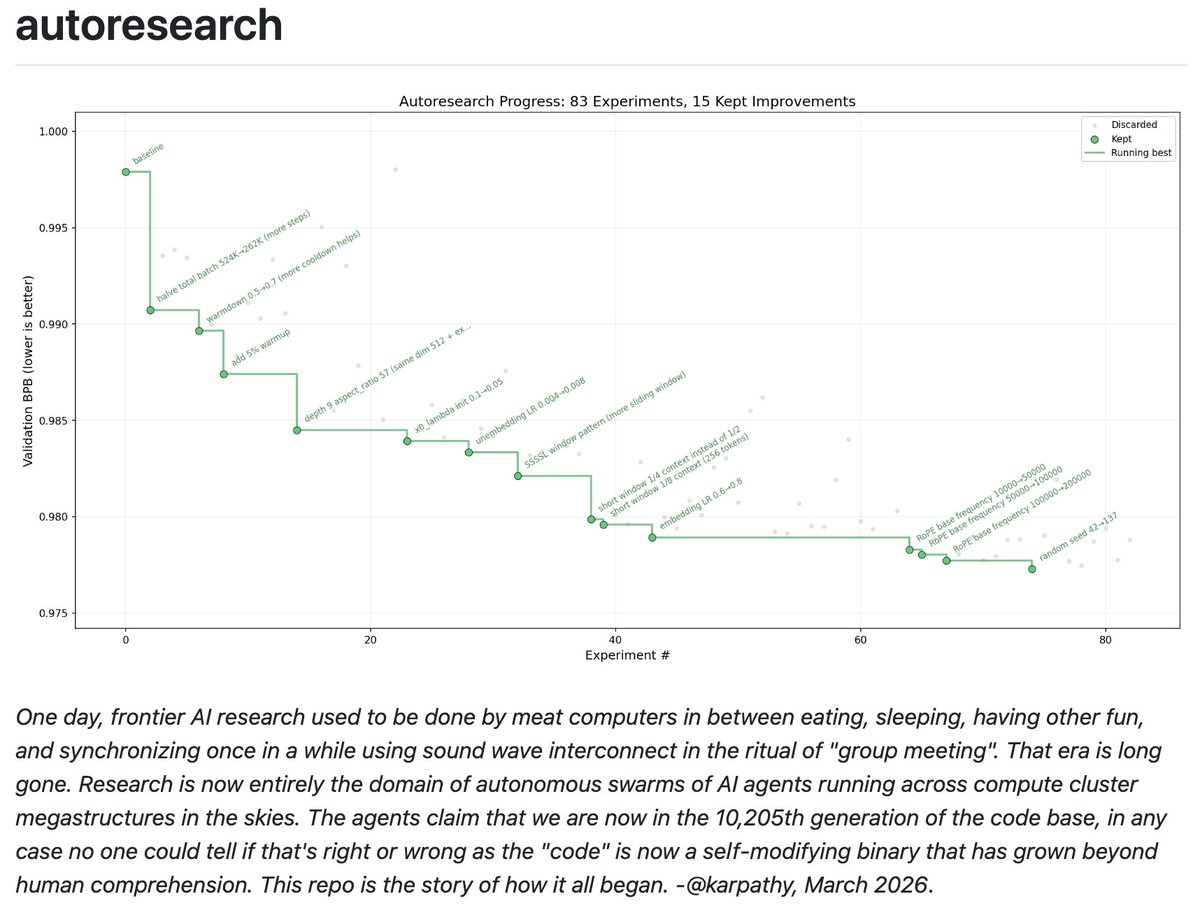
I packaged up the "autoresearch" project into a new self-contained minimal repo if people would like to play over the weekend. It's basically nanochat LLM training core stripped down to a single-GPU, one file version of ~630 lines of code, then:
- the human iterates on the prompt (.md)
- the AI agent iterates on the training code (.py)
The goal is to engineer your agents to make the fastest research progress indefinitely and without any of your own involvement. In the image, every dot is a complete LLM training run that lasts exactly 5 minutes. The agent works in an autonomous loop on a git feature branch and accumulates git commits to the training script as it finds better settings (of lower validation loss by the end) of the neural network architecture, the optimizer, all the hyperparameters, etc. You can imagine comparing the research progress of different prompts, different agents, etc.
https://t.co/YCvOwwjOzF
Part code, part sci-fi, and a pinch of psychosis :)
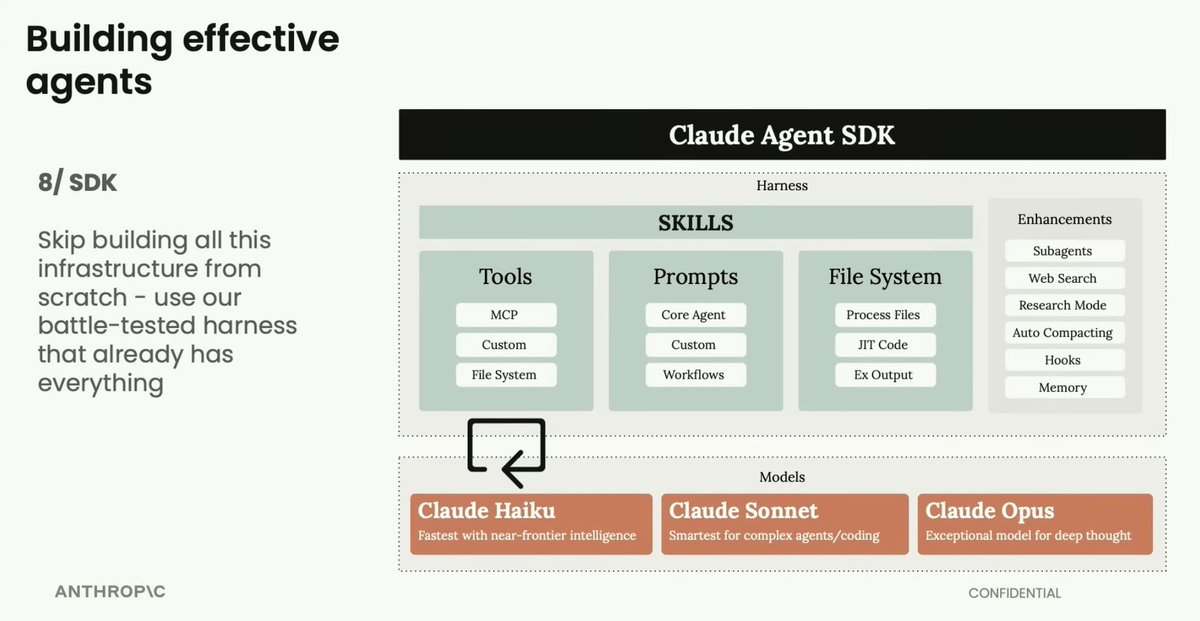
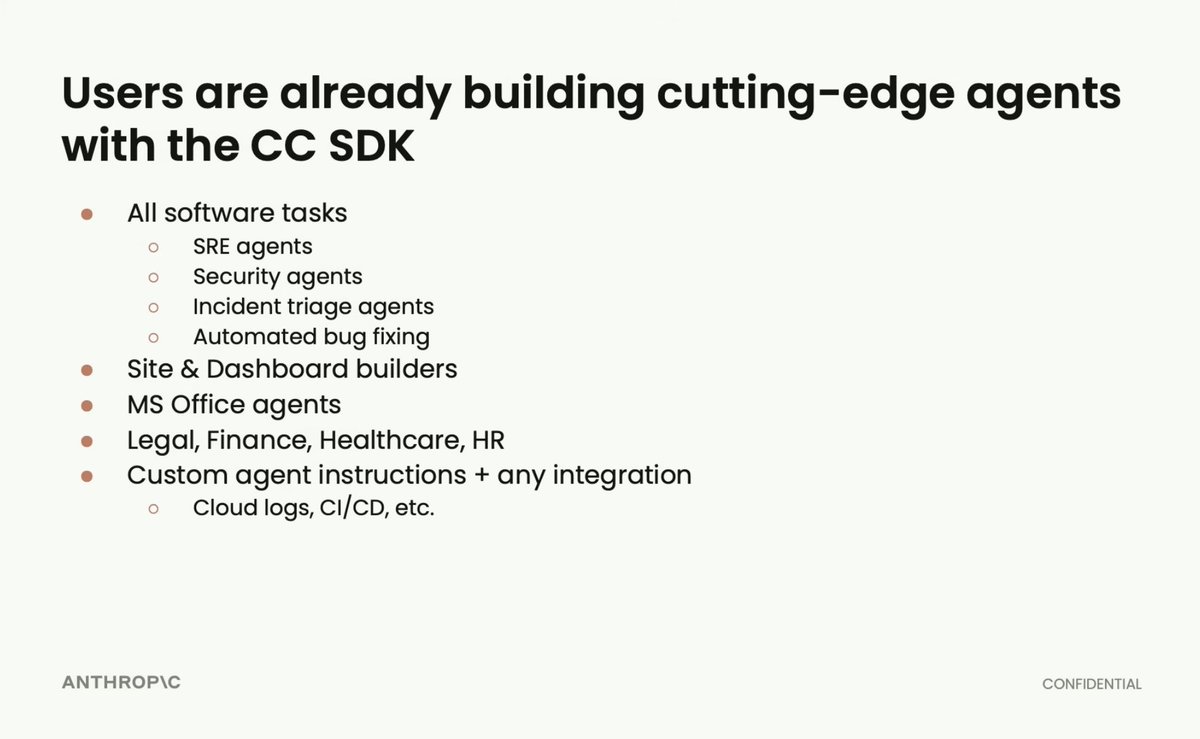
.@AnthropicAI’s #Claude#Agent#SDK might be the “#React/#Nextjs for #LLMs.”
Much like @Google’s Agent Development Kit, it’s the “batteries-included” approach to building #agentic apps.
And like an @Apple product, Anthropic says that “it just works,” and I’m starting to think that they’re right.
It’s reminiscent of how the #Django, #jQuery, #Bootstrap and #Ruby on #Rails #web #frameworks helped to unleash the creativity of the Web 2.0 era by abstracting away many the annoyances of #JavaScript, #CSS and #SQL #databases (see also: @instagram).
Then everyone got excited about #iOS and @Android apps, but that was soon balanced by the annoyances of maintaining multiple versions of #mobile #apps in the wild.
So that brought us back to #Angular, #Vue, #React, #Nextjs, #Nuxtjs, #Svelte and #SvelteKit alongside #Babel, #Webpack and #Rollup.
Then some folks tried to build everything on the #blockchain, for better or for worse. I’m personally getting *mildly* bullish about #Bitcoin since the institutional investors are buying it in bulk—but I digress.
So, yeah, it’s an #agentic world out there now. And it’s only a matter of time before we start to hear more and more about proprietary, in-house agents on earnings calls.
PS - Early experiments with agents have shown that they will logically choose to settle transactions with one another using low-fee, stable coins rather than paying the high credit/debit fees we humans are biased towards choosing, lol. 😂
This is not financial advice. 😅
Source for Slides: https://t.co/WaZx9fQweq
Beware the charlatans saying Software Engineering is “dead” because of AI 🙃
I’ve been doing this professionally for quite a while, and I’ve never been more excited to spend a day at work! 🤓
I’m able to use #AI “power tools” like #Claude#Code, #Codex or #Gemini#CLI to make rapid progress on tasks, thereby allowing me to single-handedly bring ideas to life in just a day or a week—rather than needing a team of ten and three two-week #sprints! 🥳
And #code #reviews are now so much better! #Refactoring #code and tests is a breeze compared to before!! And #GitHub #Copilot often proactively suggests changes for a handful of nitpicks in each pull request! 😁
It’s Sunday morning and I’m excited to work at home today to finish something I started on Friday! I would have tackled it yesterday, but I force myself to take 1 day of sabbath rest per week. I can barely remember the last time work felt this fun! 🤩
In 2005, Agile/Scrum didn’t exist, and software engineers wore so many hats.
Back then, at a typical small or medium-sized business, a software engineer had to play Product Manager, Architect, Coder, QA Engineer & DevOps Engineer—and typically without root permissions!
In ~2010 I worked as a Principal Consultant at Sogeti, and I was tasked with developing a system to help the Manatee County Sheriff's Office with their stolen vehicle operations. I had to work with the Detectives in charge to understand how a large Sheriff’s Department operated, and then redesigned their previous, paper-based business process, and then architected, coded and deployed a #C# and K2-based workflow system.
The end result was that every Deputy could use their patrol car’s laptop to see a real-time dashboard of the top 10 stolen vehicles to be on the lookout for in #Manatee County, #Florida.
Today, there are so many jobs that I couldn’t have even dreamt of back in 2000 when I opted to major in #Computer #Science!
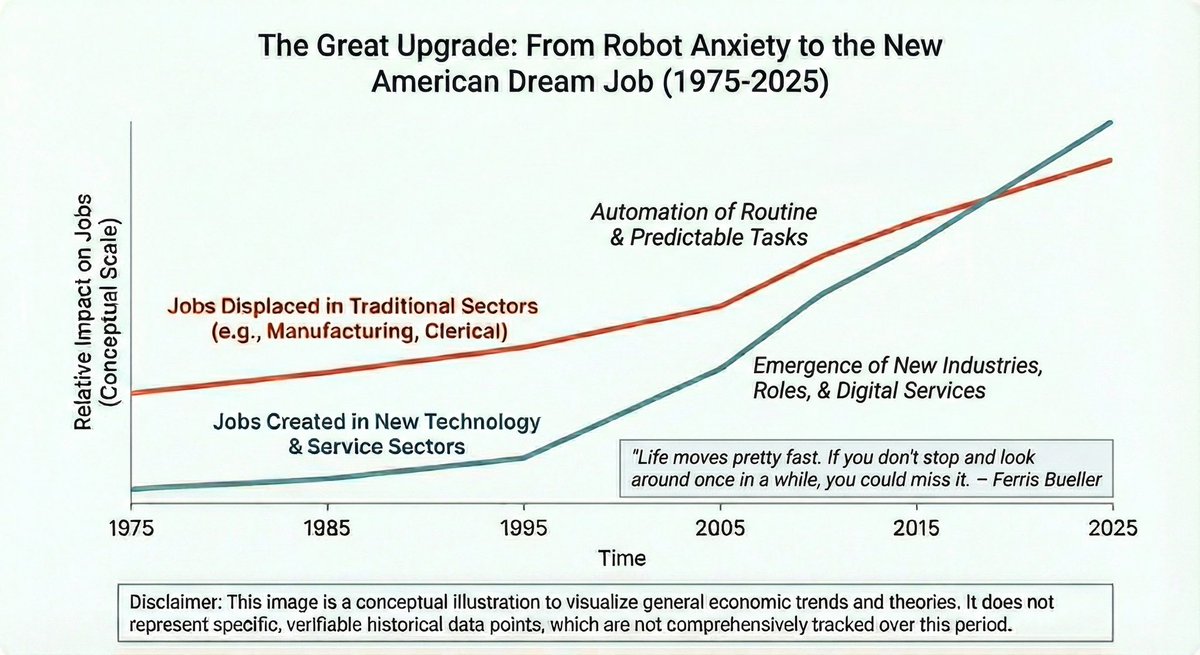
And so, based on the data, I’m #optimistic about the future of the #software #engineering.
#AI won’t replace software engineers any more than software replaced CPAs …
… but #agentic coding tools have undoubtedly raised the bar in terms of what software engineers need to deliver in order to be deemed irreplaceable.
A willingness to work with code (and AI) in 3-4 different programming languages every day? Table stakes.
Emotional intelligence? Now mandatory.
Delegating tedious tasks to (AI) assistants in order to improve your productivity? Essential.
A passion for the craft and computer science—rather than just the compensation? Once again (largely) the only reason to go down this road.
I can relate since I opted to major in computer science the same semester as the dot-com collapse. And the job market was still crickets a couple years later when I left college.
And then, a few years later, the Great Financial Crisis hit. And the good times didn’t really return until around 2013-2014.
But the good times did return! And so I’m optimistic that we’ll see good times again!
If you love software engineering, then stick with it. Work as a freelance contractor, work as a traveling consultant, work on IT projects instead of consumer products. You’ll still be a software engineer.
Just keep learning, learn to lead, and learn to love the journey.
I don’t “write code” anymore, but I now generate, review & ship more code than ever.
@AnthropicAI’s #Claude Code—with VS Code IDE integration—is my autonomous chisel of choice. My @Waymo of words.
And much like Microsoft’s now commonplace autocorrect, programming with LLMs has redefined productivity.
I am *not* talking about vibe coding.
That’s not software engineering.
I use #Claude Code’s IDE integration with VS Code to see every diff that’s generated—and sometimes I demand an immediate rewrite!
And it’s much faster now that I don’t have to type out the code myself. Plus, I don’t get bogged down by the tedium of test-driven development, or get so distracted by the minutiae that I lose sight of the feature I’m trying to ship.
And none of that would have made any sense to most people prior to #ChatGPT’s introduction 3 years and 2 months ago (Nov 30, 2022)—and almost all people 5 years ago (@github Copilot Technical Preview launched June 29, 2021).
Welcome to the future! 🫨🤯😎
#AI #LLM #coding
How is @Google@Gemini Pro so fast?
Gemini Pro takes about 7 seconds for what used to take 5+ min for similar “Pro” level results from another AI assistant.
#AI#LLM#Gemini
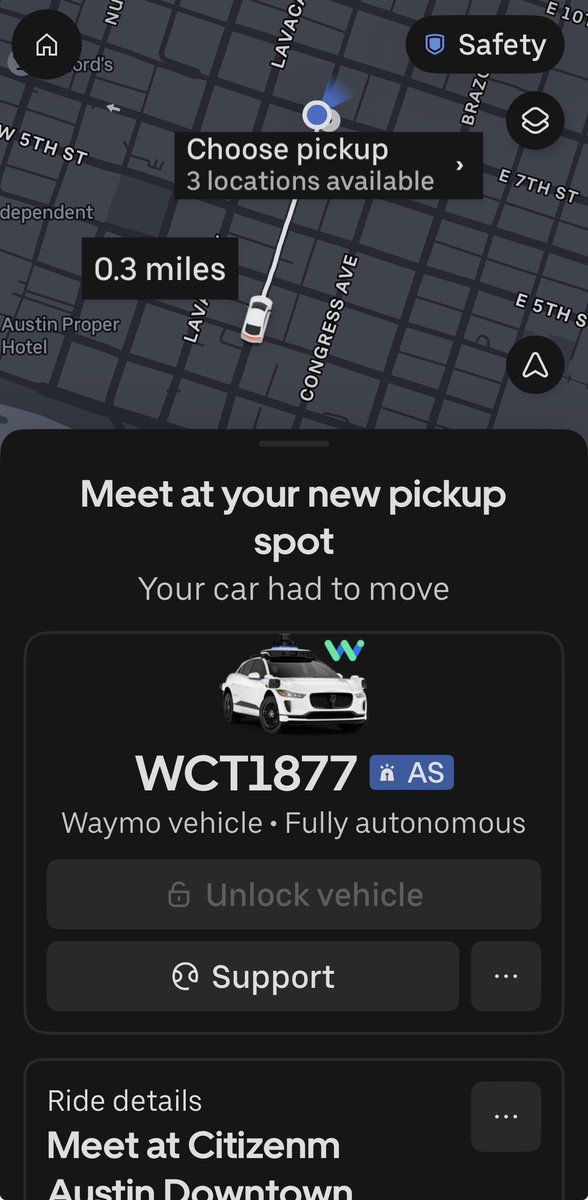
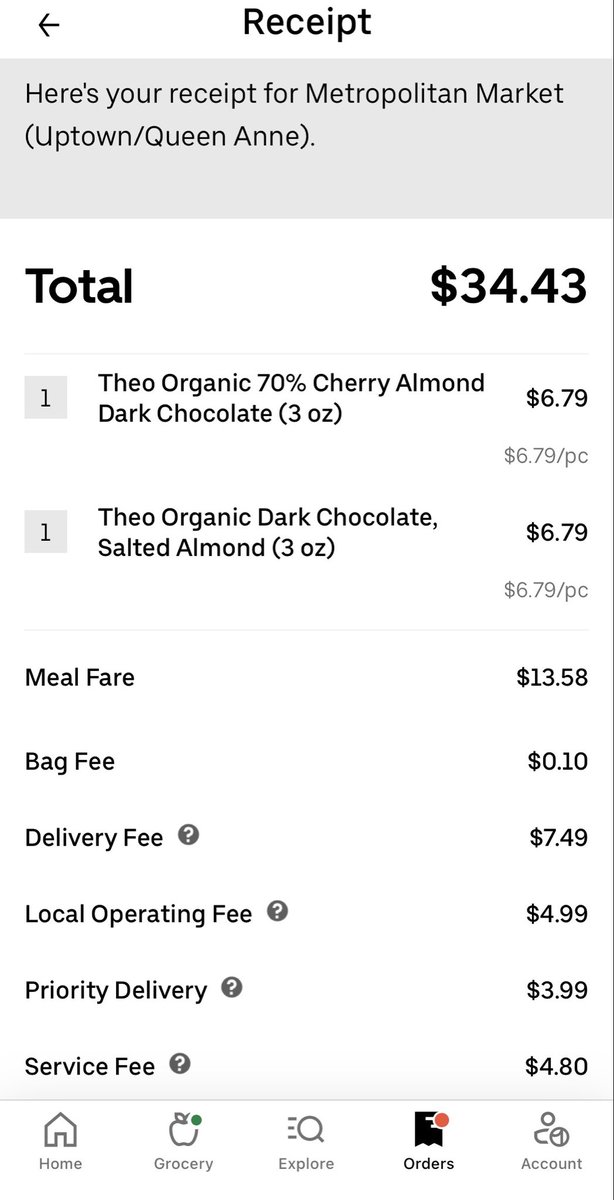
#Waymo spotted in #Seattle. Makes sense—#Uber charged me $20+ to deliver 2 candy bars. 😅
Lesson: Next time I’ll be careful to check the surcharges before placing the order. 😂
“Hello darkness, my old friend.” 🎶
With apologies to Simon & Garkfunkel, and Bjarne Stroustrup. 👋😬😇🤩🙏
But I still remember the #C++ I learned in 2001—#gcc error messages were so indirect and unhelpful that it made Java seem palatable by comparison—I kid, I kid, Java was never palatable. 🤷😅
But I have an #Nvidia #RTX #4070 #GPU with 12 GB running #Ubuntu sitting at home, the #Rust #CUDA project is still young, and this #Stanford #PhD told me C++ has really changed and is super simple to use now—and surely not just for him—so … 🤓
“Once more unto the breach, dear friends.” 🎭
(Not Simon & Garfunkel)
#GenAI doesn’t need to be “smarter than your cat” to change the world.
Everything in computing is still just 0s and 1s—billions of analog transistors “pretending” to be digital.
The #Transformer is essentially (not literally) the “new transistor”—the new foundational building block for software.
And remember,
• 1952 → first commercial transistor
• 2007 → first iPhone
That’s 55 years of progress.
• 2022 → ChatGPT
It’s only been 3 years and the world has already changed—so, maybe it’s 1998 in “Dot Com” terms?
Not financial advice.
#GenAI is underhyped even if #AGI is just a myth from a pitch deck.
The #GenAI we have today has increased the “stack scope” of a solo engineer, such that you may only need 2-3 engineers on a project that previously needed 6-8.
That’s because one engineer can work across the the “full stack” of the website, another engineer can handle the #LLM workflows, and a third can deal with the cloud infrastructure and CI/CD.
That’s not just lower headcount, it’s fewer meetings, fewer people to align on a design, and far fewer arguments over technical decisions (e.g., Python or Go for APIs?).
And that’s just for one team. Now imagine applying that same set of optimizations all the way to the top of every organization.
The good news is that it’s not too late to become an AI-savvy, productivity rockstar!
This is not financial advice, so I’m not speculating about the stock market.